
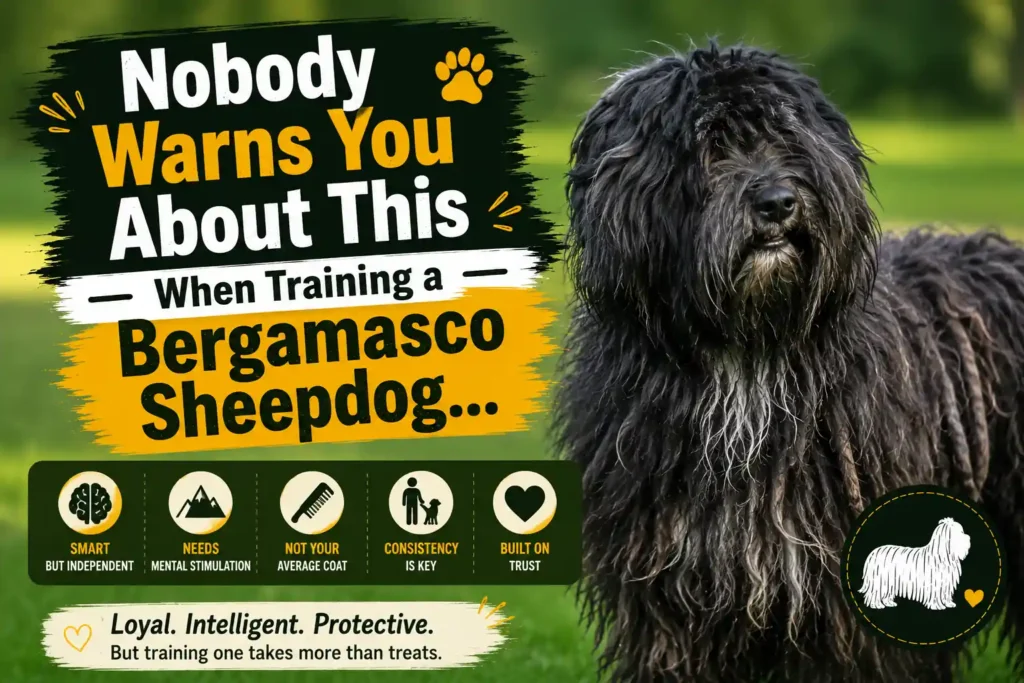
The Bergamasco Sheepdog is one of the oldest herding breeds in the world, originating over 2,000 years ago in the Italian Alps. For centuries, these dogs worked alone, guarded flocks without human supervision, and made independent decisions in extreme conditions.
That independence is still in their DNA today.
Before jumping into Bergamasco Sheepdog training tips, you need to understand one thing: this is not a breed that obeys just because you asked. They are calm, intelligent, and deeply loyal, but they need a reason to follow your lead. Standard training methods built for eager-to-please breeds simply don’t work here.
The right Bergamasco Sheepdog training tips are not about force or repetition. They are about consistency, clear boundaries, and becoming a handler this breed actually respects.
Get that foundation right, and everything else becomes easy.
Understand the Breed’s Independent Nature
Bergamascos were bred to work alone, guarding flocks in the Italian Alps without a shepherd constantly directing them. That independence is baked into their DNA. They’re not stubborn for fun; they’re just wired to think for themselves. Once you accept that, training becomes a collaboration instead of a battle.
According to the American Kennel Club (AKC), Bergamascos are classified as intelligent, patient, and trainable, but they require an owner who earns their respect, not just issues commands.
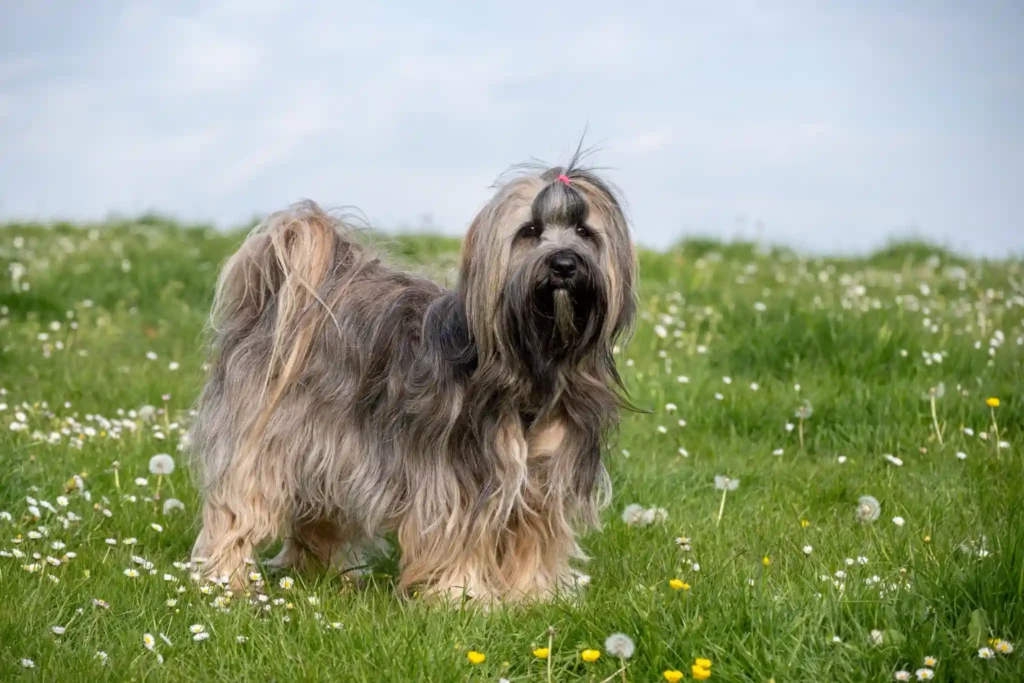
The Bergamasco’s Personality Explained: Read more in Bergamasco Sheepdog: The Rare Dog With Dreadlocks.
Start Training Early
The window between 8 and 16 weeks is pure gold with this breed. Puppies at this age are curious, adaptable, and haven’t yet developed the “I’ll decide for myself” mindset. Starting early doesn’t mean being harsh; it means introducing routines, boundaries, and basic commands in a low-pressure way.
Even something as simple as calling your pup’s name consistently before meals sets a foundation. Don’t wait until problem behaviors appear. Prevention here is genuinely easier than correction.
Use Positive Reinforcement
Forget dominance-based methods; they backfire badly with Bergamascos. A 2021 study by the University of Porto found that dogs trained with positive reinforcement show lower stress levels and faster learning retention compared to punishment-based approaches. High-value treats (think real chicken, cheese, or liver) work best in early stages. Later, you can transition to praise and play as primary rewards.
Keep your energy calm and consistent. These dogs are emotionally perceptive; they pick up on frustration immediately, and that usually means the session is over.
Keep Training Sessions Short
Ten to fifteen minutes per session, two to three times daily. That’s the sweet spot. Bergamascos disengage fast when sessions drag on. Ending on a win, even a small one, keeps them enthusiastic for next time.
Quick tips for short, effective sessions:
- Always end with something the dog already knows well
- Train before meals, not after; hungry dogs are more motivated
- Use a consistent cue word like “done” to signal the end of training
- Change locations occasionally to build generalization
Here’s a simple training schedule that works well for most Bergamasco owners:
| Time of Day | Session Length | Focus Area |
| Morning (before breakfast) | 10–12 mins | Basic commands (sit, stay, come) |
| Afternoon | 10 mins | Socialization/leash manners |
| Evening (before dinner) | 12–15 mins | New skill or reinforcement |
Teach Basic Commands First
Start with sit, stay, come, and leave it. These four commands aren’t just obedience basics; they’re safety tools. A solid “come” recall could literally save your dog’s life someday. Master these before moving to anything fancy.
Bergamascos respond well to hand signals paired with verbal cues. Using both together from the beginning gives you flexibility later, especially in noisy environments or at a distance.
What Are the Best First Commands to Teach a Bergamasco Sheepdog?
The four most important commands to start with are: Sit, Stay, Come, and Leave It. These build the foundation for all future training and are essential for safety. Pair verbal cues with hand signals from day one for best results.
Socialize From Puppy Age
Socialization isn’t optional with this breed. Without it, Bergamascos can become wary or reactive around strangers and unfamiliar dogs. Exposure to different sounds, environments, people, and animals between 8 and 14 weeks is critical.
Puppy classes are genuinely worth it, not just for training but for social exposure. Look for a class run by a Certified Professional Dog Trainer (CPDT-KA) for the best experience.
- Dog-friendly cafes, parks, and pet stores are great for exposure
- Invite friends over regularly in the first few months
- Introduce different sounds: traffic, thunder recordings, kids playing
Leash Train Early
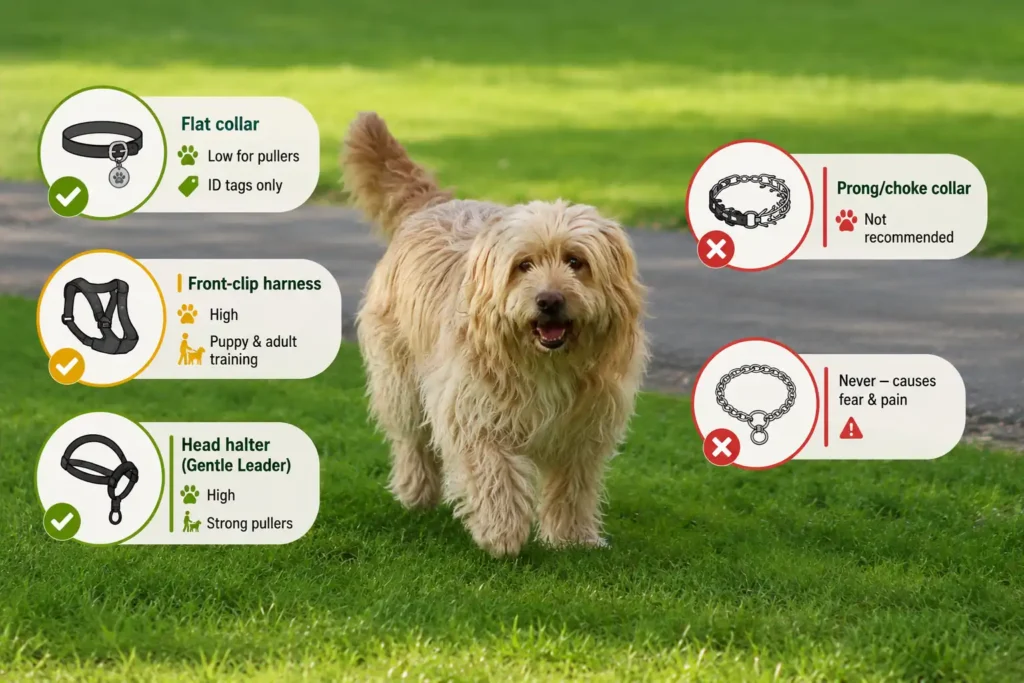
Bergamascos are medium-to-large dogs with real pulling power when motivated. Starting leash training before 12 weeks means you’re working with a 15-pound puppy instead of fighting a 70-pound adult. The technique matters more than the gear; loose-leash walking comes from stopping movement the moment the leash tightens, not from constant corrections.
Compare common leash training tools and their suitability for Bergamascos:
| Tool | Effectiveness | Recommended For |
| Flat collar | Low for pullers | ID tags only |
| Front-clip harness | High | Puppy & adult training |
| Head halter (Gentle Leader) | High | Strong pullers |
| Prong/choke collar | Not recommended | Never — causes fear & pain |
Prevent Stubborn Behavior
Here’s the truth: some days your Bergamasco will simply decide training isn’t happening. It’s not rebellion, it’s the breed. When that happens, don’t push through. Drop the session, do something fun together, and try again later.
Consistency prevents most stubborn streaks. When rules change daily- sometimes allowed on the couch, sometimes not- dogs get confused. Clear, consistent rules reduce friction significantly.
How Do You Handle a Stubborn Bergamasco Sheepdog During Training?
If your Bergamasco refuses to engage, end the session calmly without punishment. Try again after 30–60 minutes or the next day. Consistency in daily rules, short sessions, and high-value rewards prevent most stubborn behavior. Never force participation; it backfires with this breed.
Train Away Stubborn Behavior with Confidence: Read more in Bergamasco Sheepdog Behavior Problems: It’s Not Always “Bad Dog”.
Add Daily Mental Stimulation
A physically tired Bergamasco is manageable. A mentally bored one is a disaster waiting to happen. These are intelligent herding dogs; they need problems to solve. Puzzle feeders, sniff games, hide-and-seek, and learning new tricks all count as mental exercise.
- Nina Ottosson puzzle toys (Level 2–3) are excellent for this breed
- Scatter feeding in grass taps into natural foraging instincts
- Trick training, even silly tricks, keeps their brain engaged
- Short agility sessions work brilliantly once basic commands are solid
Avoid Common Training Mistakes
Most Bergamasco training problems come down to a handful of avoidable errors. Knowing them upfront saves a lot of frustration.
- Training when YOU’RE frustrated; they feel it instantly
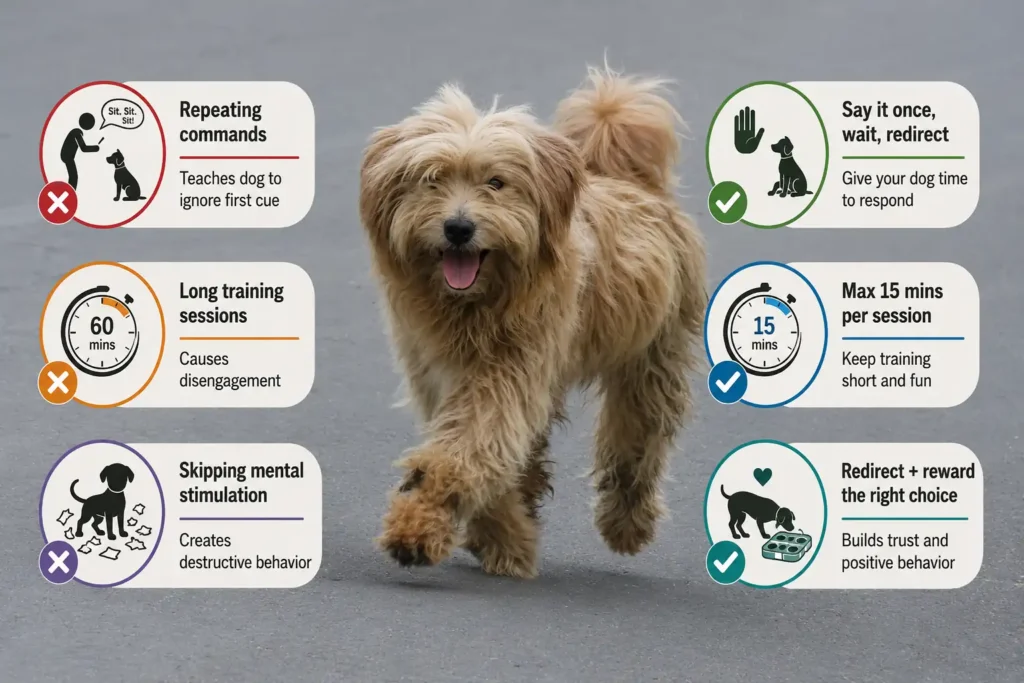
- Repeating commands multiple times before the dog responds (“Sit, sit, sit, SIT!”)
- Skipping socialization because “my dog seems fine indoors”
- Moving to advanced skills before basics are solid
- Expecting golden retriever-level eagerness to please
Common Bergamasco training mistakes vs. what to do instead:
| Mistake | Why It’s a Problem | Better Approach |
| Repeating commands | Teaches dog to ignore first cue | Say it once, wait, redirect |
| Long training sessions | Causes disengagement | Max 15 mins per session |
| Skipping mental stimulation | Creates destructive behavior | Daily puzzle or sniff games |
| Using punishment | Builds fear and distrust | Redirect + reward the right choice |
Build a Simple Daily Training Routine
Routines are your best friend with this breed. Bergamascos thrive when they know what to expect. A predictable structure- wake up, short training, walk, mental enrichment, evening session- creates a calmer, more cooperative dog over time.
Don’t aim for perfection. Aim for consistency. Even five minutes of focused work daily beats a two-hour session once a week.
What Does a Good Daily Training Routine Look Like for a Bergamasco?
A simple daily routine: Morning,10-minute obedience session before breakfast. Afternoon: 20-minute walk with leash training practice. Evening: 10-15 minutes of new skill work or mental enrichment. Weekend bonus: short socialization outing. Keep it predictable and end every session positively.
Final Training Tips for Long-Term Success
You’re playing a long game here. Bergamascos mature slowly; most don’t hit full mental maturity until around 2.5 to 3 years old. What looks like stubborn behavior at 18 months often smooths out by year three if you’ve been consistent. Stick with it.
Find a trainer who has experience with herding or livestock guardian breeds. Standard obedience trainers sometimes underestimate how different these dogs think. Online communities like the Bergamasco Sheepdog Club of America forums are surprisingly helpful for breed-specific advice.
And honestly? The relationship you build through training is worth more than any specific skill you teach. When a Bergamasco trusts you, their loyalty is extraordinary.
FAQs: Bergamasco Sheepdog Training Tips
Are Bergamasco Sheepdogs easy to train?
They’re not the easiest breed, but they’re very trainable with the right approach. Their independent nature means they need a trainer who earns respect, not just issues commands.
At what age should I start training my Bergamasco puppy?
Start as early as 8 weeks. The socialization and learning window between 8–16 weeks is the most impactful period for this breed.
How long should training sessions be for a Bergamasco?
Keep sessions to 10–15 minutes, two to three times daily. Longer sessions cause disengagement with this breed.
Do Bergamascos respond well to treats?
Yes, especially high-value treats like real chicken or cheese in early training. Over time, you can shift toward praise and play as rewards.
What’s the biggest training mistake Bergamasco owners make?
Repeating commands multiple times before the dog responds. Say it once, wait, then redirect. Saying “sit” five times teaches them to ignore the first four.
Do Bergamascos need mental stimulation?
Absolutely. Without mental enrichment, they become bored and destructive. Daily puzzle toys, sniff games, and trick training are essential for this breed.