
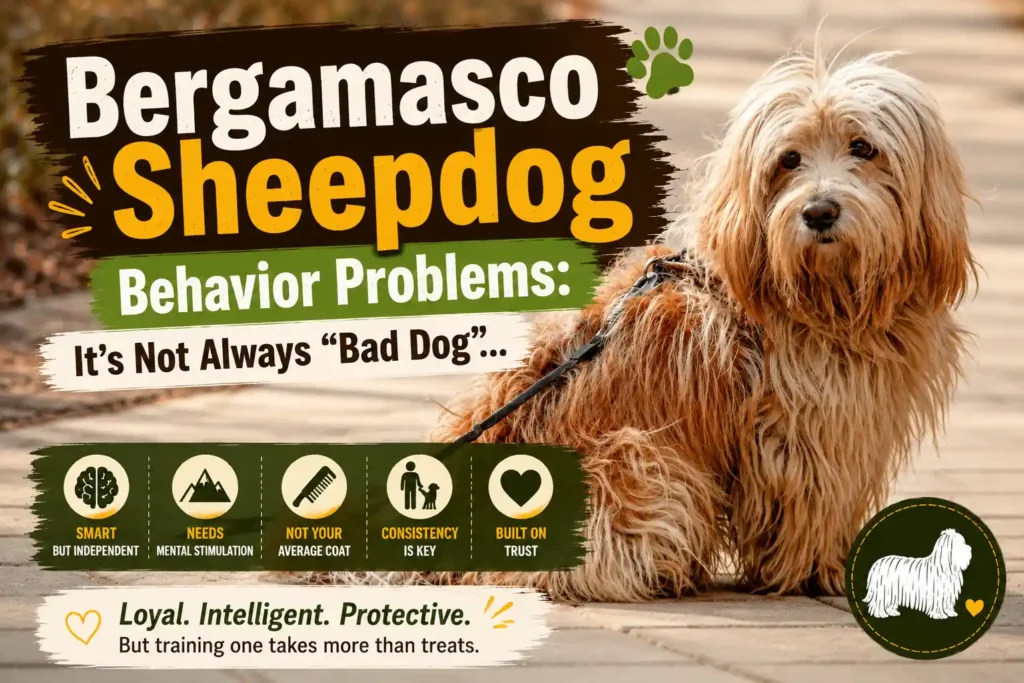
Bergamasco Sheepdog behavior problems catch a lot of owners off guard, even ones who’ve had dogs their whole lives. One minute everything’s fine; the next your dog is trying to herd your kid around the living room or has planted its feet mid-walk and won’t budge. Here’s the thing though: it’s usually not about being “bad” or stubborn for no reason.
These dogs spent centuries up in the Italian Alps guarding flocks pretty much on their own, making their own calls without a shepherd hovering over them. That independent streak didn’t just disappear because they’re sleeping on your couch now. Once you dig into what’s really behind Bergamasco Sheepdog behavior problems, things get a lot easier to manage, and no, you don’t need to be a professional trainer to turn it around.
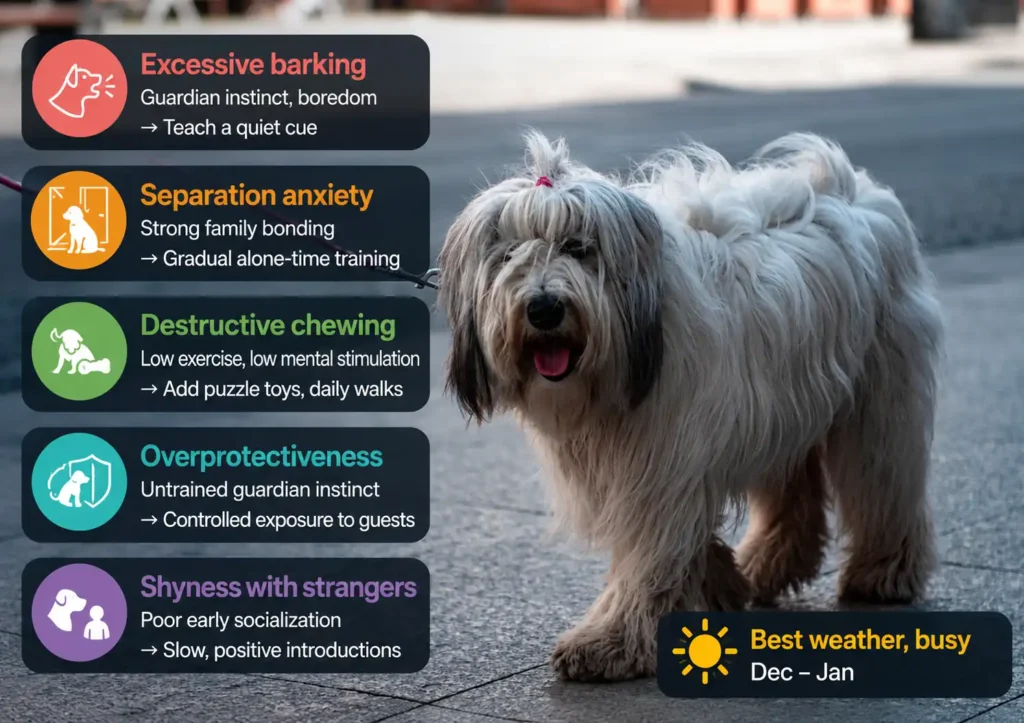
Quick answer: here’s how common Bergamasco behavior problems typically show up and what tends to help.
Common Bergamasco Behavior Problems at a Glance
| Problem | Common Cause | First Step |
| Excessive barking | Guardian instinct, boredom | Teach a quiet cue |
| Separation anxiety | Strong family bonding | Gradual alone-time training |
| Destructive chewing | Low exercise, low mental stimulation | Add puzzle toys, daily walks |
| Overprotectiveness | Untrained guardian instinct | Controlled exposure to guests |
| Shyness with strangers | Poor early socialization | Slow, positive introductions |
Bergamasco Sheepdog Temperament
The Bergamasco is a flock-guarding herder from the mountains near Bergamo, Italy, and that heritage shows up in everyday life. According to the American Kennel Club, the breed ranks among the calmer working dogs, but calm doesn’t mean compliant. These dogs were selected over centuries to think independently, which is wonderful out on a pasture and occasionally maddening on your living room rug.
They’re loyal almost to a fault, deeply bonded to their family, and quietly watchful of everything happening around them. That watchfulness is part of what makes them excellent guardians, and part of what fuels several of the behavior issues we’ll cover below.
Inside the Bergamasco Sheepdog’s Personality and Traits: Read more in Bergamasco Sheepdog: The Rare Dog With Dreadlocks.
Stubborn Behavior
Bergamascos were never bred to take orders the way a Labrador was. They were bred to assess a situation and act on their own judgment while guarding sheep miles from any shepherd. That independence often gets labeled “stubborn,” but it’s really a dog deciding whether your request is worth following.
In practice, this shows up as a dog that sits down mid-walk, ignores a recall in the yard, or simply stares at you when asked to do something it sees no point in. Short, reward-based sessions of 5 to 10 minutes work far better than long drills, since this breed checks out quickly when training feels pointless or repetitive.
Separation Anxiety
Why Bergamascos Struggle With Alone Time
Because Bergamascos bond so tightly with their family, being left alone can genuinely distress them. Signs include howling, destroyed door frames, or accidents indoors even in a fully house-trained adult. The ASPCA notes that separation-related issues affect a meaningful share of companion dogs, and high-attachment breeds like this one are particularly prone to it.
- Start with very short absences, even 2 to 3 minutes, and build up gradually
- Leave a worn t-shirt with your scent near their bed
- Avoid dramatic hellos and goodbyes, which heighten the emotional contrast
Excessive Barking
A Bergamasco barking at the mail carrier, a passing car, or a squirrel three gardens over isn’t being naughty; it’s doing exactly what its ancestors did for 2,000 years: announcing anything unusual near the flock. Left unmanaged, though, that instinct can turn into near-constant noise, which is one of the more common Bergamasco Sheepdog behavior problems reported by owners in apartments or close neighborhoods.
Teaching a reliable “quiet” cue, rewarded the instant the barking stops, tends to work faster than yelling, which a Bergamasco usually interprets as you joining in.
Overprotective Tendencies
Guardian instinct runs deep in this breed, and it doesn’t always switch off at the front door. Some Bergamascos position themselves between visitors and family members, growl at unfamiliar dogs on leash, or become tense at the vet’s office. This isn’t aggression in the dramatic sense most people imagine; it’s closer to an overactive sense of duty.
Herding Behavior at Home
Nipping at heels, circling children during play, or gently “steering” people around a room are classic herding behaviors that simply have nowhere productive to go inside a house. Without sheep to manage, kids and other pets become the next best thing.
Shyness Around Strangers
Bergamascos are famously aloof with people outside their inner circle — a trait the breed standard itself describes as natural reserve rather than fear. Still, undersocialized puppies can grow into adults who shrink from guests, refuse treats from strangers, or hide during parties.
Destructive Behavior
Chewed furniture, shredded cushions, or dug-up flower beds are rarely about spite. They’re almost always tied to boredom, leftover puppy energy, or anxiety. A 2019 University of Helsinki survey of over 13,700 dogs found destructiveness was strongly linked to insufficient exercise and mental engagement, a pattern that fits the Bergamasco closely, given how much this breed was bred to think and work.
Lack of Mental Stimulation
A tired body isn’t the same as a tired mind, and Bergamascos need both. Puzzle feeders, scent games, and short training sessions tap into the problem-solving instincts this breed relies on, channeling energy that would otherwise go toward chewing the couch or barking at shadows.
At a glance: how much exercise and mental work this breed actually needs by age.
Bergamasco Exercise and Mental Stimulation Needs
| Age | Daily Needs |
| 8–16 weeks | Short play sessions, 5–10 minutes, several times a day |
| 4–12 months | 20–30 minutes structured exercise plus puzzle toys |
| 1–7 years | 45–60 minutes of activity, daily training games |
| Senior (8+) | 20–30 minutes gentle walks, scent games |

Socialization Problems
The window between 8 and 16 weeks shapes how a Bergamasco views the world for the rest of its life. Puppies that miss out on varied, positive exposure to people, dogs, sounds, and surfaces during that period are far more likely to develop fear-based reactivity as adults, a finding echoed in numerous canine behavior studies, including work published through the Journal of Veterinary Behavior.
Training Mistakes That Worsen Behavior
Punishment-heavy methods tend to backfire spectacularly with this breed. A Bergamasco that feels cornered or threatened often shuts down or becomes defensive rather than compliant, since the breed simply isn’t wired to respond well to force.
- Inconsistent rules between family members confuse the dog
- Long, repetitive drills cause boredom and disengagement
- Skipping the “why”, Bergamascos respond better when training feels purposeful
Training Mistakes That Lead to Bad Habits: Read more in Nobody Warns You About This When Training a Bergamasco Sheepdog.
How to Prevent Behavior Problems
Prevention beats correction every time with this breed, and it starts long before bad habits set in.
- Begin socialization the week the puppy comes home
- Provide at least 45 to 60 minutes of physical activity daily
- Mix in puzzle toys and short obedience games for mental tiredness
- Use positive reinforcement consistently across the whole household
- Address small issues immediately instead of waiting for them to grow
When to Get Professional Help
If barking, anxiety, or guarding behavior hasn’t improved after a few weeks of consistent effort, it’s worth bringing in a certified applied animal behaviorist or a trainer experienced with herding breeds. The Bergamasco Sheepdog Club of America and similar breed clubs often keep referral lists, and catching a problem early is almost always easier than untangling it after years of reinforcement.
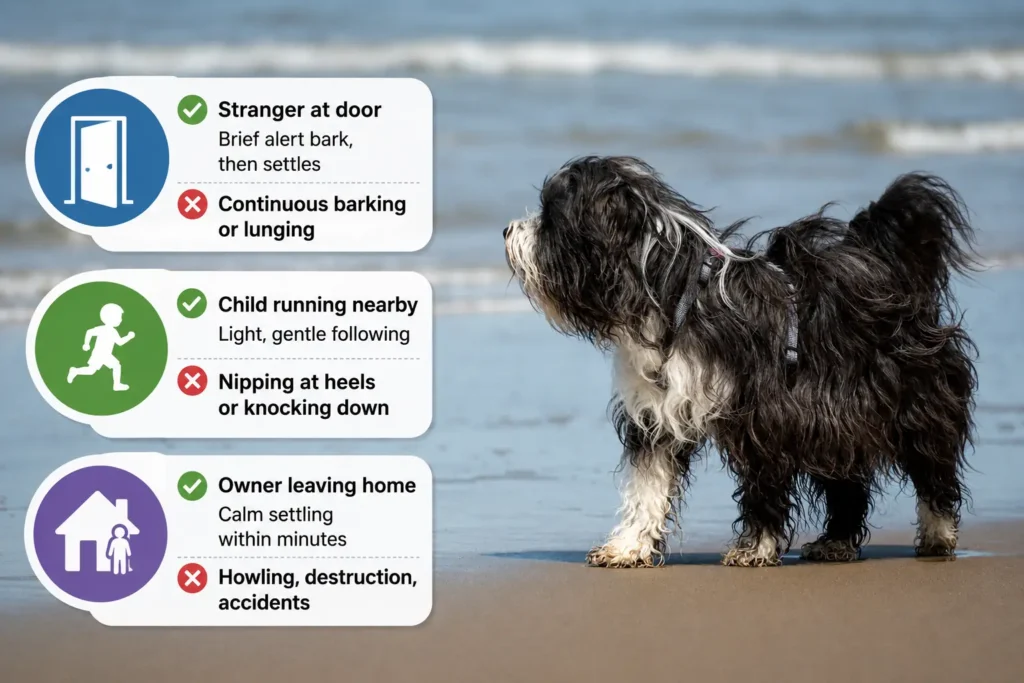
Side-by-side: signs of normal guardian instinct versus a behavior problem that needs attention.
Normal Instinct vs Behavior Problem
| Situation | Normal Instinct | Behavior Problem |
| Stranger at door | Brief alert bark, then settles | Continuous barking or lunging |
| Child running nearby | Light, gentle following | Nipping at heels or knocking down |
| Owner leaving home | Calm settling within minutes | Howling, destruction, accidents |
Your Bergamasco Can Become an Amazing Companion
Living with a Bergamasco isn’t always easy, but that’s part of what makes this breed so special. Most Bergamasco Sheepdog behavior problems come from their strong instincts, not stubbornness or bad behavior. With patience, consistent training, and plenty of mental and physical activity, you’ll see steady progress.
Give your Bergamasco the guidance it needs, and you’ll be rewarded with a loyal, confident companion for years to come.
Frequently Asked Questions
Are Bergamasco Sheepdogs naturally aggressive?
No. They’re protective and reserved with strangers, but true aggression usually points to poor socialization or an unmet need, not breed temperament.
How do I stop my Bergamasco from herding my kids?
Redirect the instinct with structured games like fetch or agility, and interrupt nipping calmly with a firm “no” followed by praise once the dog stops.
Do Bergamasco Sheepdogs get separation anxiety easily?
Yes, more than many breeds, because of how tightly they bond with their family. Gradual desensitization to alone time helps a great deal.
How much exercise prevents behavior problems in this breed?
Most adults do well with 45 to 60 minutes of daily activity combined with mental stimulation like puzzle feeders or training games.
When should I hire a professional trainer?
If issues like barking, anxiety, or guarding persist beyond a few weeks of consistent home training, a certified behaviorist is worth the investment.