

The Dandie Dinmont Terrier lifespan usually falls between 11 and 13 years. This makes the breed quite long-lived when you compare it to many other small purebred dogs. Several things shape the Dandie Dinmont Terrier lifespan, such as genetics, daily diet, exercise, and regular vet visits.
Some dogs live past 14 years when they get good care and avoid major health problems. Others may have a shorter life because of health issues common in the breed, like back problems linked to their long spine. Knowing what affects lifespan helps owners make smart choices from puppyhood all the way through the senior years.
Average Dandie Dinmont Terrier Lifespan
On average, a healthy Dandie Dinmont Terrier lives between 11 and 13 years. According to the UK Kennel Club, the breed’s median lifespan based on health surveys sits around 12 years. Some individuals reach 14 or even 15 with excellent genetics and consistent veterinary care. By comparison, many small terrier breeds average 12 to 15 years, so Dandies fall in the middle of that range rather than at the top.
The table below gives a quick comparison of the Dandie Dinmont Terrier lifespan against similar small breeds, which is useful context when evaluating long-term commitment to this breed.
| Breed | Average Lifespan | Size Category |
| Dandie Dinmont Terrier | 11–13 years | Small |
| Scottish Terrier | 11–13 years | Small |
| Skye Terrier | 12–14 years | Small |
| Cairn Terrier | 13–15 years | Small |
| West Highland White Terrier | 12–16 years | Small |

How to Help Your Dandie Live a Longer, Healthier Life: Read more in Is a Dandie Dinmont Terrier Right for You? Complete Breed Guide & Owner Insights.
What Affects a Dandie Dinmont Terrier’s Lifespan?
Several factors play a real role in how long a Dandie lives. Genetics is probably the biggest one. A puppy from health-tested parents is starting life with a meaningful advantage over one from untested lines.
Body weight is another factor that’s easy to overlook but genuinely matters. Dandies are long-backed dogs, and extra weight puts significant strain on their spine and joints over time. Even a pound or two of excess weight can accelerate wear, particularly as they age.
The table below outlines the main factors influencing lifespan and the level of impact each one tends to have.
| Factor | Impact on Lifespan | Owner Controllable? |
| Genetics/breeding quality | High | Partially (choose carefully) |
| Body weight management | High | Yes |
| Regular veterinary care | High | Yes |
| Diet quality | Moderate to High | Yes |
| Exercise level | Moderate | Yes |
| Spay/neuter timing | Moderate | Yes |
Life Stages: Puppy, Adult, and Senior
Dandies grow through three fairly distinct phases, and knowing what to expect at each one helps you provide the right care at the right time.
Puppyhood runs from birth to around 12 months. During this phase, the Dandie is developing both physically and mentally. Socialization is critical here. Dandies that miss out on early exposure to people, other dogs, and different environments can become reserved or stubborn adults.
The adult years, roughly 1 to 8, are generally the most stable. A well-cared-for adult Dandie is confident, playful, and relatively low-drama compared to some other terrier breeds. This is the phase where good habits around exercise and diet really pay off later.
Senior years typically begin around age 8 to 9. You might notice a slower gait, less enthusiasm for long walks, or some stiffness after rest. These are normal signs of aging, but they also signal the time to increase veterinary monitoring.
What Is the Average Lifespan of a Dandie Dinmont Terrier?
The average Dandie Dinmont Terrier lifespan is 11 to 13 years. With excellent genetics, consistent veterinary care, and a healthy weight, some individuals reach 14 to 15 years. The breed’s long-backed build and specific genetic conditions mean that proactive health management genuinely extends quality of life.
Signs Your Dandie Is Aging Gracefully
Not all aging looks the same. A Dandie that’s doing well in their senior years tends to show some predictable positive signs alongside the expected slowdowns.
- Steady, healthy weight without visible ribs or obvious rounding
- Clear, bright eyes with no cloudiness beyond what’s normal for age
- Good appetite without dramatic changes in eating habits
- Coat that still holds some texture and color, even if slightly drier than before
- Willingness to engage in shorter play sessions or gentle walks

Cloudiness in the eyes, called nuclear sclerosis, is common and usually normal in dogs over 8. It’s different from cataracts, though both can occur. A vet can tell the difference easily during a routine exam.
Healthy Habits That Support a Longer Life
The basics genuinely matter here. Feeding a balanced, high-quality diet, keeping weight in check, and staying current on vaccinations and parasite prevention form the foundation of a long, healthy life for most Dandies.
Joint support becomes relevant earlier than most people expect with this breed. The Dandie’s long spine means intervertebral disc disease (IVDD) is a real concern, and maintaining a lean body weight is probably the single most impactful thing an owner can do. The American Kennel Club Canine Health Foundation recognizes IVDD as one of the key health priorities for long-backed breeds, including the Dandie Dinmont Terrier.
Dental care is also worth taking seriously. Periodontal disease is extremely common in small dogs and has links to heart and kidney problems over time. Daily brushing, or at least regular professional cleanings, adds up in ways that might surprise you.
How Mental Stimulation Helps Senior Dogs
Keeping an older Dandie mentally engaged is genuinely underrated as a health strategy. Cognitive decline in dogs, sometimes called canine cognitive dysfunction, shares several features with human dementia and becomes more common after age 10.
Short training sessions, puzzle feeders, nose work activities, and consistent daily routines all help keep an aging dog mentally sharp. The goal isn’t to exhaust them. It’s to give their brain something to do. Even 10 minutes of gentle scent work a day can make a noticeable difference in a senior dog’s quality of life.
How Can You Extend a Dandie Dinmont Terrier’s Lifespan?
To support a longer Dandie Dinmont Terrier lifespan, maintain a healthy body weight, feed a high-quality diet, schedule twice-yearly vet visits after age 7, and provide regular dental care. Spinal health is particularly important for this breed due to its elongated back. Mental stimulation through puzzle toys and gentle training also supports healthy aging.
Common Mistakes That Can Shorten Lifespan
Some of the most damaging things owners do are the ones that seem harmless in the moment. Allowing a Dandie to jump freely on and off high furniture is a good example. For a dog with a long back and short legs, repeated impact adds up over years and can contribute to disc problems that are both painful and expensive to treat.
Overfeeding is probably the most common mistake of all. Dandies have a way of looking perpetually underfed, and those eyes are very convincing. Sticking to measured portions and limiting high-calorie treats is important, not just for weight, but for long-term metabolic health.
Skipping dental care is another mistake that tends to catch owners off guard later. The connection between periodontal disease and systemic health problems in dogs is well documented, and small breeds accumulate tartar much faster than large ones.
When to Increase Senior Veterinary Visits
The general veterinary recommendation is to move from annual to twice-yearly exams once a dog reaches approximately 7 years of age. This applies to Dandies as well. The reasoning is practical: conditions like hypothyroidism, kidney disease, and early cancer are much easier to manage when caught early.
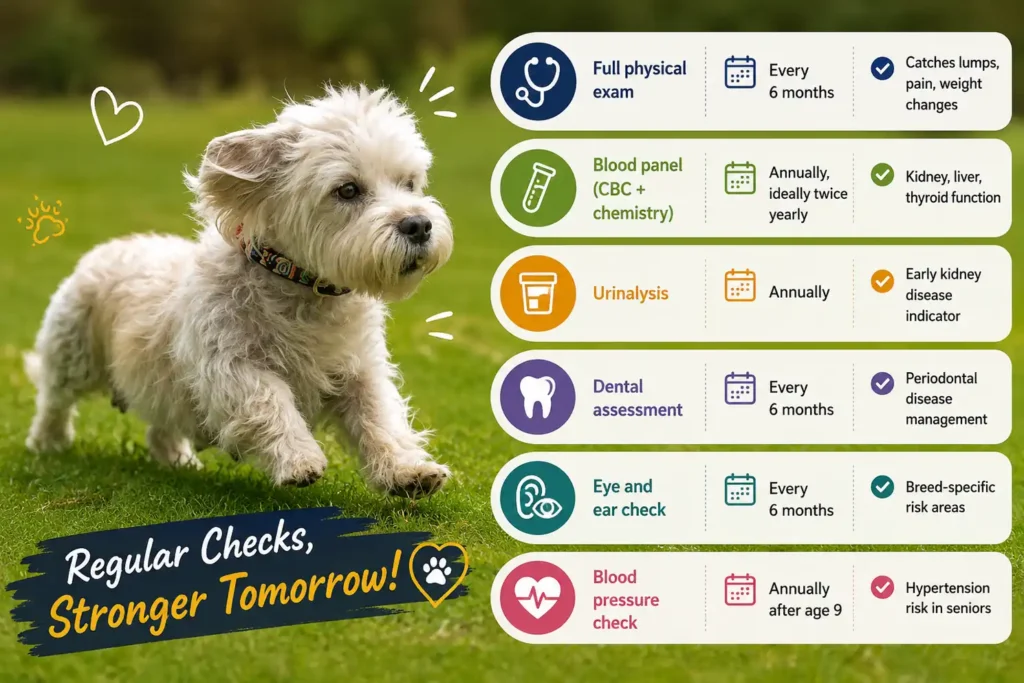
The table below outlines what a typical senior wellness check for a Dandie Dinmont Terrier should include, according to current small animal veterinary guidelines.
| Check | Frequency (Senior Dog) | Why It Matters |
| Full physical exam | Every 6 months | Catches lumps, pain, weight changes |
| Blood panel (CBC + chemistry) | Annually, ideally twice yearly | Kidney, liver, thyroid function |
| Urinalysis | Annually | Early kidney disease indicator |
| Dental assessment | Every 6 months | Periodontal disease management |
| Eye and ear check | Every 6 months | Breed-specific risk areas |
| Blood pressure check | Annually after age 9 | Hypertension risk in seniors |
The American Animal Hospital Association (AAHA) publishes senior care guidelines that recommend individualized monitoring schedules based on breed, size, and prior health history, which a good vet will apply to your specific dog rather than using a one-size-fits-all approach.
Living With an Older Dandie Dinmont Terrier
Older Dandies are genuinely wonderful companions. They tend to mellow without losing their characteristic personality; that dry terrier wit and confidence stay intact long into old age. They still want to be involved in family life; they just want it at a slightly slower pace.
Practical adjustments make a real difference. Ramps instead of stairs, orthopedic bedding, food and water at an accessible height, and a consistent routine all reduce stress on an aging body. Keeping the environment predictable matters more as dogs age, especially if any cognitive changes are developing.
If a Dandie Dinmont Terrier lifespan is going to reach its upper potential, the senior years are when attentive care matters most. A dog that’s been well cared for through adulthood tends to age more gracefully, but the last few years are where day-to-day management really makes the difference.
What Health Problems Affect Dandie Dinmont Terrier Lifespan?
The main health conditions affecting Dandie Dinmont Terrier lifespan include intervertebral disc disease (IVDD) due to the breed’s elongated spine, Cushing’s disease, hypothyroidism, glaucoma, and dental disease. Responsible breeding and regular veterinary screenings significantly reduce the risk and impact of these conditions.
Protect Your Dandie from These Common Health Problems: Read more in Dandie Dinmont Terrier Health Issues Every Owner Should Know.
Key Takeaways
- Most Dandie Dinmont Terriers enjoy a long life when they receive proper care from an early age.
- A healthy weight, balanced diet, and regular veterinary check-ups play a major role in supporting lifelong health.
- Because of their long back, protecting the spine with safe exercise and avoiding frequent jumping is especially important.
- As your Dandie gets older, simple changes like regular dental care, mental enrichment, and more frequent health checks can help keep them comfortable and active.
Frequently Asked Questions
How long does a Dandie Dinmont Terrier typically live?
Most Dandie Dinmont Terriers live between 11 and 13 years. With good genetics, proper diet, and consistent veterinary care, some reach 14 to 15 years.
Are Dandie Dinmont Terriers prone to back problems?
Yes. Their elongated spine puts them at risk for intervertebral disc disease (IVDD). Keeping weight healthy, limiting high-impact jumping, and scheduling regular spinal check-ups all help manage this risk.
At what age is a Dandie Dinmont Terrier considered a senior?
Dandies are generally considered senior around age 8 to 9. Twice-yearly veterinary exams are recommended starting at age 7 to catch age-related changes early.
Do Dandie Dinmont Terriers have many genetic health problems?
Like all purebreds, they have some predispositions, including IVDD, Cushing’s disease, and glaucoma. Choosing a reputable breeder who performs health testing significantly reduces these risks.
What can I do to help my Dandie live a longer, healthier life?
Maintain a healthy body weight, provide high-quality nutrition, schedule regular vet visits, keep up with dental care, and support their mental health through gentle enrichment activities as they age.