

Dandie Dinmont Terrier training tips help you turn a stubborn puppy into a confident, well-behaved dog. This breed was originally bred to hunt badgers underground, so it learned to think and act on its own without waiting for instructions. That same independent nature is still strong today, and it can make basic commands harder to teach than with other breeds.
But this does not mean your dog cannot learn. With the right Dandie Dinmont Terrier training tips, you can build trust, keep your dog’s attention, and see real progress in just a few weeks.
Is the Dandie Dinmont Terrier Easy to Train?
Not exactly. Dandie Dinmont Terriers rank highly intelligent but stubbornly independent. They respond well to positive reinforcement but resist harsh corrections or repetitive drills. Training requires patience, consistency, and understanding of what motivates these determined little hunters.
Unique Terrier Facts Every Dog Lover Should Know: Read more in Is a Dandie Dinmont Terrier Right for You? Complete Breed Guide & Owner Insights.
When Should You Start Training a Dandie Dinmont Terrier?
Begin immediately at 6-8 weeks. Early socialization and basic commands prevent behavioral problems before they root. Young puppies have shorter attention spans, so keep sessions brief; 5-10 minutes works best.
How to Train a Dandie Dinmont Terrier Puppy
Start with foundation skills: name recognition, sit, basic recall. Use high-value treats (soft, small pieces) to maintain engagement. Puppies need frequent outdoor bathroom breaks, typically every 2-3 hours. Keep training playful rather than rigid.
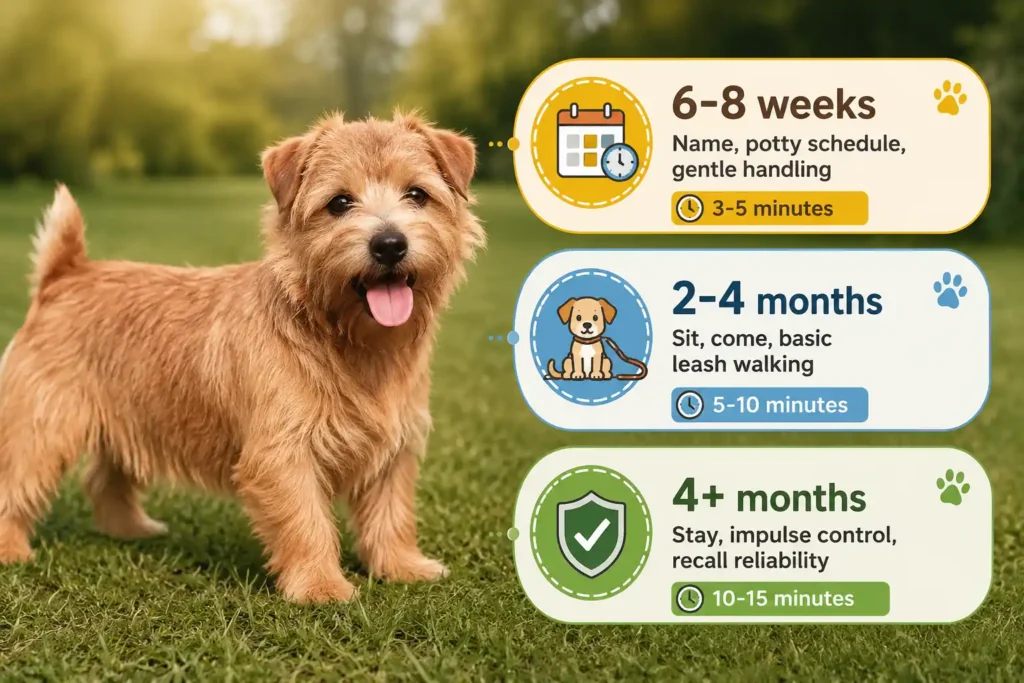
Training progression for puppies typically follows this timeline:
| Age | Focus | Session Length |
| 6-8 weeks | Name, potty schedule, gentle handling | 3-5 minutes |
| 2-4 months | Sit, come, basic leash walking | 5-10 minutes |
| 4+ months | Stay, impulse control, recall reliability | 10-15 minutes |
Best Positive Reinforcement Training for Dandie Dinmont Terriers
Positive reinforcement isn’t optional; it’s essential. These terriers disengage from punishment-based methods. Reward-based training creates willing learners. Rotate between treats, praise, and play to maintain novelty.
How to Teach Basic Commands to a Dandie Dinmont Terrier
Start with sit, the foundational command. Hold a treat close to the nose, and move upward slowly. When the rear hits the ground, reward immediately with enthusiasm. Practice 3-5 times daily for 2-minute sessions. Move to stay and come only after sit is solid (typically 2-3 weeks).
How to Stop Barking in a Dandie Dinmont Terrier
Barking is breed-normal; don’t expect complete silence. Instead, teach the ‘quiet’ command. When the dog barks, let it finish naturally, say ‘quiet,’ and reward silence with a treat. Never reward barking with attention. Ensure 45-60 minutes daily exercise; bored dogs bark more.
How to House Train a Dandie Dinmont Terrier
Crate training accelerates housebreaking. Take puppies outside every 2-3 hours, after meals, before bed, and after play. Reward outdoor elimination enthusiastically. Expect accidents; they’re normal through 12-16 weeks. Use enzymatic cleaner on accidents to remove scent markers.
How to Leash Train a Dandie Dinmont Terrier
Start indoors with a lightweight leash. Reward any movement toward you while holding the leash. Once comfortable indoors, practice outside in low-distraction areas. Progress to busier environments gradually. Keep walks structured but enjoyable.
How to Socialize a Dandie Dinmont Terrier
Expose puppies to different people, environments, and sounds between 3 and 16 weeks. This critical socialization window shapes confidence and reduces fear-based behaviors. Controlled exposure to other dogs matters, though these terriers have prey drive; supervision is necessary.
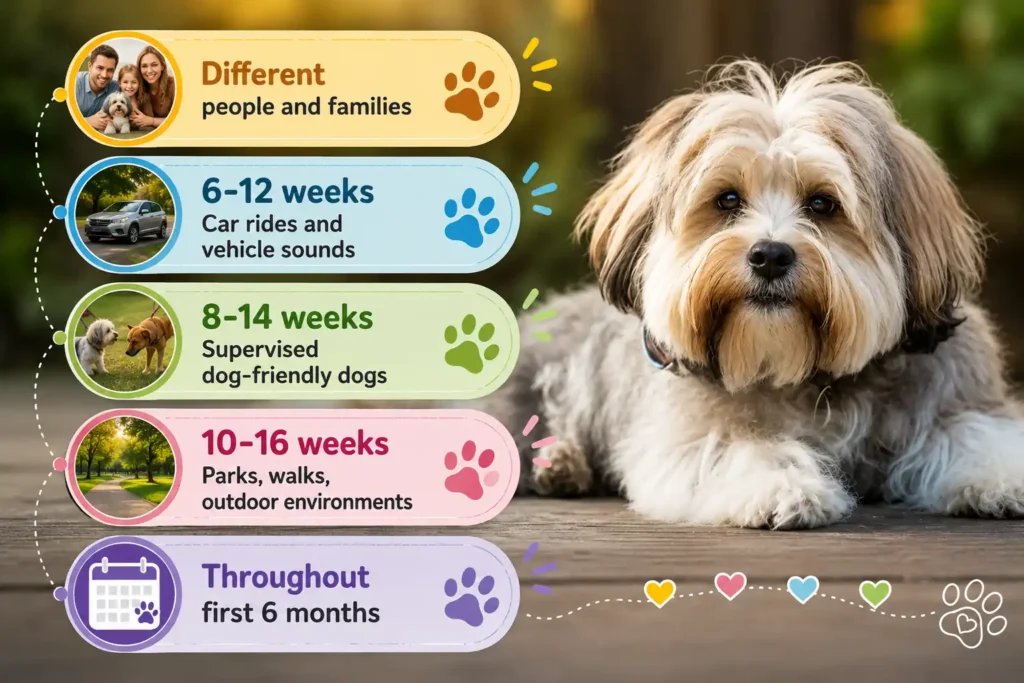
Key socialization milestones include exposure to different environments and experiences:
| Experience | Best Age Range |
| Different people and families | 6-12 weeks |
| Car rides and vehicle sounds | 8-14 weeks |
| Supervised dog-friendly dogs | 10-16 weeks |
| Parks, walks, outdoor environments | Throughout first 6 months |
Why Won’t My Dandie Dinmont Terrier Come When Called?
Because Dandies are stubborn little hunters at heart, if something smells more interesting than you, you’ll lose that battle every time.
Common Dandie Dinmont Terrier Training Problems and Solutions
Recall failure typically stems from inadequate proofing or low motivation. These terriers have strong prey drive and get distracted easily. Practice recall in distraction-free areas first. Use extremely high-value rewards (chicken, cheese). Never call the dog for something unpleasant (nail trim, bath). Build positive associations with the recall command through consistent, rewards-based practice.
How Much Exercise Does a Dandie Dinmont Terrier Need for Good Behavior?
A Dandie Dinmont Terrier does well with about 30-45 minutes of exercise a day; a couple of short walks plus some playtime is usually enough to keep them calm and well-behaved.
Mental Stimulation Games for Dandie Dinmont Terriers
These compact hunters need 45-60 minutes of daily activity split into multiple sessions. This includes 30 minutes of moderate walking, 15 minutes of vigorous play, and 15 minutes of mental enrichment (puzzle games, training, sniffing activities). Under-exercised Dandie Dinmont Terriers develop destructive behaviors and excessive barking. Mental stimulation matters equally; a bored terrier becomes a problem terrier.
Are Dandie Dinmont Terriers Stubborn? And What Should You Do About It?
Yes, they can be quite stubborn, but with patience and short, reward-based training sessions, that independent streak turns into loyal, confident companionship instead of a battle.
Common Training Mistakes Dandie Dinmont Terrier Owners Make
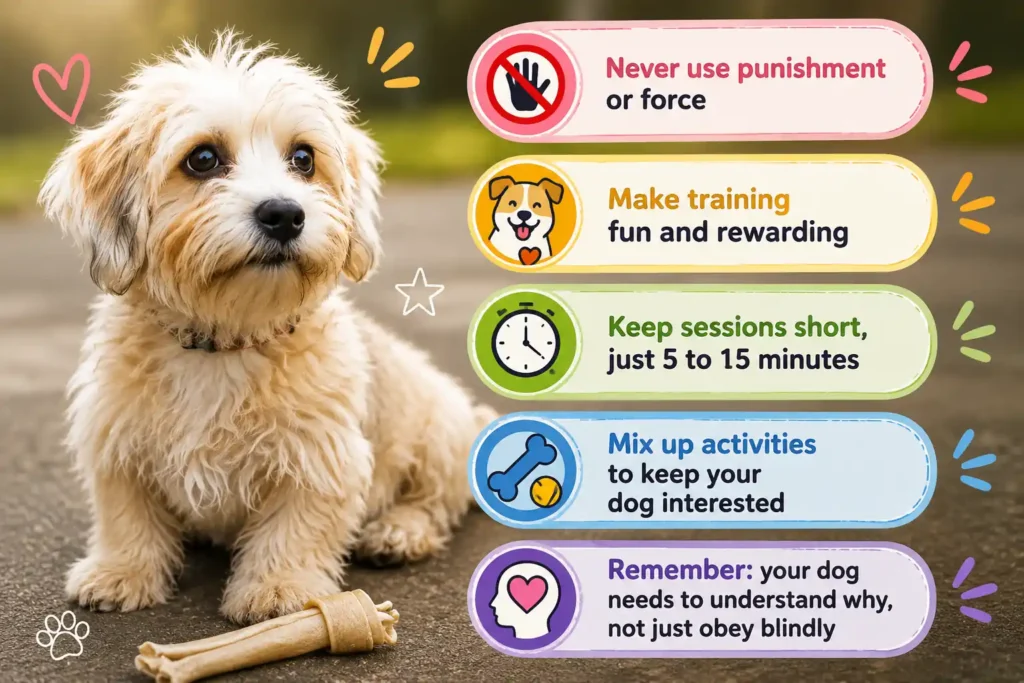
Stubbornness is just part of who they are. It’s not defiance; it’s independent thinking, passed down from their hunting past. Here’s how to work with it, not against it:
- Never use punishment or force
- Make training fun and rewarding
- Keep sessions short, just 5 to 15 minutes
- Mix up activities to keep your dog interested
- Remember: your dog needs to understand why, not just obey blindly
When you respect this independent nature, training becomes much easier for both of you.
When to Hire a Professional Dog Trainer
Consult a certified professional if: aggression emerges, fear-based behaviors develop, housetrain doesn’t progress within 12-16 weeks, or recall consistently fails after 8+ weeks of training. Look for trainers certified through recognized organizations using positive reinforcement methods. The American Kennel Club and Certification Council for Professional Dog Trainers maintain trainer directories. Avoid dominance-based methods; they backfire with independent breeds like Dandies.
Evidence-Based Training Standards
The American Veterinary Society of Animal Behavior recommends positive reinforcement as the gold standard for all dog training. Additionally, Fear Free Happy Homes provides evidence-based guidelines for low-stress handling during training. These approaches align with modern understanding of canine learning and emotional well-being.
Final Thoughts: Turning Stubbornness Into Loyalty
Training a Dandie Dinmont Terrier is not about control. It’s not about breaking their spirit either. It’s about understanding who they are. These dogs were bred to hunt badgers, so being independent and strong-willed is just natural for them.
The best Dandie Dinmont Terrier training tips are simple: keep sessions short, use rewards, start socializing early, give daily exercise, and be patient. Do this, and stubbornness slowly turns into trust and loyalty.
Stay consistent. Make training fun. Celebrate the small wins along the way. Every dog learns at their own pace. But if you follow these Dandie Dinmont Terrier training tips, you’ll end up with a dog that is confident, well-behaved, and truly loyal to you.
Frequently Asked Questions
Are Dandie Dinmont Terriers good for first-time dog owners?
They can be, if owners commit to consistent training, daily exercise, and understanding their independent nature. First-time owners willing to invest time succeed.
How long does it take to train a Dandie Dinmont Terrier?
Basic commands typically take 7-10 weeks with daily training. Full reliability with impulse control and consistent recall takes 6-12 months. Ongoing reinforcement maintains behaviors.
What treats are best for Dandie Dinmont Terrier training?
Use small, soft, high-value treats, such as chicken, beef, cheese. Rotate varieties to maintain novelty. Avoid hard treats that require chewing during training sessions.
Can older Dandie Dinmont Terriers still be trained?
Absolutely. Adult and senior Dandie Dinmont Terriers learn effectively, often with better focus than puppies. Positive reinforcement works across all life stages.