
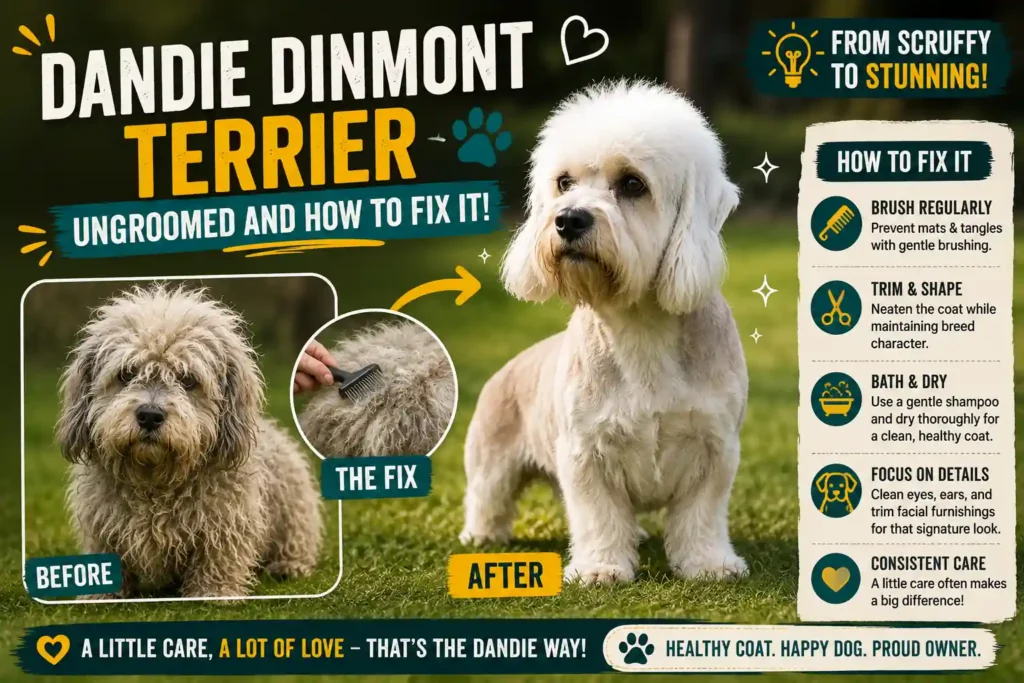
A Dandie Dinmont Terrier ungroomed for several weeks looks very different from a well-kept one. The breed’s soft top-knot loses its shape, and the thick double coat starts to form tight knots close to the skin. This usually happens after 8 weeks or more without brushing or trimming.
A Dandie Dinmont Terrier ungroomed for too long can also feel pain because the mats pull on the skin and make it hard to move freely. This guide explains what happens to the coat over time, the signs you should watch for, and five safe steps to fix the problem.
What Does an Ungroomed Dandie Dinmont Terrier Look Like?
The first thing you notice is the top-knot. This breed’s silky, rounded head crest is its most distinctive feature. Without regular trimming and brushing, it flattens, splits, and begins to merge with the fur on the ears and face. The body coat, a mix of crisp topcoat and soft undercoat, starts to look uneven and dull within four to six weeks of no maintenance.
The legs and underbelly tend to mat first because they collect dirt and moisture more easily. The tail also loses its neat shape. Overall, the dog starts to look shapeless, losing the clean lines that define the breed.
The table below summarizes key Dandie Dinmont Terrier breed facts that directly affect grooming needs.
| Characteristic | Details |
| Origin | Scottish Borders, UK |
| Size | Small, 8 to 11 inches tall |
| Weight | 18–24 lbs |
| Coat Type | Double coat; crisp topcoat, soft undercoat |
| Coat Colors | Pepper, mustard |
| Lifespan | 12–15 years |
| Grooming Frequency | Every 8–12 weeks (professional) |

Why a Dandie Dinmont Terrier Becomes Ungroomed
It usually comes down to time, cost, or simply not knowing how quickly this breed’s coat changes. Dandie Dinmonts are rare; the Kennel Club (UK) lists them as a Vulnerable Native Breed, with fewer than 300 puppies registered per year. That rarity means some owners are unprepared for the coat’s actual demands.
New owners sometimes assume the coat is low-maintenance because the dog is small. That assumption is mistaken. The double coat grows continuously and requires hand-stripping (for show dogs) or clipping (for pets), plus regular brushing to stay manageable.
Everything You Should Know About Dandie Puppies. Read more in Is a Dandie Dinmont Terrier Right for You? Complete Breed Guide & Owner Insights.
How the Coat Changes Without Regular Grooming
The process happens in stages. In the first few weeks, the coat just looks a little fluffy and less defined. After six to eight weeks, real problems begin. Dead undercoat hair clumps with the topcoat, forming mats that tighten over time. By the three-month mark, some dogs develop what groomers call “pelting”, where the entire coat fuses into a solid mass against the skin.
The table below shows how the coat typically progresses without grooming attention.
| Time Without Grooming | Coat Condition | Risk Level |
| 0–4 weeks | Slightly fluffy, minor tangles | Low |
| 4–8 weeks | Noticeable mats, dull top-knot | Moderate |
| 8–12 weeks | Heavy matting, skin irritation likely | High |
| 12+ weeks | Pelting, possible infection | Very High |
How Long Before a Dandie Dinmont Terrier Coat Becomes Seriously Matted?
Most Dandie Dinmont Terriers begin showing moderate to severe matting between 8 and 12 weeks without brushing or grooming. The undercoat sheds but remains trapped, binding with the outer layer. High-friction areas like the armpits, behind the ears, and the groin are usually the first to pelt.
Common Coat Problems You May Notice
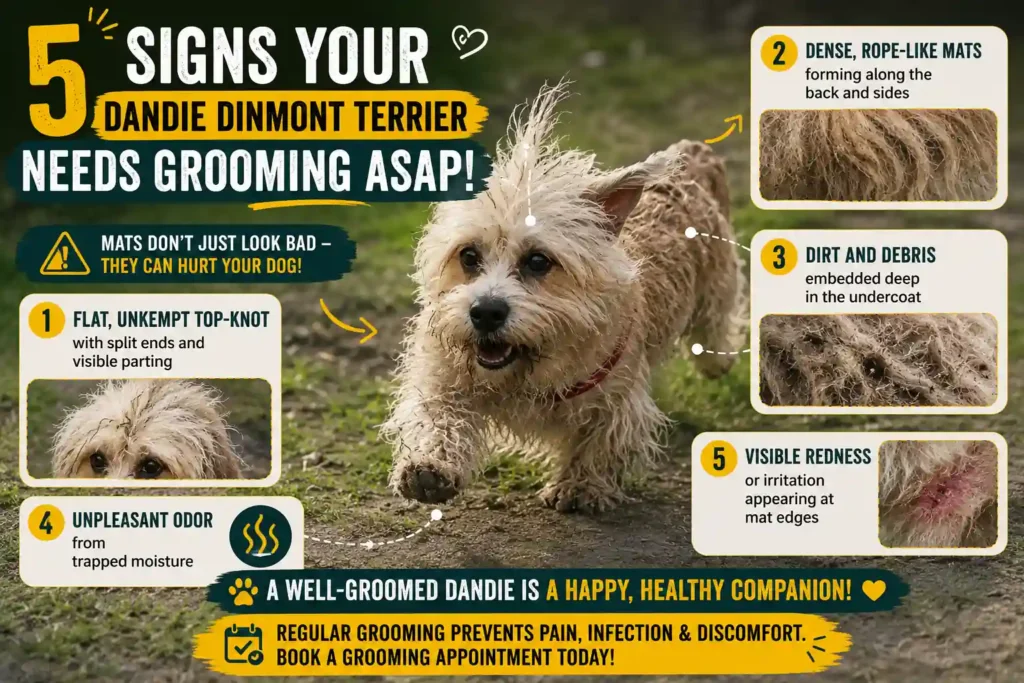
- Flat, unkempt top-knot with split ends and visible parting
- Dense, rope-like mats forming along the back and sides
- Dirt and debris embedded deep in the undercoat
- Unpleasant odor from trapped moisture
- Visible redness or irritation appearing at mat edges
Skin Issues Linked to Poor Grooming
Matting does more than look bad. When a mat presses against the skin for weeks, it blocks airflow and traps moisture. That damp environment becomes a breeding ground for bacteria and fungi. The American Veterinary Medical Association (AVMA) notes that skin fold and coat-related dermatitis can escalate quickly in dogs with dense double coats if hygiene is neglected.
Hot spots, also called acute moist dermatitis, are particularly common under tight mats. These are painful, weeping skin lesions that can develop within 24 to 48 hours. They require veterinary treatment in moderate to severe cases.
Does an Ungroomed Coat Affect Comfort?
Yes, and significantly. Tight mats physically pull on the skin with every movement. Dogs may start to walk differently, avoid being touched in certain areas, or scratch and bite at their coat more than usual. In cold weather, a pelted coat also loses its insulating properties because the trapped undercoat no longer holds warm air.
How to Safely Groom an Overgrown Dandie Dinmont Terrier
Never force a brush through a tightly matted coat. That causes pain and can create skin injuries. Instead, work slowly and in sections:
- Step 1: Assess the coat carefully. Feel through it gently to identify how widespread the matting is before starting.
- Step 2: Apply a detangling spray or a small amount of coat conditioner to each mat and let it sit for two to three minutes.
- Step 3: Use a dematting comb or mat splitter to carefully separate each mat from the outside edges inward.
- Step 4: Follow up with a slicker brush in short strokes, always brushing outward from the skin.
- Step 5: Clip out any mats too dense to detangle safely, using blunt-tipped scissors held flat against the skin.
What Is the Safest Way to Remove Mats From a Dandie Dinmont Terrier at Home?
The safest home approach for mild to moderate mats is to apply a detangling conditioner, wait a few minutes, then work through the mat with a wide-tooth dematting comb, moving from the outer edges inward. Avoid pulling from the root. If the mat is larger than a golf ball or sits flat against the skin, consult a professional groomer.
Brushing Tips for a Neglected Coat
A slicker brush and a medium-tooth metal comb are the two main tools for this breed. Brush in layers, lift the topcoat, work through the undercoat first, then move upward. Pay extra attention to the neck, armpits, and behind the ears. A short 10-to-15-minute session three times a week prevents most matting from forming.
How to Groom a Dandie Dinmont Terrier
Brush 2-3 times a week, hand-strip or clip every 8-12 weeks, trim eyes and paws regularly, and check ears weekly.
When a Professional Groomer Is the Better Choice
If the dog flinches or cries when you try to brush, or if you can see redness beneath the mats, stop and book a professional. A skilled groomer can assess whether clipping the coat down is the kindest option. Sometimes a full clip, called a “puppy cut”, is the most humane starting point for a severely neglected coat.
The table below compares DIY and professional grooming to help you decide which approach suits your situation.
| Factor | DIY Grooming | Professional Grooming |
| Cost | $30–$60 (tools, one-time) | $60–$120 per session |
| Time | 1–2 hours | 2–4 hours with wait time |
| Skill needed | Moderate | None (on your part) |
| Best for | Maintenance coats | Neglected or matted coats |

How Often Should a Dandie Dinmont Terrier Be Groomed?
Every 8 to 12 weeks is the standard recommendation for a professional session on a pet-coat Dandie Dinmont. Show-coated dogs that are hand-stripped need more frequent attention, typically every 6 to 8 weeks. At home, light brushing three times a week keeps tangles from forming between appointments.
Dandie Dinmont Terrier Ungroomed: How Quickly Do Problems Develop?
Problems develop faster than most owners expect. Noticeable matting typically appears within 4 to 6 weeks for dogs that skip brushing entirely. By 8 weeks, skin issues become a real possibility. By 12 weeks, many dogs require professional intervention rather than simple home grooming.
Avoid Coat Problems with the Perfect Grooming Routine. Read more in Dandie Dinmont Terrier grooming mistakes are costing you hundreds.
Simple Coat Care to Prevent Heavy Matting
- Brush at least 3 times per week using a slicker brush and metal comb
- Book professional grooming every 8 to 12 weeks without skipping
- Dry the coat fully after baths or rain; never let it air-dry while matted
- Trim around the feet, ears, and face monthly to reduce debris buildup
- Use a leave-in conditioner spray weekly to keep the coat manageable and soft
Do Dandie Dinmont terriers shed?
No, Dandie Dinmont Terriers do not shed much. They are considered a low-shedding breed, though they still need regular grooming to prevent matting.
Common Grooming Mistakes to Avoid
Bathing a matted coat is one of the most common mistakes. Water causes mats to tighten and shrink, making them much harder to remove afterward. Always detangle before bathing.
Using a bristle brush instead of a slicker brush is another frequent error. Bristle brushes glide over the top layer without reaching the undercoat where most of the tangling happens. The British Small Animal Veterinary Association (BSAVA) recommends using breed-appropriate grooming tools to minimize skin trauma during coat maintenance.
Finally, many owners brush too aggressively when they do find a mat. Short, gentle strokes with the correct tool are always more effective, and far less stressful for the dog.
Grooming Is a Welfare Issue, Not Just Looks
An ungroomed Dandie Dinmont Terrier is not just a cosmetic issue; it is a welfare issue. This is a breed with a coat that demands consistent attention. The good news is that with a simple weekly routine and regular professional appointments, their coat stays healthy, comfortable, and true to the breed’s elegant character. Start a routine now, and the results will speak for themselves.
Frequently Asked Questions
What does a Dandie Dinmont Terrier look like when ungroomed?
An ungroomed Dandie Dinmont Terrier shows a flat, unkempt top-knot, a dull and tangled body coat, and possible skin irritation beneath dense mats. The breed’s distinctive silhouette disappears within 6 to 8 weeks without regular maintenance.
How often should a Dandie Dinmont Terrier be groomed?
Pet owners should plan for professional grooming every 8 to 12 weeks, plus at-home brushing three times per week. Show dogs with hand-stripped coats need grooming every 6 to 8 weeks.
Can I groom a matted Dandie Dinmont Terrier at home?
Mild mats can often be handled at home using a detangling spray and a dematting comb. Severe or skin-level matting should be handled by a professional groomer to avoid injuring the dog.
What are the skin risks of leaving a Dandie Dinmont Terrier ungroomed?
Prolonged neglect can cause hot spots, bacterial infections, and fungal growth. Tight mats cut off airflow and trap moisture, creating serious conditions for skin disease.
How much does grooming a Dandie Dinmont Terrier cost in the US?
Professional grooming typically costs between $60 and $120 per session in the United States, depending on coat condition and the groomer’s location.