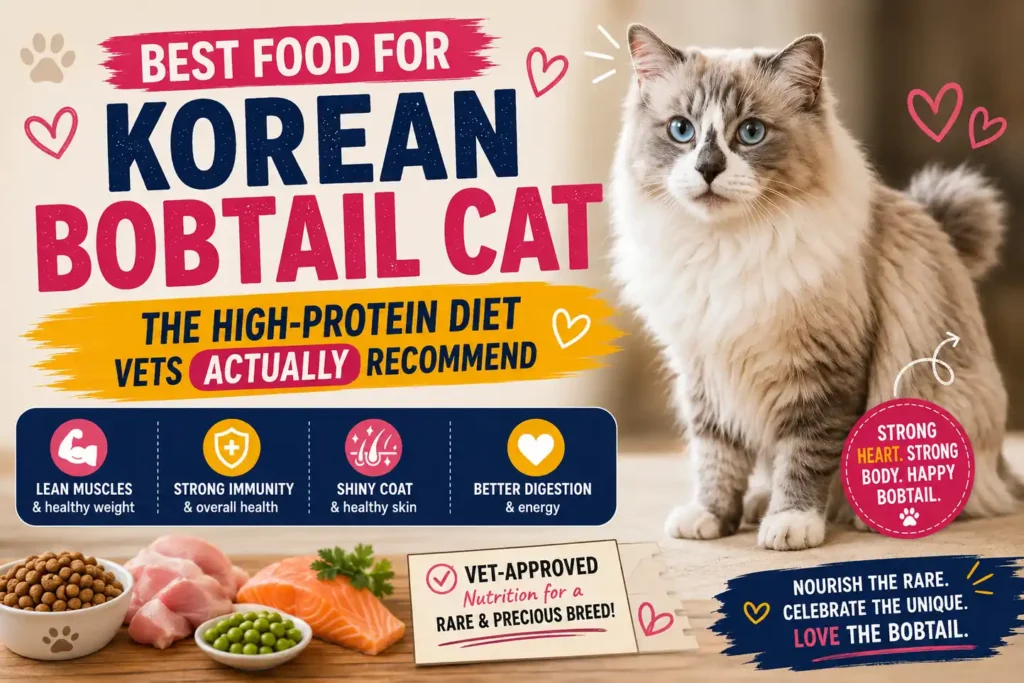
The best food for Korean Bobtail cat pets is high in real animal protein, since this breed is muscular, playful, and burns energy fast every day. A good diet should give at least 26% protein, some healthy fat, and very few carbs or fillers, numbers that match guidelines from the Association of American Feed Control Officials.
Fillers and by-products can cause weight gain, dull fur, and stomach problems over time. This is why picking the best food for Korean Bobtail cats matters so much for their long-term health. Wet food with real meat as the first ingredient is often a smart choice, since it also helps keep your cat hydrated. With the right food, your Korean Bobtail can stay lean, active, and healthy for many years.
What Is the Best Food for a Korean Bobtail Cat?
There’s no single product that works for every Korean Bobtail, but there is a formula. Look for foods where a named meat, like chicken, turkey, or fish, sits at the top of the ingredient list. Avoid anything padded out with corn, wheat, or unnamed “meat meal.”
A good rule of thumb is checking for an AAFCO statement confirming the food is “complete and balanced” for your cat’s life stage. Wet, dry, or a mix of both can work, as long as the nutrient profile fits an active, medium-sized breed. Price isn’t everything, but rock-bottom kibble often skips the animal protein this breed actually needs.
See Why the Korean Bobtail Deserves Your Attention. Read more in Korean Bobtail Cat That Looks Rare but Isn’t Officially Recognized.
Quick Answer: Best Food for Korean Bobtail Cat in One Sentence
The best food for Korean Bobtail cat health combines a high-quality wet food with a smaller portion of dry kibble, both listing real meat first and meeting AAFCO’s complete-and-balanced standard. This mix gives hydration, dental benefits, and steady protein in one plan.
Nutritional Needs of a Korean Bobtail Cat
Cats are obligate carnivores, and the Korean Bobtail is no exception, so its diet has to lean heavily on animal-based protein rather than plant filler. Taurine, an amino acid found almost exclusively in meat, is essential for heart and eye health, and cats can’t make enough of it on their own.
Arginine matters too, since a single meal without it can cause a dangerous ammonia buildup. Fat should sit around 15–20% for an active adult, giving this energetic breed the calories it needs without tipping into obesity. Moisture content matters as well, since Korean Bobtails, like most cats, don’t naturally drink much water. Diets that follow World Small Animal Veterinary Association nutrition guidelines, with protein a little richer than the bare AAFCO minimum, tend to serve this active breed best.
Wet vs. Dry Food for Korean Bobtail Cats
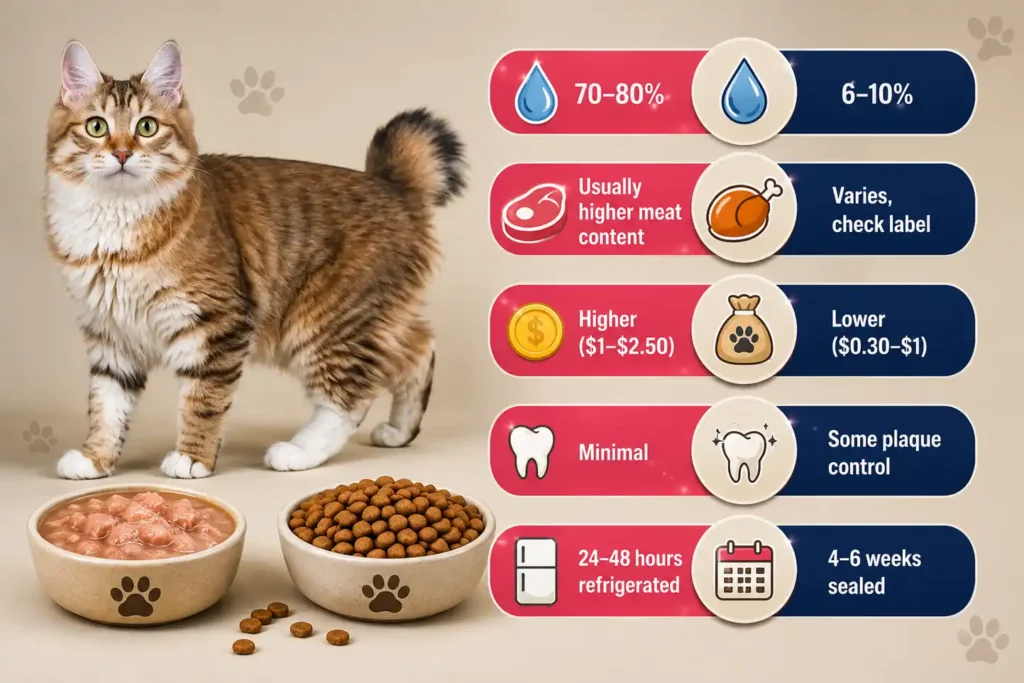
Neither wet nor dry food is automatically “better,” but each brings different strengths to the bowl. Wet food is roughly 70–80% moisture, which helps support kidney and urinary health over a lifetime. Dry food is more convenient, cheaper per serving, and can help scrape plaque off teeth as your cat chews.
Many owners split the difference, feeding wet food for hydration and a small amount of dry food for grazing between meals. Whichever route you pick, check that both formats meet AAFCO’s complete-and-balanced standard. The table below breaks down the practical differences side by side.
Here’s a side-by-side look at how wet and dry food compare for this breed.
| Factor | Wet Food | Dry Food |
| Moisture content | 70–80% | 6–10% |
| Protein source | Usually higher meat content | Varies, check label |
| Cost per day | Higher ($1–$2.50) | Lower ($0.30–$1) |
| Dental benefit | Minimal | Some plaque control |
| Shelf life after opening | 24–48 hours refrigerated | 4–6 weeks sealed |
What Is the Best Wet Food for a Korean Bobtail Cat?
The best wet food for a Korean Bobtail cat lists a specific meat, such as chicken or salmon, as the first ingredient and carries an AAFCO complete-and-balanced statement. Pate-style textures tend to suit this breed’s steady, unfussy appetite better than gravy-heavy chunks.
Best Protein Sources for Korean Bobtail Cats
Not all proteins are equal when it comes to feline nutrition, and quality matters more than the marketing on the bag. Chicken, turkey, and rabbit are lean, easy to digest, and rarely trigger sensitivities. Fish, like salmon or tuna, can be fed occasionally but shouldn’t be the sole protein, since it’s linked to thiamine deficiency and mercury buildup over time.
Organ meats such as liver and heart pack in taurine and other nutrients that muscle meat alone doesn’t fully cover. Eggs, cooked thoroughly, offer one of the most complete amino acid profiles available.
Best Kitten Food for Korean Bobtail Cats
Kittens grow fast, and a Korean Bobtail kitten needs noticeably more protein and fat than an adult cat to support that growth. AAFCO sets the minimum protein for growth and reproduction at roughly 30% on a dry-matter basis, higher than the adult maintenance level. Look for kitten-specific formulas that include DHA for brain and vision development, since this fatty acid isn’t always guaranteed in adult recipes.
Smaller kibble size also matters, since a Korean Bobtail kitten’s jaw and teeth are still developing. Feeding four small meals a day usually works better than two large ones at this stage. Most kittens can transition to adult food gradually around 12 months old.
Best Food for Adult Cats
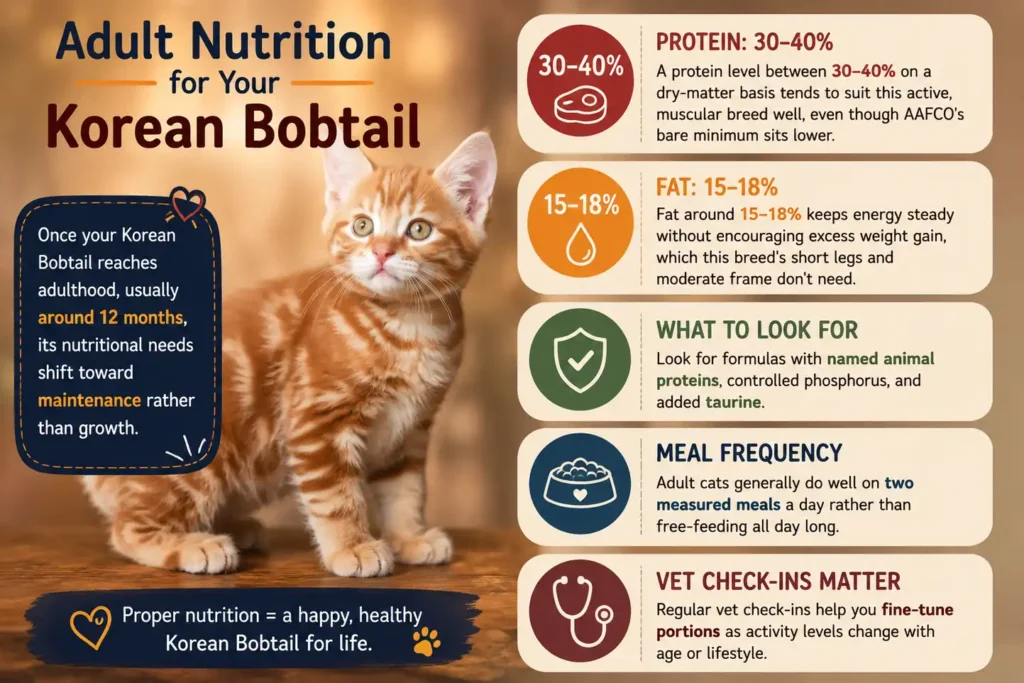
Once your Korean Bobtail reaches adulthood, usually around 12 months, its nutritional needs shift toward maintenance rather than growth. A protein level between 30–40% on a dry-matter basis tends to suit this active, muscular breed well, even though AAFCO’s bare minimum sits lower. Fat around 15–18% keeps energy steady without encouraging excess weight gain, which this breed’s short legs and moderate frame don’t need.
Look for formulas with named animal proteins, controlled phosphorus, and added taurine. Adult cats generally do well on two measured meals a day rather than free-feeding all day long. Regular vet check-ins help you fine-tune portions as activity levels change with age or lifestyle.
Best Food for Senior Korean Bobtail Cats
Korean Bobtails can live well into their teens, and senior cats, generally those over 10 or 11, often need gentler nutrition. Slightly reduced calories help offset a slower metabolism, while maintained or even boosted protein helps guard against muscle loss that comes naturally with age. Added joint support, like glucosamine, becomes more valuable as older cats slow down.
Softer wet food textures can help if dental issues develop, which is common in aging cats. Kidney-friendly formulas with moderate, high-quality protein and controlled phosphorus are worth discussing with your vet if bloodwork shows early kidney changes. Routine senior wellness exams make it much easier to catch nutrition-related issues early.
Homemade Food for Korean Bobtail Cats
Homemade diets can work, but they carry real risk if they aren’t properly balanced by a professional. Cats need precise levels of taurine, calcium, and other nutrients that are easy to miss without lab-tested recipes. The American Association of Feline Practitioners generally recommends consulting a board-certified veterinary nutritionist before switching to a homemade plan.
Raw or lightly cooked meat, organ meat, and a vet-approved supplement blend form the backbone of most safe recipes. Never guess at ratios, since deficiencies can take months to show obvious symptoms.
Foods Korean Bobtail Cats Should Avoid
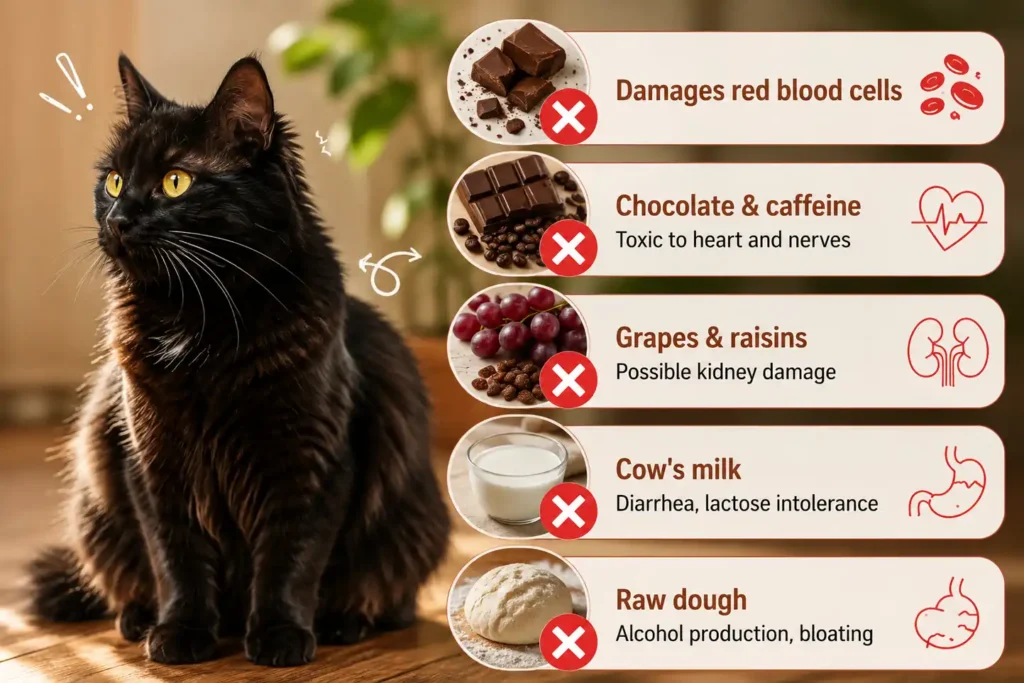
Some everyday human foods are genuinely dangerous for cats, and a Korean Bobtail is no more resistant to them than any other breed. Onions, garlic, and chives can damage red blood cells even in small amounts. Chocolate, caffeine, and alcohol are toxic to a cat’s nervous system and heart.
Grapes and raisins are linked to kidney injury in some pets, even though the exact mechanism isn’t fully understood. Cow’s milk often causes diarrhea, since most adult cats are lactose intolerant. Below is a quick-reference table of foods to keep well out of reach.
Here’s a fast reference for foods that never belong in your cat’s bowl.
| Food | Risk |
| Onions & garlic | Damages red blood cells |
| Chocolate & caffeine | Toxic to heart and nerves |
| Grapes & raisins | Possible kidney damage |
| Cow’s milk | Diarrhea, lactose intolerance |
| Raw dough | Alcohol production, bloating |
How Much Should You Feed a Korean Bobtail Cat?
Portion size depends on weight, age, and activity level, so there’s no single number that fits every cat. As a starting point, most adult cats need roughly 20 calories per pound of body weight daily, adjusted up or down based on body condition.
A typical 8-pound adult Korean Bobtail might need around 160–200 calories a day, split across two or three meals. Kittens need more calories per pound than adults because they’re actively growing. The chart below gives rough daily targets you can adjust with your vet’s input.
The table below offers a starting point for daily feeding amounts by life stage.
| Life Stage | Approx. Weight | Daily Calories |
| Kitten (3–6 months) | 3–6 lbs | 180–250 |
| Kitten (6–12 months) | 6–8 lbs | 200–280 |
| Adult | 7–10 lbs | 160–220 |
| Senior (10+ years) | 7–9 lbs | 140–190 |
How Much Should a Korean Bobtail Cat Eat Per Day?
Most adult Korean Bobtail cats do well on 160–220 calories a day, split into two or three measured meals. Exact amounts depend on weight, activity level, and whether the food is wet, dry, or a mix of both.
Feeding Schedule for a Korean Bobtail Cat
Consistency matters more than the exact clock time you choose. Kittens under six months generally need three to four small meals daily to match their fast metabolism. Adult cats typically do best on two meals, spaced roughly 8–12 hours apart, which helps prevent the begging that comes with long gaps between food.
Free-feeding dry food all day sounds convenient, but it’s one of the easiest ways to end up with an overweight cat. Puzzle feeders can slow down fast eaters and add a bit of mental stimulation to mealtime. Sticking to a predictable routine also makes it easier to notice if your cat’s appetite suddenly changes.
Signs Your Korean Bobtail Cat Is Getting the Right Diet
A well-fed Korean Bobtail usually shows it in small, everyday ways rather than dramatic changes. Look for a glossy coat, steady energy, and a body shape where you can feel, but not see, the ribs. Firm, well-formed stools and consistent litter box habits are also good signs of a diet that’s agreeing with your cat.
Bright eyes and healthy gums point to solid nutrition too, since deficiencies often show up here first. On the flip side, a dull coat or unexplained weight changes are worth mentioning to your vet.
Common Feeding Mistakes to Avoid
Even attentive owners slip into a few predictable habits that work against good nutrition. Free-feeding without measuring portions is probably the most common mistake, and it adds up to weight gain over months. Switching foods too quickly, without a 7–10 day transition period, often causes stomach upset.
Relying on treats for more than 10% of daily calories can crowd out balanced nutrition from the actual meal. Skipping regular weigh-ins means creeping weight gain can go unnoticed for a long time.
Making the Right Choice for Your Korean Bobtail’s Diet
Choosing the best food for your Korean Bobtail cat’s needs doesn’t have to be complicated once you know what to look for on the label. Prioritize real animal protein, watch portion sizes, and adjust as your cat moves from kitten to adult to senior. A little consistency in feeding schedule and regular vet check-ins will do more for long-term health than chasing the trendiest bag on the shelf. This breed’s energy and personality shine brightest when its diet actually matches its needs.
Frequently Asked Questions About the Best Food for Korean Bobtail Cat
What is the best food for a Korean Bobtail cat?
A mix of high-quality wet food and dry kibble, both listing real meat first and meeting AAFCO’s complete-and-balanced standard, generally works best for this active breed.
How much protein does a Korean Bobtail cat need?
Adult cats need a minimum of 26% protein on a dry-matter basis, though many Korean Bobtails do better closer to 30–40%, given their active, muscular build.
Can Korean Bobtail cats eat wet food only?
Yes, a complete-and-balanced wet food alone can meet all of a cat’s nutritional needs, and the added moisture may benefit kidney and urinary health.
How many times a day should you feed a Korean Bobtail cat?
Most adults do well with two to three measured meals daily, while kittens under six months typically need three to four smaller meals.
Is homemade food safe for Korean Bobtail cats?
It can be, but only when a board-certified veterinary nutritionist helps balance the recipe, since deficiencies in nutrients like taurine can be hard to spot early.
What foods should Korean Bobtail cats never eat?
Onions, garlic, chocolate, caffeine, alcohol, grapes, raisins, and raw dough are all dangerous and should be kept completely out of reach.