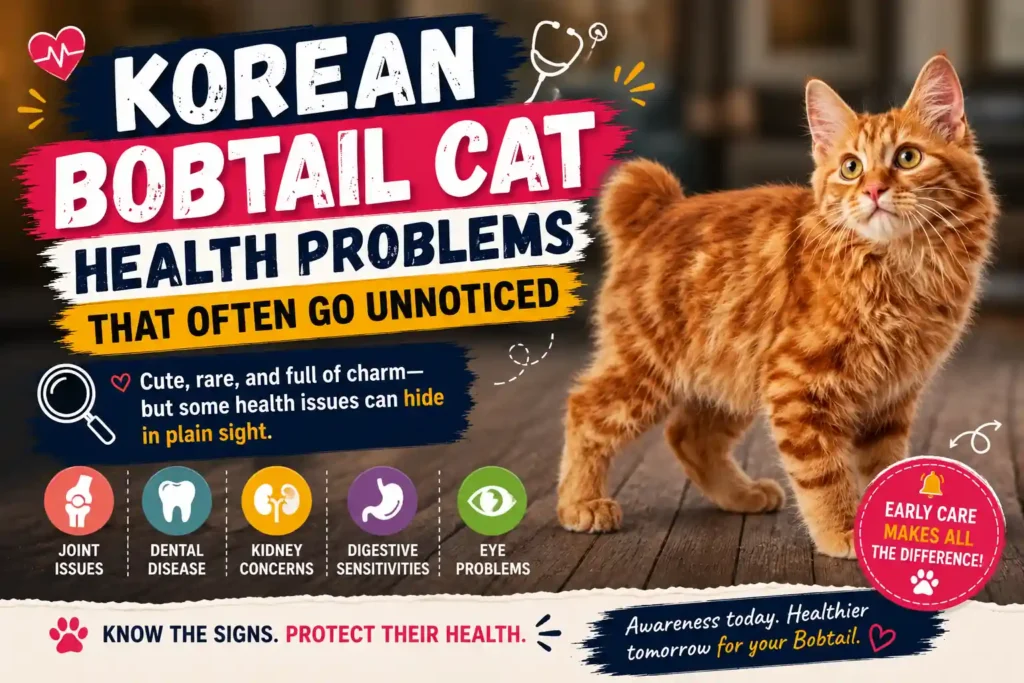
Korean Bobtail cat health problems mainly include joint pain, hip issues, dental disease, and urinary tract infections, and these are the real problems that show up most often in vet reports about this breed. The short, curved tail bone of the Korean Bobtail can sometimes affect the spine and hips, which leads to stiffness or pain in older cats. Dental disease is also common, because plaque builds up fast on their teeth if brushing is skipped.
Urinary tract infections happen when the cat does not drink enough water or eats poor-quality food, and this can turn into a serious problem if it is ignored for too long. Obesity is another real risk, since this breed loves food and can gain weight quickly without daily exercise. Knowing these Korean Bobtail cat health problems early helps owners catch small signs before they become big, expensive vet visits.
Common Korean Bobtail Cat Health Problems
Most breed guides agree on one thing: the Korean Bobtail is a fairly robust cat compared to many pedigreed breeds. It wasn’t shaped by decades of breeding for extreme looks, so it dodged many structural problems that plague flat-faced or ultra-long-bodied cats. Still, no breed gets a free pass.
Owners commonly report mild joint stiffness in older cats, dental tartar buildup, occasional urinary flare-ups, and weight gain after spaying or neutering. None of these are dramatic alone, but together they explain most vet visits for this breed. Knowing the pattern ahead of time helps you spot changes faster.
Get to Know One of Asia’s Most Fascinating Cat Breeds. Read more in Korean Bobtail Cat That Looks Rare but Isn’t Officially Recognized.
Genetic Health Issues in Korean Bobtail Cats
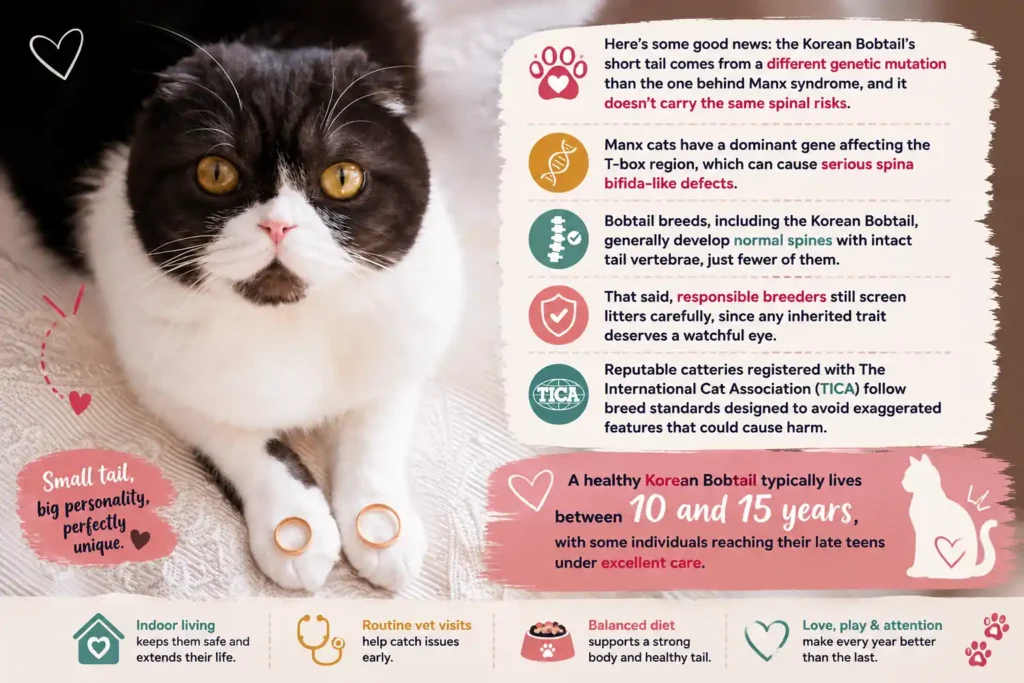
Here’s some good news: the Korean Bobtail’s short tail comes from a different genetic mutation than the one behind Manx syndrome, and it doesn’t carry the same spinal risks. Manx cats have a dominant gene affecting the T-box region, which can cause serious spina bifida-like defects. Bobtail breeds, including the Korean Bobtail, generally develop normal spines with intact tail vertebrae, just fewer of them.
That said, responsible breeders still screen litters carefully, since any inherited trait deserves a watchful eye. Reputable catteries registered with The International Cat Association (TICA) follow breed standards designed to avoid exaggerated features that could cause harm.
What Is the Average Lifespan of a Korean Bobtail Cat?
A healthy Korean Bobtail typically lives between 10 and 15 years, with some individuals reaching their late teens under excellent care. Indoor living, routine vet visits, and a balanced diet are the biggest factors that push a cat toward the longer end of that range.
Joint and Bone Problems
Because the Korean Bobtail has a slim, muscular frame with fairly short legs, joint wear can show up as cats age, particularly in the hips and lower spine. Mild hip laxity or early arthritis isn’t unusual in cats past age eight, though it’s rarely severe in this breed. Jumping off high furniture repeatedly can accelerate wear over time. Keeping a cat at a lean weight is the single best way to protect joints long-term. Ramps or steps near favorite perches reduce repetitive strain. Watch for stiffness after naps or reluctance to jump as early clues.
Dental Problems
Dental disease is one of the most underrated Korean Bobtail cat health problems, mostly because it develops slowly and quietly behind closed lips. Plaque hardens into tartar within days, and left alone, it leads to gum inflammation, tooth root infection, and eventually tooth loss.
Bad breath is often the first sign owners notice, though damage has usually already started by then. Daily brushing with cat-safe toothpaste is the gold standard, but even a few times a week helps. Dental treats and water additives offer modest support but shouldn’t replace brushing. Annual vet dental checks catch problems while they’re still cheap to treat.
Eye Health Issues
The Korean Bobtail’s large, round eyes are a signature feature, and thankfully, breed-specific eye disease isn’t common. That said, any cat can develop conjunctivitis, corneal scratches, or mild age-related cloudiness in the lens. Watery discharge, squinting, or redness lasting more than a day or two deserves a vet look.
Upper respiratory infections in kittens sometimes bring eye symptoms along for the ride. Keeping the home free of irritants like strong cleaning fumes also helps protect sensitive eyes. Routine wellness exams usually catch subtle changes before an owner would notice them at home.
Ear Infections
Ear infections aren’t a defining trait of this breed, but they do happen, especially in cats that spend time outdoors or live in humid climates. Signs include head shaking, scratching at the ears, dark waxy discharge, or an unpleasant smell. Left untreated, infections can spread deeper and become harder to clear. Routine ear checks during grooming make it easy to catch buildup before it worsens. Never use cotton swabs deep in the ear canal, since that can push debris further in or cause injury. A vet-approved ear cleaner used weekly is usually enough for most healthy cats.
Skin and Coat Problems
Korean Bobtails come in both shorthair and longhair varieties, and both generally have low-maintenance coats without major breed-specific skin conditions. Flea allergy dermatitis, dry winter skin, and occasional hot spots are the most common complaints, and none are unique to this breed.
Regular brushing distributes natural oils and cuts down on shedding, especially for the longhair variety. Diet plays a bigger role in coat health than most owners realize, since low-quality food leaves fur dull and skin flaky. A cat that’s suddenly over-grooming or losing patches of fur should be checked for allergies, stress, or parasites.
Digestive Problems
Occasional vomiting or soft stool usually points to something simple, like a sudden food switch, a hairball, or eating too fast, rather than a Korean Bobtail-specific issue. Chronic diarrhea, repeated vomiting, or noticeable weight loss are red flags that warrant testing for parasites, food sensitivities, or inflammatory bowel disease. Introducing new foods gradually over a week or two reduces stomach upset significantly.
Fresh water and a consistent feeding schedule support steady digestion. Slow-feeder bowls help cats that gulp their food and then bring it back up minutes later. Symptoms lasting more than 48 hours shouldn’t be brushed off as “just a phase.”
Urinary Tract Issues
Urinary tract problems are a genuine concern across most cat breeds, and the Korean Bobtail is no exception, with feline lower urinary tract disease (FLUTD) affecting a meaningful share of indoor cats. Straining to urinate, frequent litter box trips with little output, or blood-tinged urine are emergency signs, especially in male cats, where a blocked urethra can become life-threatening within hours. Adequate water intake is the cheapest, most effective prevention tool available. Wet food naturally boosts hydration compared to dry kibble alone. Stress reduction matters too, since anxiety is a known trigger for flare-ups.
How Can I Tell If My Cat Has a Urinary Blockage?
A blocked cat will often visit the litter box repeatedly, strain without producing urine, cry out in pain, or lick at the genital area obsessively. This is a true emergency requiring same-day veterinary care, since male cats especially can develop kidney failure within 24 to 48 hours if left untreated.
Obesity and Weight-Related Problems
Obesity ranks among the most preventable Korean Bobtail cat health problems, yet it’s also one of the most common, particularly after spaying or neutering slows a cat’s metabolism. Extra weight strains joints, raises diabetes risk, and shortens lifespan overall. The table below gives a rough sense of healthy weight ranges by life stage, though individual cats vary based on frame size.
| Life Stage | Typical Weight Range | Feeding Note |
| Kitten (3–6 months) | 3–6 lbs | Free-feed kitten food |
| Adult (1–7 years) | 7–11 lbs | Measured portions, twice daily |
| Senior (8+ years) | 6–10 lbs | Monitor for weight loss, not just gain |
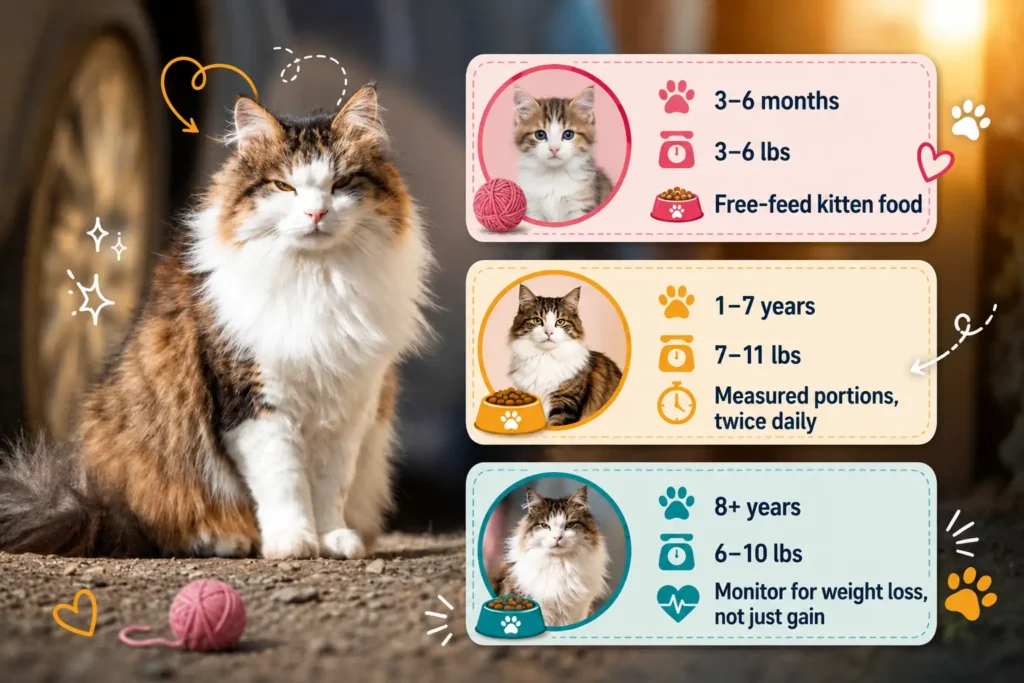
Measuring food rather than guessing, along with daily play sessions, keeps most Korean Bobtails at a healthy weight without much fuss.
Parasites and Infections
Fleas, ticks, ear mites, and intestinal worms remain common threats regardless of breed, and outdoor access raises exposure risk. The table below breaks down the parasites owners run into most often and how to keep them under control.
| Parasite | Common Signs | Prevention |
| Fleas | Scratching, small black specks in fur | Monthly topical or oral preventive |
| Ear mites | Head shaking, dark ear debris | Vet-prescribed ear treatment |
| Roundworms | Bloated belly, visible worms in stool | Routine deworming, fecal tests |
| Ticks | Small attached bumps on skin | Tick prevention products, outdoor checks |
Year-round parasite prevention, recommended by most veterinary organizations, remains far cheaper than treating an infestation later.
Warning Signs of Health Problems
Cats are notorious for hiding pain and illness until symptoms are fairly advanced, which makes owner awareness genuinely important. Recognizing the early signs of Korean Bobtail cat health problems can mean the difference between a quick fix and an emergency vet bill. Watch for changes in appetite, energy, litter box habits, or grooming behavior, since these often shift before anything looks visibly wrong. A cat hiding more than usual, breathing rapidly at rest, or refusing food for over 24 hours needs prompt attention.
Common Signs of Korean Bobtail Cat Health Problems
The most reliable warning signs include sudden weight loss or gain, lethargy lasting more than a day, changes in litter box frequency, bad breath, excessive scratching, and vomiting more than once or twice a week. Any combination of these, especially appearing together, justifies a same-week veterinary appointment rather than a wait-and-see approach.
How to Prevent Korean Bobtail Cat Health Problems
Prevention beats treatment nearly every time, and most strategies here are refreshingly simple and inexpensive. A high-protein diet portioned to the cat’s activity level keeps weight and energy in check. Annual wellness exams, even for a cat that “seems fine,” catch subtle issues like early dental disease or rising kidney values on bloodwork. Fresh water, ideally from multiple bowls or a fountain, supports urinary and kidney health. Regular grooming sessions double as informal health checks, since you’ll notice lumps, skin changes, or ear issues while brushing.
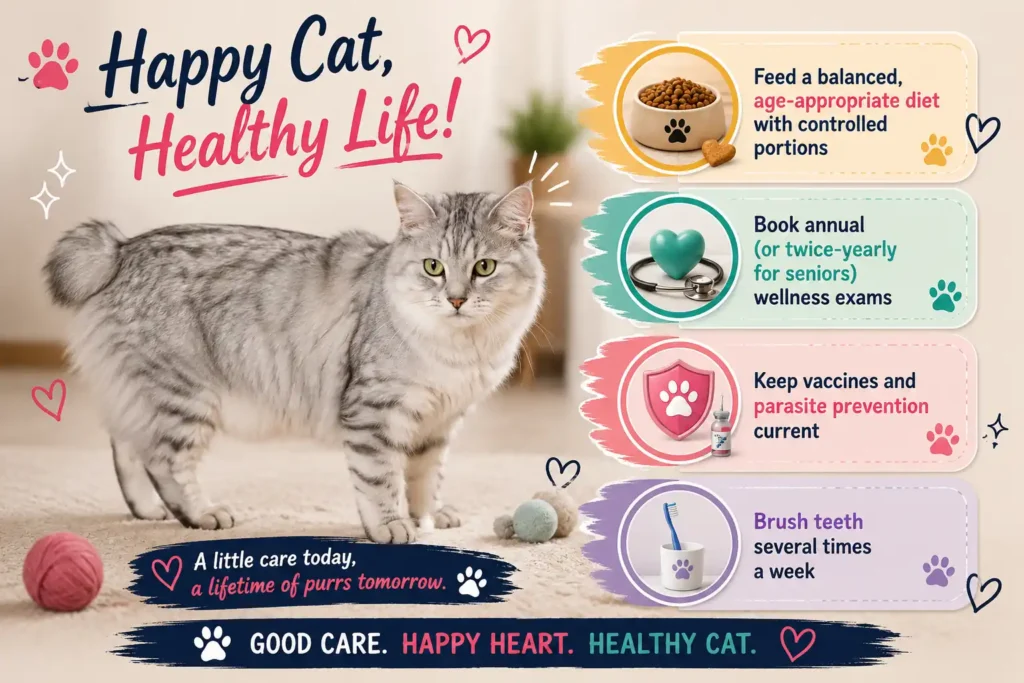
- Feed a balanced, age-appropriate diet with controlled portions
- Book annual (or twice-yearly for seniors) wellness exams
- Keep vaccines and parasite prevention current
- Brush teeth several times a week
When to Visit a Veterinarian
Some symptoms can wait for a routine appointment, while others need same-day care, and knowing the difference saves both money and stress. Straining to urinate, difficulty breathing, repeated vomiting, sudden collapse, or a swollen abdomen all count as emergencies. Less urgent but still worth a call within a few days include mild limping, slight appetite changes, or minor skin irritation. According to the American Association of Feline Practitioners, adult cats benefit from at least one full wellness exam per year, while seniors and cats with existing conditions often need two. When in doubt, a quick call to your vet’s office costs nothing.
FAQs About Korean Bobtail Cat Health Problems
Are Korean Bobtail cats generally healthy?
Yes. Most breed registries and veterinary references describe the Korean Bobtail as robust, without major inherited disorders, though routine care still matters.
What is the most common health issue in Korean Bobtail cats?
Dental disease and weight gain are the most frequently reported issues, both largely preventable with consistent home care.
Do Korean Bobtails have the same spinal risks as Manx cats?
No. Their tail mutation is genetically distinct from the Manx gene and isn’t linked to the same spinal defects.
How often should a Korean Bobtail see the vet?
Once a year for healthy adults, and twice a year for kittens, seniors, or cats with an ongoing condition, per guidance from the Cornell Feline Health Center.
Can diet prevent Korean Bobtail cat health problems?
Diet won’t prevent every issue, but a high-protein, portion-controlled diet lowers the risk of obesity, urinary problems, and diabetes over a lifetime.
What is the average lifespan of a Korean Bobtail?
Most live between 10 and 15 years, with excellent home care and preventive vet visits pushing some cats toward the higher end.
Is pet insurance worth it for a Korean Bobtail?
Since the breed is relatively healthy, premiums tend to be moderate, and insurance mainly helps offset accident or dental costs rather than chronic conditions.