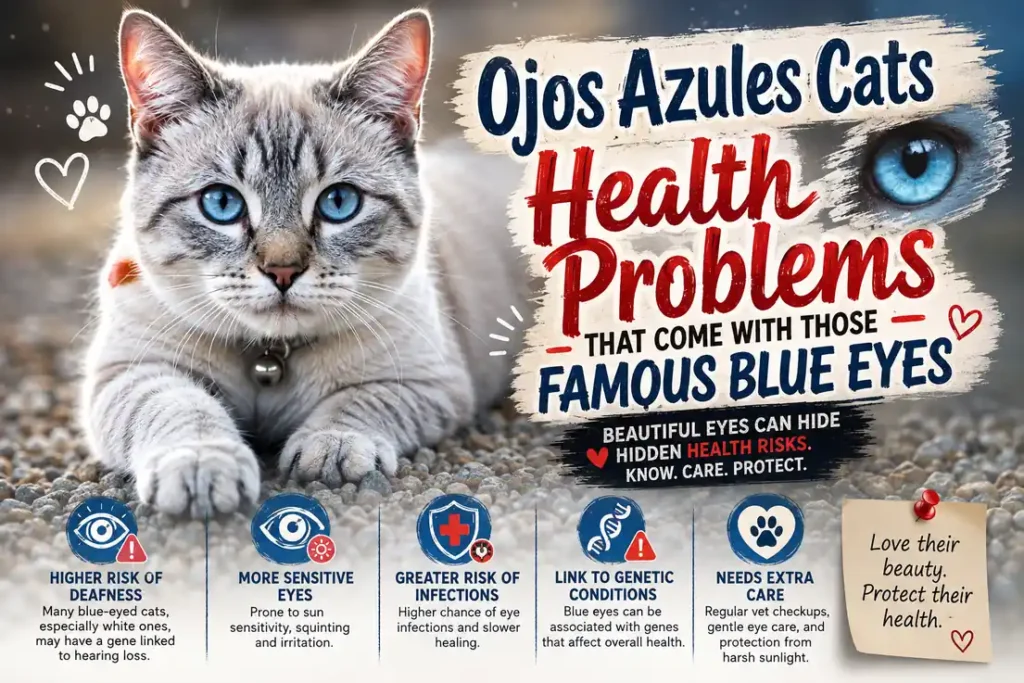
Ojos Azules cats’ health problems come from one dominant gene that also gives the breed its bright blue eyes. If a kitten gets two copies of this gene, one from each parent, it usually leads to serious skull defects, and the kitten often dies before or right after birth. This is why good breeders never mate two Ojos Azules cats together.
Instead, they always pair an Ojos Azules cat with a cat from a different breed to lower this risk. Because of this rule, litters are small and true Ojos Azules kittens are still hard to find. Anyone thinking about getting this cat should know that Ojos Azules cats’ health problems are not just bad luck. They are a direct result of the same gene that creates those stunning blue eyes.
Common Ojos Azules Cats Health Problems
Most Ojos Azules cats that are outcrossed with non-blue-eyed cats live pretty normal, healthy lives. However, the breed does carry a few recurring concerns that every owner should know about. These issues almost always trace back to the same genetic source, which makes them somewhat predictable once you know what to look for.
- Cranial deformities in kittens carrying two copies of the blue-eye gene
- A short, sometimes curled or kinked tail
- Higher-than-average stillbirth rates in certain breeding pairs
- Occasional internal organ irregularities in severely affected kittens
Because the population of this breed is so small, long-term health data is limited. Still, breeders and geneticists agree that the risks below are the ones worth watching most closely.
Quick Answer: What Are the Most Common Ojos Azules Cats Health Problems?
The most common Ojos Azules cats health problems are cranial deformities, tail abnormalities, and stillbirth, all tied to a homozygous version of the blue-eye gene. Cats with only one copy of the gene rarely show these issues.
Genetic Health Problems in Ojos Azules Cats
The heart of nearly every health concern in this breed comes down to genetics. The gene responsible for that vivid blue eye color is dominant, meaning only one copy is needed for a cat to have blue eyes. The trouble starts when two blue-eyed cats are bred together, giving kittens two copies of the same gene, known as a homozygous pairing.
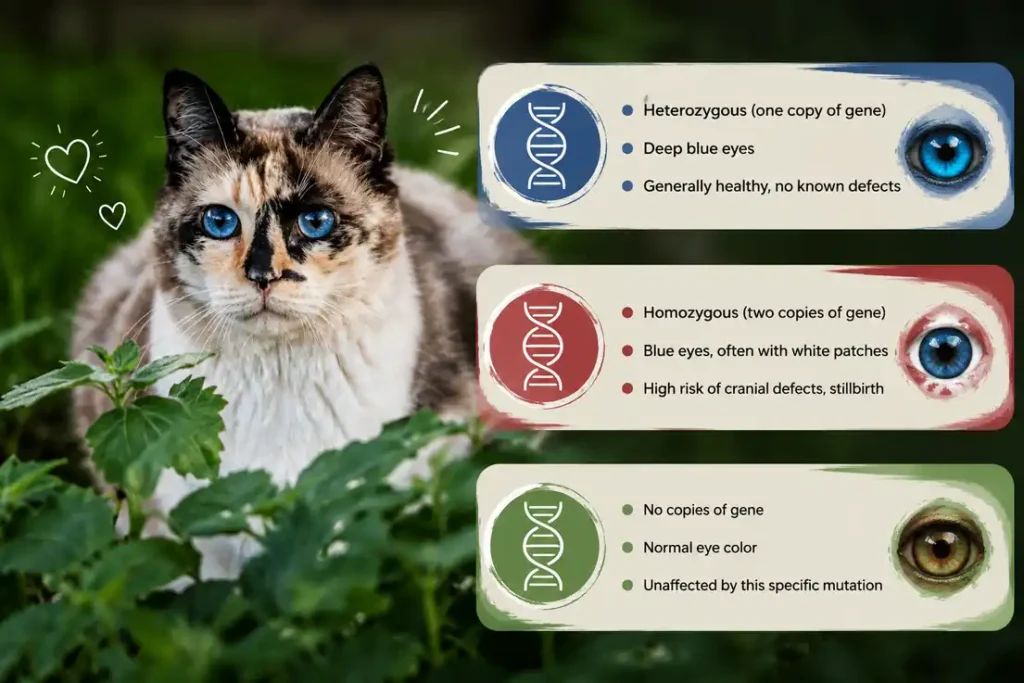
To make this easier to picture, here’s how the outcomes typically differ depending on the genetic combination involved.
| Genetic Pairing | Eye Color Result | Health Outcome |
| Heterozygous (one copy of gene) | Deep blue eyes | Generally healthy, no known defects |
| Homozygous (two copies of gene) | Blue eyes, often with white patches | High risk of cranial defects, stillbirth |
| No copies of gene | Normal eye color | Unaffected by this specific mutation |
Geneticist Solveig Pflueger’s early research into this mutation helped confirm that heterozygous cats are essentially safe, while homozygous kittens face serious, sometimes fatal, complications. This single discovery reshaped how the breed has been managed ever since.
Craniofacial Defects in Ojos Azules Cats
Cranial deformities are the most documented issue linked to the Ojos Azules gene. Affected kittens can be born with an abnormally shaped skull, which may affect brain development and overall viability. These defects tend to appear only in homozygous kittens, not in cats carrying a single copy of the gene.
Tail and Spinal Abnormalities
A short, curled, or kinked tail is another marker connected to the homozygous gene pairing. In some cases, the same genetic disruption that affects tail formation can extend to minor spinal irregularities, though these are usually less severe than the cranial issues.
Stillbirth and Kitten Mortality Risks
Sadly, stillbirth is common in litters where both parents carry the blue-eye gene. Some estimates suggest close to half of homozygous kittens don’t survive to birth or shortly after. This is one of the strongest arguments breeders give for never pairing two blue-eyed Ojos Azules cats together.
Internal Organ Defects
Less commonly, severely affected kittens may show internal organ irregularities alongside the more visible cranial and tail defects. Documentation here is thinner simply because so few homozygous kittens survive long enough for a full veterinary workup.
How Ojos Azules Breeding Affects Health
Responsible breeding is really the entire story with this breed. Because the dangerous outcomes only appear in homozygous kittens, breeders avoid pairing two blue-eyed cats together. Instead, they cross an Ojos Azules with a cat of a different eye color, usually a domestic shorthair, which produces a litter where roughly half the kittens inherit blue eyes and half don’t, without the fatal gene combination.
This outcrossing approach is exactly why organizations like The International Cat Association (TICA) eventually shifted the breed to registration-only status. TICA accepted the breed back in 1991, but concerns over the homozygous defects led to a pause and, later, tighter restrictions. Some sources consider the original breed functionally extinct today, with only a handful of confirmed bloodlines remaining through dedicated breeders.
Quick Answer: Can Two Ojos Azules Cats Be Safely Bred Together?
No, breeding two Ojos Azules cats together is considered unsafe. This pairing risks producing homozygous kittens with cranial deformities, curled tails, and a significantly higher chance of stillbirth compared to outcrossed litters.
Signs Your Ojos Azules Cat May Have Health Problems
Most of the genetic issues linked to this breed show up at birth or within the first weeks of life, so adult cats with a single copy of the gene rarely develop new symptoms later on. Even so, owners should stay alert for a few warning signs, especially in kittens.
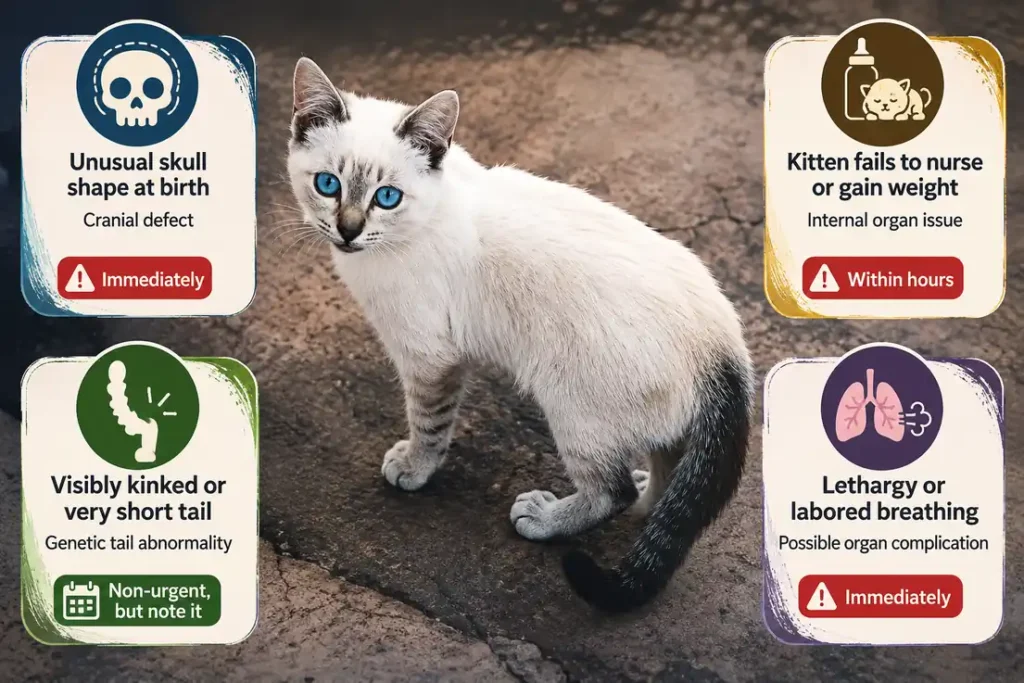
To help you spot trouble early, here’s a simple breakdown of symptoms and what they might indicate.
| Symptom | Possible Cause | When to Call the Vet |
| Unusual skull shape at birth | Cranial defect | Immediately |
| Kitten fails to nurse or gain weight | Internal organ issue | Within hours |
| Visibly kinked or very short tail | Genetic tail abnormality | Non-urgent, but note it |
| Lethargy or labored breathing | Possible organ complication | Immediately |
If a kitten shows any combination of these signs, don’t wait it out. Early veterinary evaluation can sometimes mean the difference between a manageable condition and a medical emergency.
Treatment and Management of Ojos Azules Cats Health Problems
There’s no cure for the underlying genetic mutation, so treatment usually focuses on managing symptoms rather than reversing them. Mild cranial or tail abnormalities may not need any intervention at all beyond regular monitoring. More severe cranial defects, on the other hand, often carry a poor prognosis, and many affected kittens don’t survive infancy regardless of veterinary care.
For cats that make it past kittenhood without major defects, ongoing care looks pretty standard. Routine wellness exams, a balanced diet, and prompt attention to any new symptoms go a long way. Groups like The Cornell Feline Health Center recommend genetic screening and careful breeding records for any rare breed with known hereditary risks, and this advice applies directly to Ojos Azules cats and their owners.
Can Ojos Azules Cats Live a Healthy Life?
Yes, and this is actually good news buried in an otherwise serious topic. A heterozygous Ojos Azules cat, meaning one with a single copy of the blue-eye gene, typically lives just as long and healthy a life as any domestic shorthair. Most sources put their lifespan around 10 to 12 years, with some living even longer under attentive care.
The real risk sits almost entirely with homozygous kittens, which is a breeding decision, not something that develops later in an otherwise healthy adult cat. So if your Ojos Azules cat was born without cranial or organ defects, there’s little reason to expect ongoing health struggles tied specifically to this gene.
Quick Answer: What Is the Average Lifespan of an Ojos Azules Cat?
The average lifespan of a healthy Ojos Azules cat is 10 to 12 years, similar to most domestic shorthairs. Cats without homozygous genetic defects generally face no breed-specific barriers to a long, comfortable life.
How to Prevent Health Problems in Ojos Azules Cats
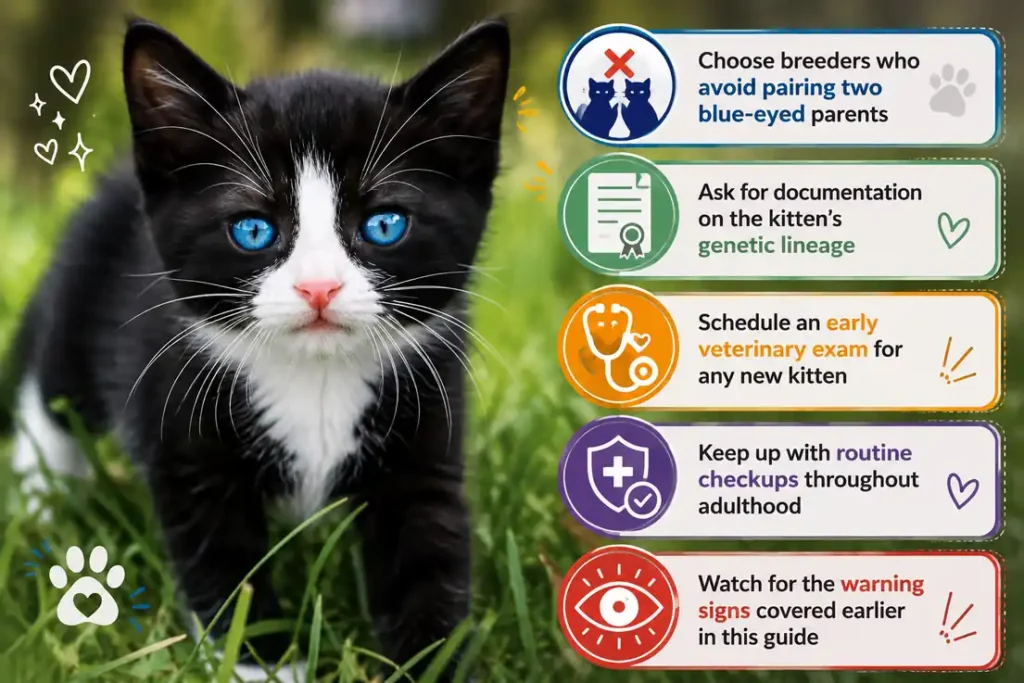
Prevention here is really about breeding decisions rather than daily care routines. If you’re purchasing a kitten, ask the breeder directly about the parents’ genetic backgrounds and whether outcrossing was used. A reputable breeder should be transparent about this, since it’s the single biggest factor in whether a litter faces elevated risk.
- Choose breeders who avoid pairing two blue-eyed parents
- Ask for documentation on the kitten’s genetic lineage
- Schedule an early veterinary exam for any new kitten
- Keep up with routine checkups throughout adulthood
- Watch for the warning signs covered earlier in this guide
Organizations such as the American Association of Feline Practitioners generally recommend annual wellness visits for all cats, and this becomes even more valuable for a breed with known hereditary risk factors like this one.
What This Means for Ojos Azules Owners
Ojos Azules cats’ health problems all trace back to one thing: the blue-eye gene and how it’s inherited. A single copy gives a cat those famous blue eyes with no real health risk. Two copies, though, can lead to cranial defects, tail abnormalities, and sadly, stillbirth. The good news is that this risk is preventable.
Explore the History, Traits, and Mystery of Ojos Azules. Read more Ojos Azules Cats With Eyes That Break Every Rule.
Responsible breeders avoid pairing two blue-eyed cats, and most heterozygous Ojos Azules cats live long, healthy lives of 10 to 12 years. If you’re considering this breed, ask about the parents’ genetics, get an early vet checkup for any kitten, and keep up with routine care. With the right precautions, Ojos Azules cats’ health problems become a manageable part of ownership rather than an unavoidable heartbreak.
FAQs About Ojos Azules Cats’ Health Problems
Are Ojos Azules cats generally healthy?
Yes, cats with a single copy of the blue-eye gene are usually just as healthy as any domestic shorthair. Health problems mostly affect kittens with two copies of the gene.
What causes health problems in Ojos Azules cats?
A homozygous pairing of the dominant blue-eye gene causes most documented issues, including cranial defects, tail abnormalities, and increased stillbirth risk.
Can Ojos Azules cats be deaf or cross-eyed like other blue-eyed cats?
No. Unlike some other blue-eyed breeds, this gene isn’t linked to deafness or crossed eyes, which is somewhat unusual for a blue-eye mutation.
How long do Ojos Azules cats live?
Healthy Ojos Azules cats typically live between 10 and 12 years, comparable to most domestic shorthair cats.
Is the Ojos Azules cat breed extinct?
Some sources consider the original bloodline functionally extinct, since major registries moved the breed to registration-only status after the genetic risks became clear.