

Ojos Azules cat training works best when you focus on short, five-minute sessions using treats as a reward for good behavior, since these cats respond quickly to positive reinforcement. Start with simple commands like “come” or “sit,” and use a clicker to mark the exact moment your cat does the right thing before giving a treat.
Litter training is usually easy too, as most kittens learn the habit within a few days if you keep the box clean and in a quiet spot. Because Ojos Azules cats are curious and bond closely with their owners, consistent daily practice is the key to successful Ojos Azules cat training.
What to Know Before Ojos Azules Cat Training
Before you even pick up a clicker, it helps to understand where this breed comes from. The Ojos Azules was first noticed in 1984, when a tortoiseshell cat with striking blue eyes turned up in a feral colony near Santa Fe, New Mexico. Breeders traced her sapphire eyes to a dominant gene, and The International Cat Association (TICA) granted the breed registration status in 1991.
Sadly, that same gene can cause severe defects, including cranial deformities, in kittens that inherit two copies of it, which is why registries approach the breed with caution today. Knowing this history matters because it explains why responsible breeders test carefully and why patience, not pressure, should guide every training session.
Are Ojos Azules Cats Easy to Train?
Yes, generally speaking. Ojos Azules cats rank among the more food-motivated and people-oriented breeds, which makes them naturally receptive to reward-based lessons. They’re curious by nature, so a new toy, sound, or command usually grabs their attention within seconds. That said, every cat has an off day, and this breed can be a little stubborn if sessions run too long or feel repetitive. Short, upbeat, and frequent sessions almost always beat one long marathon lesson, and consistency wins out over intensity every single time.
Understanding Ojos Azules Cat Behavior for Training
This breed tends to be chatty, affectionate, and glued to its favorite humans, which is exactly the temperament that makes Ojos Azules cat training go smoothly. They dislike being ignored, so lessons double as bonding time rather than a separate chore. Most get along fine with respectful kids and calm dogs, and their moderate energy level suits apartments just as well as houses. Boredom, though, tends to bring out mischief, so mental stimulation through training and puzzle toys isn’t optional; it’s part of keeping this cat genuinely content.
| Trait | Detail |
| Origin | New Mexico, USA, 1984 |
| Registry status | TICA-recognized (1991), now extremely rare |
| Coat & colors | Short, silky coat; various colors, not solid white |
| Weight | Roughly 6–9 lbs |
| Lifespan | About 12–14 years |
| Temperament | Affectionate, playful, food-motivated |
| Trainability | High; responds well to positive reinforcement. |
| Health watch | Cranial or tail defects possible in some lines |

The snapshot above shows why Ojos Azules cat training tends to go faster than expected: intelligence and food motivation are baked into this rare breed’s genetics.
When to Start Ojos Azules Cat Training
Start as early as possible, ideally between 8 and 12 weeks old, while the kitten is still soaking up new experiences like a sponge. This early window is when socialization and basic litter habits form most easily. Older cats and rescues can absolutely still learn; just expect the process to take a bit longer since you’re working around habits that already exist. Regardless of age, keep the first few sessions short and low-pressure so the cat associates training with fun, not stress.
Quick Answer: What Age Should Ojos Azules Cat Training Begin?
Most breeders and behaviorists recommend starting between 8 and 12 weeks of age, since kittens are most receptive to new routines during this stage. Adult cats can still learn, though sessions usually need to be shorter and more repetitive.
Essential Supplies for Ojos Azules Cat Training
A few basic tools make the whole process smoother, and none of them need to be expensive. Soft, pea-sized treats work better than large chunks, since a hungry cat that finishes chewing quickly stays focused longer. A clicker, a scratching post, a covered litter box, and a few puzzle feeders round out the starter kit. Interactive wand toys also help burn off extra energy before a lesson, which makes the cat calmer and more attentive once training actually begins.
| Supply | Approx. Price (USD) |
| Training clicker | $5–$10 |
| Soft training treats | $4–$8 per bag |
| Scratching post | $20–$60 |
| Puzzle feeder | $10–$25 |
| Cat harness & leash | $15–$35 |
This price breakdown gives a realistic starting budget for anyone gearing up for Ojos Azules cat training at home.
Basic Commands for an Ojos Azules Cat
Once the supplies are ready, start with commands that build on natural feline instincts rather than fighting against them.
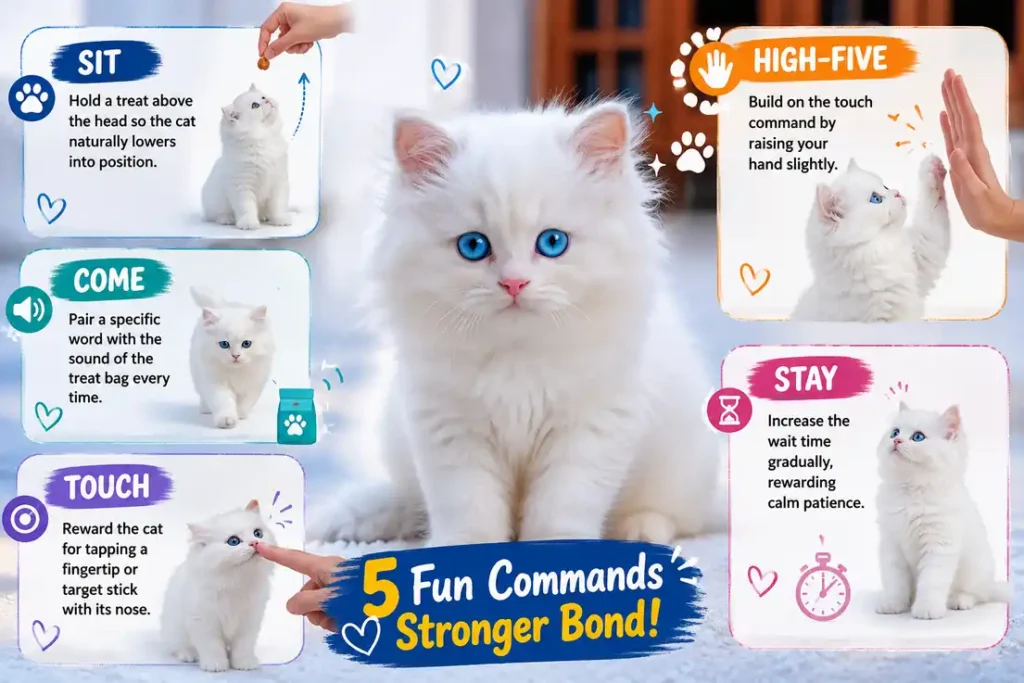
- Sit: hold a treat above the head so the cat naturally lowers into position
- Come: pair a specific word with the sound of the treat bag every time
- Touch: reward the cat for tapping a fingertip or target stick with its nose
- High-five: build on the touch command by raising your hand slightly
- Stay: increase the wait time gradually, rewarding calm patience
How to Litter Train an Ojos Azules Cat
Most Ojos Azules cats take to the litter box with very little coaching, since the instinct is already strong in this breed. Place the box in a quiet, low-traffic spot, and set the kitten inside right after meals and naps, when the urge to go is highest. Praise calmly the moment they use it correctly; loud excitement can actually startle a young kitten. If accidents happen outside the box, resist scolding and instead check for a dirty box, a disliked litter texture, or a location that feels too exposed.
Teaching an Ojos Azules Cat to Use a Scratching Post
Scratching is a normal, healthy behavior, so redirection works far better than punishment. Place a sturdy post near the areas your cat already scratches, then use catnip or a toy to draw attention to it. Reward any contact with the post immediately, even if it’s just a sniff at first. Over a week or two, most Ojos Azules cats shift their scratching habit toward the post entirely, especially if furniture nearby gets a double-sided tape deterrent in the meantime.
Quick Answer: Do Ojos Azules Cats Respond Well to Clicker Training?
Yes. Their high food motivation and curiosity make clicker training one of the most effective methods for this breed, often producing visible progress within the first week of short daily sessions.
How to Stop Unwanted Ojos Azules Cat Behaviors
Counter-surfing, nighttime zoomies, and nipping during play are common in this energetic breed. The fix is almost always redirection plus consistency: offer an acceptable alternative, reward the moment they choose it, and remove the reward for jumping on counters or beds.
The American Association of Feline Practitioners (AAFP) recommends reward-based methods over punishment for all cats, noting that yelling or spraying water tends to damage trust without actually solving the behavior. Patience and repetition solve far more than a raised voice ever will.
Positive Reinforcement for Ojos Azules Cat Training
Reward-based learning is the backbone of every successful session with this breed. Mark the exact moment of good behavior with a treat, a click, or a warm word, and repeat it often enough that the cat starts predicting the reward. Ojos Azules cats, being unusually food-focused, tend to respond within just a few repetitions. Avoid punishment entirely; it doesn’t just fail to work, it can also make an already social, clingy cat more anxious and less willing to engage during future lessons.
Clicker Ojos Azules Cat Training
Clicker training works especially well for this breed because it gives a precise, consistent signal the cat can rely on. Start by clicking and immediately treating several times in a row, so the sound alone becomes a promise of food. Once that connection is solid, use the click to mark specific behaviors like sitting or touching a target. Keep sessions to five or ten minutes, two or three times a day, and end on a success so the cat stays eager for the next round.
Leash Training an Ojos Azules Cat
A harness lets this curious, people-loving breed enjoy supervised outdoor time safely. Start indoors by letting the cat wear the harness for a few minutes at a time, rewarding calm behavior throughout. Once it feels normal, attach the leash and let the cat lead you around a familiar room before ever stepping outside. Choose quiet, low-traffic areas for the first real walks, and always keep sessions short, since even a confident cat can get overwhelmed by unfamiliar sights and sounds.
| Age | Training Focus |
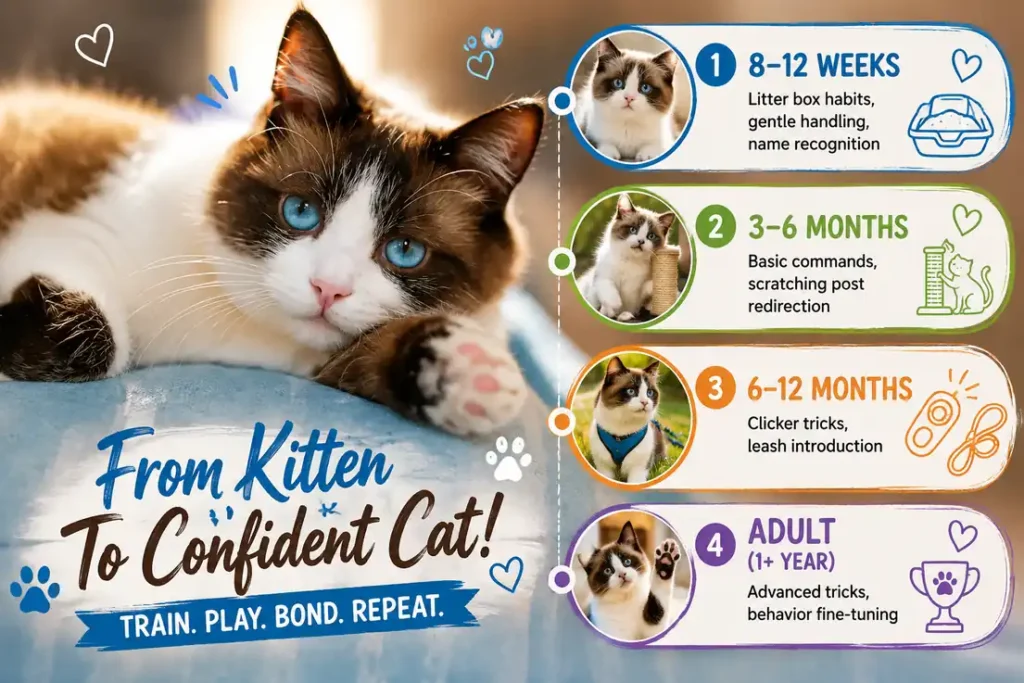
| 8–12 weeks | Litter box habits, gentle handling, name recognition |
| 3–6 months | Basic commands, scratching post redirection |
| 6–12 months | Clicker tricks, leash introduction |
| Adult (1+ year) | Advanced tricks, behavior fine-tuning |
This timeline gives a realistic map of how Ojos Azules cat training typically unfolds from kittenhood into adulthood.
Common Ojos Azules Cat Training Mistakes to Avoid
- Making sessions too long, which leads to boredom and disengagement
- Using punishment instead of redirection for unwanted behavior
- Skipping consistency, so the cat gets mixed signals from different family members
- Ignoring the breed’s need for mental stimulation between formal sessions
- Ending a session right after a mistake instead of on a small win
Set Your Ojos Azules Up for Training Success. Read more in Ojos Azules Cats With Eyes That Break Every Rule.
Quick Answer: How Rare Is the Ojos Azules Cat Today?
Extremely rare. Only around ten cats were documented in 1992, and International Cat Care notes the breed is now considered functionally extinct as an actively bred line, which makes responsible sourcing and gentle, patient training even more important for any cat carrying this heritage.
How Long Does Ojos Azules Cat Training Take?
Basic litter and handling habits often click within the first one to two weeks. Simple commands like sit or come typically take two to four weeks of short daily practice, while tricks such as high-five or leash walking can take one to three months depending on the cat’s age and confidence. Ojos Azules cat training rarely follows a straight line, though; expect quick wins alongside the occasional plateau, especially around the six-month mark when adolescent independence kicks in.
Final Tips for Ojos Azules Cat Training
Keep sessions short, upbeat, and food-rich, and remember that this breed learns through connection as much as repetition. Ojos Azules cat training works best when it feels like play rather than a lesson plan, so let curiosity lead and reward generously along the way. Given how rare this breed is, every owner who gets it right is also helping preserve a gentle, trusting relationship with one of the world’s most unusual cats. Stay patient, stay consistent, and the results tend to speak for themselves.
Ojos Azules Cat Training FAQs
How smart are Ojos Azules cats?
They’re considered highly intelligent and food-motivated, which makes structured training sessions genuinely enjoyable for both cat and owner.
Can Ojos Azules cats learn tricks like a dog?
Many owners report success with fetch, high-five, and even simple agility-style tricks, thanks to the breed’s curiosity and eagerness to please.
Do Ojos Azules cats need a harness for walks?
Yes, a well-fitted harness is safer than a collar and gives better control during early leash sessions.
Is punishment ever appropriate during training?
No. Veterinary behaviorists consistently recommend reward-based methods, since punishment tends to increase anxiety rather than correct behavior.
How rare is it to actually own an Ojos Azules cat?
Very rare. The breed was never widely bred, and responsible sourcing usually means working with specialty breeders or rescues familiar with the lineage.