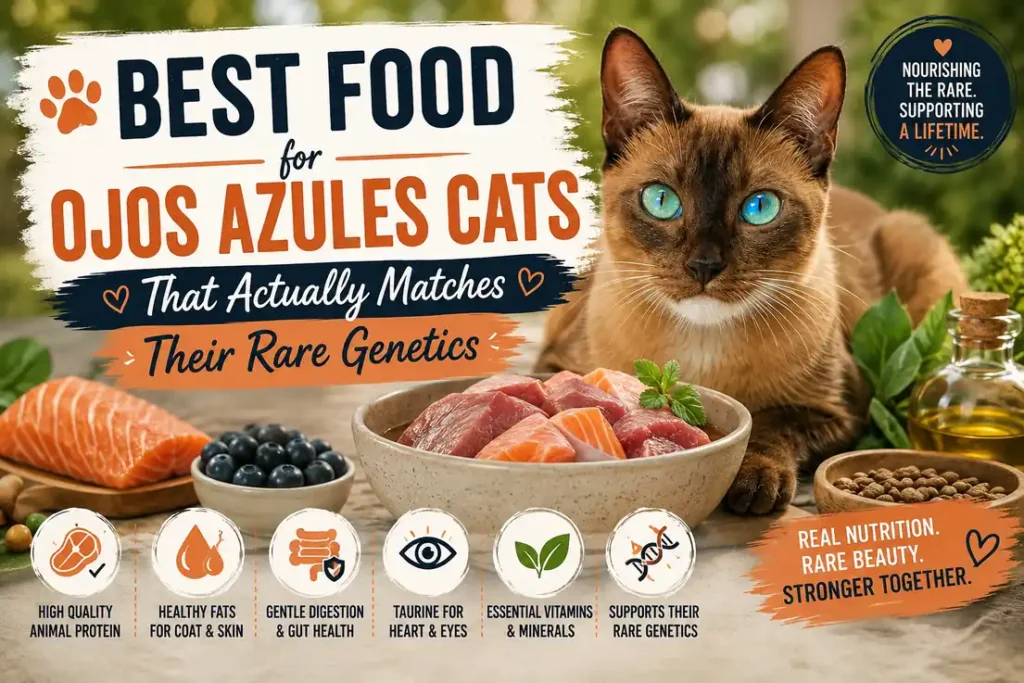
The best food for Ojos Azules cats is a high-protein, meat-based diet that meets AAFCO standards for complete feline nutrition, since this breed has no special dietary needs beyond what any healthy cat requires. Because the Ojos Azules is defined by a single gene for blue eyes and not by body size or metabolism, owners should choose food based on the cat’s age, weight, and activity level rather than the breed name itself.
Wet food with at least 30-40% protein supports lean muscle and eye health, while dry kibble can be added for dental benefits if the cat tolerates it well. Kittens need higher calorie and protein density for growth, adult cats need balanced maintenance formulas, and senior cats benefit from easier-to-digest recipes with joint support like glucosamine. When picking the best food for Ojos Azules cats, always check the ingredient list for real meat as the first item and avoid fillers like corn or soy that offer little nutritional value.
What Is the Best Food for Ojos Azules Cats?
The honest answer is that the best food for Ojos Azules cats looks like the best food for any healthy cat: complete, balanced, protein-forward, and matched to life stage. The breed was discovered among feral cats in New Mexico in 1984 and is defined by its dominant blue-eye gene, not by body size or metabolism, so there’s no secret ingredient list to chase. Look for food meeting standards set by the Association of American Feed Control Officials (AAFCO), the baseline every trustworthy cat food should clear. Wet, dry, or a mix can work, as long as the label matches your cat’s life stage.
Discover the Foods Your Ojos Azules Will Love. Read more in Ojos Azules Cats With Eyes That Break Every Rule.
Nutritional Needs of Ojos Azules Cats
Because the Ojos Azules is a natural, medium-sized cat usually weighing 8 to 12 pounds, its nutrient needs track closely with AAFCO’s published minimums. Cats are obligate carnivores, needing meat-based protein, taurine, arachidonic acid, and vitamin A from animal sources, since they can’t make enough of these from plants the way dogs can. Kittens and nursing cats need more protein and fat for growth, while adults need just enough to maintain lean muscle without extra weight. Fresh water matters just as much, so keep it beside the bowl.
Here’s a quick snapshot of AAFCO’s nutrient minimums by life stage, a useful starting point when comparing labels.
| Life Stage | Min. Protein (dry matter) | Min. Fat (dry matter) | Typical Daily Calories |
| Kitten (growth) | 30% | 9% | 250–300 kcal |
| Adult maintenance | 26% | 9% | 200–275 kcal |
| Senior (7+ years) | 26–30%* | 9%* | 180–250 kcal |
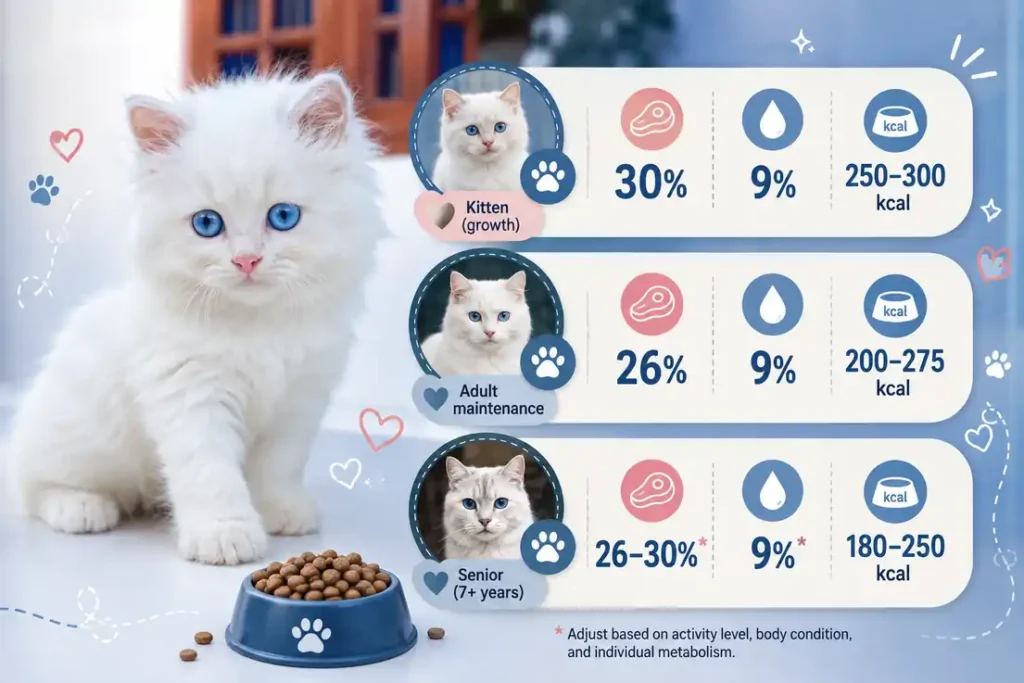
Senior needs vary with activity, muscle mass, and kidney health, so these figures should be adjusted with a vet’s input.
High-Protein Diet for Ojos Azules Cats
Because cats are obligate carnivores, a high-protein diet should sit at the center of any feeding plan. Look for a named meat, like chicken, turkey, or salmon, as the first ingredient rather than a vague ‘meat meal’ or filler grain. The World Small Animal Veterinary Association (WSAVA) recommends judging food by the maker’s nutritional expertise, not by unregulated terms like ‘natural’ or ‘premium.’ Aim for 30–35% protein on a dry-matter basis, above AAFCO’s bare minimum of 26%, which only guards against deficiency. Too little animal protein over time can quietly cost a cat muscle mass.
Wet vs Dry Food for Ojos Azules Cats
Since hydration and dental health both play a role in feline health, it helps to see how wet and dry food stack up side by side.
| Factor | Wet Food | Dry Food |
| Moisture content | ~75–80% | ~6–10% |
| Protein source quality | Usually higher meat content | Varies, some use fillers |
| Dental benefit | Minimal | Some plaque-scraping effect |
| Cost per day | Higher | Lower |
| Shelf life once opened | 24–48 hrs, refrigerated | Weeks in a sealed container |
Neither format is objectively better, and many owners feed a mix of both. Wet food helps cats that don’t drink much on their own, which matters for kidney and urinary health. Dry food is more convenient and budget-friendly, and some dental-formula kibble reduces plaque between vet cleanings. If you mix formats, keep total daily calories consistent instead of piling extra food on top.
Quick Answer: Best Food for Ojos Azules Cats
The best food for Ojos Azules cats is any AAFCO-compliant formula with real meat as the first ingredient, at least 30% protein on a dry-matter basis, and a nutritional adequacy statement matching the cat’s life stage, whether that’s a kitten, adult, or senior formula.
Best Kitten Food for Ojos Azules Cats
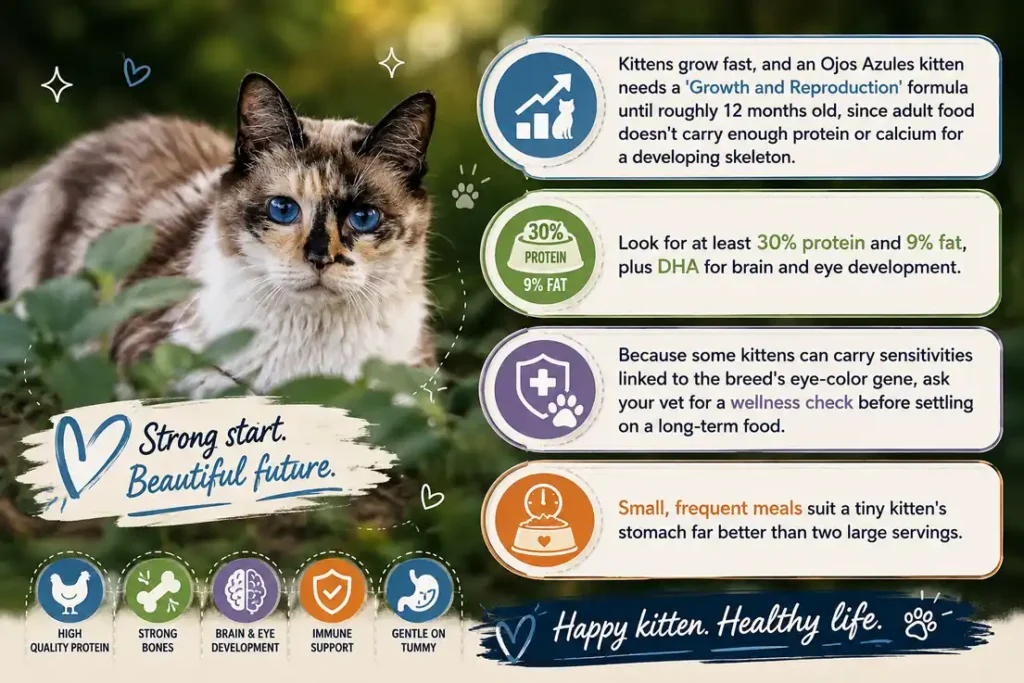
Kittens grow fast, and an Ojos Azules kitten needs a ‘Growth and Reproduction’ formula until roughly 12 months old, since adult food doesn’t carry enough protein or calcium for a developing skeleton. Look for at least 30% protein and 9% fat, plus DHA for brain and eye development. Because some kittens can carry sensitivities linked to the breed’s eye-color gene, ask your vet for a wellness check before settling on a long-term food. Small, frequent meals suit a tiny kitten’s stomach far better than two large servings.
Best Adult Food for Ojos Azules Cats
Once a cat reaches its first birthday, an adult maintenance formula meeting AAFCO’s 26% minimum protein, though ideally higher, becomes appropriate. Most healthy adults do well on 200 to 275 calories a day, adjusted for activity level and whether the cat is spayed or neutered, since fixed cats burn roughly 20% fewer calories at rest. Weight checks every few months catch creeping gain early, before it’s a harder problem to reverse. Rotating between a couple of trusted recipes can also curb picky eating.
Best Senior Food for Ojos Azules Cats
Cats are generally considered senior around age 7, and senior formulas often add joint-support ingredients like glucosamine, plus adjusted phosphorus that’s gentler on aging kidneys. The Ojos Azules doesn’t have a large published lifespan dataset, given how rare and new the breed is, so lean on general senior-cat guidance from your vet rather than breed-specific claims that don’t really exist yet. Softer wet textures often help once dental issues or reduced appetite show up. Bloodwork past age 10 can catch kidney or thyroid changes early.
Best Grain-Free Food for Ojos Azules Cats
Grain-free food isn’t automatically healthier, despite the marketing push, since cats digest properly cooked grains like rice and oats just fine. Grain-free simply shifts the carb source to peas, lentils, or potatoes instead of wheat or corn. The exception is a diagnosed grain allergy, which is uncommon compared to protein-source allergies like chicken or beef. If you choose grain-free, check that it still meets AAFCO standards rather than assuming the label means ‘complete and balanced.’
Do Ojos Azules Cats Need Grain-Free Food?
No. Most Ojos Azules cats digest grains without any trouble, and true grain allergies are rare in cats overall. Grain-free food only really matters if a vet has diagnosed a specific grain sensitivity or allergy.
Best Limited-Ingredient Food for Ojos Azules Cats
Limited-ingredient diets, often shortened to LID, cut the list down to one protein and one or two carbs, making it easier to spot the culprit if a cat shows sensitivities like itchy skin, vomiting, or loose stool. Novel proteins like duck, rabbit, or venison show up often, since a cat is less likely to have been exposed to them before. This helps more with diagnosing a suspected allergy than everyday feeding, so most healthy cats don’t need it long-term. Talk to a vet before switching.
Foods Ojos Azules Cats Should Avoid
Some human foods and ingredients cause real harm, and it’s worth keeping this list somewhere visible in the kitchen.
- Onions, garlic, and chives, which damage red blood cells
- Grapes and raisins, linked to kidney injury in cats
- Chocolate and caffeine, toxic to the feline heart and nervous system
- Raw bread dough, which can expand dangerously in the stomach
- Excess dairy, since most adult cats are lactose intolerant
Sticking to cat-formulated food and vet-approved treats keeps these risks off the table entirely.
How Much Should You Feed an Ojos Azules Cat?
Portion sizes depend heavily on weight and activity level, so here’s a general starting point to adjust from.
| Weight | Daily Calories (approx.) | Dry Food (approx. cups/day)* |
| 6–8 lbs | 180–220 kcal | 1/3–1/2 cup |
| 8–10 lbs | 220–260 kcal | 1/2–2/3 cup |
| 10–12 lbs | 260–300 kcal | 2/3–3/4 cup |
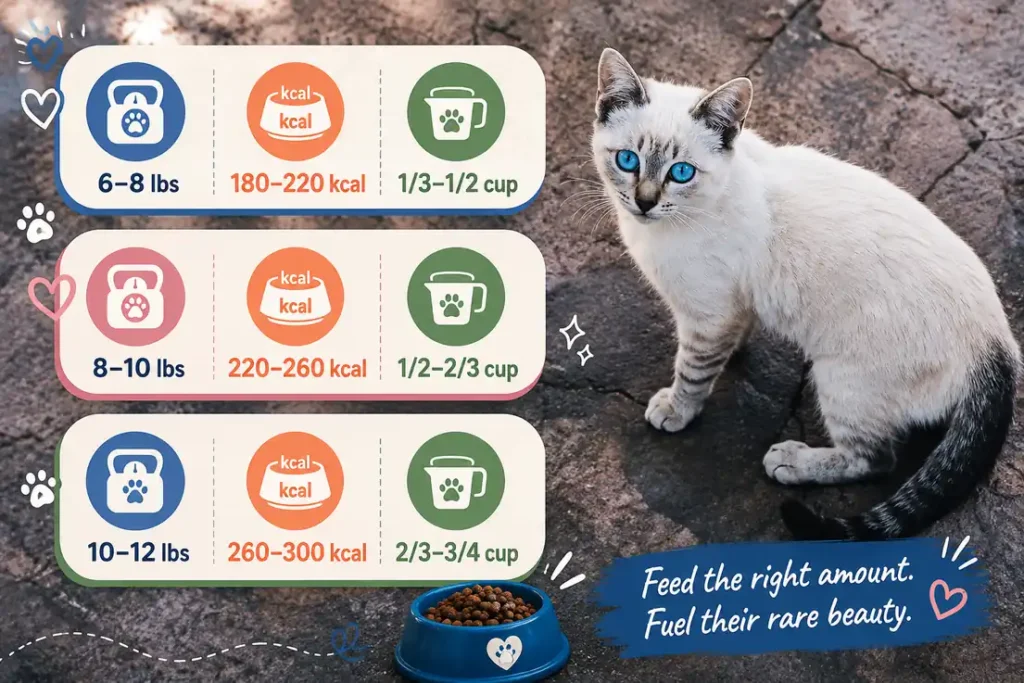
Based on an average 300–400 kcal per cup of kibble; always check the specific bag, since calorie density varies by brand.
These numbers are starting points, not gospel, since calorie density varies between brands. Feeding guides assume an average, moderately active cat, so a couch-loving Ojos Azules may need less, and a growing kitten may need more. Weigh your cat every month or two, then adjust in small steps rather than big swings. When in doubt, a quick call to your vet clinic settles the math faster than guessing.
Feeding Schedule for Ojos Azules Cats
Kittens under six months do best with three to four small meals a day, since their stomachs are too small for large portions. Adults generally thrive on two measured meals, spaced 8 to 12 hours apart, rather than free-feeding all day, which makes weight gain easier to sneak up on. Seniors sometimes do better with smaller, more frequent meals if appetite has dropped or dental discomfort makes big meals unappealing. Consistent timing also keeps litter box habits predictable.
How Many Times a Day Should an Ojos Azules Cat Eat?
Adult Ojos Azules cats generally do best with two measured meals a day. Kittens need three to four smaller meals, and senior cats may benefit from more frequent, smaller portions if appetite or dental comfort has changed.
Healthy Treats for Ojos Azules Cats
Treats are fine in moderation, ideally capped around 10% of daily calories so they don’t crowd out balanced nutrition. Small pieces of cooked, unseasoned chicken or fish work well as training rewards. Freeze-dried single-ingredient treats, like chicken or salmon, tend to have fewer fillers than colorful commercial treats. Puzzle feeders that dispense daily kibble double as enrichment, which suits this breed’s naturally curious streak.
How to Choose the Best Food for Ojos Azules Cats
Start by checking the AAFCO adequacy statement on the label, then confirm it matches your cat’s life stage rather than grabbing whatever’s on sale. Named animal proteins near the top of the ingredient list beat vague terms like ‘meat by-product.’ Watch your cat’s coat, energy, stool quality, and weight over four to six weeks after any switch, since that trial period tells you more than any marketing claim. The American Association of Feline Practitioners (AAFP) recommends an annual wellness exam for adult cats, a good time to review the diet too. If your cat has a diagnosed condition, a vet-prescribed diet always overrides general advice.
The Real Answer to Feeding Ojos Azules Cats Right
Feeding an Ojos Azules cat well doesn’t require chasing rare or expensive specialty products, since this breed’s needs mirror standard feline nutrition science almost exactly. What actually moves the needle is an AAFCO-compliant formula matched to life stage, sensible portions, and adjusting as your cat ages.
Given how rare this breed is, with organized breeding largely paused since the 1990s, much of what’s marketed as ‘Ojos Azules food’ online is really just quality cat food aimed at fans of the breed. Partner with your vet, read labels carefully, and the best food for Ojos Azules cats becomes a fairly simple, evidence-based choice rather than a guessing game.
Frequently Asked Questions
What is the best food for Ojos Azules cats?
The best food for Ojos Azules cats is an AAFCO-compliant formula with real meat listed first, at least 26–30% protein on a dry-matter basis, and a nutritional adequacy statement matching the cat’s life stage.
How much protein does an Ojos Azules cat need?
Adult Ojos Azules cats need a minimum of 26% protein on a dry-matter basis, though 30–35% is generally considered a healthier target for an obligate carnivore.
Is wet or dry food better for an Ojos Azules cat?
Neither is universally better. Wet food supports hydration and urinary health, while dry food is more convenient and budget-friendly. Many owners feed a mix of both.
Do Ojos Azules cats need special kitten food?
Yes. Kittens need a ‘Growth and Reproduction’ formula with at least 30% protein until around 12 months old, since adult food doesn’t provide enough for a growing skeleton.
Can Ojos Azules cats eat grain-free food?
Yes, but it isn’t required unless a vet has diagnosed a grain allergy. Most cats digest cooked grains like rice and oats without any issue.
How often should you feed an Ojos Azules cat?
Kittens need three to four small meals a day, adults do well with two measured meals, and seniors sometimes benefit from smaller, more frequent portions.