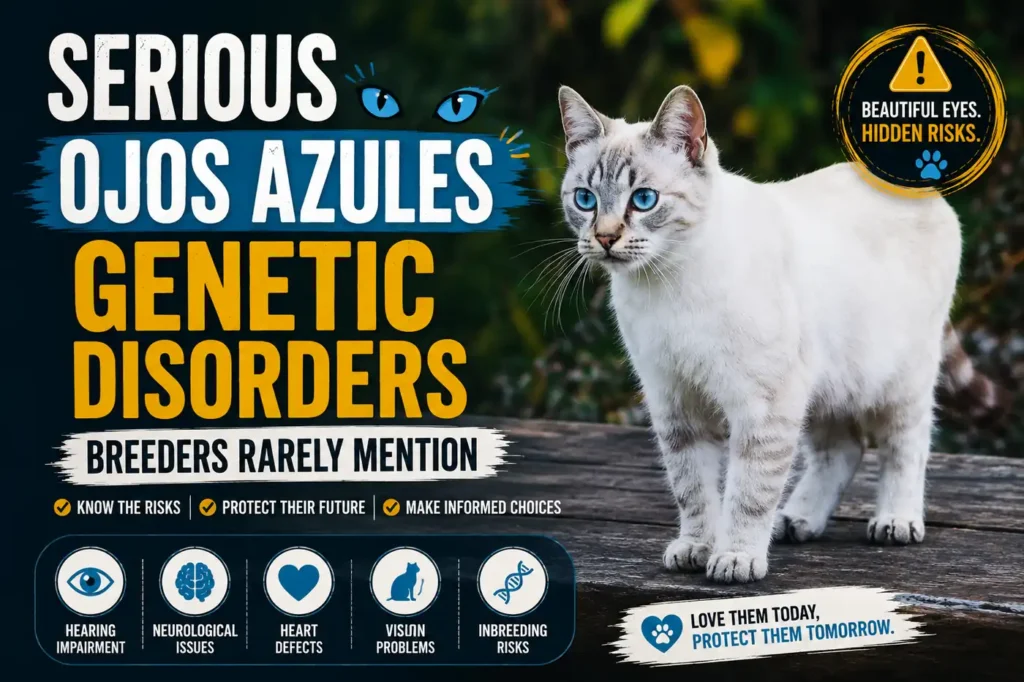
Ojos Azules genetic disorders stem from a single dominant gene that controls the breed’s signature blue eye color, but this gene becomes dangerous when a kitten inherits two copies instead of one. Cats with two copies often develop severe skull and facial deformities, and many do not survive to birth. Breeders learned this the hard way in the years after the breed’s discovery, when litters bred from two blue-eyed parents produced kittens with cleft palates, malformed skulls, and other fatal defects.
Because of this risk, responsible breeding programs now pair an Ojos Azules cat with a non-Ojos Azules partner, ensuring kittens inherit only one copy of the gene. This single safety rule is the main reason Ojos Azules genetic disorders have kept the breed so small and so rare, even decades after its first appearance.
What Are Ojos Azules Genetic Disorders?
At the center of this breed sits a single dominant gene, often called the DBE gene (dominant blue eye). One copy gives a cat those famous deep-blue eyes with zero downside. Two copies, though, is a different story entirely.
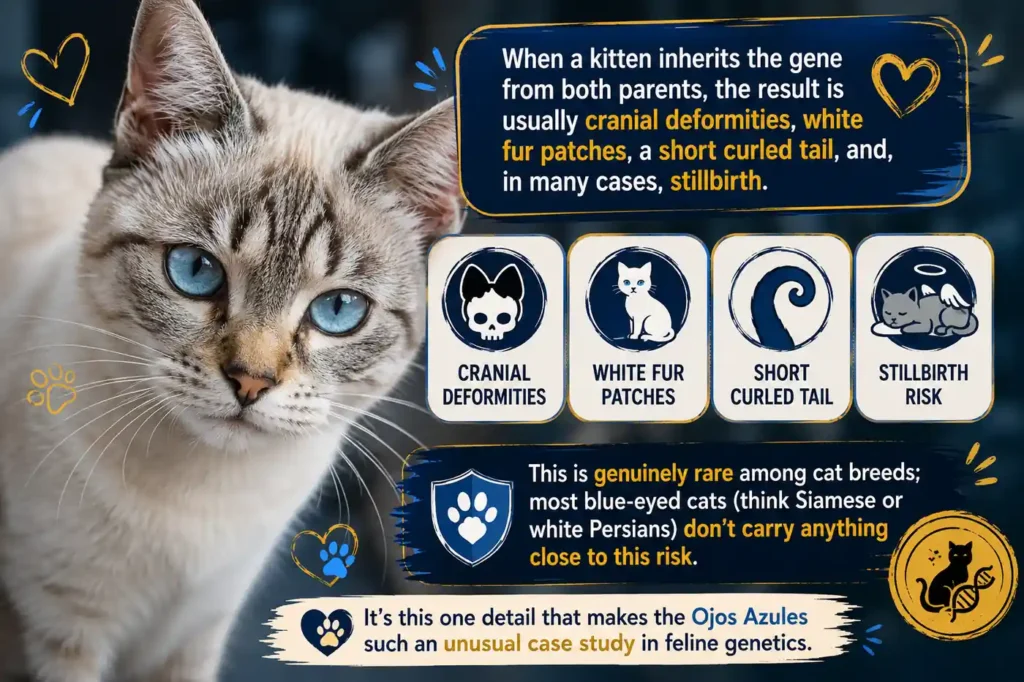
When a kitten inherits the gene from both parents, the result is usually cranial deformities, white fur patches, a short curled tail, and, in many cases, stillbirth. This is genuinely rare among cat breeds; most blue-eyed cats (think Siamese or white Persians) don’t carry anything close to this risk. It’s this one detail that makes the Ojos Azules such an unusual case study in feline genetics.
Explore the Genetic Risks Associated With This Rare Cat Breed. Read more in Ojos Azules Cats With Eyes That Break Every Rule.
Genetic Disorders Linked to Ojos Azules Cats
The list of confirmed problems is short but serious. According to genetic research led by feline geneticist Solveig Pflueger and recognized by The International Cat Association (TICA), homozygous kittens (two copies of the gene) consistently show the same cluster of defects.
That cluster includes skull malformation, all-white or largely white coats, a flattened or curled tail tip, and embryonic or newborn death. Heterozygous cats, the ones with just one copy, don’t show any of this. Responsible breeders avoid pairing two blue-eyed Ojos Azules cats, despite the appeal of dazzling blue-eyed kittens.
Health Risks Associated With the Blue-Eye Gene
It’s worth being clear about what this gene does and doesn’t do. It isn’t linked to a weak immune system, and it doesn’t shorten a healthy adult cat’s life. The danger is concentrated almost entirely in reproduction, not in day-to-day living.
A living, breathing Ojos Azules with just one copy of the gene is, by most accounts from International Cat Care, a genuinely healthy cat. The risk shows up before birth, which is exactly why understanding Ojos Azules genetic disorders matters so much for anyone involved in breeding decisions, not just casual owners.
Separate Fact from Fiction About Ojos Azules Cat Health. Read more in Ojos Azules Cats Health Problems That Come With Those Famous Blue Eyes.
What Causes Genetic Disorders in Ojos Azules Cats?
Genetic disorders in Ojos Azules cats happen when a kitten inherits two copies of the dominant blue-eye gene, one from each parent. This homozygous combination is associated with cranial deformities, excess white fur, a curled tail, and stillbirth. A single copy of the gene causes none of these problems.
Genetic Eye Problems in Ojos Azules Kittens
Here’s some good news: the Ojos Azules gene isn’t linked to crossed eyes or structural vision problems. Their eye color comes from a completely different genetic pathway than the one behind Siamese or white cat blue eyes.
Some heterozygous individuals have shown mild light sensitivity or slightly slower pupil contraction, though this is uncommon and rarely disruptive to daily life. Regular vet checkups still matter, of course, but eye structure itself tends to be sound in cats carrying just one copy of the gene.
Hearing and Genetic Health Concerns
Deafness is more common in white cats and some blue-eyed breeds. A different gene affects pigment cells in the inner ear. The Ojos Azules gene doesn’t appear to work that way at all.
Research and breed documentation consistently report that Ojos Azules cats don’t show elevated rates of congenital deafness tied to their eye-color gene. That said, vets should still screen cats with significant white fur, including surviving homozygous Ojos Azules kittens, because extensive white coat coverage can increase the risk of hearing problems.
Genetic Problems in Ojos Azules Kittens
Breeders and vets who work with this breed track outcomes closely, since litter results vary so much depending on the parents’ genetics. Here’s a simple breakdown of what typically happens with different pairings.
Understanding these odds clearly shows why most registries and welfare groups now discourage breeding two Ojos Azules cats together.
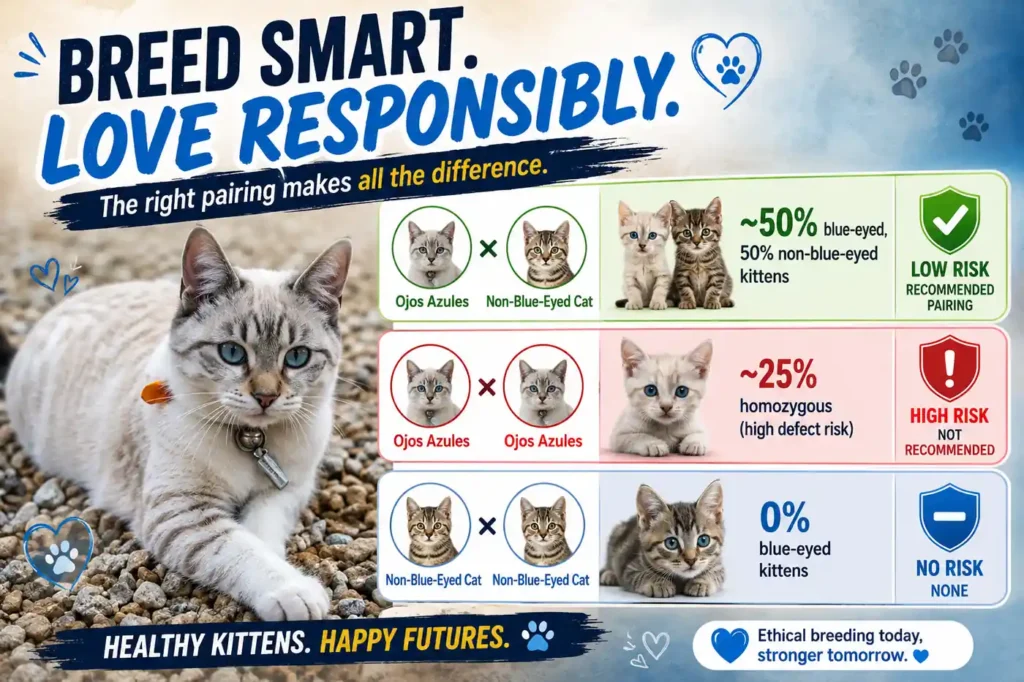
The table below shows how outcomes shift depending on which parents are paired, which makes the inheritance pattern easy to visualize.
| Pairing | Approx. Outcome | Risk Level |
| Ojos Azules x non-blue-eyed cat | ~50% blue-eyed, 50% non-blue-eyed kittens | Low — recommended pairing |
| Ojos Azules x Ojos Azules | ~25% homozygous (high defect risk) | High — not recommended |
| Non-blue-eyed x non-blue-eyed | 0% blue-eyed kittens | None |
How Genetics Affect Ojos Azules Health
Beyond reproduction, the day-to-day health of an Ojos Azules cat depends mostly on standard feline care rather than anything gene-specific. Diet, exercise, and routine veterinary visits matter far more to lifespan than the Ojos Azules genetic disorders conversation, once a kitten has cleared the newborn stage safely.
Lifespan for a healthy Ojos Azules typically runs 12 to 15 years, similar to other medium-sized domestic breeds, according to veterinary breed profiles. Weight generally settles between 8 and 12 pounds for adults. Kittens with two copies of the gene rarely survive to adulthood, so having one or two copies doesn’t affect any of these traits.
Is the Ojos Azules Gene Dominant or Recessive?
The Ojos Azules blue-eye gene is dominant, meaning only one copy is needed to produce the deep blue eye color. However, it behaves as a recessive lethal gene when two copies are inherited, causing cranial deformities and stillbirth in homozygous kittens.
Genetic Testing for Ojos Azules Cats
Genetic testing for this breed isn’t as simple as sending off a cheek swab for a single marker, mainly because the DBE gene hasn’t been mapped to one exact DNA sequence the way some other feline traits have.
Instead, responsible breeders rely on pedigree tracking, careful pairing records, and veterinary consultation to manage risk. Some general feline DNA panels can rule out unrelated hereditary conditions, which is still worthwhile for any purebred or hybrid cat.
The table below compares the testing and screening approaches most commonly used by breeders working with this rare gene.
| Method | What It Checks | Availability |
| Pedigree tracking | Known carrier status of parent cats | Widely used |
| General feline DNA panel | Unrelated hereditary conditions | Commercially available |
| Veterinary cranial exam | Physical signs in surviving kittens | Standard veterinary care |
Responsible Breeding and Genetic Health
Responsible breeding here comes down to one simple rule: never pair two blue-eyed Ojos Azules together. Reputable breeders always cross a blue-eyed cat with a non-blue-eyed partner, which produces roughly half blue-eyed kittens without any homozygous risk at all.
Organizations including TICA have supported this approach since the early 1990s, after breeding was briefly suspended once the lethal gene combination was identified. Ethical breeders also disclose this history openly to buyers, rather than treating it as a footnote.
Signs of Genetic Disorders in Ojos Azules Cats
Most warning signs of a genetic problem show up before or right at birth, not later in life, which makes early veterinary involvement during pregnancy and delivery especially important for this breed.
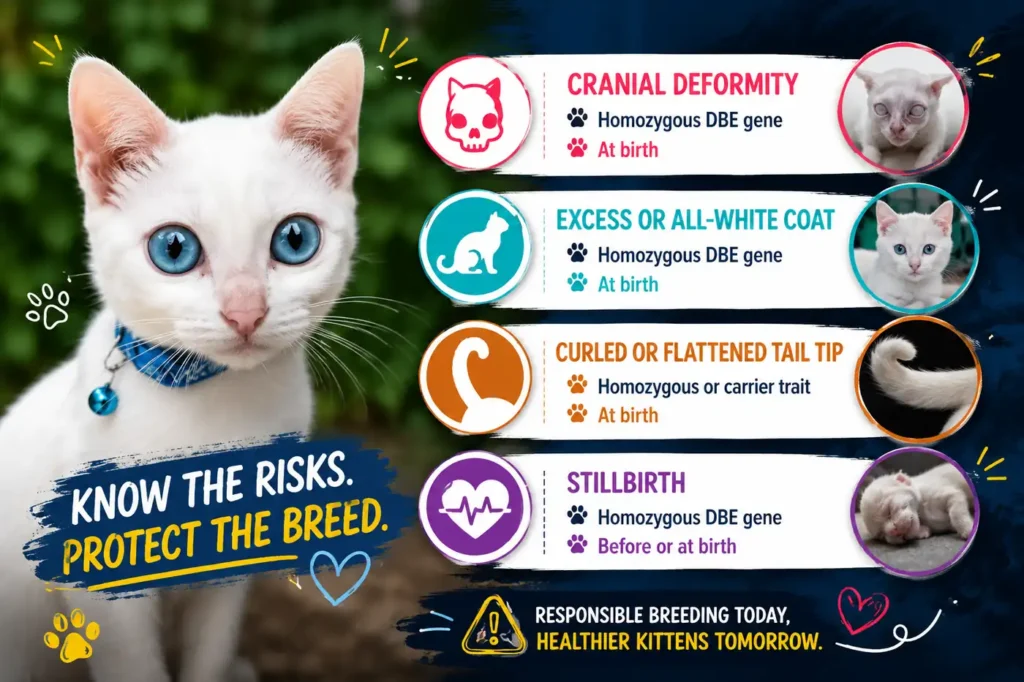
This quick reference table lays out the physical signs most often associated with the homozygous form of the gene.
| Sign | Typical Cause | When It Appears |
| Cranial deformity | Homozygous DBE gene | At birth |
| Excess or all-white coat | Homozygous DBE gene | At birth |
| Curled or flattened tail tip | Homozygous or carrier trait | At birth |
| Stillbirth | Homozygous DBE gene | Before or at birth |
How to Reduce Genetic Health Risks
Reducing risk starts long before a litter is even planned. Choosing the right pairing is the single most effective tool breeders have, and it costs nothing beyond a bit of patience and record-keeping.
- Always pair a blue-eyed Ojos Azules with a non-blue-eyed cat
- Keep detailed pedigree records across generations
- Work with a vet experienced in rare or hybrid breeds
- Avoid breeding from lines with a known history of stillbirth
- Ask breeders directly about their pairing history before buying
How Can Breeders Avoid Genetic Disorders in Ojos Azules Cats?
Breeders can avoid genetic disorders in Ojos Azules cats by never pairing two blue-eyed cats together. Crossing a blue-eyed Ojos Azules with a non-blue-eyed cat produces about 50% blue-eyed kittens with no risk of the lethal homozygous combination.
A Beautiful Risk Worth Understanding
The Ojos Azules is proof that a single gene can make a cat both extraordinary and vulnerable at the same time. Ojos Azules genetic disorders aren’t a reason to avoid the breed altogether; they’re a reason to be informed. A cat with one copy of that gene lives a full, healthy life with nothing but stunning eyes to show for its unusual genetics.
If you’re considering adding one to your family, ask breeders hard questions, look for transparency about pairing history, and remember that rarity should never come at the cost of animal welfare. Done responsibly, this breed can thrive for generations to come.
Frequently Asked Questions
Are Ojos Azules cats prone to genetic disorders?
Yes, but only when two copies of the blue-eye gene are inherited. A single copy causes no known health problems in adult cats.
Can two Ojos Azules cats be bred together safely?
No. Breeding two blue-eyed Ojos Azules together risks producing homozygous kittens with cranial deformities and a high chance of stillbirth.
Do Ojos Azules cats go deaf or develop crossed eyes?
No. Unlike some other blue-eyed breeds, the Ojos Azules gene isn’t linked to deafness or strabismus in cats with a single copy of the gene.
How much does an Ojos Azules kitten typically cost?
Prices generally range from $1,500 to $3,000 USD, depending on lineage, breeder reputation, and location.
What is the average lifespan of an Ojos Azules cat?
Most healthy Ojos Azules cats live between 12 and 15 years with standard veterinary care and a balanced diet.