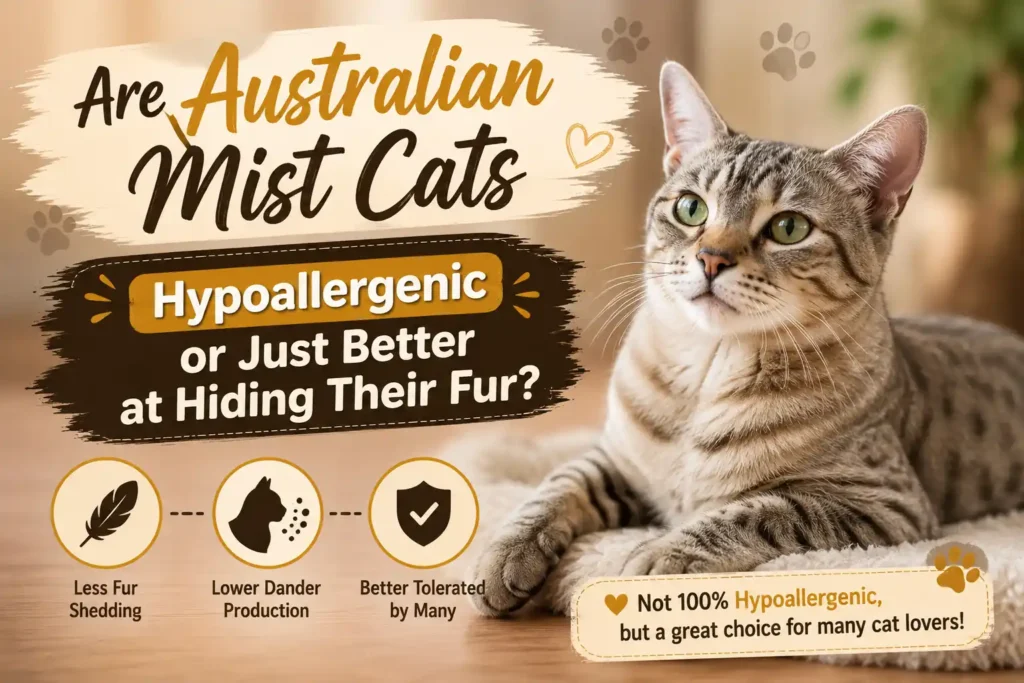
Are Australian Mist Cats Hypoallergenic? The short answer is no. Like every other cat breed, the Australian Mist produces Fel d 1, the protein found in cat saliva, skin, and urine that triggers most human allergies. This protein spreads through grooming and ends up on the fur, then floats into the air on tiny skin flakes called dander. Some owners say their Australian Mist seems easier on their allergies than other breeds, but this is likely due to lower shedding, not lower Fel d 1 production.
So while the coat may release less loose hair around your home, the actual allergen level stays close to that of most other cats. If you are asking, “Are Australian Mist Cats Hypoallergenic?” because you have a mild allergy, this breed might feel manageable with the right care. But if your reactions are severe, it is important to understand that no scientific study or veterinary organization has ever labeled this breed allergy-safe.
Are Australian Mist Cats Hypoallergenic? What the Science Actually Says
The short version: are Australian Mist cats hypoallergenic? No, and the reason has nothing to do with fur length. The protein behind almost every cat allergy is called Fel d 1, and it’s produced in a cat’s saliva, skin, and sebaceous glands rather than in the hair itself.
The American College of Allergy, Asthma & Immunology (ACAAI) has stated plainly that no breed has ever been scientifically proven to be hypoallergenic, and that includes so-called “low-allergen” breeds sold at a premium. One independent allergen-scoring tool rated the Australian Mist at just 4.5 out of 10 for allergy-friendliness, which is squarely average. So while the coat is short and tidy, it doesn’t change how much Fel d 1 the cat produces or spreads around your home.
Are Australian Mist Cats Hypoallergenic?
No. Australian Mist cats produce normal levels of Fel d 1, the main allergy-triggering protein, and no cat breed has been medically proven hypoallergenic. Their short coat only reduces visible shedding, not allergen exposure.
Thinking About an Australian Mist? Check This Before You Buy. Read more in 7 Australian Mist Cat Facts, Including One Big Hypoallergenic Myth.
Why Australian Mist Cats Cause Allergies
Allergic reactions to any cat, including the Australian Mist, come down to Fel d 1 exposure rather than actual cat hair. This glycoprotein sits on the skin and coats loose hairs, dust, and household fabric every time the cat grooms itself. Because the Australian Mist is a sociable, lap-loving breed developed from Burmese and Abyssinian lines, it spends a lot of time in close, direct contact with people and furniture, which spreads the allergen efficiently through the home.
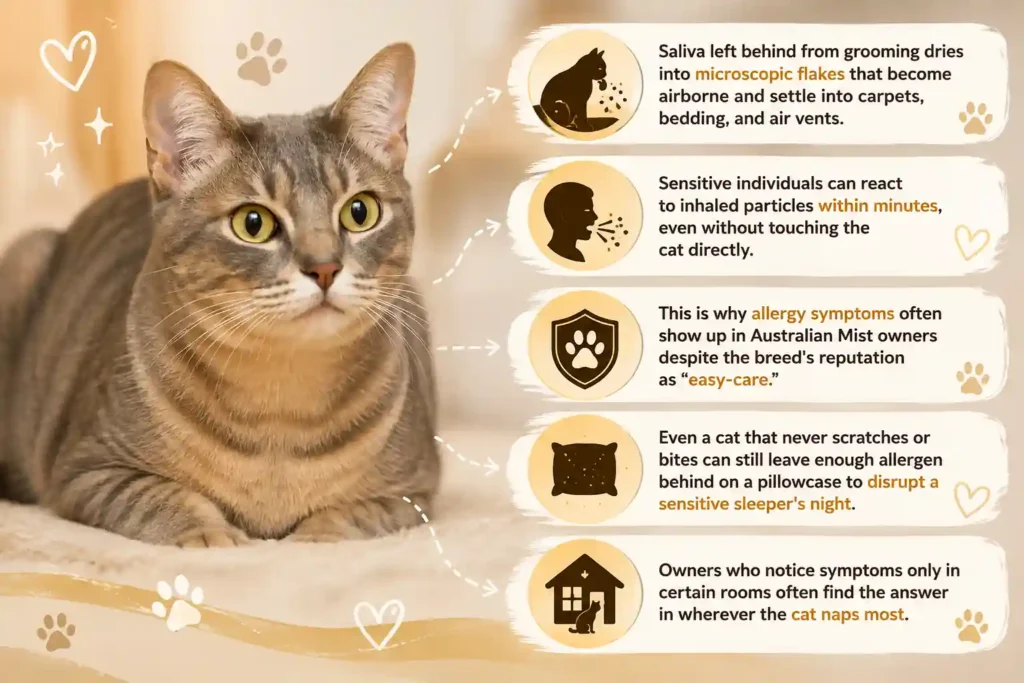
- Saliva left behind from grooming dries into microscopic flakes that become airborne and settle into carpets, bedding, and air vents.
- Sensitive individuals can react to inhaled particles within minutes, even without touching the cat directly.
- This is why allergy symptoms often show up in Australian Mist owners despite the breed’s reputation as “easy-care.”
- Even a cat that never scratches or bites can still leave enough allergen behind on a pillowcase to disrupt a sensitive sleeper’s night.
- Owners who notice symptoms only in certain rooms often find the answer in wherever the cat naps most.
How Much Do Australian Mist Cats Shed?
Here’s a fact worth knowing before comparing shedding levels across breeds: the Australian Mist has a single, short, satin-textured coat that sheds lightly to moderately compared with double-coated breeds. Because there’s no dense undercoat, loose hair is easier to manage with a weekly brush, and most owners don’t find hair on furniture to be a major issue.
That said, moderate shedding still means allergen-carrying hair and dander end up on sofas, rugs, and clothing over time. Below is a simple comparison to put the Australian Mist’s shedding into context against a few well-known breeds.
Table 1: Shedding comparison across popular cat breeds
| Breed | Coat Type | Shedding Level | Recommended Brushing |
| Australian Mist | Short, single coat | Light to moderate | 1-2 times per week |
| Persian | Long, double coat | Heavy | Daily |
| Siberian | Long, triple coat | Moderate (lower Fel d 1) | 2-3 times per week |
| Russian Blue | Short, dense double coat | Moderate | 2 times per week |
| Sphynx | Hairless | Minimal hair, high oil/dander | Bathing weekly |
What Causes Allergic Reactions to Australian Mist Cats?
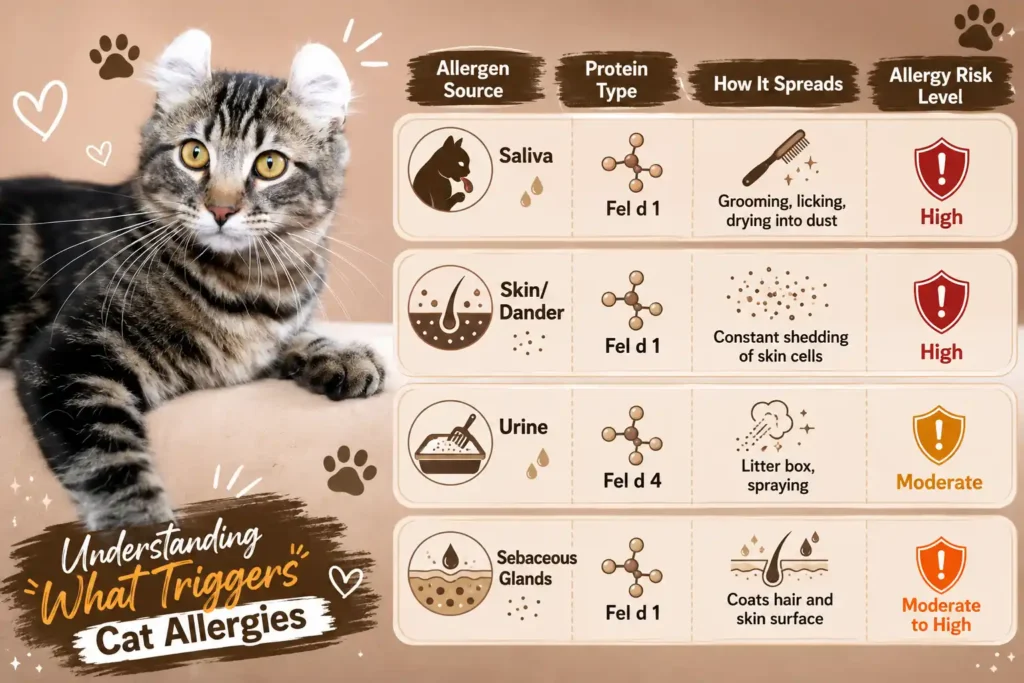
Most allergic reactions trace back to four allergen sources every cat produces, and the Australian Mist is no different from any other breed in this regard. Saliva deposited during self-grooming dries and flakes off as airborne particles. Skin dander sheds constantly, even from short-coated cats, and carries Fel d 1 directly into carpets and air filters.
Urine contains a related allergen protein that can trigger reactions in litter box areas. Sebaceous gland secretions on the skin also coat each hair strand, meaning even minimal shedding still distributes allergens. The table below breaks down where these allergens actually come from.
Table 2: Where cat allergens come from
| Allergen Source | Protein Type | How It Spreads | Allergy Risk Level |
| Saliva | Fel d 1 | Grooming, licking, drying into dust | High |
| Skin/Dander | Fel d 1 | Constant shedding of skin cells | High |
| Urine | Fel d 4 | Litter box, spraying | Moderate |
| Sebaceous Glands | Fel d 1 | Coats hair and skin surface | Moderate to High |
Are Australian Mist Cats Suitable for Allergy Sufferers?
Suitability really depends on the severity of a person’s allergy rather than the breed itself. People with mild seasonal-type sensitivities sometimes tolerate an Australian Mist reasonably well, especially with strict grooming and cleaning routines in place. Those with moderate to severe cat allergies, including asthma triggered by cat dander, are usually advised by allergists to avoid cat ownership altogether, regardless of breed.
- Spend extended time around an adult Australian Mist, not just a kitten, before adopting; allergen production can vary with age, hormone levels, and neuter status.
- Speak with a board-certified allergist and consider a skin-prick or blood test for Fel d 1 sensitivity as a practical first step before committing.
- Some households foster an adult Australian Mist for a trial period, offering a realistic, low-risk preview of how the body actually responds over several weeks.
How to Reduce Allergens From an Australian Mist Cat
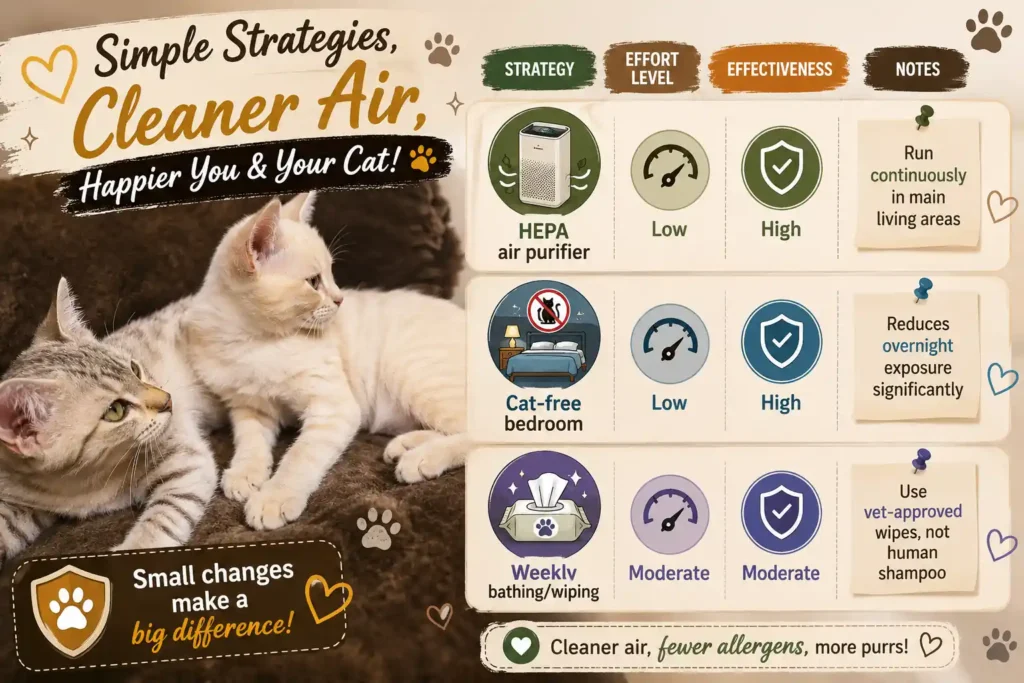
While you can’t eliminate Fel d 1, several evidence-based steps meaningfully reduce airborne allergen levels in a home with an Australian Mist. Keeping the cat out of the bedroom is one of the most effective single changes, since it gives allergy sufferers several allergen-free hours of sleep each night. HEPA air purifiers capture airborne dander particles that regular vacuuming misses.
Washing hands after handling the cat and avoiding touching your face afterward cuts direct exposure. Swapping carpets for hard flooring and washable rugs also reduces the surface area where allergens can build up over time.
Table 3: Practical allergen-reduction strategies and their effectiveness
| Strategy | Effort Level | Effectiveness | Notes |
| HEPA air purifier | Low | High | Run continuously in main living areas |
| Cat-free bedroom | Low | High | Reduces overnight exposure significantly |
| Weekly bathing/wiping | Moderate | Moderate | Use vet-approved wipes, not human shampoo |
| Hard flooring over carpet | High (upfront) | Moderate to High | Easier to clean allergen buildup |
| HEPA vacuum, twice weekly | Moderate | Moderate | Standard vacuums recirculate dander |
How Can I Reduce Allergens From My Australian Mist?
Run a HEPA air purifier, keep the cat out of the bedroom, wash hands after contact, and vacuum with a HEPA-filter vacuum at least twice a week. These four habits combined can noticeably lower airborne Fel d 1 levels at home.
Australian Mist Cat Grooming for Allergy Control
Grooming won’t cure a cat allergy, but a consistent routine does reduce how much allergen circulates through the house. Brushing an Australian Mist two to three times a week removes loose hair and dander before it settles into furniture, which lines up with grooming guidance from breed clubs recognized by the Governing Council of the Cat Fancy (GCCF). Here’s how to build an effective routine:
- Brush 2–3 times a week to remove loose hair and dander before it settles into furniture
- Wipe the coat with a damp microfiber cloth or unscented pet wipe between baths to capture surface dander without over-bathing (which can dry the skin and trigger more shedding)
- Let a non-allergic person handle brushing, ideally outdoors or in a well-ventilated room
- Keep up with nail trimming and ear cleaning to round out the routine
- Stick to short sessions: five minutes, three times a week beats one long, stressful grooming marathon that leaves both cat and owner covered in loose fur
Can You Live With an Australian Mist If You Have Allergies?
For many people, yes, with the right precautions, realistic expectations, and ongoing management. Living comfortably with an Australian Mist as an allergy sufferer usually means combining air filtration, restricted access to sleeping areas, frequent grooming, and sometimes allergy medication or immunotherapy prescribed by a doctor. It’s worth being honest about severity: someone with a mild sniffle around cats has very different odds of success than someone who’s had an asthma attack triggered by dander.
If you’re still asking yourself whether Australian Mist cats’ hypoallergenic status makes them worth the risk, the safest approach is a supervised trial visit with the breed before committing, ideally recommended by a breeder registered with the International Cat Association (TICA) or the GCCF, who can speak to the individual cat’s temperament and coat condition.
Frequently Asked Questions
Are Australian Mist cats low-allergen?
Not officially. They produce standard levels of Fel d 1 like most breeds, though their short coat can make loose hair easier to manage day-to-day.
Do Australian Mist cats shed a lot?
No, shedding is light to moderate thanks to their short single coat. Weekly brushing is generally enough to keep it under control.
Can Australian Mist cats cause allergy symptoms?
Yes. Any cat, including the Australian Mist, can trigger sneezing, itchy eyes, or asthma in sensitive people because of the Fel d 1 protein in saliva and skin.
How can I reduce allergens from my Australian Mist?
Use a HEPA air purifier, keep the cat out of bedrooms, brush 2-3 times weekly, and wash hands after contact to lower airborne allergen exposure.