
Australian Mist cat grooming starts with a simple weekly brushing routine, since this breed’s short, dense coat sheds all year and needs little more than a rubber brush or grooming glove to stay smooth. Brushing once or twice a week removes loose hair before it ends up on your furniture, spreads natural oils through the fur for a healthy shine, and gives you a chance to spot mats, dry skin, or fleas early.
Beyond brushing, a full Australian Mist cat grooming routine also covers nail trims every two to three weeks, quick ear checks for wax or odor, and teeth brushing a few times a week to prevent gum disease. None of these steps take long on their own, but doing them consistently is what keeps your cat’s coat soft, healthy, and free of tangles.
How Often Should You Do Australian Mist Cat Grooming?
Grooming needs shift depending on the task, so there’s no single answer to “how often.” Brushing is the most frequent job because Australian Mist cats shed lightly all year, not just seasonally. Nails, ears, eyes, and teeth each run on their own schedule, and skipping any of them for too long can lead to real discomfort.
Think of grooming less as one big weekly chore and more as several small habits spread across the week. Setting a loose calendar reminder for each task makes it far easier to stay consistent. The table below breaks it down so you’re not guessing.
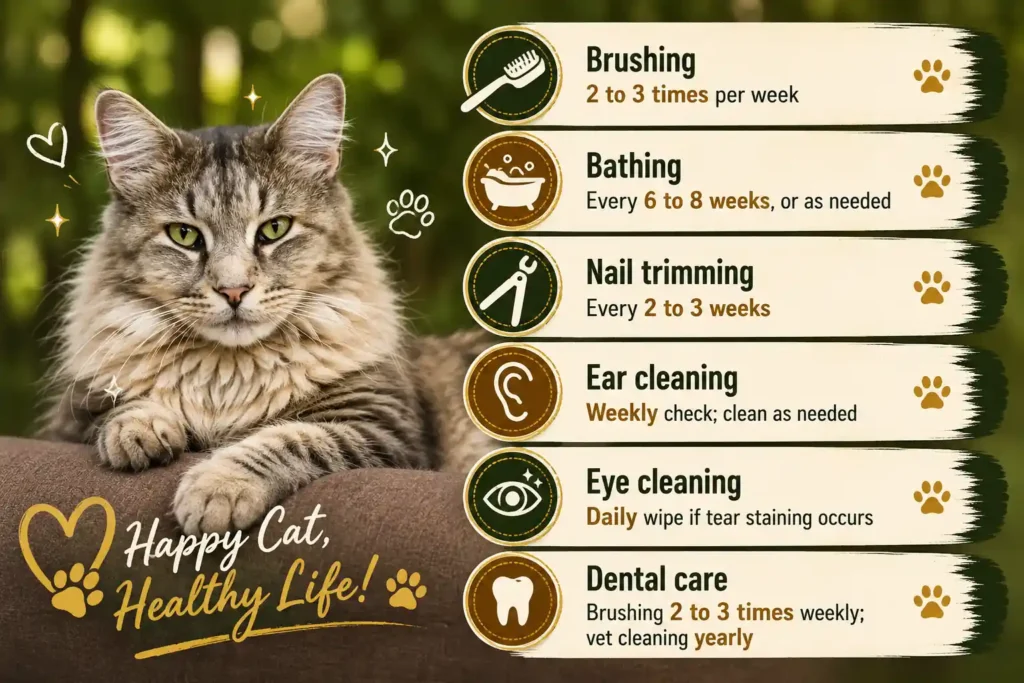
| Grooming Task | Recommended Frequency |
| Brushing | 2 to 3 times per week |
| Bathing | Every 6 to 8 weeks, or as needed |
| Nail trimming | Every 2 to 3 weeks |
| Ear cleaning | Weekly check; clean as needed |
| Eye cleaning | Daily wipe if tear staining occurs |
| Dental care | Brushing 2 to 3 times weekly; vet cleaning yearly. |
Understanding the Australian Mist Coat
The Australian Mist was developed in Australia during the 1970s by crossing Burmese, Abyssinian, and domestic shorthair cats, and it’s officially recognised by the Australian Cat Federation (ACF). Its coat is short, close-lying, and comes in a spotted or marbled pattern with a soft, almost velvety texture. Unlike long-haired breeds, this coat doesn’t tangle easily, but it still sheds fine hairs that stick to furniture and clothing.
The undercoat is thinner than a Maine Coon’s or Persian’s, which is exactly why Australian Mist cat grooming feels lighter than caring for fluffier breeds. That doesn’t mean you can skip it, though; regular brushing keeps the coat’s natural sheen intact, distributes natural skin oils evenly, and removes loose hair before it ends up on your couch or clothing.
Explore the History and Unique Traits of the Australian Mist. Read more in 7 Australian Mist Cat Facts, Including One Big Hypoallergenic Myth.
What Type of Coat Does an Australian Mist Cat Have?
An Australian Mist has a short, dense, spotted or marbled coat with minimal undercoat, making it low-shedding compared to long-haired breeds and easy to maintain with just two to three brushing sessions a week.
Brushing and Coat Care
Brushing is the backbone of any coat-care routine, and it does more than remove loose hair. It stimulates natural oil production, checks for skin issues like flaking or parasites, and gives you a chance to spot lumps or wounds early. For an Australian Mist, two to three short sessions a week are usually enough to keep the coat smooth. Skipping brushing for weeks at a time lets dead hair build up, which can lead to hairballs and skin irritation, so consistency matters more than intensity.
Choosing the Right Brush for Your Cat
Not every brush works for every coat, and using the wrong one can do more harm than good. Short-haired breeds like the Australian Mist generally do best with a rubber curry brush or a fine-toothed metal comb rather than heavy-duty deshedding tools built for thick double coats. Using a tool meant for a Persian or a Maine Coon on a short, fine coat can irritate the skin without actually removing more hair. Here’s how the main brush types compare for a short-coated breed like the Australian Mist:
| Brush Type | Best For | Notes |
| Rubber curry brush | Short, sleek coats | Removes loose hair gently; roughly $8 to $15 USD |
| Fine-toothed metal comb | Face and ear detail work | Catches fine debris and flakes |
| Bristle brush | Finishing touch, adds shine | Use after the curry brush |
| Deshedding tool | Heavy seasonal shedding | Use sparingly, about $25 to $45 USD |
How to Brush Your Cat Properly: Australian Mist Cat Grooming Steps
Follow these steps for a routine that most cats will tolerate, and some will even enjoy:
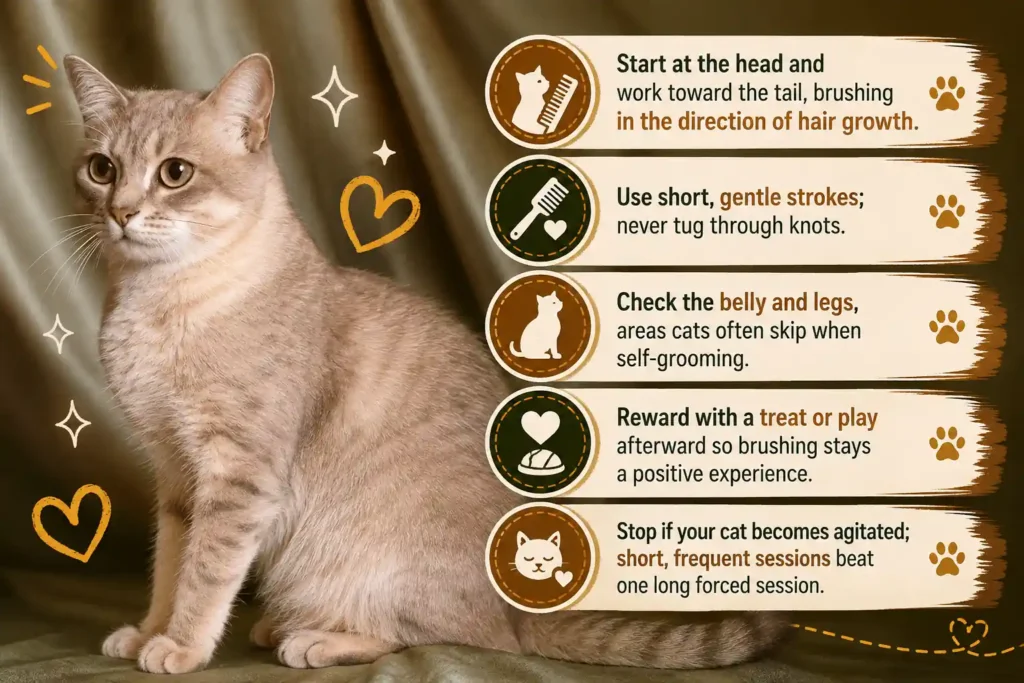
- Start at the head and work toward the tail, brushing in the direction of hair growth.
- Use short, gentle strokes; never tug through knots.
- Check the belly and legs, areas cats often skip when self-grooming.
- Reward with a treat or play afterward so brushing stays a positive experience.
- Stop if your cat becomes agitated; short, frequent sessions beat one long forced session.
Bathing Your Cat: Does It Really Need It?
Most Australian Mist cats don’t need regular baths; their grooming habits and short coat keep them clean most of the time. That said, a bath makes sense if your cat gets into something sticky or greasy, has a skin condition your vet is treating, or you’re prepping for a cat show.
Use a cat-specific shampoo, never human shampoo, since a cat’s skin pH is different and human products can cause irritation or dryness. Keep water lukewarm, avoid getting water in the ears, and dry your cat fully afterward with a towel or a low-heat dryer, since short coats chill quickly when damp.
How Often Should You Bathe an Australian Mist Cat?
Most Australian Mist cats need bathing only every 6 to 8 weeks or less, since their self-grooming and short coat keep skin oils balanced; more frequent bathing can actually strip natural oils and dry out the skin.
Nail Trimming for Cats
Overgrown nails can curl into the paw pad or catch on carpet, so trimming every 2 to 3 weeks is a good baseline for most indoor cats. Use a cat-specific nail clipper and trim just the sharp tip, avoiding the pink quick where blood vessels sit. If your cat’s nails are dark and the quick isn’t visible, trim small amounts at a time to stay safe, and keep styptic powder on hand in case you nick the quick by accident. Scratching posts help keep nails naturally shorter between trims.
How Often Should You Trim a Cat’s Nails?
Most indoor cats, including the Australian Mist, need their nails trimmed every 2 to 3 weeks. Kittens and very active outdoor cats may need slightly more frequent trims to prevent snagging or overgrowth.
Ear Cleaning for Cats
Check ears weekly for redness, odor, or dark debris, all of which can signal ear mites or infection. Clean only the visible outer ear with a vet-approved cleaner and a cotton ball; never insert cotton swabs into the ear canal, as this can cause injury. Healthy ears are pale pink and mostly odor-free, with little to no visible wax buildup. If you notice frequent head-shaking or scratching, it’s worth a vet visit rather than more cleaning at home.
Eye Cleaning for Cats
Some cats develop mild tear staining around the inner eye corners, especially light-coated cats. A damp, soft cloth wiped gently outward from the corner once a day keeps the area clean without irritating the eye. Never use cotton balls with loose fibers near the eyes, and always use a separate cloth section for each eye to avoid spreading any infection between them. Contact your vet if you notice thick discharge, redness, or squinting, since these can point to infection.
Dental Care for Cats
Dental disease is one of the most common health issues in adult cats, and organizations like the World Small Animal Veterinary Association (WSAVA) recommend brushing a cat’s teeth several times a week alongside annual veterinary dental checks. Use a cat-specific toothpaste, never human toothpaste, which contains ingredients unsafe for cats, and a small, soft-bristled brush or finger brush.
Watch for warning signs like persistent bad breath, red or swollen gums, or reluctance to eat, since these often point to dental disease that needs veterinary attention. Dental treats and specially designed kibble can help between brushings, but they don’t replace brushing entirely.
Managing Shedding: Australian Mist Cat Grooming for Shedding Season
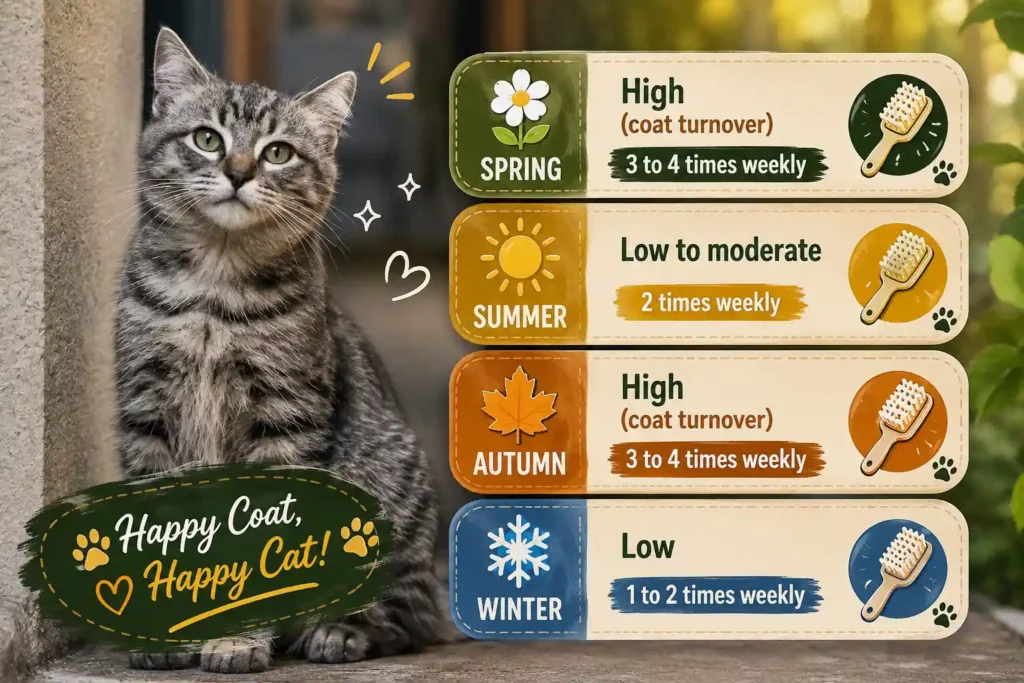
Australian Mist cats shed lightly year-round, with a noticeable uptick during seasonal coat changes in spring and autumn. Increasing brushing frequency during these windows and switching to a rubber curry brush for extra loose-hair removal helps manage shedding before it spreads across furniture and clothing. Diet also plays a role; a balanced diet with adequate omega-3 fatty acids supports healthier skin and less excessive shedding. The table below shows how shedding levels typically shift through the year.
| Season | Shedding Level | Suggested Brushing |
| Spring | High (coat turnover) | 3 to 4 times weekly |
| Summer | Low to moderate | 2 times weekly |
| Autumn | High (coat turnover) | 3 to 4 times weekly |
| Winter | Low | 1 to 2 times weekly |
Grooming Kittens vs. Adult Cats
Kittens should be introduced to grooming early, ideally by 8 to 10 weeks old, using very short, gentle sessions to build positive associations. Their nails grow faster and need trimming almost weekly, while their skin is more sensitive to brush pressure, so a soft brush and a light touch matter here.
Adult cats generally tolerate longer sessions and need less frequent nail trims, but senior cats often groom themselves less effectively due to arthritis or reduced flexibility, and may need more hands-on help maintaining Australian Mist cat grooming standards as they age.
Common Cat Grooming Mistakes to Avoid
A few habits show up again and again, even among well-meaning owners, and they’re worth watching for in your own routine:
- Using human shampoo or soap, which disrupts a cat’s skin pH.
- Cutting nails too short and hitting the quick.
- Skipping the belly and legs during brushing.
- Forcing a stressed cat through a full session instead of stopping early.
- Ignoring bad breath or tartar buildup instead of scheduling a dental check.
Making Grooming a Stress-Free Routine
Cats respond best to predictability, so grooming at the same time and place each session helps reduce anxiety. Keep sessions short at first, pair them with treats or gentle praise, and never punish a cat for pulling away. Choose a quiet room away from other pets, and keep tools within easy reach so you’re not fumbling mid-session.
Watching for tail flicking, flattened ears, or growling gives you a heads-up to pause before things escalate. Over time, most cats learn to associate grooming with calm, positive attention rather than stress.
When Does Your Cat Need Professional Grooming?
Some situations call for a professional groomer rather than a DIY approach: severe matting, an anxious cat that won’t tolerate handling, or a senior cat with mobility issues that makes self-grooming difficult. Certified groomers trained through organizations like the National Cat Groomers Institute of America (NCGI) know how to handle stressed cats safely and can spot skin or health issues you might miss, from early-stage matting to skin infections. Professional grooming sessions typically range from $40 to $90 USD depending on services like deshedding treatments, sanitary trims, and nail care, and are worth considering a few times a year even for low-maintenance breeds like the Australian Mist.
Frequently Asked Questions
How often should I groom my Australian Mist cat?
Brush your Australian Mist 2 to 3 times a week, trim nails every 2 to 3 weeks, and check ears and eyes weekly. Bathing is only needed every 6 to 8 weeks or as required.
Do Australian Mist cats shed a lot?
Australian Mist cats are low to moderate shedders thanks to their short, dense coat, though shedding increases slightly during seasonal coat changes in spring and autumn.
Can I use human shampoo on my cat?
No. Human shampoo has a different pH than a cat’s skin and can cause dryness or irritation. Always use a cat-specific shampoo formulated for their skin.
How much does professional cat grooming cost?
Professional grooming typically costs between $40 and $90 USD per session, depending on the services included and your location.
At what age should kitten grooming start?
Start gentle, short grooming sessions around 8 to 10 weeks old to help kittens build positive associations with brushing, nail trims, and handling.