
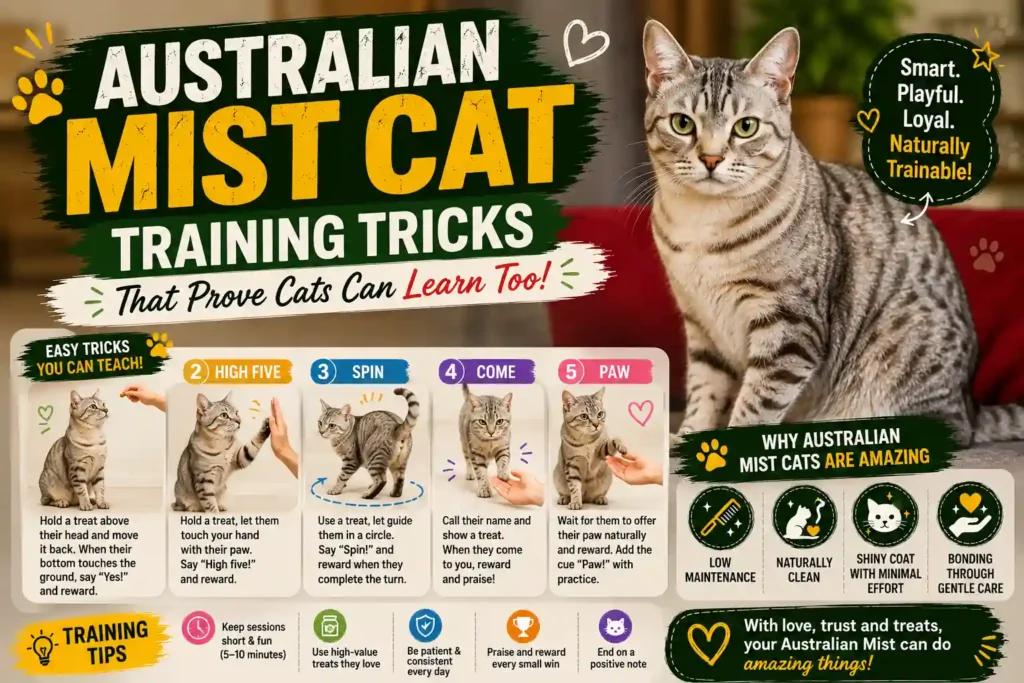
Australian Mist Cat Training works best when you understand this breed’s background first. Bred in Australia in the 1970s from Burmese, Abyssinian, and domestic shorthair cats, the Australian Mist is naturally social, calm, and eager to please its owner. This gentle temperament makes Australian Mist Cat Training faster and easier than training many other cat breeds, since these cats respond well to positive reinforcement and short, consistent sessions.
Most owners notice clear behavior changes within two to three weeks, as long as they stay patient and reward good behavior right away. With the right approach, you can teach your Mist cat good litter box habits, proper scratching behavior, and basic commands without much stress on either side.
Australian Mist Cat Training: Understanding Their Personality First
Before you start any training plan, it helps to know what makes this breed tick. Australian Mists are playful as kittens but settle into calm, people-focused adults who genuinely enjoy human company. They rank among the more trainable cat breeds because of their Abyssinian ancestry, which brings curiosity and a strong food drive.
The International Cat Association (TICA) describes the breed as loyal, sociable, and easy to train, which lines up with what reward-based methods need to work. Mists dislike harsh corrections and tend to shut down if training feels stressful. Keeping sessions light, short, and food-motivated respects their temperament while building trust quickly.
Learn Everything You Need to Know About This Australian Breed. Read more in 7 Australian Mist Cat Facts, Including One Big Hypoallergenic Myth.
When to Start Training
Kittens start absorbing habits from the moment they arrive home, usually around eight to twelve weeks old. Litter box and scratching post habits should begin immediately, while name recognition and simple cues can start by ten weeks. Waiting until adulthood isn’t a dealbreaker, since Mists stay responsive well into their senior years, but early lessons stick faster. Sticking to a predictable daily routine also helps kittens settle in and learn faster. The table below outlines a general age-based training timeline you can adapt to your kitten’s pace.
| Age | Training Focus | Session Length |
| 8–10 weeks | Litter box, name recognition | 2–3 minutes |
| 10–14 weeks | Scratching post, basic cues | 3–5 minutes |
| 3–6 months | Handling, socializing, harness intro | 5–8 minutes |
| 6+ months | Advanced cues, leash walks | 5–10 minutes |
Using Positive Reinforcement Effectively
Positive reinforcement is the foundation of every successful training plan for this breed. Reward desired behavior within one to two seconds, so your cat connects the action with the treat. Small, high-value snacks such as freeze-dried chicken work better than a handful of regular kibble.
A clicker adds precision by marking the exact right moment before the reward arrives. Avoid punishment entirely, since it damages trust and can trigger anxiety-based behaviors like hiding or over-grooming. Consistency across every family member matters just as much as the reward itself.
Is Australian Mist Cat Training Difficult for Beginners?
No. Australian Mist Cat Training is considered beginner-friendly because the breed is naturally food-motivated, sociable, and eager to interact with people. Short five-minute sessions using treats and a clicker typically produce visible results within two to three weeks. Patience and consistency matter more than experience, which makes this breed a solid choice for first-time trainers.
Teaching Basic Commands and Name Recognition
Start with your cat’s name before moving to any command. Say the name, wait for eye contact or a head turn, then reward immediately. Once that’s solid, cues like “sit,” “come,” and “high-five” follow the same three-step pattern: cue, action, reward. Keep each command word short and consistent so there’s no confusion.
The Governing Council of the Cat Fancy (GCCF) highlights the breed’s intelligence and people-focused nature, both of which support short, repeated cue-and-reward cycles. Ten repetitions across a few short sessions daily usually beats one long session.
Below is a simple reference for the order in which most cats pick up common cues, along with a realistic timeline.
| Command | Cue Word | Average Time to Learn |
| Name recognition | Cat’s name | 3–7 days |
| Sit | “Sit” + hand signal | 1–2 weeks |
| Come | “Come” + clicker | 2–3 weeks |
| High-five | “Paw” + target stick | 2–4 weeks |
Litter Box Training
Most Australian Mist kittens pick up litter box habits almost instinctively, especially if they learned from their mother. Place one box per cat plus one extra, spaced apart in quiet, low-traffic areas. Scoop daily and do a full clean weekly, since this breed is sensitive to strong odors and dirty boxes.
If accidents happen outside the box, rule out a medical cause with your vet before assuming it’s behavioral. Unscented, fine-grain litter is generally the safest starting point for kittens.
Scratching Post Training
Scratching is a natural need, not a behavior to eliminate, so redirect it rather than punish it. Place a sturdy vertical post near favorite lounging spots and rub it with catnip or silvervine to encourage first use.
- Reward every scratch on the post with a treat or verbal praise
- Trim nails every two to three weeks to reduce damage while the habit forms
- Cover furniture edges temporarily with double-sided tape, which most cats dislike and avoid
- Within a few weeks, most Mists shift their scratching entirely to the approved post
Preventing Biting and Unwanted Scratching
Playful nipping is common in kittens and usually fades with the right response. Stop play immediately and step back the moment teeth touch skin, teaching your cat that biting ends the fun. Never use hands or feet as toys, since this only reinforces biting as acceptable. Offer wand toys instead so your cat directs energy toward appropriate targets.
The RSPCA recommends redirecting rough play toward toys rather than scolding, since punishment rarely reduces biting long-term. Most kittens outgrow overly rough play by six to eight months with consistent redirection.
Leash and Harness Training
Introduce the harness indoors first, letting your cat sniff and wear it for a few minutes before any walk. Add short leash-attached sessions inside the house once the harness feels normal. Reward calm behavior generously during every stage of this process.
Move outdoors only after your cat walks comfortably on leash indoors. Choose quiet, low-traffic times for early outdoor sessions to avoid overwhelming your cat. Patience here pays off, since Mists are naturally curious and often grow to enjoy supervised outdoor time.
How Many Minutes a Day Should You Train an Australian Mist Kitten?
Most trainers recommend five to ten minutes per session, repeated two to three times daily. Short sessions prevent boredom and keep motivation high, especially in food-driven breeds like the Mist. Total daily training time rarely needs to exceed twenty minutes, even when working on advanced cues.
Socializing With People and Other Pets
Early, gentle exposure to new people, sounds, and other animals shapes a confident adult cat. Introduce new pets slowly through scent swapping and short supervised meetings over several days. Let your cat approach visitors on its own terms rather than forcing interaction.
Reward calm, curious behavior around new experiences to build positive associations. Because Mists are naturally social, most adapt to multi-pet households and children faster than many other breeds.
Getting Used to Grooming and Handling
Regular handling is an important part of Australian Mist grooming. Gently touch the paws, ears, and mouth during calm moments, rewarding your cat with treats. This makes vet visits, nail trims, and grooming sessions much less stressful.
- Short, frequent sessions work better than one long handling routine
- Introduce brushes and nail clippers gradually, letting your cat sniff the tool before it’s used
- Consistency here builds a cat that tolerates handling calmly for life
Common Training Problems and Simple Solutions
Even food-motivated cats occasionally lose interest or ignore a familiar cue. Boredom, a change in treats, or overly long sessions are usually the cause. Switching reward types and shortening sessions typically restores enthusiasm within a few days.
If house-training regresses suddenly, check for stress triggers like a new pet, moved furniture, or a dirty box first. The table below lists frequent issues and quick fixes worth trying before assuming a deeper problem.
| Problem | Likely Cause | Quick Fix |
| Ignoring cues | Low-value treats, fatigue | Switch treats, shorten sessions |
| Scratching furniture | Post placement or texture | Move post, add catnip |
| Litter box avoidance | Dirty box, stress, illness | Clean box, schedule a vet check |
| Excessive biting in play | Hands used as toys | Redirect to wand toys immediately |
Training Mistakes to Avoid
Skipping consistency is the single biggest reason training stalls. Mixed signals from different family members confuse cats fast, so agree on cue words in advance.
- Long sessions exceeding ten minutes often backfire, draining interest rather than building it
- Punishing accidents or mistakes damages trust and can create new anxiety-based behaviors
- Rewarding too late, more than a couple of seconds after the action, weakens the connection between behavior and reward.
Can You Train an Adult Australian Mist Cat?
Yes. While kittens learn fastest, adult Mists remain highly trainable thanks to their intelligent, food-motivated nature. Sessions may need slightly more repetition, but the same reward-based method works at any age. Many rescue Mists successfully learn new cues well into their senior years with patient, consistent practice.
How Long Does Training Usually Take?
Basic habits like name recognition often click within a week, while litter box and scratching post training can settle in two to four weeks with consistency. Household reliability across cues, handling, and socializing typically takes two to three months of regular, short practice. Every cat progresses differently, so treat these ranges as general guidance rather than a fixed deadline. Patience remains the most reliable ingredient in Australian Mist Cat Training success.
Frequently Asked Questions About Training
How old should a kitten be before starting training?
Most Australian Mist kittens can begin simple training, including name recognition and litter box habits, from around eight weeks old.
Do Australian Mist cats really enjoy learning tricks?
Yes. Their Abyssinian ancestry gives them a strong food drive and curiosity that makes trick training genuinely enjoyable for most individuals.
What treats work best for training sessions?
Small, high-value treats like freeze-dried meat or a few pieces of plain cooked chicken work better than regular kibble for reward-based sessions.
Can Australian Mist cats be leash trained?
Yes, many adapt well to a harness and leash with gradual indoor introduction before any outdoor walks.
How much does professional cat training cost if needed?
Private feline behaviour consultations in the US typically range from $75 to $200 USD per session, though most Australian Mist owners never need one given the breed’s trainability.