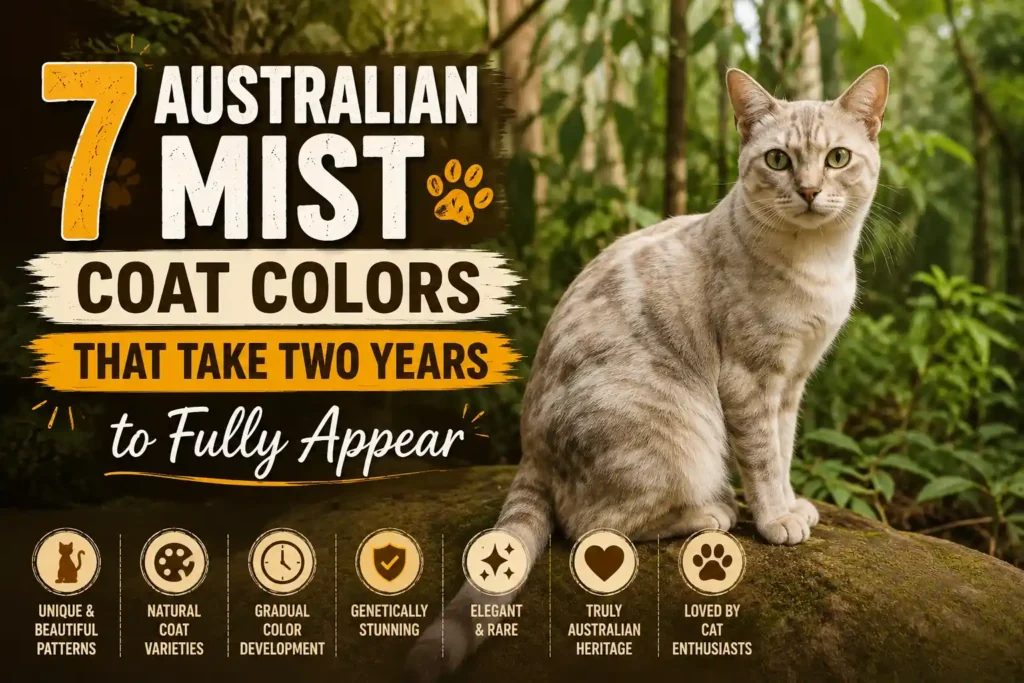
The Australian Mist has a short, dense coat with seven recognized colors, and its full adult color can take up to two years to develop. An Australian Mist coat can take up to two full years to reveal its true color, and kittens are born with patterns that look almost nothing like the adult cat’s finished look. The slow reveal is one of the most talked-about traits of this Australian-born breed, and it’s part of why so many owners fall for the Australian Mist coat before they even meet the cat’s personality.
Short, dense, and famously low-maintenance, this coat comes in seven official colors and two coat patterns, each wrapped in a soft, ticked “misted” effect that gives the breed its name. Understanding how this coat looks, changes with age, and needs to be cared for makes ownership far less confusing, and a lot more rewarding.
What Does an Australian Mist Coat Look Like?
A misted coat effect defines this breed more than any single color or pattern. Random ticking spreads across each hair shaft, layering a soft veil over a spotted or marbled base pattern. Rings and bars mark the legs and tail, while distinct lines run down the neck and across the face, forming a clear letter-M above the eyes.
The underside carries a paler, warmer tone than the back and flanks, adding to the soft, blended look breeders call “misting.” Large, expressive eyes, usually shades of green, though gold is common in kittens, complete a face that looks gentle even at rest. Decades of selective breeding, not a single gene, produced this specific, unmistakable look.
Learn Everything You Need to Know About the Australian Mist. Read more in 7 Australian Mist Cat Facts, Including One Big Hypoallergenic Myth.
Australian Mist Colors and Patterns
Seven official colors make up the Australian Mist palette: brown, blue, chocolate, lilac, caramel, gold, and peach. Each color sits over a warm, agouti-style ground shade, so the pattern always looks layered rather than flat. Two coat patterns are recognized by breed standards: spotted, with random spots of any size and shape, and marbled, with swirling patches and a horizontal flow along the body. Marbled cats must still show spotting on the belly, a detail breed judges check closely.
The Governing Council of the Cat Fancy outlines these color and pattern standards in detail for breeders and judges working with the breed. Genetics limit the breed to eumelanistic, or black-based, colors, which is why no red, cream, or tortoiseshell Australian Mists exist.
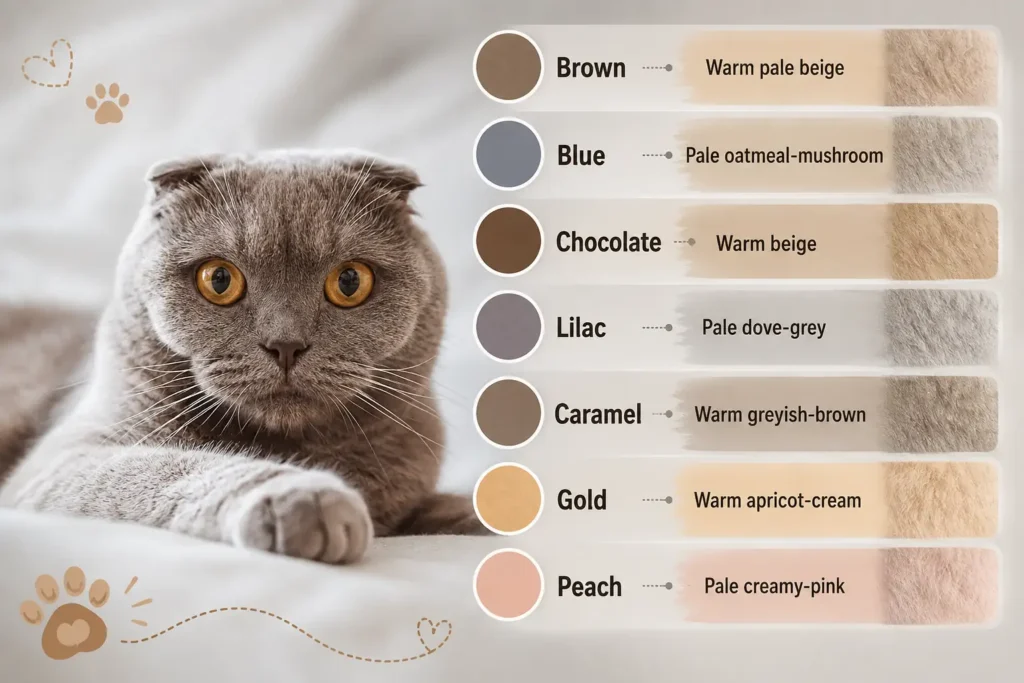
The table below breaks down each of the seven recognized Australian Mist coat colors and how they typically appear.
| Color | Ground Tone | Pattern Notes |
| Brown | Warm pale beige | Seal-brown markings with a soft misted veil |
| Blue | Pale oatmeal-mushroom | Bluish-grey markings, a cool but muted tone |
| Chocolate | Warm beige | Rich milk-chocolate colored markings |
| Lilac | Pale dove-grey | Soft pinkish-grey markings, one of the palest shades |
| Caramel | Warm greyish-brown | Muted caramel-toned markings |
| Gold | Warm apricot-cream | Golden-apricot markings with rufous warmth |
| Peach | Pale creamy-pink | Soft peachy-apricot markings, among the lightest shades |
Coat Texture and Length
Short and close-lying, the Australian Mist coat lacks an undercoat entirely, which is unusual among pedigreed breeds and directly affects how the fur feels and behaves. Hair lies flat against the body, giving the coat a silky, almost polished texture rather than a plush or fluffy one. Density remains high despite the short length, so the coat still looks glossy and well-covered rather than thin.
No fluffy ruff or feathering appears anywhere on the body, keeping the silhouette sleek year-round. Warm climates suit this coat particularly well, since the lack of undercoat means less insulation and less risk of matting. Grooming demands drop significantly compared to double-coated breeds, simply because there’s no dense underlayer to manage.
How the Coat Changes With Age
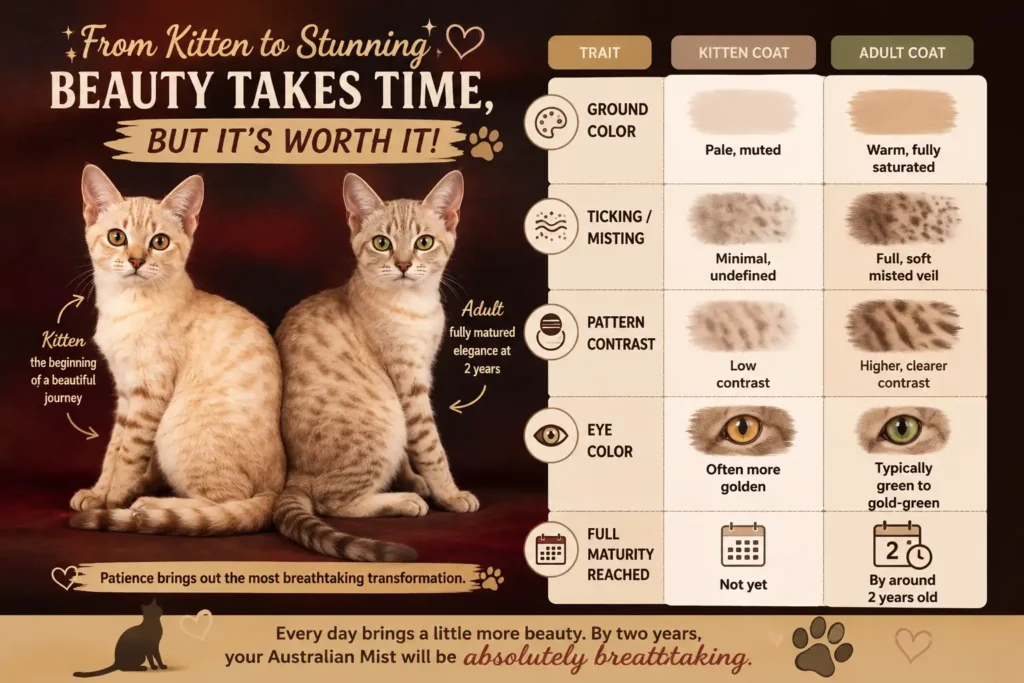
Color development in this breed is a slow process, not a one-time reveal at birth. Kittens arrive with paler, more loosely defined markings that gradually intensify and gain the signature misted ticking over time. Full adult coloration typically isn’t complete until the cat reaches around two years old, according to breed authorities including The International Cat Association. Pattern edges sharpen gradually during this period, while the ground color deepens into its final warm shade.
Owners who adopt an Australian Mist kitten should expect the coat they see at eight weeks to look noticeably different by the cat’s second birthday. Patience during this stretch pays off, since the fully misted adult coat is often what draws people to the breed in the first place.
Australian Mist Coat: Kitten vs. Adult
Kitten coats are paler and show less defined ticking, while adult coats develop deeper ground color and a fuller misted veil by around age two. Contrast between pattern and background color increases steadily through the first 24 months, and eye color can shift too, with many kittens showing more gold before settling into the breed’s typical green range.
A side-by-side comparison makes the kitten-to-adult coat transformation easier to picture.
| Trait | Kitten Coat | Adult Coat |
| Ground color | Pale, muted | Warm, fully saturated |
| Ticking / misting | Minimal, undefined | Full, soft misted veil |
| Pattern contrast | Low contrast | Higher, clearer contrast |
| Eye color | Often more golden | Typically green to gold-green |
| Full maturity reached | Not yet | By around 2 years old |
Grooming an Australian Mist
Weekly brushing is an important part of Australian Mist grooming, even though this breed’s coat rarely develops mats or tangles. A rubber grooming mitt or soft-bristle brush can remove loose hair while spreading natural oils across the skin and coat. Regular baths are usually unnecessary because the short, dense fur stays clean between grooming sessions. However, nail trimming, ear checks, and dental care are equally important for maintaining your Australian Mist’s overall health and hygiene.
Show cats or cats with skin sensitivities may need more frequent brushing, but the average pet-quality Australian Mist gets by with minimal upkeep. Grooming sessions also double as a chance to spot lumps or skin irritation early.
How Much Does This Breed Shed?
Shedding stays low to moderate year-round, since the Australian Mist has no undercoat to blow out seasonally the way double-coated breeds do. Seasonal changes in daylight can still trigger a modest increase in loose hair during spring and fall, and a weekly brushing routine catches most of it before it ends up on furniture or clothing. Low shedding doesn’t mean hypoallergenic, since allergens come primarily from saliva and skin dander rather than hair volume alone.
Keeping the Coat Healthy and Shiny
Diet quality shows up directly in coat condition, often faster than in most other areas of feline health. Complete, balanced nutrition with adequate protein and essential fatty acids supports the glossy, silky finish this breed is known for.
Veterinary nutrition experts, including those at the Cornell Feline Health Center, note that omega-3 and omega-6 fatty acids play a measurable role in skin and coat quality across cat breeds. Fresh water access, parasite prevention, and regular veterinary checkups round out the basics that keep any coat looking its best.
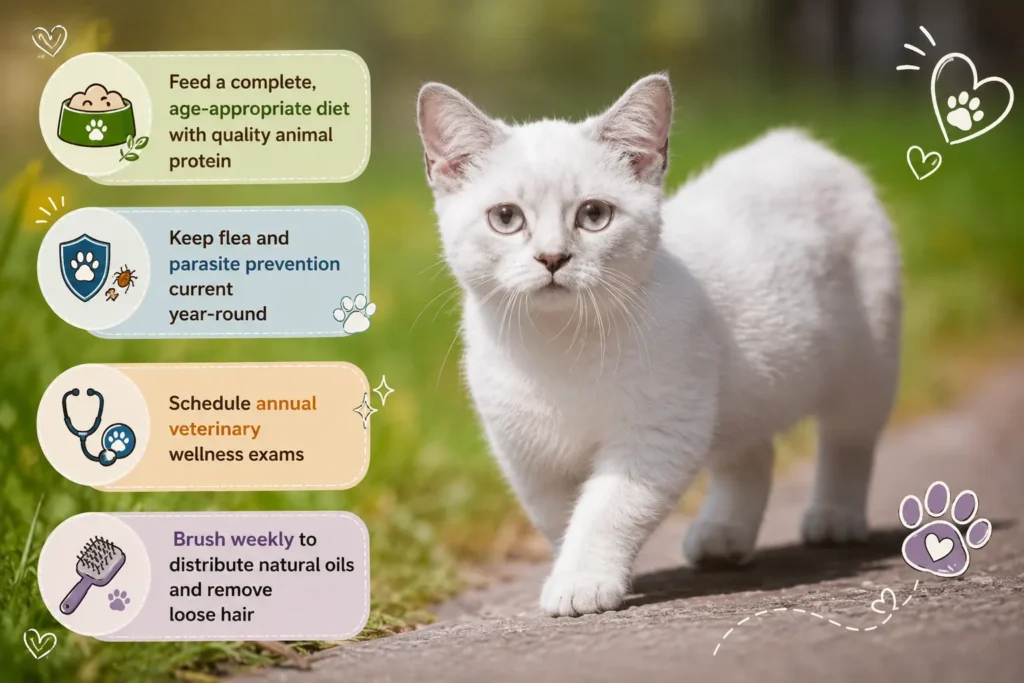
A few simple habits protect coat quality over the long run:
- Feed a complete, age-appropriate diet with quality animal protein
- Keep flea and parasite prevention current year-round
- Schedule annual veterinary wellness exams
- Brush weekly to distribute natural oils and remove loose hair
Stress and illness both tend to dull a coat before symptoms appear elsewhere, so a sudden change in shine is worth noting.
Common Coat Changes to Watch For
Not every coat change signals a problem, but a few patterns are worth tracking. Post-spay or post-neuter cats sometimes develop a temporarily fluffier, softer coat texture as hormone levels shift, a well-documented phenomenon across many cat breeds, not just this one. Dull, brittle, or thinning fur can point toward nutritional gaps, parasites, thyroid issues, or underlying illness rather than normal aging.
Excessive shedding outside the typical seasonal window deserves a closer look, especially if it comes with bald patches or visible skin irritation. Stress-related overgrooming can also thin a coat in specific spots, most often the belly or inner legs. Sudden, unexplained coat change is reasonable grounds for a vet visit rather than a wait-and-see approach.
When Should You Worry About Coat Changes?
A veterinary visit is warranted when coat changes appear suddenly, involve bald patches, or come paired with other symptoms like weight loss, lethargy, or skin irritation. Gradual seasonal shedding and normal kitten-to-adult color development are not cause for concern, but sudden dullness, thinning, or patchy hair loss often points to something that needs professional attention.
Australian Mist Coat: Quick Facts
A quick reference makes the key coat facts easy to scan at a glance.
| Feature | Detail |
| Coat length | Short |
| Undercoat | None |
| Recognized patterns | Spotted, Marbled |
| Recognized colors | 7: Brown, Blue, Chocolate, Lilac, Caramel, Gold, Peach |
| Shedding level | Low to moderate |
| Grooming frequency | Weekly brushing |
| Full color maturity | Up to 2 years |
| Breed registries | GCCF, TICA |
| Breed origin | Australia, 1970s |
Two Years to Bloom, A Decade of Low Maintenance
Few coat stories in the cat world unfold quite like this one, with pattern and color still settling in long after most kittens have already grown up. Patience during those first two years earns owners a coat that’s genuinely low-maintenance for the decade-plus that follows, backed by minimal shedding and a texture that barely needs more than a weekly brush. Anyone drawn to the Australian Mist coat for its soft, misted good looks is signing up for an easy-care companion as much as a beautiful one.
Frequently Asked Questions
What type of coat does an Australian Mist have?
The Australian Mist has a short, dense, single-layered coat with no undercoat, featuring a spotted or marbled tabby pattern beneath a soft, misted ticking effect.
What colors can the coat be?
Breed standards recognize seven official colors: brown, blue, chocolate, lilac, caramel, gold, and peach, each shown over a warm agouti ground tone.
Do Australian Mist cats shed a lot?
No, shedding stays low to moderate year-round because the breed lacks an undercoat, with only a mild seasonal uptick during spring and fall.
Is their coat soft?
Yes, the coat feels silky and smooth to the touch, lying flat against the body rather than feeling plush, wiry, or fluffy.
How often should an Australian Mist be groomed?
Weekly brushing is generally enough to remove loose hair, distribute natural skin oils, and keep the coat looking glossy and well-maintained.