
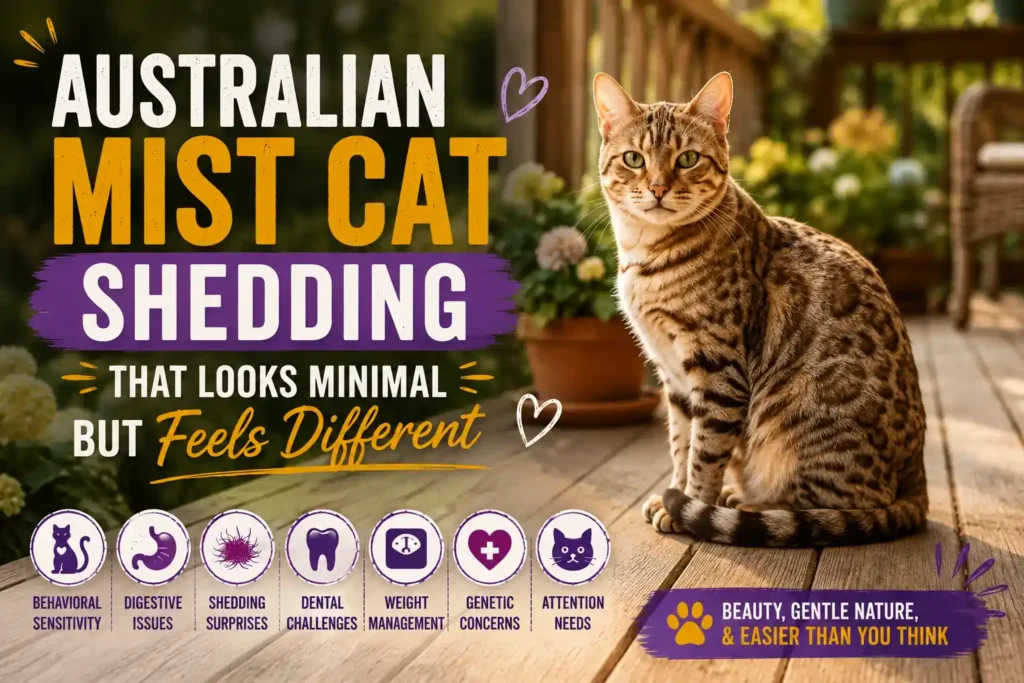
Australian Mist shedding is generally low because the breed has a short, close-lying coat without the thick undercoat that causes heavy seasonal shedding in many double-coated cats. However, Australian Mist shedding still occurs naturally throughout the year as old or damaged hairs are replaced, and the amount can increase with seasonal changes, stress, poor nutrition, skin problems, or excessive grooming.
A gentle weekly brush is usually enough to remove loose fur and keep the coat clean and manageable. Most healthy Australian Mists do not experience dramatic seasonal “coat blowouts,” making loose hair easier to control than in many long-haired or double-coated breeds. If shedding suddenly becomes heavy or is accompanied by bald patches, itching, redness, or changes in the skin, a veterinary check is recommended to rule out an underlying health or skin problem.
Do Australian Mist Cats Shed?
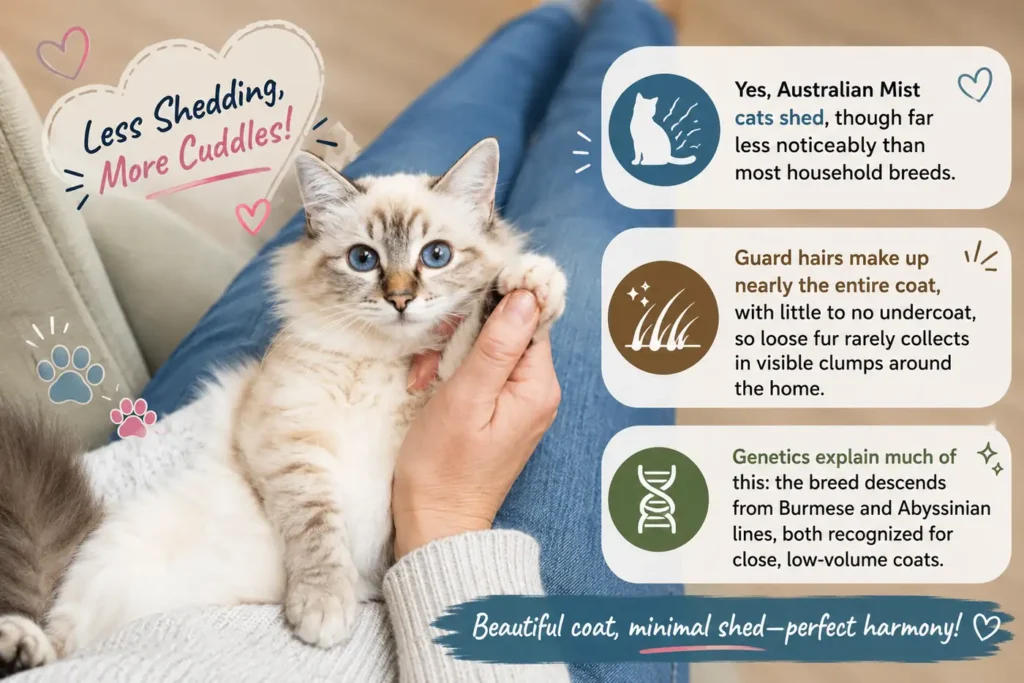
Yes, Australian Mist cats shed, though far less noticeably than most household breeds. Guard hairs make up nearly the entire coat, with little to no undercoat, so loose fur rarely collects in visible clumps around the home. Genetics explain much of this: the breed descends from Burmese and Abyssinian lines, both recognized for close, low-volume coats.
Regular shedding still happens as part of the normal hair growth cycle, since every cat continuously grows and releases hair. Owners sensitive to cat hair on furniture or clothing often find this breed easier to manage than long-haired alternatives. Breed standards from the International Cat Association (TICA) confirm the coat is short and lacks an undercoat, which explains the lighter shedding pattern.
How Much Do Australian Mist Cats Shed?
Shedding volume stays low across every life stage, though it never disappears completely. Kittens release very little hair while their coat pattern is still developing, and adults settle into a steady, light shedding rhythm once the coat matures around age two.
Weekly brushing removes most loose hair before it ever reaches the floor. Total hair loss runs noticeably lower month to month compared with plush or double-coated cats. The table below breaks down what to expect at each life stage, giving new owners a clear reference point.
| Life Stage | Typical Shedding Level | Coat Notes |
| Kitten (0–6 months) | Minimal | Coat pattern and ticking still developing |
| Adolescent (6–18 months) | Light to moderate | Pattern becomes more defined |
| Adult (2+ years) | Light, consistent | Coat reaches full color and pattern maturity |
| Senior (10+ years) | Light, may increase slightly | Skin and coat can thin with age |
When Do Australian Mist Cats Shed the Most?
Shedding peaks tend to follow daylight changes rather than the calendar. A photoperiod response lets cats sense shifts in daylight hours, cueing hair follicles into a new growth phase. Indoor cats under artificial light see this pattern blur, often shedding at a low, steady rate all year instead of two sharp peaks. Spring and early autumn still bring a slightly noticeable uptick for many households, even indoors. Homes with large windows or outdoor access tend to show more defined seasonal shedding than fully indoor setups.
Why Is My Australian Mist Shedding So Much?
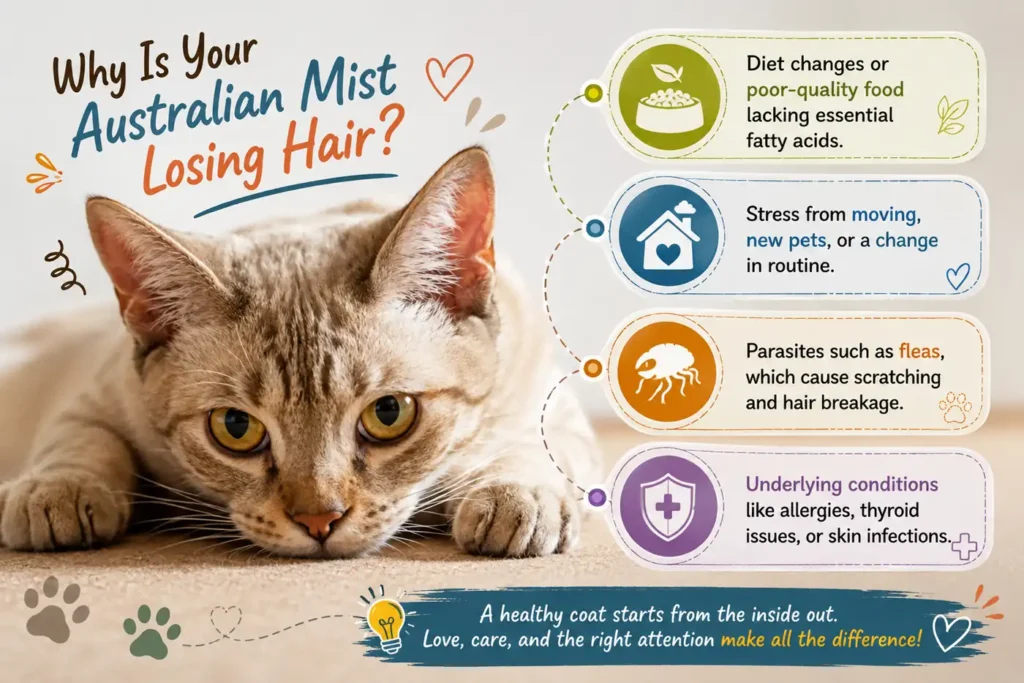
A sudden jump in hair loss usually points to something beyond normal coat cycling. Common triggers include:
- Diet changes or poor-quality food lacking essential fatty acids
- Stress from moving, new pets, or a change in routine
- Parasites such as fleas, which cause scratching and hair breakage
- Underlying conditions like allergies, thyroid issues, or skin infections
Nutrition plays a particularly large role, since a diet low in protein and omega fatty acids weakens hair shafts and speeds up hair loss. A veterinary visit remains the fastest way to rule out medical causes when shedding suddenly increases beyond what feels typical for this breed.
How to Reduce Shedding in Your Australian Mist
Consistent grooming makes the biggest difference for any low-shedding breed. A few habits keep loose hair to a minimum:
- Brush weekly with a soft rubber mitt or fine-tooth comb
- Feed a complete, protein-rich diet with adequate omega-3 and omega-6 fatty acids
- Keep fresh water available, since hydration supports skin and coat health
- Reduce stress through predictable routines and enough enrichment
- Schedule routine vet checkups to catch health issues early
None of these steps eliminate shedding entirely, since hair loss is a normal biological process. Noticeably less fur ends up on furniture and clothing once these habits become routine.
Australian Mist Shedding at a Glance
Very little hair loss occurs year-round in this breed, thanks to a short, undercoat-free coat. Weekly brushing, a protein-rich diet, and low stress levels keep loose fur to a minimum in most households
How Often Should You Brush an Australian Mist?
Once-weekly brushing covers most of this breed’s grooming needs. A five-to-ten-minute session with a rubber grooming mitt or fine-tooth metal comb removes loose hair before it spreads around the house. Shedding-heavy periods in spring and autumn may call for two short sessions instead of one.
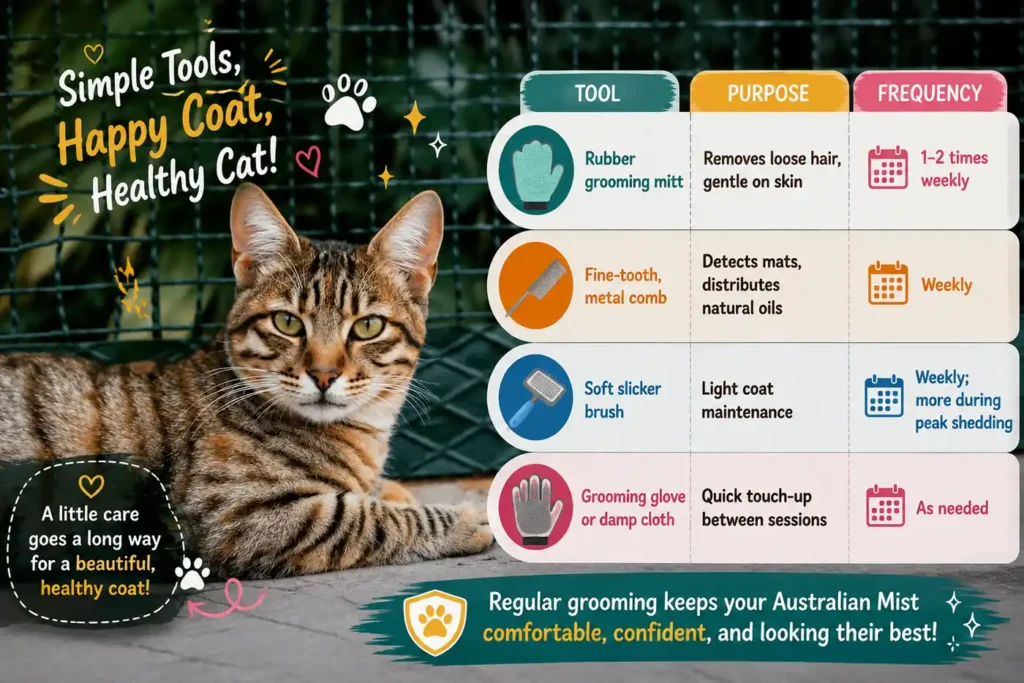
Bathing stays unnecessary for most cats of this breed, since the short coat cleans itself efficiently through normal grooming behavior. Nail trims, ear checks, and dental care fit naturally into the same weekly routine. The table below lists grooming tools that suit this coat type, along with how often each earns a spot in the routine.
| Tool | Purpose | Frequency |
| Rubber grooming mitt | Removes loose hair, gentle on skin | 1–2 times weekly |
| Fine-tooth metal comb | Detects mats, distributes natural oils | Weekly |
| Soft slicker brush | Light coat maintenance | Weekly; more during peak shedding |
| Grooming glove or damp cloth | Quick touch-up between sessions | As needed |
Australian Mist Shedding During Seasonal Changes
Seasonal light changes still influence indoor cats, even without direct sun exposure. Melatonin levels shift with day length, and this hormone signals hair follicles to move between growth and rest phases. Spring typically brings the most noticeable shedding as cats lose lingering winter density, while autumn brings a smaller, secondary increase.
Central heating and air conditioning can blur these signals further, spreading hair loss more evenly across the year rather than concentrating it into two short windows. Extra brushing during the two seasonal peaks, roughly ten to fifteen minutes twice a week, keeps fur manageable without much added effort.
Australian Mist Shedding vs Other Cat Breeds
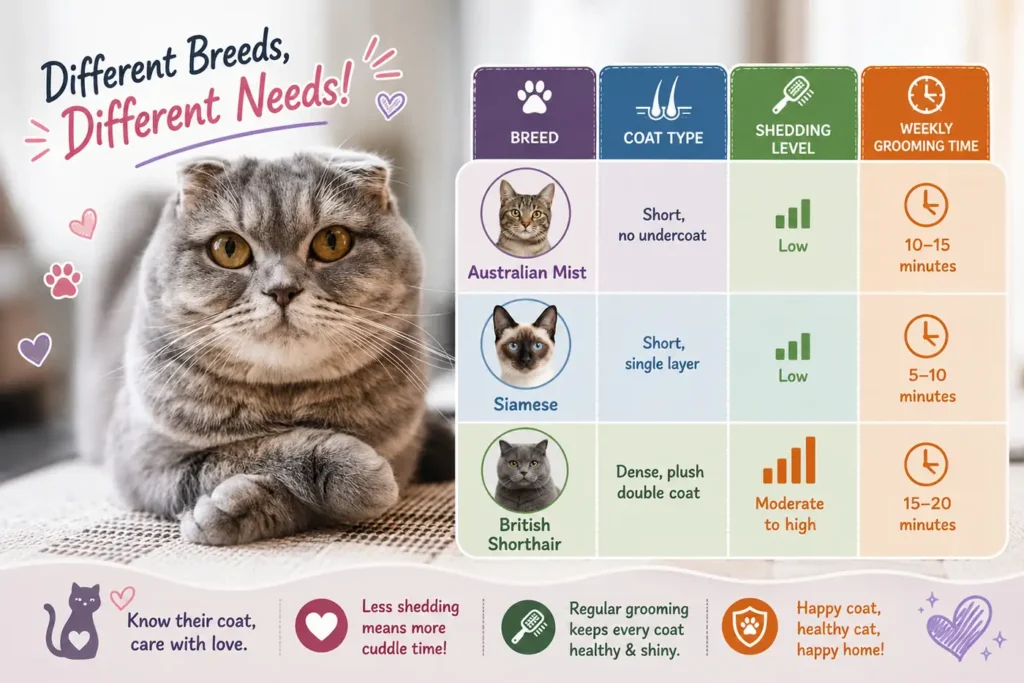
Coat structure explains most of the difference between breeds when it comes to hair loss. Cats with a dense double coat, an outer layer plus an insulating undercoat, shed far more heavily than single-layer breeds. This breed sits toward the low end of the shedding scale alongside other short-coated, undercoat-free breeds like the Siamese.
Long-haired, double-coated breeds such as the Persian or Maine Coon need considerably more grooming time each week. The Governing Council of the Cat Fancy (GCCF) breed standard likewise describes a short, close-lying coat with minimal undercoat. The comparison below puts these differences side by side.
| Breed | Coat Type | Shedding Level | Weekly Grooming Time |
| Australian Mist | Short, no undercoat | Low | 10–15 minutes |
| Siamese | Short, single layer | Low | 5–10 minutes |
| British Shorthair | Dense, plush double coat | Moderate to high | 15–20 minutes |
| Maine Coon | Long, water-resistant double coat | High | 20–30 minutes |
| Persian | Long, dense double coat | Very high | 30+ minutes daily |
Is Australian Mist Shedding Normal?
Light, even hair loss across the whole body counts as completely normal for this breed. Healthy shedding shows no bald patches, no red or irritated skin, and no change in appetite or energy. The coat underneath should look smooth and glossy rather than dull or flaky.
Normal shedding also stays fairly consistent from week to week, without sudden spikes unless a seasonal shift or stress event triggers a temporary increase. Comparing current hair loss against the cat’s usual baseline remains the simplest way to judge whether anything has changed.
When Is Excessive Shedding a Concern?
Certain signs separate ordinary coat maintenance from a problem worth a vet visit:
- Bald or thinning patches anywhere on the body
- Red, inflamed, or scabbed skin
- Constant scratching, licking, or chewing at the fur
- Dull, greasy, or flaky coat texture
- Sudden hair loss paired with appetite or energy changes
Guidance from the Cornell Feline Health Center notes that abrupt or patchy hair loss often signals an underlying issue such as allergies, parasites, or a hormonal imbalance rather than normal shedding. Booking a veterinary exam early usually leads to a faster, simpler resolution.
Quick Check: When Shedding Needs a Vet Visit
Bald patches, red skin, or hair loss paired with behavior changes are never normal. These signs call for a veterinary exam rather than a home remedy.
Australian Mist Shedding Summary
Australian Mist cats earn their reputation as an easy-care breed largely because of how little they shed. A short, undercoat-free coat keeps hair loss light across every life stage, with only a modest uptick during seasonal daylight shifts in spring and autumn. Sudden or heavy shedding usually points to diet, stress, parasites, or an underlying health issue rather than normal coat cycling.
Weekly brushing, a protein-rich diet, and a stable routine keep loose fur manageable, while grooming time stays far lower than with double-coated breeds like the Persian or Maine Coon. Bald patches, irritated skin, or behavior changes are never normal and deserve a prompt veterinary check. For most owners, a few minutes of weekly brushing is all it takes to keep this breed’s coat comfortably under control, hair and all.
Australian Mist Shedding FAQs
Do Australian Mist Cats Shed a Lot?
No. This breed sheds lightly compared with most cats, thanks to a short coat with no undercoat. Weekly brushing keeps loose hair to a minimum in nearly every home.
Are Australian Mist Cats Low-Shedding?
Yes, relative to most breeds. Low shedding does not equal hypoallergenic, since allergens come mainly from saliva and skin dander rather than hair alone, but less fur does mean less airborne dander.
Do Australian Mist Cats Shed More in Summer?
Slightly, especially in homes with plenty of natural light. Indoor lighting often flattens the seasonal pattern, so many cats shed at a steady, low level year-round instead of one sharp summer peak.
How Can I Stop My Australian Mist From Shedding?
Shedding cannot stop completely, since it remains a normal biological process. Weekly brushing, a balanced diet, good hydration, and low stress levels keep it at the lowest realistic level.