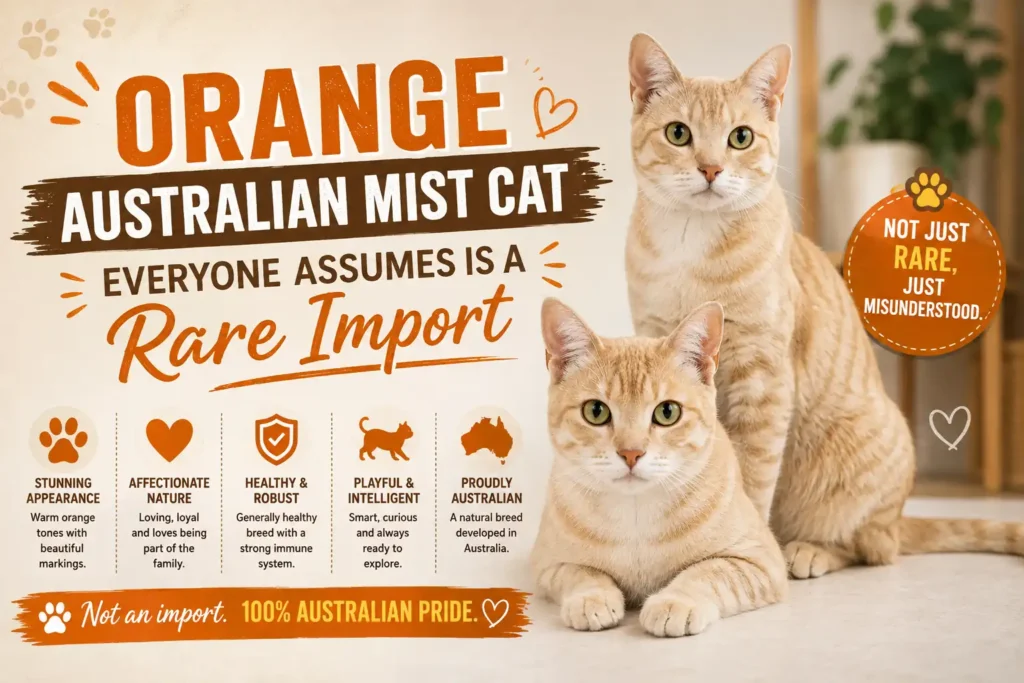
The Orange Australian Mist Cat is a warm-coated variety of the Australian Mist breed, known for its soft gold and peach markings that create a glowing, sunset-like appearance. This coloring comes from a mix of the breed’s ticked tabby pattern and warm pigment genes, giving each Orange Australian Mist Cat a slightly different shade of apricot, copper, or honey tone.
Unlike rare designer cats, this coloring is a natural result of standard Australian Mist genetics, not a separate breed. Along with its striking look, the cat is prized for its short, low-shedding coat, sturdy medium build, and calm, people-focused nature that makes it easy to live with in most homes.
What Is an Orange Australian Mist Cat?
Genetically speaking, no official “orange” color exists on the Australian Mist breed standard. Gold, called cinnamon in registries, and peach, called fawn, are the two recognized shades that read as orange, thanks to warm rufous undertones inherited from Abyssinian ancestry. Cat lovers use the term loosely online to describe any Mist with golden-apricot markings rather than a distinct color class.
Breed clubs recognize seven official colors overall, and gold and peach sit at the warmest end of that spectrum. Confirming this with a breeder avoids confusion, since “orange” is a nickname, not a registered term.
Origin and Breed History
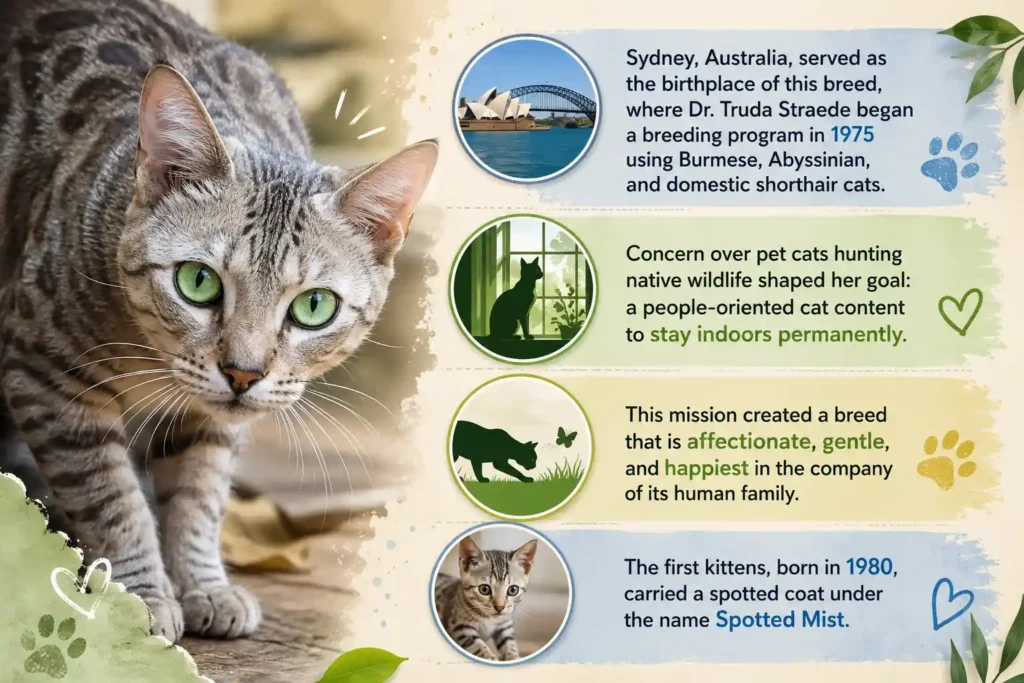
Sydney, Australia, served as the birthplace of this breed, where Dr. Truda Straede began a breeding program in 1975 using Burmese, Abyssinian, and domestic shorthair cats. Concern over pet cats hunting native wildlife shaped her goal: a people-oriented cat content to stay indoors permanently. The first kittens, born in 1980, carried a spotted coat under the name Spotted Mist.
The name changed to Australian Mist in 1998 once marbled coats were also accepted. The Governing Council of the Cat Fancy (GCCF) in the UK and the International Cat Association (TICA) both maintain official breed standards today, though the Cat Fanciers’ Association has not yet added the breed to its registry.
Orange Coat and Physical Features
Short, dense fur covers the Australian Mist body, lying close to the skin so the breed rarely needs professional grooming. Warm rufous polygenes create the gold and peach tones cat owners call “orange,” with darker markings layered over a paler, misted background.
Ears, cheeks, and the nose bridge typically show the richest copper-orange tones. Large, wide-set green eyes complete the look, though kittens are born with a yellowish tint that shifts to green by around 18 months. Full coat color can take up to two years to deepen.
What Color Is an Orange Australian Mist Cat?
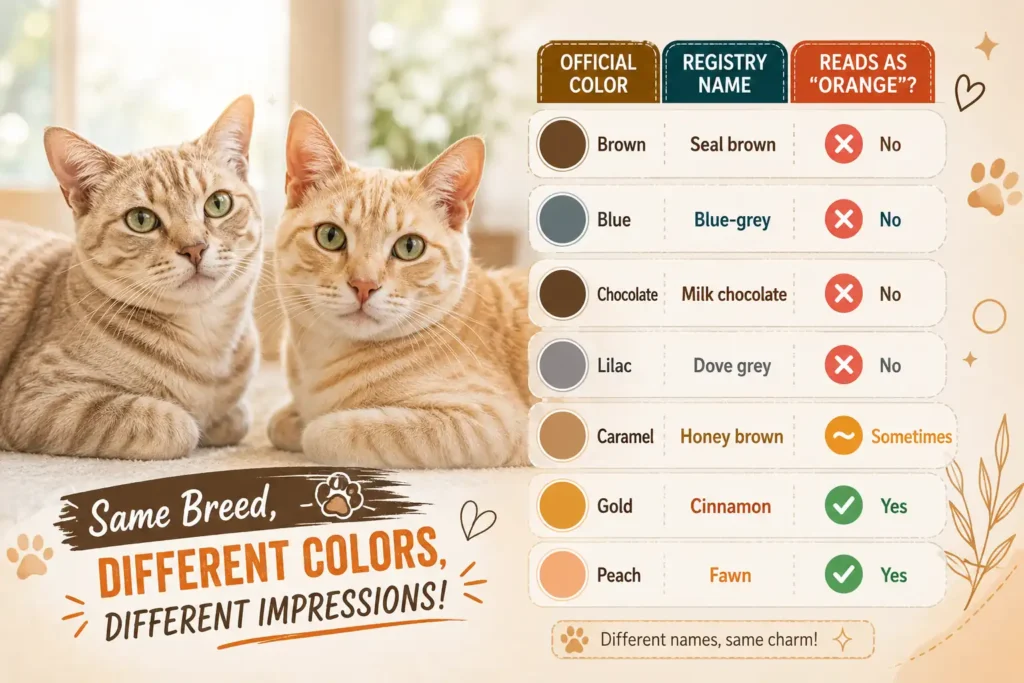
Gold (cinnamon) and peach (fawn) are the two official Australian Mist colors that produce an orange-like appearance. Rufous polygenes intensify coat warmth, giving gold cats a rich cinnamon-orange tone and peach cats a softer, pinkish-apricot shade. Neither shade appears as “orange” on official paperwork, though both read that way visually.
The table below breaks down all seven officially recognized Australian Mist colors and shows which ones create an orange-toned coat.
| Official Color | Registry Name | Reads as “Orange”? |
| Brown | Seal brown | No |
| Blue | Blue-grey | No |
| Chocolate | Milk chocolate | No |
| Lilac | Dove grey | No |
| Caramel | Honey brown | Sometimes |
| Gold | Cinnamon | Yes |
| Peach | Fawn | Yes |
Size, Weight, and Body Type
Medium build describes the Australian Mist body type best, with a rounded head, moderate boning, and a muscular yet compact frame. Adult weight ranges between 8 and 15 pounds, with males typically landing at the heavier end. Body length runs roughly 7 to 11 inches excluding the tail, giving a proportionate silhouette rather than an oversized or delicate one. Full physical maturity, including coat color, arrives around two years of age. Neither dwarf nor giant traits appear in the standard here.
A quick side-by-side comparison makes the size difference between male and female Australian Mist cats easy to picture.
| Trait | Male | Female |
| Weight | 10-15 lbs | 8-12 lbs |
| Body Length | 9-11 in | 7-9 in |
| Maturity Age | About 24 months | About 24 months |
Temperament and Behavior
Affection defines the Australian Mist personality more than any other trait, with most cats actively seeking out laps, shoulders, and constant human contact. Loud demands for attention rarely happen, since the breed favors soft, occasional vocalizing over persistent meowing.
Children, other cats, and even dogs typically earn a warm reception, making the Orange Australian Mist Cat a popular pick for busy, multi-pet households. Biting or scratching during normal handling is uncommon. Playful energy marks the kitten years, while adult cats settle into a calmer, cuddlier routine.
Grooming Needs and Shedding
Weekly brushing keeps the short, dense Australian Mist coat healthy and limits loose hair on furniture and clothing. Shedding stays moderate year-round, with a mild seasonal increase in spring and fall common to most short-haired breeds. Bathing rarely becomes necessary, since natural oils keep the coat glossy on their own.
- Brush weekly with a soft-bristle brush or grooming glove
- Trim nails every 1-2 weeks
- Check ears monthly for wax buildup
- Brush teeth several times a week with pet-safe toothpaste
Food, Diet, and Daily Exercise
No unique nutritional requirements set this breed apart from other medium-sized cats, though a high-protein, high-quality commercial diet suits its activity level well. Portion control matters more than usual, since Australian Mist cats show a documented tendency toward weight gain past the kitten stage. Fresh water around the clock supports kidney and urinary health, especially for cats eating mostly dry kibble. Daily play of 15 to 20 minutes, plus climbing towers and interactive toys, meets this breed’s moderate exercise needs.
- Feed age-appropriate, AAFCO-formulated wet or dry food
- Measure portions rather than free-feeding
- Offer puzzle feeders to slow fast eaters and add enrichment
Common Health Issues and Lifespan
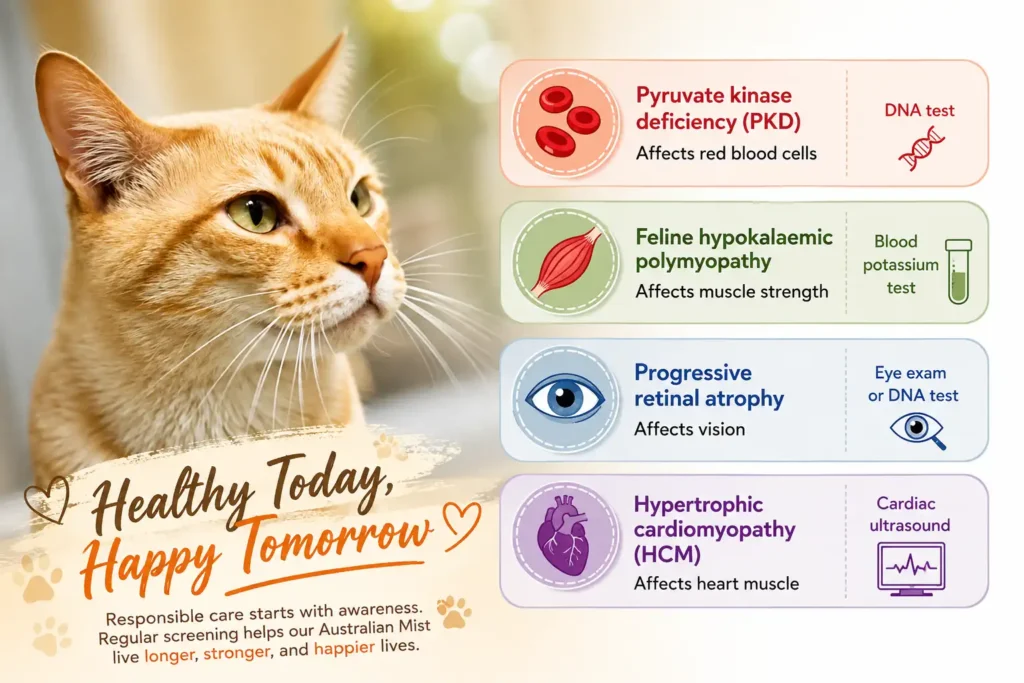
Generally robust health defines the Australian Mist breed, with breeders reporting fewer inherited problems than many pedigree cats face. Screening still covers pyruvate kinase deficiency, feline hypokalaemic polymyopathy, and progressive retinal atrophy, traceable to the founding gene pool. Age-related conditions such as hypertrophic cardiomyopathy, dental disease, and obesity-linked diabetes become more relevant after age seven or eight.
Annual wellness exams, or twice-yearly visits after age ten, follow guidance from the American Association of Feline Practitioners (AAFP) and catch issues early. Average lifespan runs between 12 and 18 years with attentive care.
How Long Do Australian Mist Cats Typically Live?
The average lifespan for the Australian Mist falls between 12 and 18 years, with several sources reporting healthy individuals reaching 20 years or more. Genetic diversity from the breed’s three founding lines supports this above-average longevity for a purebred cat.
The table below lists the health conditions veterinarians most commonly screen for in this breed, along with why each one matters.
| Condition | What It Affects | Typical Screening |
| Pyruvate kinase deficiency (PKD) | Red blood cells | DNA test |
| Feline hypokalaemic polymyopathy | Muscle strength | Blood potassium test |
| Progressive retinal atrophy | Vision | Eye exam or DNA test |
| Hypertrophic cardiomyopathy (HCM) | Heart muscle | Cardiac ultrasound |
Training and Social Needs
Trainability ranks unusually high for this breed, with many cats learning leash walking, simple commands, and puzzle-toy routines. Positive reinforcement, using treats and praise rather than punishment, produces the fastest results. Socialization needs run high too, since this breed thrives on daily interaction and struggles with long stretches of alone time.
- Start leash and harness training during kittenhood
- Rotate toys weekly to prevent boredom
- Consider a second cat for company during long workdays
Price and Adoption Costs in 2026
US pricing for an Orange Australian Mist Cat typically falls between $700 and $1,500, depending on pedigree, breeder reputation, and location. Gold and peach kittens sometimes command higher prices than brown or blue littermates due to buyer demand for the warmer coloring. Breeders outside Australia remain scarce, pushing shipping and import costs onto the final price. Ongoing costs matter too, with US owners typically budgeting $50 to $80 monthly for food, litter, and preventive care.
Is the Orange Color Rare?
Gold and peach Australian Mist cats sit among the less common color variations, since brown and blue remain the most requested and most frequently bred shades. Recessive genetics behind the fawn (peach) coloring require both parents to carry the gene, limiting how often true peach-orange litters appear. Demand for a genuinely orange Australian Mist Cat currently outpaces supply in most Western markets, contributing to the higher price tag noted above.
Is Gold or Peach a Rare Color in This Breed?
Yes: gold and peach rank among the least-produced Australian Mist colors, since most breeding programs prioritize the brown and blue lines that dominate cat shows. Waiting lists for peach or gold kittens often run longer than for other colors, particularly outside Australia and the UK.
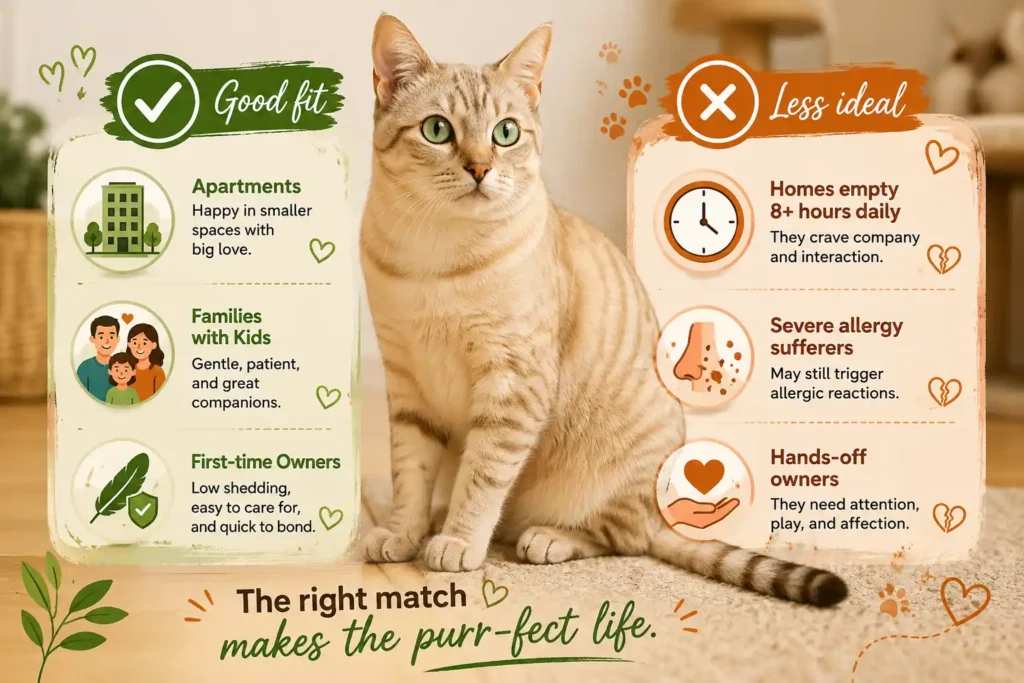
Is This Cat a Good Fit for Your Home?
Apartment living suits this breed well, given its indoor-only history and low tolerance for being left alone outdoors. Families with children, seniors seeking a lap companion, and multi-pet households show up repeatedly as strong matches. Allergy sufferers should proceed carefully, since no Australian Mist qualifies as truly hypoallergenic; the Fel d 1 protein behind most cat allergies is present in every cat regardless of coat color.
- Good fit: apartments, families with kids, first-time owners wanting low shedding
- Less ideal: homes empty 8+ hours daily, severe allergy sufferers, hands-off owners
Orange Australian Mist Cat: A Quick Recap
Pulling this guide together, the cat most people search for as an orange Australian Mist turns out to be a gold or peach-colored Mist, a shade created by rufous genetics rather than a separate registry class. Origins trace to 1970s Sydney and Dr. Truda Straede’s crossing of Burmese, Abyssinian, and domestic shorthair cats, recognized today by both GCCF and TICA.
Physical traits include a medium 8-to-15-pound frame, a short, matted coat, and green eyes that finish developing around two years old. Temperament stands out most, with an affectionate, people-oriented nature suited to families, seniors, and multi-pet homes. Weekly brushing, portion control, and routine screening keep this generally healthy breed thriving for 12 to 18 years. Training responds well to positive reinforcement, and high social needs mean long lonely days rarely suit this cat. Expect to pay $700 to $1,500 in the US for gold or peach kittens, a premium tied to genuine rarity rather than marketing.
Frequently Asked Questions
Is orange an official Australian Mist coat color?
No official “orange” class exists. Gold (cinnamon) and peach (fawn) are the two recognized colors that produce an orange-like look, both accepted by GCCF and TICA.
How much does a gold or peach Australian Mist kitten cost in the US?
Expect to pay between $700 and $1,500 from a reputable breeder in 2026, with peach kittens sometimes priced higher.
Are Australian Mist cats hypoallergenic?
No cat breed is truly hypoallergenic. The Fel d 1 protein behind most allergic reactions is present in every cat regardless of coat color.
How long do Australian Mist cats live?
Average lifespan runs from 12 to 18 years, and some individuals live into their twenties with attentive care.
Do Australian Mist cats shed a lot?
Shedding stays moderate year-round thanks to the short, dense coat, with mild seasonal increases in spring and fall.
Are Australian Mist cats good with children and other pets?
Yes. Breed literature describes this cat as tolerant, gentle, and sociable, a strong match for households with kids, dogs, or other cats.