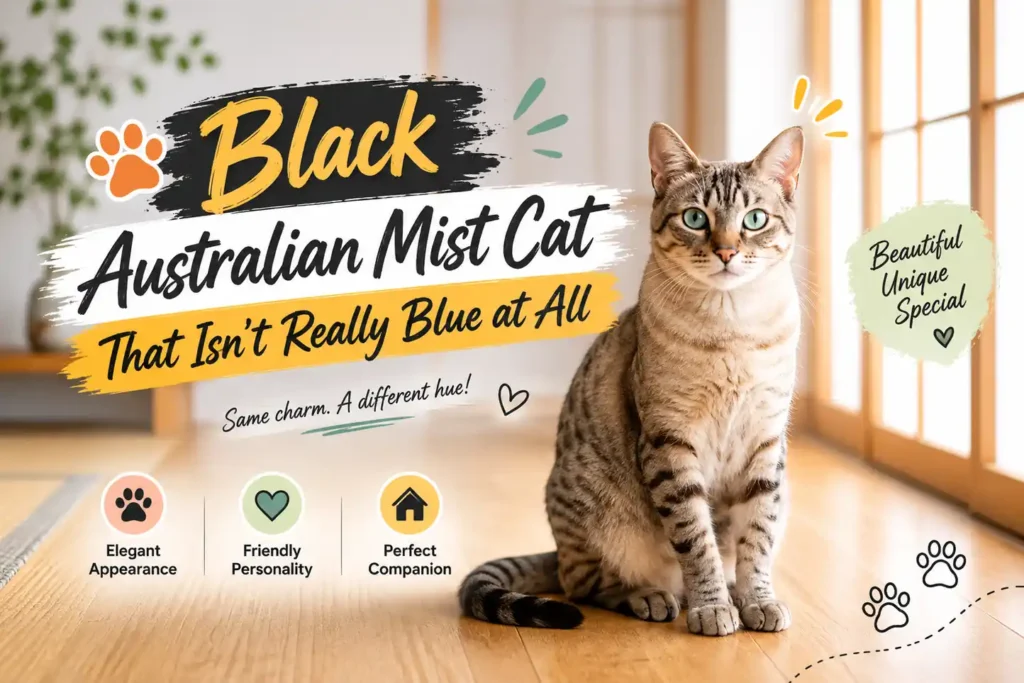
A Black Australian Mist Cat gets its color from a dilution gene that softens the breed’s normal brown spots into a cool, silvery-blue shade. This gene is recessive, so both parent cats must carry it for kittens to be born with the blue coat, which is why breeders produce far fewer blue kittens than brown ones each year.
The blue coloring appears across the cat’s spotted or marbled pattern, giving the fur a smoky, muted look that many owners find calming and elegant. Because a Black Australian Mist Cat depends on this rare gene combination, finding one from a registered breeder often takes patience and a longer wait than choosing a standard-colored kitten.
What Is a Black Australian Mist Cat?
The Blue Australian Mist is a color variety of the Australian Mist breed, not a separate breed on its own. Blue refers to a cool grey coat tone that comes from a dilution gene inherited through the Burmese side of the family tree. Spotted or marbled patterning sits over a paler, misted background, giving the coat a soft, smoky look in natural light.
Green eyes, a rounded head, and a moderate build round out the breed standard set by Australian and UK registries. Genuine affection for people separates this cat from more independent breeds, since it actively seeks out laps and company. Full coat color typically takes about two years to develop fully.
Origin and History
Dr. Truda Straede began the breeding program that created the Australian Mist in 1976 near Sydney, using foundation stock of Burmese, Abyssinian, and domestic shorthair cats. Rising concern over pet cats hunting native wildlife pushed Straede toward an indoor-loving companion, and the resulting kittens carried a spotted coat that earned the early name Spotted Mist.
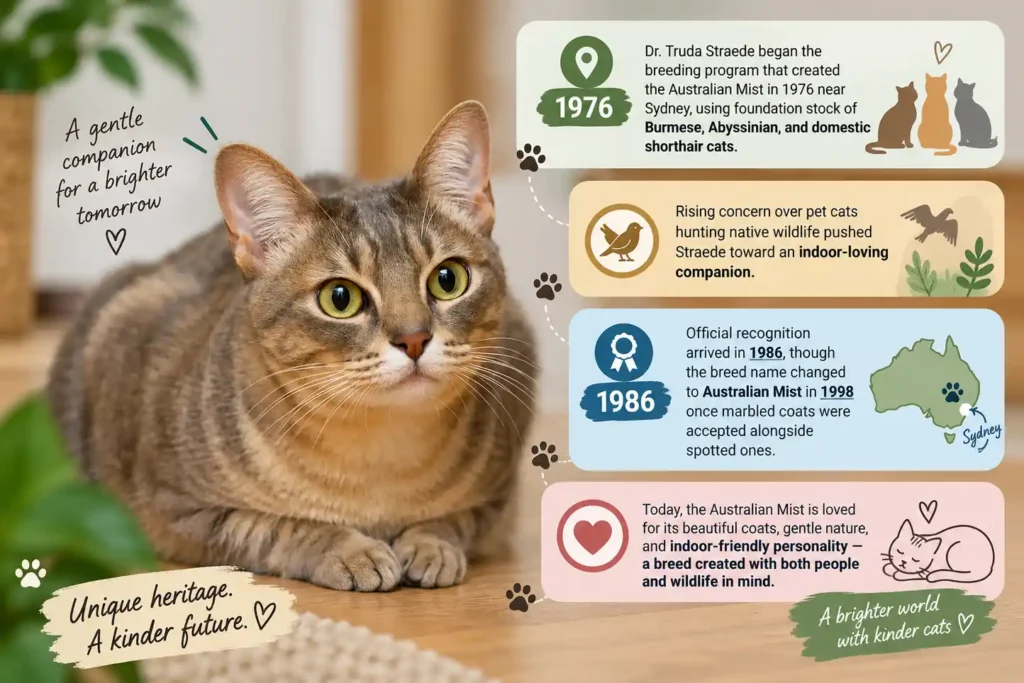
Official recognition arrived in 1986, though the breed name changed to Australian Mist in 1998 once marbled coats were accepted alongside spotted ones. A Black Australian Mist Cat traces its dilute coloring directly back to the Burmese contribution in that original gene pool. The Governing Council of the Cat Fancy (GCCF) accepted the breed in the United Kingdom in 2011. Numbers outside Australia remain small today.
Appearance and Blue Coat
Blue coloring on this breed reads as a cool, soft grey rather than the true black-based blue seen in Russian Blues or British Shorthairs. Ticking from the Abyssinian ancestor blends with spots or marbling to create the breed’s signature misted effect, where pattern edges look gently blurred. Short, dense fur lies close to the body and needs minimal upkeep despite its rich appearance. Large, expressive green eyes remain a hallmark of the breed, though gold eyes sometimes appear in younger kittens before settling. Legs, tail, and body keep a balanced, moderate build, never as extreme as an Oriental Shorthair. A quick look at core traits makes this color variety’s place within the wider breed clearer.
The table below sums up the defining physical traits of this color variety.
| Trait | Detail |
| Coat Color | Cool grey-blue base with darker blue spots or marbling |
| Pattern | Spotted or marbled, softened by fine “misted” ticking |
| Eye Color | Green, occasionally gold in young kittens |
| Coat Length | Short, dense, low-maintenance |
| Body Type | Medium, moderate foreign-style build |
| Breed-Wide Colors | Brown, blue, chocolate, lilac, gold, caramel, peach |
Size and Weight
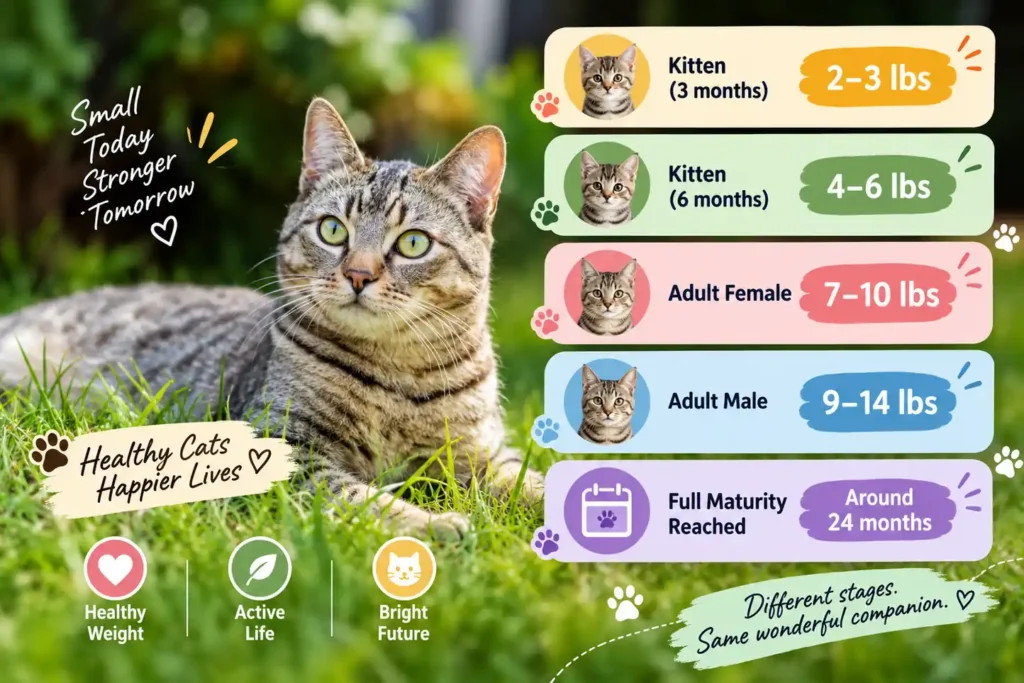
Adult cats of this color variety fall in the medium-size range, with most weighing between 7 and 14 pounds fully grown. Males typically outweigh females by a couple of pounds, a pattern also seen in Burmese and other closely related breeds. Full physical maturity, including coat depth, arrives around two years of age rather than the one-year mark common in many shorthairs. Bone structure stays moderate rather than heavy, keeping the cat athletic despite a well-fed look. Kittens grow steadily during their first year before growth slows into a lankier adolescent phase.
The table below breaks down typical weight ranges by age and sex for easier reference.
| Age or Sex | Typical Weight |
| Kitten (3 months) | 2-3 lbs |
| Kitten (6 months) | 4-6 lbs |
| Adult Female | 7-10 lbs |
| Adult Male | 9-14 lbs |
| Full Maturity Reached | Around 24 months |
Personality and Temperament
Affection defines this breed more than any physical trait, with most cats following their owners from room to room rather than napping alone all day. Loud vocalization rarely appears in this breed, making it a quieter option than talkative breeds like the Siamese. Children and dogs generally get along well with a properly socialized Mist, since the breed carries a well-documented tolerance for handling. Long stretches of solitude don’t suit this cat well, and prolonged isolation can lead to boredom or stress. Multi-pet households tend to work well here, provided introductions happen gradually.
Grooming and Shedding
Weekly brushing with a soft brush or grooming glove keeps the short coat sleek and cuts down on loose hair around the house. Shedding stays moderate year-round with mild seasonal increases, a manageable pattern next to double-coated breeds like the Maine Coon. Nail trims every one to two weeks and daily tooth brushing with pet-safe toothpaste round out a basic grooming routine. Overall grooming demands stay refreshingly low for a pedigree breed.
Diet and Exercise
High-quality, high-protein food formulated for the correct life stage supports lean muscle and coat health in this active breed. Overeating tends to be a bigger risk than pickiness, so portion control matters more than food variety for a healthy weight. Daily play sessions of ten to fifteen minutes satisfy this breed’s need for climbing and chasing. Cat trees, window perches, and puzzle feeders give an indoor-only lifestyle enough enrichment to prevent boredom.
Health and Lifespan
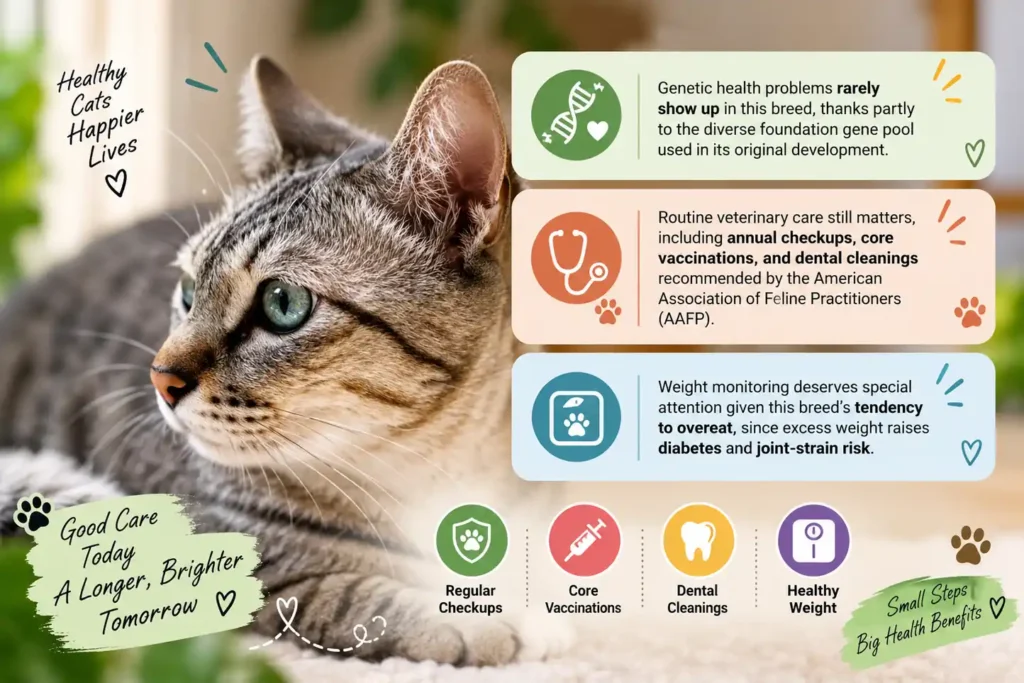
Genetic health problems rarely show up in this breed, thanks partly to the diverse foundation gene pool used in its original development. Routine veterinary care still matters, including annual checkups, core vaccinations, and dental cleanings recommended by the American Association of Feline Practitioners (AAFP). Weight monitoring deserves special attention given this breed’s tendency to overeat, since excess weight raises diabetes and joint-strain risk. Spaying or neutering around five to six months remains standard practice. Preventive care, more than breed-specific screening, drives most of the longevity seen here.
Quick Answer: How Long Do These Cats Live?
This color variety typically lives between 12 and 16 years, with some individuals reaching 18 years or more under excellent indoor care, regular vet visits, and a well-managed diet.
Training and Socialization
Food-motivated learning makes this breed unusually receptive to basic training compared to more independent cat breeds. Leash walking, simple commands, and even clicker training tend to go smoothly when sessions stay short, and rewards stay consistent. Early exposure to handling, nail trims, and carrier travel during kittenhood pays off later by reducing vet-visit stress.
Price and Availability
Reputable breeders typically price kittens of this color between $800 and $1,500 in the United States, with UK prices landing closer to £700 to £1,000. Rarity of the blue color, along with breeder location and pedigree quality, pushes prices toward the higher end of that range. Adoption through a breed-specific rescue costs considerably less, though blue-colored kittens rarely appear in shelters given how uncommon the breed remains outside Australia. Waiting lists are common internationally, since only a small number of registered catteries breed it outside its home country. Ongoing costs, including food, litter, and veterinary care, typically run $50 to $80 per month for a healthy adult.
The table below compares typical price ranges across common acquisition routes.
| Source | Typical Price (USD) |
| Registered Breeder, Pet Quality | $800 – $1,200 |
| Registered Breeder, Show/Breeding Quality | $1,200 – $1,500+ |
| Breed-Specific Rescue or Adoption | $100 – $300 |
| Monthly Upkeep (Food/Litter/Vet) | $50 – $80 |
Quick Answer: How Much Does a Black Australian Mist Cat Cost?
A Black Australian Mist Cat typically costs between $800 and $1,500 USD from a registered breeder, depending on pedigree, location, and how rare the blue coloring is in that litter.
Is a Black Australian Mist Cat Rare?
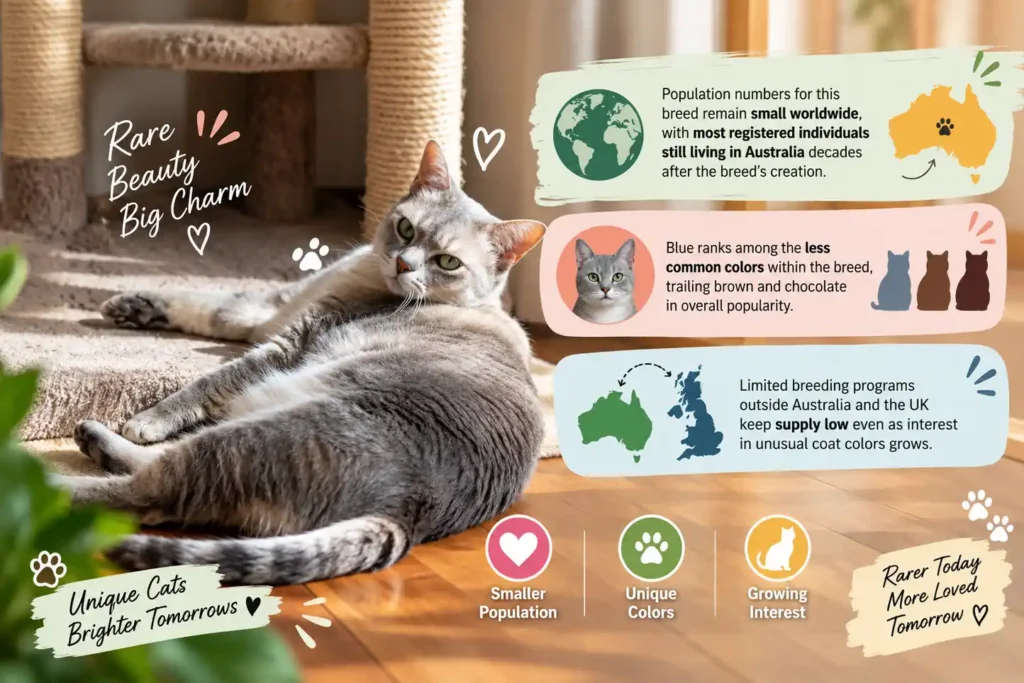
Population numbers for this breed remain small worldwide, with most registered individuals still living in Australia decades after the breed’s creation. Blue ranks among the less common colors within the breed, trailing brown and chocolate in overall popularity. The International Cat Association (TICA) recognizes the Australian Mist, yet the Cat Fanciers’ Association in the United States still does not, which limits breeder networks abroad. Limited breeding programs outside Australia and the UK keep supply low even as interest in unusual coat colors grows.
Quick Answer: Is This Coat Color Rare?
Yes, blue ranks among the rarer colors in an already uncommon breed, with most blue-coated individuals still concentrated in Australia and a small number of European catteries.
Is It the Right Cat for You?
Families wanting an affectionate, people-focused cat will likely find this breed a strong match, provided someone stays home often enough to meet its social needs. Apartment living suits it well, since the breed was developed specifically as an indoor-only companion. Allergy sufferers should note that no cat breed is truly hypoallergenic, and this one produces the same Fel d 1 protein found in all cats. Households that travel often or leave pets alone for long stretches may find this cat’s need for company hard to satisfy.
Consider this breed if:
- Daily companionship matters more than an independent pet
- Indoor-only living already fits the household
- Budget allows for $800 to $1,500 upfront plus vet care
- Patience exists for a two-year wait to see final coat color
Think twice if:
- Long work hours or travel leave little time for company
- A completely hypoallergenic pet is a strict requirement
- A registered breeder outside Australia or the UK is hard to reach
Black Australian Mist Cat Summary
A Black Australian Mist Cat brings together a rare silvery-blue coat, a Burmese-level love of company, and a health profile largely free of breed-specific problems. Its origin traces back to Dr. Truda Straede’s 1976 breeding program in Sydney, built from Burmese, Abyssinian, and domestic shorthair stock. Appearance centers on a misted, ticked coat over a moderate, athletic body with striking green eyes. Adult size settles into the 7-to-14-pound range by around two years of age.
Temperament leans social and playful, making this breed a natural fit for families and multi-pet homes. Grooming and diet stay simple, though portion control matters given this breed’s tendency to overeat. Lifespan averages 12 to 16 years with routine vet care, and price typically runs $800 to $1,500 through a registered breeder. Genuine rarity keeps this coat color harder to find than other Australian Mist colors.
Frequently Asked Questions
Is the Australian Mist good with children and other pets?
Yes, this breed tolerates handling well and generally gets along with children and other household pets when introductions happen gradually.
How much does a blue-colored kitten typically cost?
Prices from registered breeders usually range from $800 to $1,500 USD, with the blue color commanding a premium due to its rarity.
Do these cats need a lot of grooming?
No, weekly brushing is enough to manage the short, low-shedding coat.
How long do these cats typically live?
Most live between 12 and 16 years, with some reaching beyond 18 years given attentive indoor care.
Are these cats hypoallergenic?
No, no cat breed is truly hypoallergenic, and this one produces the same Fel d 1 allergen found in others.
Where can someone find a reputable breeder?
Registered catteries in Australia and the UK remain the most reliable source, though waiting lists are common.