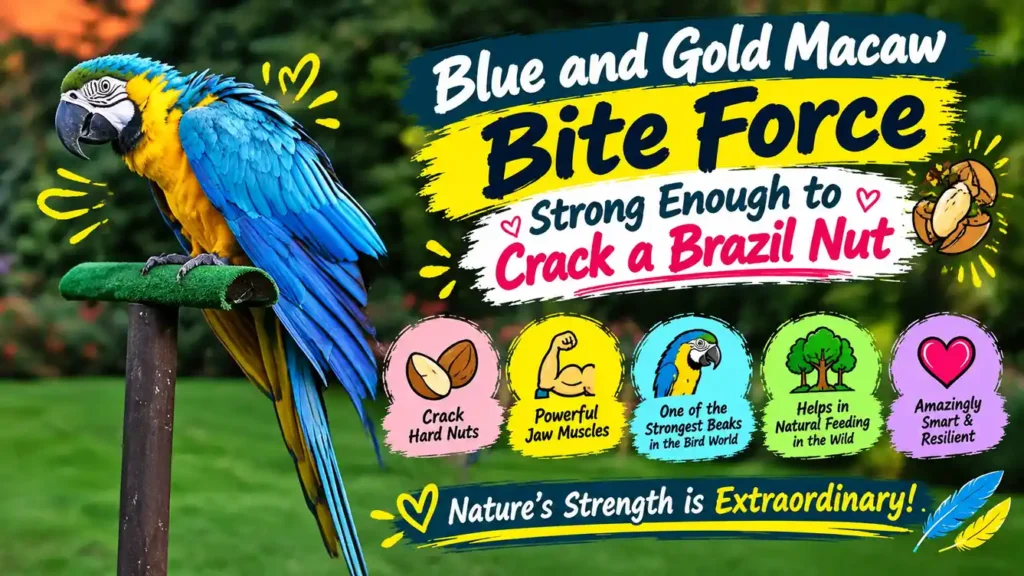
Blue and Gold Macaw bite force typically falls between 300 and 400 PSI, strong enough to crack open hard nuts and give a warning nip that many owners describe as sudden and sharp. This bite force comes from a large, hooked beak built for cracking tough seeds and nuts in the wild, so a real bite from a stressed or scared bird can break skin, cause bruising, or even lead to minor fractures in a finger.
Most day-to-day nips are much lighter, since the bird uses only the tip of its beak as a warning before it ever reaches full strength. Still, knowing the real range of blue and gold macaw bite force helps new owners understand why calm handling, trust-building, and reading body language matter so much with this species.
What Makes a Blue and Gold Macaw’s Bite So Powerful
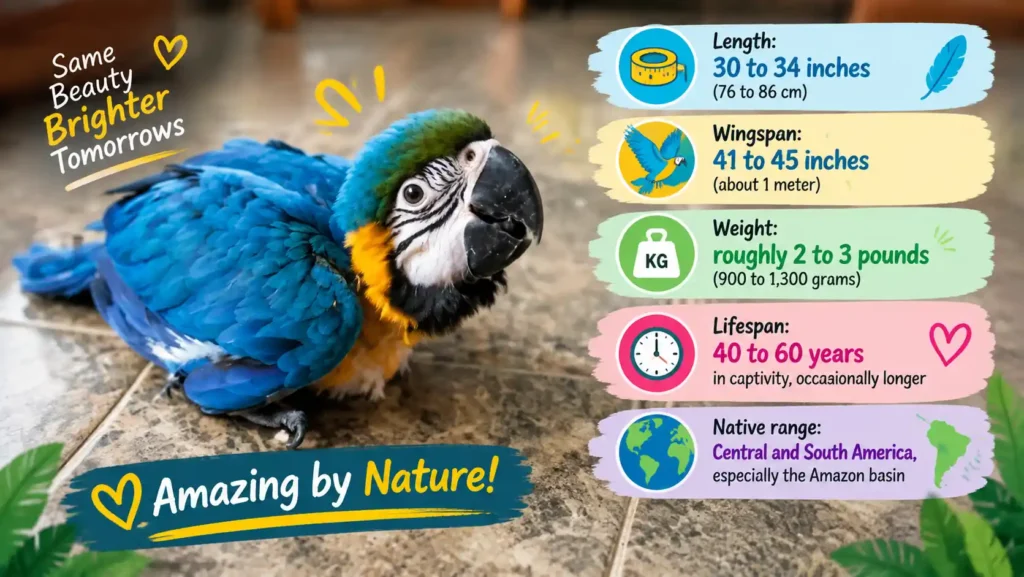
Size alone explains part of this parrot’s biting power. An adult Blue and Gold Macaw measures 30 to 34 inches long, with a wingspan past 41 inches, yet weighs only 2 to 3 pounds thanks to its long tail.
The massive curved black beak is made of keratin over a bony core, driven by strong jaw muscles anchored to a wide skull. This species is native to Central and South America, from Panama through the Amazon basin into Bolivia and Brazil, nesting inside hollow palm trunks. The IUCN lists it as Least Concern, though habitat loss and the pet trade have reduced some local populations.
Zygodactyl feet, two toes forward and two back, work with the beak like a third hand for climbing, cracking food, and courtship. That combination is worth remembering before assuming every nip is aggression.
Quick facts worth knowing:
- Length: 30 to 34 inches (76 to 86 cm)
- Wingspan: 41 to 45 inches (about 1 meter)
- Weight: roughly 2 to 3 pounds (900 to 1,300 grams)
- Lifespan: 40 to 60 years in captivity, occasionally longer
- Native range: Central and South America, especially the Amazon basin
How Strong Is a Blue and Gold Macaw Bite Force
Numbers help put that beak into perspective, so the table below lines up a blue and gold macaw against a few familiar biters.
| Species or Source | Estimated Bite Force (PSI) |
| Average human jaw | about 126 PSI |
| Rottweiler | about 328 PSI |
| Blue and Gold Macaw | roughly 300 to 400 PSI |
| Green-winged Macaw | roughly 350 to 400 PSI |
| Hyacinth Macaw | roughly 500 to 700+ PSI |
Independent estimates place blue and gold macaw bite force somewhere between 300 and 400 pounds per square inch, comparable to a healthy Rottweiler and roughly three times stronger than the average human jaw. Precise laboratory numbers specific to this exact species stay limited, and most figures circulating online come from extrapolated comparisons rather than a single controlled measurement. A 2025 study published in the Journal of Anatomy measured and modeled bite force across several parrot species, including the blue and gold macaw, and found that parrots generate unusually large bite forces relative to body size compared with most other birds studied.
What Is the Average Blue and Gold Macaw Bite Force in PSI
Most estimates put this parrot’s bite strength between 300 and 400 PSI, roughly on par with a Rottweiler and about three times stronger than an average human bite. That force comes from a short, thick beak built to crack palm nuts and hardwood rather than from unusual aggression. Exact figures vary by source since few controlled lab studies have measured this specific species directly.
Why Do Blue and Gold Macaws Bite
Biting rarely happens without a reason, even when it seems sudden. Fear tops the list of triggers, since a macaw that feels cornered or startled reaches for its beak the same way a dog might snap at a threat. Hormonal surges during breeding season can also turn an easygoing bird noticeably nippier for several weeks at a stretch.
Territorial guarding shows up often around a favorite cage, perch, or person, especially in a bird that has bonded strongly with one household member. Miscommunication plays a role too, since beak contact is a normal part of how macaws explore objects, test grip, and communicate with flock mates in the wild.
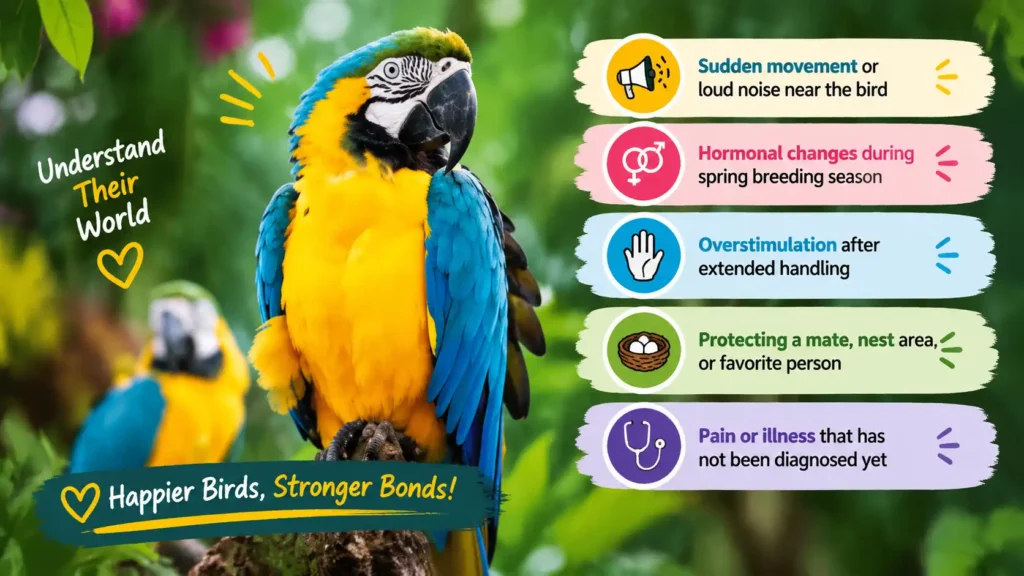
Common triggers include:
- Sudden movement or loud noise near the bird
- Hormonal changes during spring breeding season
- Overstimulation after extended handling
- Protecting a mate, nest area, or favorite person
- Pain or illness that has not been diagnosed yet
Reading body language, such as pinned eyes, raised neck feathers, or a lunging stance, gives an owner a warning window before a bite actually lands.
Is a Blue and Gold Macaw Bite Dangerous
Injury risk from a full-force bite is real, given the pressure this beak can generate. Blue and gold macaw bite force concentrated on a small area of skin can break skin, cause deep bruising, or in rare cases crack a small bone, especially in children or older adults with thinner bone density.
Most bites, though, land far below that maximum force, since macaws usually deliver a warning nip with just the tip of the beak before escalating further. Medical attention becomes important whenever a bite breaks skin deeply, since parrot beaks can carry bacteria capable of causing infection.
Typical bite injuries range from minor pinches to punctures requiring stitches, and any bite that shows swelling, spreading redness, or bleeding that will not stop warrants a call to a doctor. The Association of Avian Veterinarians recommends prompt cleaning of any bite wound along with professional medical review for deep punctures.
Diet, Foraging, and Natural Beak Use
Diet explains a good part of why this beak evolved to be so strong, so the table below breaks down what a blue and gold macaw eats in the wild compared with captivity.
| Food Type | Wild Diet | Captivity Diet |
| Nuts and seeds | Palm nuts, Brazil nuts | Walnuts, almonds in small amounts |
| Fruits | Native rainforest fruit | Apples, mango, papaya |
| Vegetables | Minimal | Leafy greens, peppers, squash |
| Pellets | Not applicable | Formulated macaw pellets, 60-70% of diet |
| Mineral clay | Riverbank clay licks | Not applicable |
Palm nuts and other hard-shelled seeds make up a large share of the wild diet, and cracking those shells demands serious jaw strength developed over the bird’s lifetime. Clay licks along riverbanks supply minerals and may also help neutralize toxins found in some unripe seeds, a behavior documented among several South American parrot species. Captive macaws thrive best on a base of formulated pellets supplemented with fresh vegetables and limited nuts, since a diet too rich in fat can lead to obesity or liver problems in a bird that no longer forages for hours each day.
Training and Prevention Tips to Reduce Biting
Consistent handling from a young age lowers bite frequency dramatically, since a macaw exposed early to new people, sounds, and touch tends to grow into a calmer adult. Positive reinforcement, using target training and small treats, teaches step-up and step-down commands without relying on fear or force.
Preventing a full-strength blue and gold macaw bite force incident starts with recognizing stress signals long before the beak ever makes contact. The World Parrot Trust advises against any form of physical punishment, noting that fear-based responses tend to increase biting rather than reduce it over time.
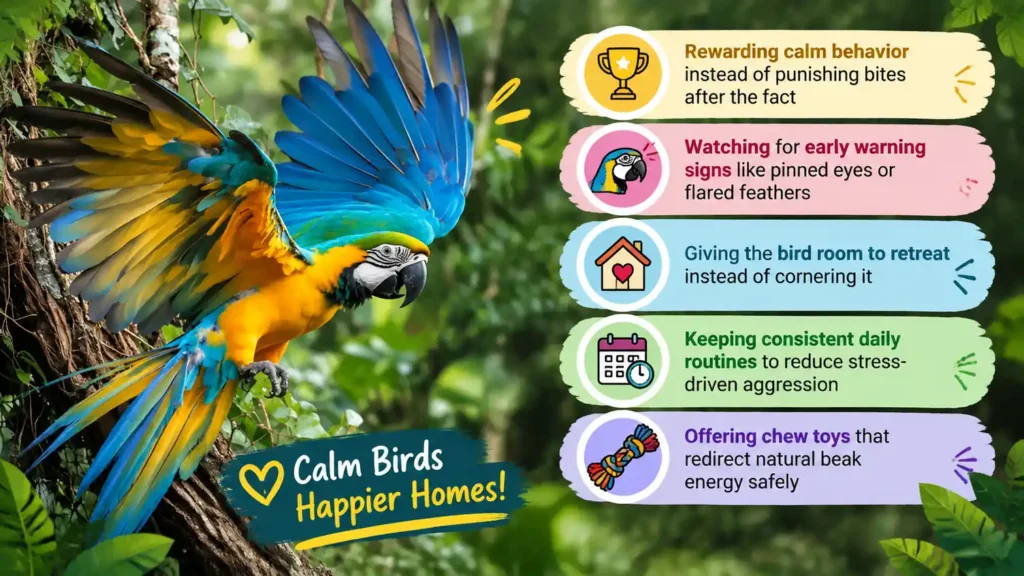
Effective prevention strategies include:
- Rewarding calm behavior instead of punishing bites after the fact
- Watching for early warning signs like pinned eyes or flared feathers
- Giving the bird room to retreat instead of cornering it
- Keeping consistent daily routines to reduce stress-driven aggression
- Offering chew toys that redirect natural beak energy safely
Short, frequent training sessions tend to work better than long ones, since macaws lose focus quickly and frustration can trigger nipping. Patience matters more than speed here, since a macaw that trusts its handler rarely needs to rely on its beak as a first response.
How Can Families Stay Safe Around a Blue and Gold Macaw
Supervision during every interaction between a macaw and young children reduces bite risk more than any single training method. Teaching kids to read warning signs, avoid sudden movements, and never reach toward a startled bird prevents most incidents before they start. Keeping the cage in a calm area away from constant foot traffic also lowers the stress that leads to defensive biting.
What This Means for You and Your Macaw
A beak built for cracking palm nuts explains most of what makes this parrot’s mouth so formidable, and that natural design sits behind every number attached to blue and gold macaw bite force. Size and skull structure set the baseline for that power, while fear, hormones, and territorial instinct usually explain why a bite happens in the first place.
Injury risk stays real, ranging from bruising to the rare broken finger, which is why prompt care and honest respect for that beak matter more than fear ever will. Wild feeding habits, especially cracking tough palm nuts and hard seeds, shaped the jaw strength this species carries into captivity, and a proper diet keeps that same beak and body healthy at home.
Early, consistent training built on trust rather than punishment remains the most reliable way to lower bite frequency over a macaw’s long life. Budgeting honestly for the true cost of ownership, alongside supervision around children and other pets, keeps both the bird and the household safe for decades to come. None of this makes the blue and gold macaw a dangerous pet by default, only a powerful animal that deserves informed, patient handling.
Frequently Asked Questions
How strong is the bite of a blue and gold macaw in PSI?
Estimates commonly place bite force between 300 and 400 PSI, though exact lab-measured figures specific to this species remain limited.
Do blue and gold macaws bite often?
Well-socialized, consistently trained macaws bite far less often than neglected or under-stimulated birds, and most bites are brief warning nips rather than full-force clamps.
Can a blue and gold macaw break a finger?
A full-strength bite could crack a small bone, including a finger, though this remains rare since most bites stay well below maximum force.
Why do blue and gold macaws bite their owners?
Fear, hormonal changes, territorial guarding, and miscommunication during handling account for most biting incidents.
Is a blue and gold macaw bite dangerous for children?
Supervision matters, since a bite near a child’s face or hands carries higher injury risk than the same bite on an adult.
How can biting be reduced in a pet macaw?
Consistent, reward-based training combined with reading body language before a bite happens lowers frequency significantly over time.