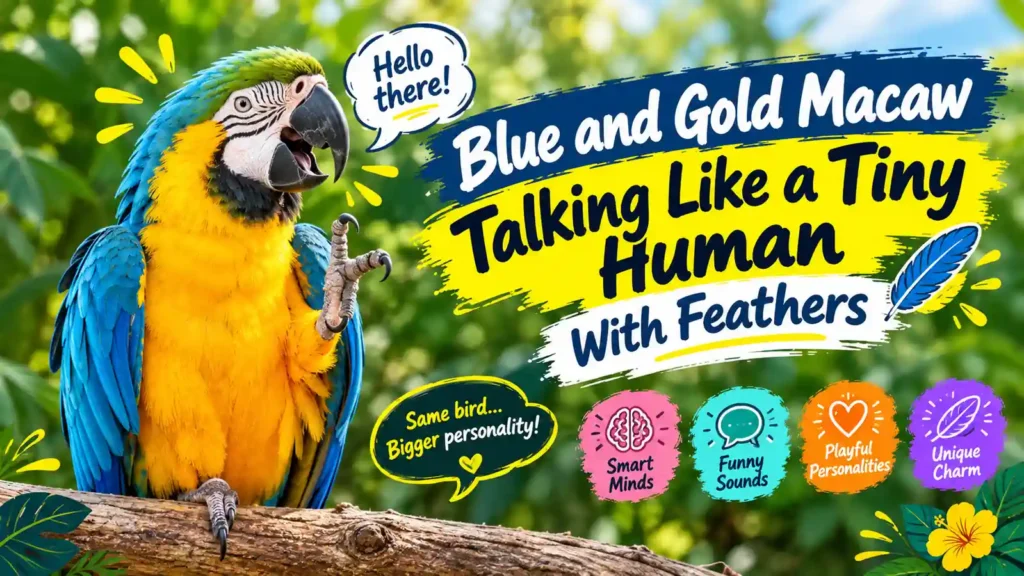
Blue and Gold Macaw Talking usually means a vocabulary of about 10 to 60 words, plus whistles and household sounds like phones, doorbells, and laughter. These birds can copy speech clearly, but they are not always as talented as African greys, so results depend on each bird’s personality, daily social contact, and regular practice. Young macaws often start copying sounds between six months and two years of age, and short words like “hello” or the bird’s own name are the easiest first goals.
Repeating a word in the same tone, rewarding every try with praise or a small treat, and talking to your bird during normal daily routines all help it learn faster. Because these macaws can live 60 years or more with good care, Blue and Gold Macaw Talking is a long-term project, not a quick trick, and a realistic goal is a handful of clear words rather than full conversations.
Can Blue and Gold Macaws Talk?
Yes, blue and gold macaws can talk, and that skill is a big reason for their popularity in captivity. A few quick facts explain what to expect from the voice.
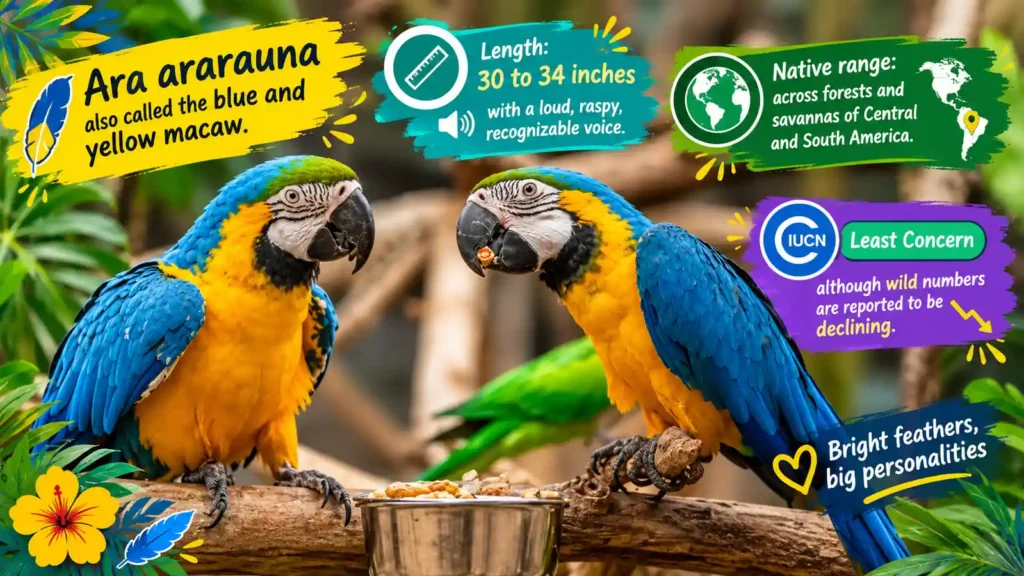
- Scientific name: Ara ararauna, also called the blue and yellow macaw.
- Length: 30 to 34 inches, with a loud, raspy, recognizable voice.
- Native range across forests and savannas of Central and South America.
- International Union for Conservation of Nature status of Least Concern, although wild numbers are reported to be declining.
Sound starts in the syrinx, a voice organ at the base of the windpipe, and the tongue shapes those sounds into word-like patterns. Most macaws link a word with a situation, such as hello with someone entering the room, rather than understanding language the way people do. Blue and Gold Macaw Talking therefore works best when words match daily routines.
Compared with African greys, macaws usually trail in vocabulary size and mimicry range. Even so, the blue and gold often earns praise for a distinct voice that some listeners mistake for a person.
Do All Blue and Gold Macaws Talk?
No, not every blue and gold macaw becomes a talker. Personality, early socialization, and daily interaction all matter, so some birds speak clearly while others stay with whistles, laughter, and natural calls. A macaw that never says a word is not less intelligent or less bonded.
Blue and Gold Macaw Talking Ability
Ability varies because every macaw brings its own personality, learning style, and interest in people. Research on companion parrots suggests that parrots keep learning new sounds throughout life, so an older bird can still add words.
The table below links common talking factors with simple responses.
| Factor | Effect on Talking | Helpful Response |
| Daily interaction | More exposure to words and tone | Talk during meals, greetings, and play |
| Personality | Bold birds often try new sounds sooner | Follow the bird’s pace without pressure |
| Boredom or loneliness | Screaming can replace speech | Rotate toys and add foraging tasks |
| Health | Illness can quiet or roughen the voice | Book an avian vet visit |
Birds that feel safe and busy usually vocalize more. A quiet macaw is not a failure, because some birds prefer whistles and sound effects over words.
When Do Blue and Gold Macaws Start Talking?
Published estimates differ, with early mimicry often placed somewhere in the first year and clearer words arriving later, sometimes past age two. Practice sounds usually come before recognizable words and often include the following.
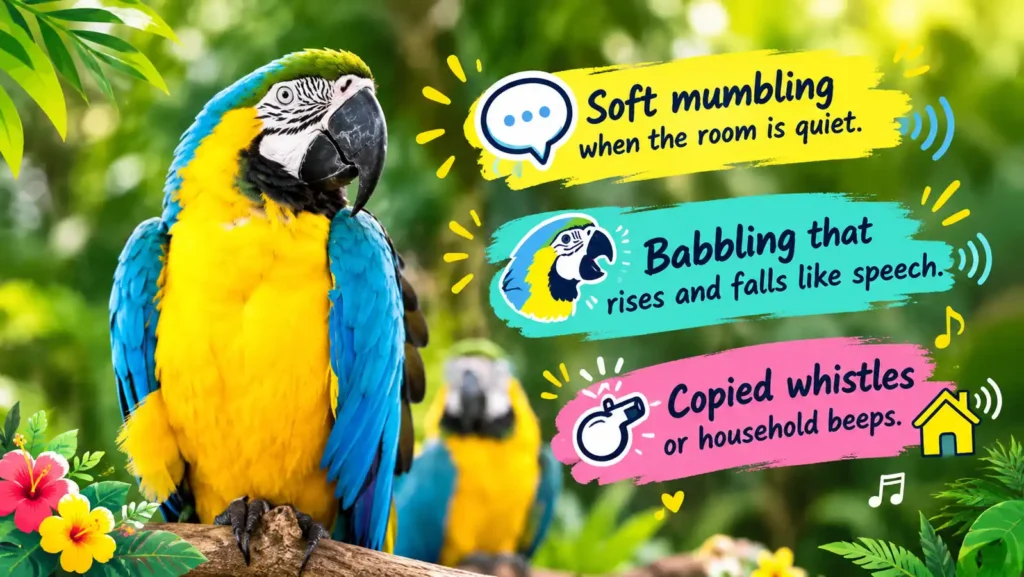
- Soft mumbling when the room is quiet.
- Babbling that rises and falls like speech.
- Copied whistles or household beeps.
No fixed schedule exists, so comparing one bird with another can create needless worry. Regular conversation during the first years builds a habit of listening.
Adult birds can still learn, since parrots keep vocal learning for life, though stress in a new home can delay speech until routines feel calm. A rescued or rehomed macaw may need patience, steady meals, and gentle handling first.
Blue and Gold Macaw Vocabulary
Vocabulary size matters less than clarity and context. A macaw that uses ten words at the right moment often seems more impressive than a bird that mumbles fifty. Words heard rarely may fade over time, so regular repetition keeps favorites fresh.
How Many Words Can a Blue and Gold Macaw Learn?
Reported vocabularies for blue and gold macaws run from about 10 to 60 words and short phrases, with about 20 quoted most often. A few birds learn more with steady practice, but no guaranteed number exists because personality and daily interaction shape every macaw.
Words and Phrases Macaws Copy Most Often
The table below shows the kinds of sounds macaws pick up most easily.
| Sound Type | Common Examples | Why It Sticks |
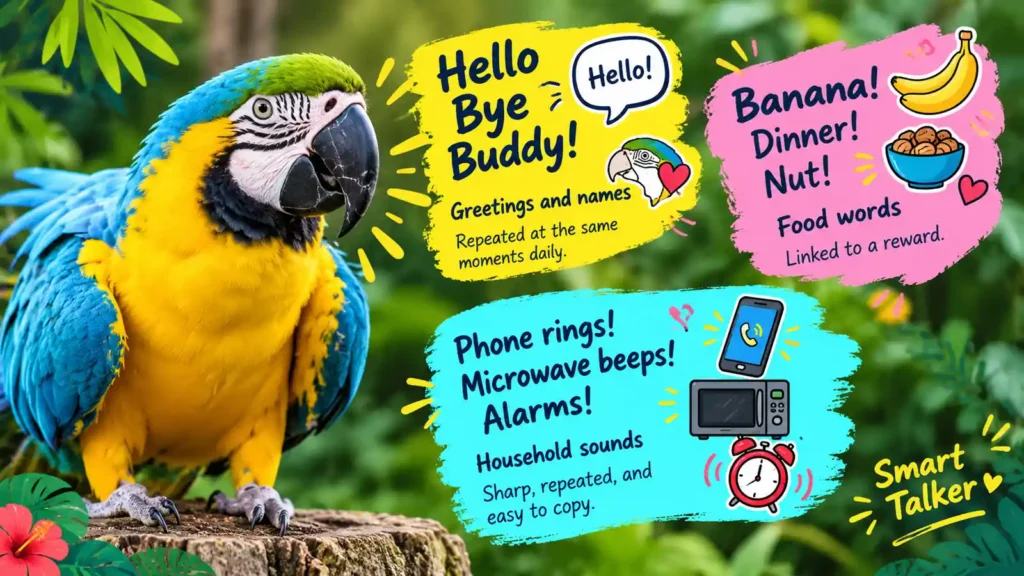
| Greetings and names | Hello, bye, the bird’s name | Repeated at the same moments daily |
| Food words | Banana, dinner, nut | Linked to a reward |
| Household sounds | Phone rings, microwave beeps, alarms | Sharp, repeated, and easy to copy |
| Laughter and whistles | Giggles, tunes, wolf whistles | Emotional and fun to repeat |
Starting with simple words such as hello or bye keeps early practice manageable and rewarding, and rude phrases deserve caution because macaws repeat them just as easily as friendly ones.
Blue and Gold Macaw Speech
Speech from a blue and gold macaw sounds deeper and rougher than the voice of a smaller parrot. Volume runs high, so words often arrive as bold, attention-grabbing calls rather than soft chatter. Tone, mixing, and context define most of what owners hear.
- Many macaws use different intonations for the same word, whispering one phrase and shouting another.
- Words often mix with whistles, laughter, and mechanical noises, which is normal parrot behavior.
- Context can make a phrase look meaningful, such as saying goodbye when someone picks up keys, yet grammar and true meaning stay limited.
Talking gets clearer when the owner speaks slowly, cheerfully, and close to the bird during calm moments. Quiet, focused practice keeps target words clear.
How to Teach a Blue and Gold Macaw to Talk
Teaching works best when sessions stay short, cheerful, and tied to real moments. Positive reinforcement, such as praise, a favorite treat, or gentle attention, rewards effort without pressure. Shouting or punishment can damage trust and may increase screaming.
Teaching Blue and Gold Macaws to Talk Step by Step
Six simple steps cover the basic process.
- Build trust first through calm handling and quiet conversation.
- Pick one simple word, such as hello, and say it clearly.
- Repeat the word in the same situation with an upbeat tone.
- Reward any attempt, including mumbles that only resemble the word.
- Add a second word only after the first is used reliably.
- End each session while the bird still seems interested.
Blue and Gold Macaw Talking Training
Consistency beats intensity. Several short sessions each day usually suit a macaw better than one long lesson, since repetitive practice can bore an intelligent bird.
- Choose calm moments, such as after a meal, when the bird feels relaxed.
- Link words to routines, such as hello at the morning greeting and dinner at mealtime.
- Reward quiet talking and ignore demanding screams until the bird settles.
- Keep the tone steady so the bird hears each word the same way.
- Choose words carefully, because a macaw may repeat anything heard often.
Blue and Gold Macaw Sounds
Wild blue and gold macaws use loud calls to stay in touch across forest and savanna, and the Cornell Lab of Ornithology describes the calls as raucous, typical of large macaws. Captive birds keep that instinct, so flock calls and noisy bursts are normal behavior rather than bad manners.
The table below explains common sounds and sensible responses.
| Sound | Likely Meaning | Owner Response |
| Loud flock call | Contact or excitement | Answer calmly and avoid shouting back |
| Soft chatter or mumbling | Relaxed practice | Reward with quiet praise |
| Sustained screaming | Boredom, alarm, or attention seeking | Check the environment, then ignore demands |
| Sudden silence or hoarse voice | Possible illness | Call an avian vet promptly |
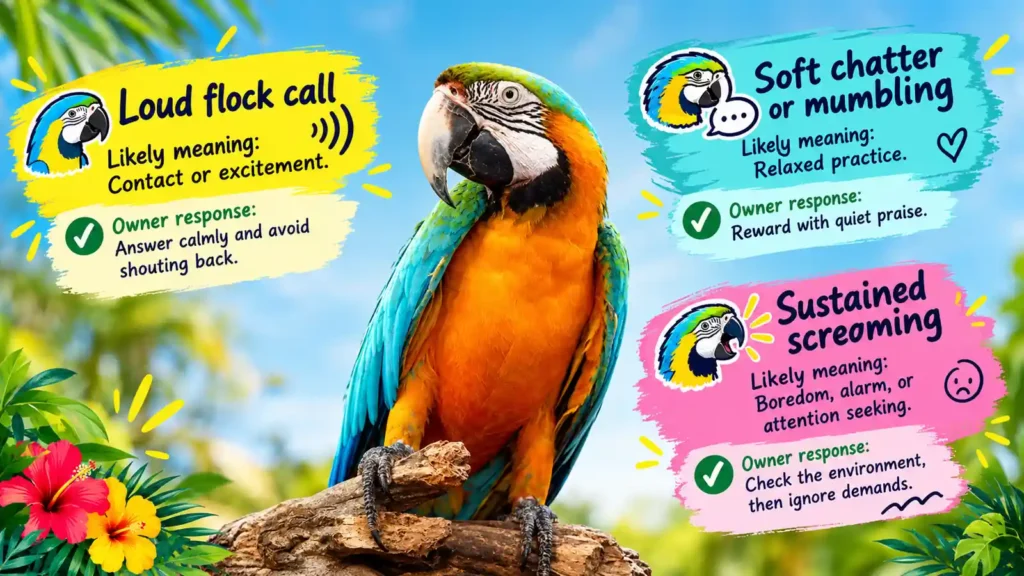
Screaming often rises with boredom, loneliness, or a wish for attention, so daily habits matter.
- Provide foraging toys and chewable items every day.
- Keep meals, play, and sleep on a predictable schedule.
- Offer daily time outside the cage with social contact.
- Reward quiet moments with attention or a treat.
Noise still deserves honest planning, since thin walls can turn macaw calls into a neighbor problem, and apartment living calls for extra thought before choosing a large macaw.
Health, Safety, and Realistic Expectations
A macaw that suddenly turns quiet, sounds hoarse, or breathes with effort needs prompt attention from an avian vet. Birds often hide illness, so a change in vocal habits can serve as an early warning. The Association of Avian Veterinarians recommends regular checkups for companion birds and offers an online tool for locating a vet.
- Wild birds are reported to live about 30 to 35 years, and well-cared-for captives have reached 60 or more, so ownership means decades of commitment.
- Early morning calls and daily screams can strain relationships with neighbors.
- Large beaks demand careful handling and close supervision around children.
- Boredom and stress are linked with feather plucking, so enrichment and social time matter.
Talking is a bonus rather than a reason to buy a parrot. No bird is guaranteed to speak, so the safest plan is to value personality and companionship first, and treat every new word as a pleasant extra.
Final Thoughts Before You Start Teaching
Blue and gold macaws can talk, yet Blue and Gold Macaw Talking is never guaranteed, because personality and daily contact decide the outcome. Talking ability grows from social time, good health, and a calm mood. First words may appear within the first year or well after age two, and adult birds can still learn. Reported vocabulary lands between 10 and 60 words, often mixed with whistles and household sounds. Speech comes out loud and raspy, tied to context more than meaning.
Teaching works best through short, cheerful sessions, patient repetition, and rewards for every attempt. Natural sounds explain the flock calls that come with the species, so noise planning matters. Regular vet visits, lifespan planning, and realistic expectations protect both bird and household, and the FAQs below answer the quick questions that remain.
Frequently Asked Questions
Why is my blue and gold macaw not talking?
Young age, shyness, stress, boredom, or illness can delay speech. Calm routines help, and an avian vet should check a bird that also seems hoarse, lethargic, or unusually quiet.
Can an adult blue and gold macaw learn to talk?
Yes, adult parrots can still learn new sounds, although progress varies. A rehomed macaw may need time to settle first.
What are the best first words to teach a macaw?
Simple greetings such as hello or the bird’s name work well because they connect to daily routines. Reward every attempt.
Are blue and gold macaws loud?
Yes, loud calls are natural for the species, and boredom can make them worse. Apartments and close neighbors deserve serious thought.
How often should a macaw practice new words?
Short sessions repeated a few times a day usually work better than one long lesson. Stop while the bird still seems interested.