
The question of whether the Aphrodite Giant Cat is hypoallergenic has a clear answer: this breed is not hypoallergenic. Its large size and semi-long, thick coat mean it produces more dander and hair than many smaller breeds, and its Fel d 1 protein output is normal, not reduced. The Aphrodite Giant is not considered hypoallergenic, and its semi-long coat needs regular grooming to prevent matting.
While no cat is truly hypoallergenic, this breed sheds less than some others, though its large size can produce more dander, which may not suit allergy sufferers. So for anyone with allergies, the Aphrodite Giant Cat hypoallergenic label is more myth than fact, and extra precautions like regular brushing and clean air filters become important if you still want one in your home.
Are Aphrodite Giant Cats Hypoallergenic?
No, Aphrodite Giant Cats are not hypoallergenic. Veterinary sources and breed profiles consistently note that no cat is completely allergen-free, and the Aphrodite Giant is no exception. Their semi-long, thick double coat sheds seasonally and holds dander, dust, and dried saliva close to the skin.
Because the breed carries more body mass and coat volume than an average domestic shorthair, allergens can spread through a household more easily. Mildly sensitive people sometimes tolerate them better than expected, but there is no verified hypoallergenic guarantee for this breed.
What Makes Aphrodite Giant Cats Cause Allergies?
Most cat allergies trace back to Fel d 1, a protein produced in the salivary and sebaceous glands. When an Aphrodite Giant Cat grooms itself, saliva dries on the fur and flakes off as fine dander that drifts through the air and settles on furniture and bedding. Their large sebaceous glands and dense coat give this protein more surface area to cling to.
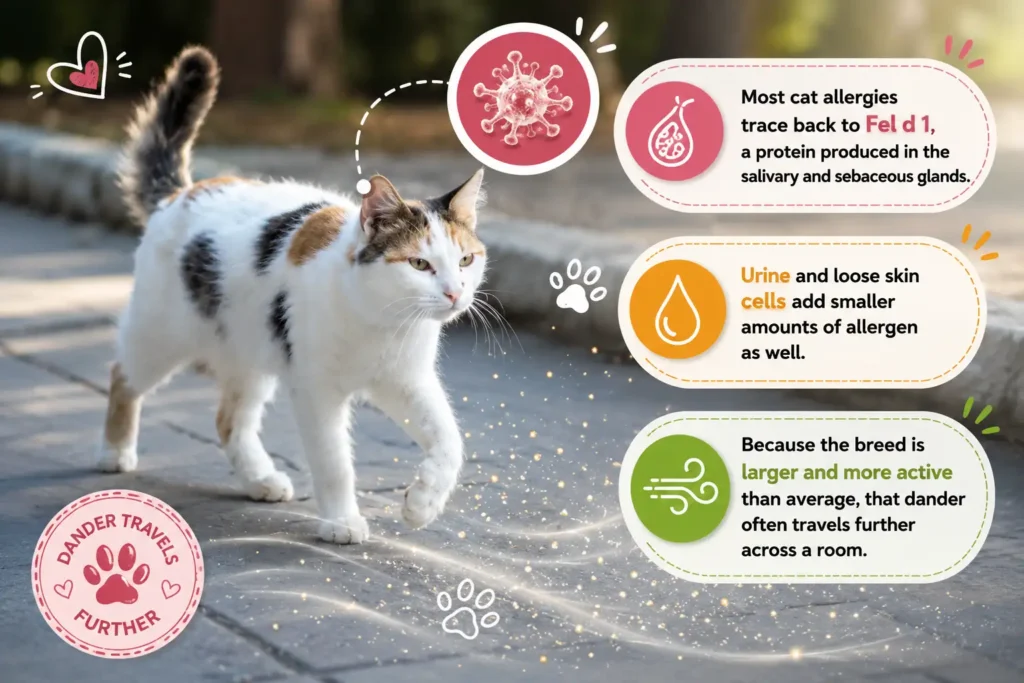
Urine and loose skin cells add smaller amounts of allergen as well. Because the breed is larger and more active than average, that dander often travels further across a room.
Separate the Facts From the Myths About Hypoallergenic Cats. Read more in Rare Aphrodite Giant Facts Most Cat Lovers Don’t Know.
Do Aphrodite Giant Cats Shed a Lot?
Yes, Aphrodite Giant Cats shed a moderate to heavy amount. Their semi-long double coat sheds year-round, with noticeably heavier hair loss during the spring and autumn coat change. Owners who skip regular brushing usually see loose fur collect on furniture, carpets, and clothing within a few days.
The dense undercoat traps dead hair close to the skin, which can hold allergens longer than a short, single-layer coat would. Brushing several times a week, more often during shedding season, keeps loose fur and attached dander to a minimum.
How Much Fel d 1 Do Aphrodite Giant Cats Produce?
No independent laboratory has published breed-specific Fel d 1 measurements for the Aphrodite Giant, so exact figures should not be assumed or invented. What research on cats in general does show is that individual hormone status matters more than breed alone; intact males typically produce more Fel d 1 than neutered males or females.
Because the Aphrodite Giant is a larger cat with a substantial coat, the total surface area carrying the protein is greater, which can mean more allergen spread around a home even without a higher concentration per cat.
Can People With Cat Allergies Live With an Aphrodite Giant Cat?
People with mild cat allergies sometimes manage life with an Aphrodite Giant Cat by combining consistent grooming, air filtration, and pet-free zones such as bedrooms. Those with moderate to severe allergies, including asthma triggered by dander, face a higher risk of ongoing symptoms with such a large, heavily coated breed.
Spending time around an adult Aphrodite Giant before adoption, ideally across several visits, gives a realistic sense of personal tolerance. Checking with an allergist beforehand is a practical step rather than an overreaction, especially for households with children who have asthma.
Aphrodite Giant Cat vs. Other Breeds for Allergy Sufferers
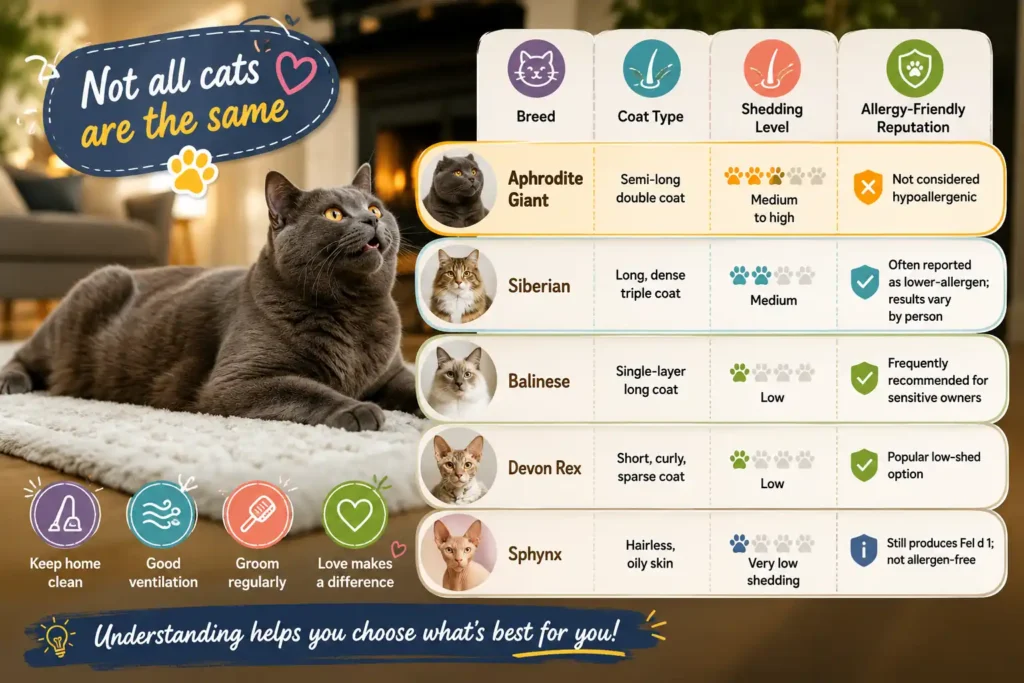
The table below compares the Aphrodite Giant Cat to breeds more commonly recommended for allergy-prone households, based on coat type and general shedding tendency.
| Breed | Coat Type | Shedding Level | Allergy-Friendly Reputation |
| Aphrodite Giant | Semi-long double coat | Medium to high | Not considered hypoallergenic |
| Siberian | Long, dense triple coat | Medium | Often reported as lower-allergen; results vary by person |
| Balinese | Single-layer long coat | Low | Frequently recommended for sensitive owners |
| Devon Rex | Short, curly, sparse coat | Low | Popular low-shed option |
| Sphynx | Hairless, oily skin | Very low shedding | Still produces Fel d 1; not allergen-free |
Coat length is only part of the story. A hairless breed like the Sphynx still triggers reactions in many allergy sufferers because Fel d 1 lives in the skin and saliva, not just the fur.
How to Reduce Allergens in an Aphrodite Giant Cat’s Home
A few consistent habits make a measurable difference for allergy-prone households:
- Run a HEPA air purifier in rooms where the cat spends the most time.
- Wash bedding, cat beds, and soft furnishings weekly in hot water.
- Choose hard flooring over carpet where possible, since carpet traps dander.
- Vacuum with a HEPA-filter vacuum at least twice a week.
- Wipe the cat down with a damp cloth between baths to lift loose dander.
- Wash hands after petting or handling the cat, especially before touching your face.
Keeping at least one allergen-free room, such as a bedroom, gives sensitive household members a reliable place to recover overnight.
Grooming Tips to Control Cat Allergens
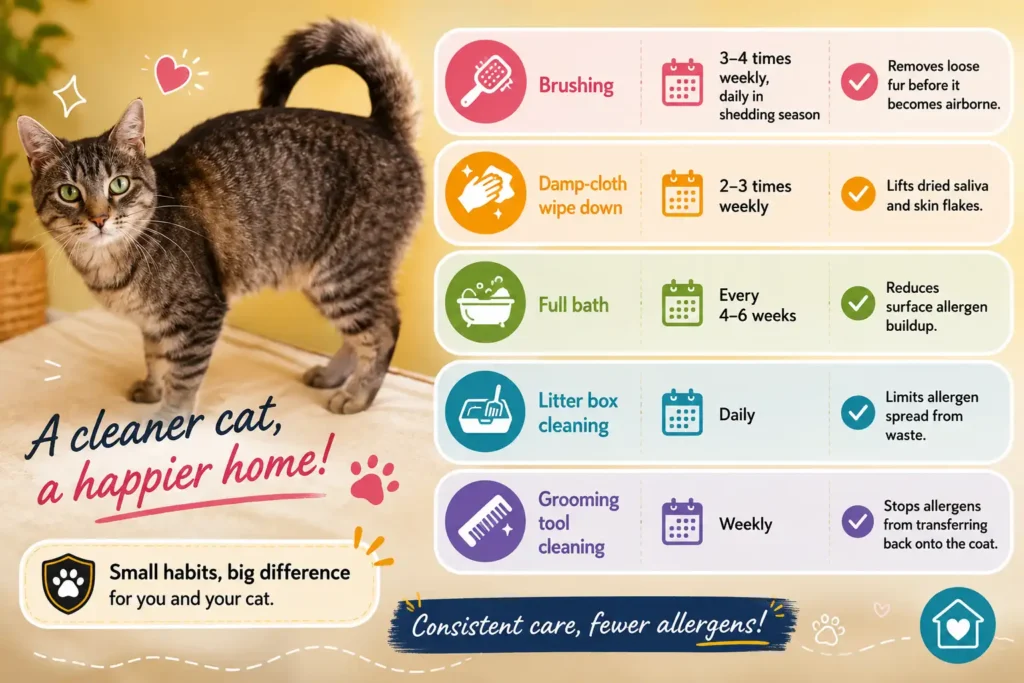
This grooming schedule shows how often each task helps keep loose fur and dander under control.
| Task | Recommended Frequency | Why It Helps |
| Brushing | 3–4 times weekly, daily in shedding season | Removes loose fur before it becomes airborne |
| Damp-cloth wipe down | 2–3 times weekly | Lifts dried saliva and skin flakes |
| Full bath | Every 4–6 weeks | Reduces surface allergen buildup |
| Litter box cleaning | Daily | Limits allergen spread from waste |
| Grooming tool cleaning | Weekly | Stops allergens from transferring back onto the coat |
The American Association of Feline Practitioners recommends regular, low-stress grooming sessions for large, thick-coated breeds like the Aphrodite Giant, since consistent handling from kittenhood makes brushing far easier as the cat matures.
Are Aphrodite Giant Cats a Good Choice for Allergy-Prone Families?
Aphrodite Giant Cats suit allergy-prone families best when allergies are mild, and owners commit to a real grooming routine. Their gentle, affectionate temperament makes them a strong match for households with children, but that benefit has to be weighed against their above-average dander output. Families managing asthma or severe allergies are usually better served by a lower-shedding breed such as the Balinese or Devon Rex. A short trial visit with an individual cat, along with input from a treating allergist, gives a far more reliable answer than breed reputation alone.
The International Cat Association (TICA) officially recognized the Aphrodite Giant as a breed in 2017, and the World Cat Federation (WCF) followed with recognition in 2012, both citing the breed’s natural Cypriot origins rather than any allergen-reducing traits.
Frequently Asked Questions About Aphrodite Giant Cats and Allergies
Are Aphrodite Giant Cats completely hypoallergenic?
No. No cat breed is completely hypoallergenic, and the Aphrodite Giant Cat produces normal to above-average levels of dander and Fel d 1 due to its size and thick double coat. People with mild allergies may tolerate them with careful management, but a guaranteed allergen-free experience does not exist for this breed.
Do Aphrodite Giant Cats shed?
Yes. Aphrodite Giant Cats shed moderately to heavily year-round, with heavier shedding during spring and autumn coat changes. Regular brushing, several times a week, keeps loose hair and attached dander from building up around the home.
Can an Aphrodite Giant Cat trigger asthma or allergies?
Yes, an Aphrodite Giant Cat can trigger asthma or allergy symptoms in sensitive individuals. Their size, thick coat, and normal Fel d 1 production mean more airborne dander compared with smaller, short-haired breeds. The American College of Allergy, Asthma & Immunology (ACAAI) notes that symptoms can appear within minutes of exposure in sensitized people, regardless of breed.
How can I reduce allergens from an Aphrodite Giant Cat?
- Brush the cat several times a week, ideally outdoors or in a well-ventilated room.
- Use a HEPA air purifier and vacuum.
- Keep the cat out of bedrooms.
- Wash hands and bedding regularly.
- Schedule routine grooming or occasional professional grooming sessions.
Are Aphrodite Giant Cats good with children despite allergy concerns?
Yes, Aphrodite Giant Cats are known for a gentle, patient temperament that generally suits families with children. Allergy risk should still be tested before adoption, since a friendly temperament does not reduce dander or Fel d 1 output.
Do male or female Aphrodite Giants cause more allergies?
Intact males of most cat breeds tend to produce more Fel d 1 than females or neutered males, based on general feline research. Neutering an Aphrodite Giant early can modestly reduce allergen production, though it will not eliminate it.
Is professional grooming worth it for allergy control?
Professional grooming can help, particularly for owners who struggle to keep up with a thick double coat on their own. Regular de-shedding treatments remove loose undercoat that home brushing might miss, which reduces the amount of dander left to circulate indoors.