
Aphrodite Giant personality is built around size, strength, and a strong need for human company. Adult cats of this breed can weigh between 15 and 20 pounds, making them one of the largest natural cat breeds, yet they carry that size with a calm and friendly attitude instead of any aggression. This temperament comes from their history as working farm cats in Cyprus, where they hunted rodents and lived close to people for generations.
That background shaped a cat that bonds deeply with its owners, follows them from room to room, and often greets visitors at the door instead of hiding. A key part of Aphrodite Giant personality is its dislike of being left alone for long periods, since this breed thrives on interaction, play, and physical closeness with its family. Their high intelligence also makes them easier to train than most large cat breeds, allowing many owners to teach simple commands or leash walking with consistent practice.
Aphrodite Giant Personality at a Glance
Aphrodite Giant personality blends strong affection with steady confidence, making this cat both a loving companion and an alert presence at home. Its behavior stays consistent across different settings, whether it’s playing with children or resting quietly beside its owner.
Before getting into specific behaviors, here’s a quick snapshot of the traits that shape Aphrodite Giant personality day to day.
| Trait | What to Expect |
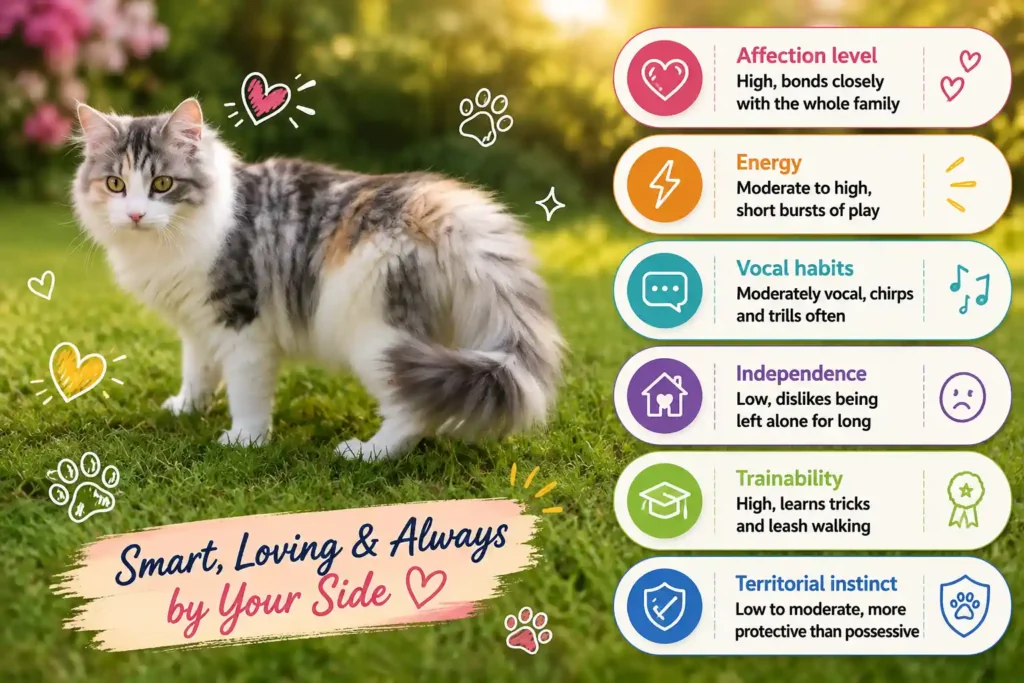
| Affection level | High, bonds closely with the whole family |
| Energy | Moderate to high, short bursts of play |
| Vocal habits | Moderately vocal, chirps and trills often |
| Independence | Low, dislikes being left alone for long |
| Trainability | High, learns tricks and leash walking |
| Territorial instinct | Low to moderate, more protective than possessive |
What Defines Aphrodite Giant Personality?
Aphrodite Giant personality is defined by strong affection, high sociability, and calm, dog-like devotion to its family. These cats are playful, intelligent, and thrive on daily interaction. Despite their muscular, athletic build, they rarely show aggression and usually prefer curling up next to an owner over spending time alone.
Find Out If the Aphrodite Giant Fits Your Lifestyle. Read more in Rare Aphrodite Giant Facts Most Cat Lovers Don’t Know.
Is the Aphrodite Giant a Friendly or Aggressive Cat?
This breed leans firmly toward friendly. Its mountain ancestry made it a confident, capable hunter, but that confidence rarely turns into aggression toward people. Most behavior issues in Aphrodite Giants trace back to boredom, isolation, or a startling situation rather than a naturally hostile streak.
Early socialization with children, guests, and other animals keeps this tendency toward friendliness intact well into adulthood, and most owners report their cat warming up to new visitors within a few calm introductions rather than staying guarded.
Is the Aphrodite Giant Aggressive Toward People?
No, the Aphrodite Giant is not considered an aggressive breed. Aggression usually appears only when the cat is startled, in pain, or left without company for long stretches. With steady attention and a predictable routine, most Aphrodite Giants stay calm, affectionate, and easygoing around family members and visitors alike.
How the Aphrodite Giant Behaves Around Humans
Aphrodite Giants tend to shadow their favorite person around the house, hopping up onto counters or furniture just to stay close. They tolerate handling well for such a large cat, often accepting being picked up or carried despite weighing well over a typical housecat. Communication comes through chirps, trills, and the occasional loud meow rather than constant yowling.
Many greet their owners at the door after time apart, a habit more common in dogs than cats. While they usually bond most closely with one person, they stay friendly and approachable toward the rest of the household, including regular guests once they’ve been introduced a few times.
Aphrodite Giant Social Behavior
Social behavior is one of the clearest hallmarks of this breed. Aphrodite Giants actively seek out attention, “supervise” household tasks, and greet other resident pets rather than avoiding them. Isolation tends to bring out clinginess or mild destructiveness rather than genuine independence.
Households that are home often, or that already have another sociable cat or dog, tend to suit this breed better than a quiet, empty apartment, since the breed’s confidence around others comes from regular, positive contact.
Is the Aphrodite Giant Territorial?
Not in the guarding sense most people picture. Aphrodite Giants can be protective of a favorite perch, cat tree, or window seat, and may nudge another pet away from that spot rather than sharing it. That said, true territorial aggression, hissing matches, or resource guarding over food is uncommon in a well-socialized, spayed or neutered Aphrodite Giant.
Spaying or neutering also reduces marking and roaming instincts tied to territory, and giving each pet its own resting spot usually resolves any mild pushiness over a favorite perch.
Aphrodite Giant Behavior at Home
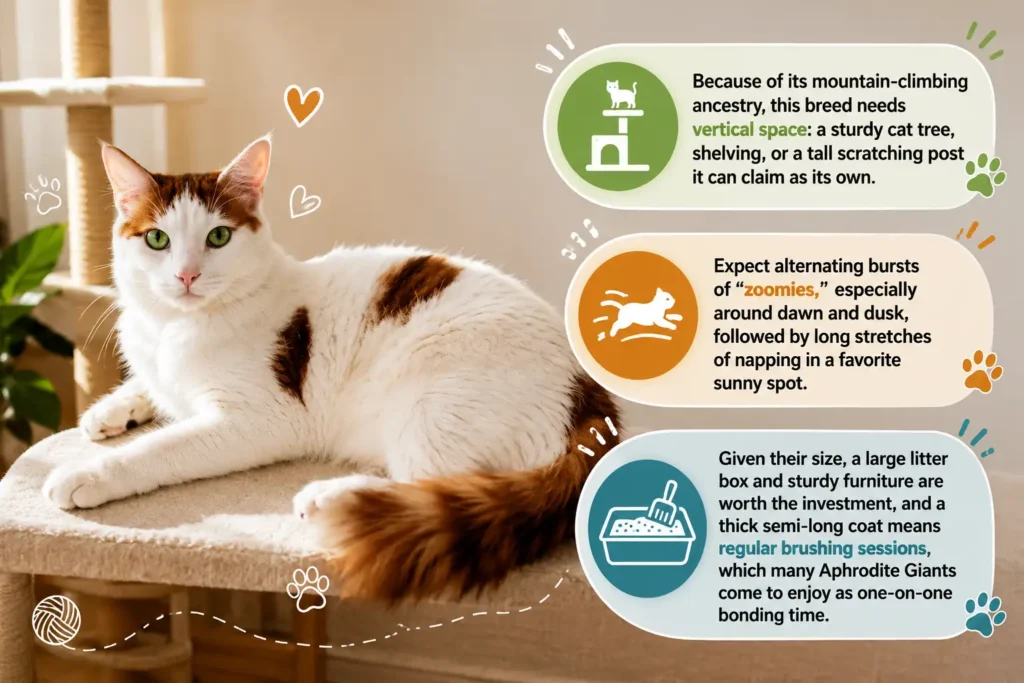
Because of its mountain-climbing ancestry, this breed needs vertical space: a sturdy cat tree, shelving, or a tall scratching post it can claim as its own. Many Aphrodite Giants enjoy supervised outdoor time or leash walks, echoing their history as active outdoor hunters. Expect alternating bursts of “zoomies,” especially around dawn and dusk, followed by long stretches of napping in a favorite sunny spot.
Given their size, a large litter box and sturdy furniture are worth the investment, and a thick semi-long coat means regular brushing sessions, which many Aphrodite Giants come to enjoy as one-on-one bonding time.
How Active Is the Aphrodite Giant?
This is a moderately active breed rather than a hyperactive one. Aphrodite Giants enjoy interactive play, puzzle feeders, and even a game of fetch, but they balance that activity with plenty of lap time and rest. The breed also matures slowly, not reaching full size until around 4 to 5 years old, so kittens tend to be noticeably more playful and clumsy than settled adults, and their exercise needs shift as they grow into their full frame.
Aphrodite Giant Temperament With Other Pets
Aphrodite Giants generally get along well with other cats and dogs once introductions happen gradually. Their mountain-hunting background does leave a trace of prey drive, though, so temperament around very small animals depends heavily on early exposure and supervision.
A calm, confident cat that isn’t aggressive toward its housemates can still see a small rodent or bird as something to chase, so it pays to keep those introductions controlled rather than assuming friendliness automatically extends to every species.
Can Aphrodite Giants Live With Other Pets?
In most cases, yes, especially with dogs or other cats introduced slowly and on neutral territory over a week or two rather than all at once. The table below breaks down likely compatibility by pet type, based on documented breed behavior.
| Other Pet | Compatibility | Notes |
| Dogs | Good | Enjoys dog-like companionship once introduced slowly |
| Other cats | Good | Often does better with a feline companion than alone |
| Children | Good | Gentle and tolerant when socialized early |
| Small rodents | Use caution | Natural hunting instinct may kick in |
| Birds | Use caution | Same prey-drive concern as with rodents |
Do Aphrodite Giant Cats Get Along With Dogs and Other Cats?
Yes, most Aphrodite Giants get along well with dogs and other cats when introductions are slow and supervised. Their sociable, non-territorial nature makes them adaptable to multi-pet households. Because they dislike being alone, having a compatible dog or cat companion often works in their favor rather than against it.
Male vs Female Aphrodite Giant Personality
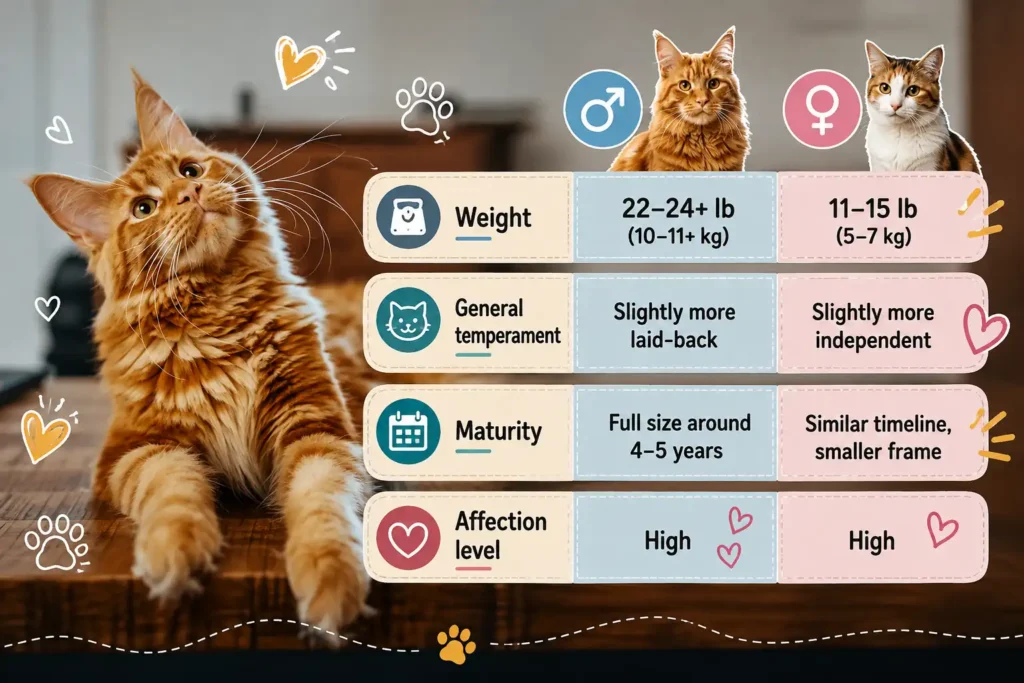
Size is the biggest difference between the sexes: males often reach 22 to 24 pounds or more, while females typically stay between 11 and 15 pounds. Personality overlaps heavily between the two, but males tend to run a touch more laid-back overall, while females can show a bit more independence and confidence around new situations. Spaying or neutering tends to even out both temperaments and reduce any territorial edge, regardless of sex.
| Trait | Male | Female |
| Weight | 22-24+ lb (10-11+ kg) | 11-15 lb (5-7 kg) |
| General temperament | Slightly more laid-back | Slightly more independent |
| Maturity | Full size around 4-5 years | Similar timeline, smaller frame |
| Affection level | High | High |
What Makes the Aphrodite Giant’s Personality Unique?
Few breeds combine a large, athletic, mountain-cat build with such a consistently gentle, people-oriented temperament. The Aphrodite Giant’s dog-like loyalty, calm confidence, and low aggression stand out compared to other large breeds that can be more aloof or independent.
Its status as a natural breed also means fewer of the behavioral extremes sometimes seen in cats bred heavily for appearance, giving it a grounded, steady demeanor rather than a skittish one. That combination of size, history, and warmth is rare enough that many owners describe the breed as feeling more like a devoted dog than a typical house cat.
Common Aphrodite Giant Behavior to Watch For
New owners often notice a consistent set of habits once their Aphrodite Giant settles in:
- Chirping or trilling to greet family members
- Kneading blankets, laps, or soft furniture
- Following an owner from room to room
- Climbing to the highest available perch
- Short bursts of “zoomies,” often at dawn or dusk
- Nudging or pawing for attention if ignored too long
How to Keep an Aphrodite Giant Calm and Comfortable
A predictable daily routine goes a long way with this breed, since sudden changes can trigger stress-driven behavior. Vertical climbing space, interactive play sessions, and puzzle feeders help burn off energy before it turns into restlessness. Because loneliness affects this cat more than most, regular company from a person or a compatible pet matters as much as physical exercise.
Slow, calm introductions to new people or animals also help keep territorial nudges from turning into real conflict. The American Association of Feline Practitioners recommends routine wellness visits for all cats, and for a large, active breed like this one, those checkups double as an easy way to catch early signs of joint or weight issues before they affect mood or behavior.
Frequently Asked Questions About Aphrodite Giant Personality
Is the Aphrodite Giant a good family cat?
Yes. Its gentle, patient nature and tolerance for handling make it a good fit for households with children and other pets, provided it gets enough daily attention and interaction.
Are Aphrodite Giant cats vocal?
They’re moderately vocal, using chirps, trills, and occasional meows to communicate rather than constant yowling or demanding vocalization.
Do Aphrodite Giants like to be held?
Most tolerate and even enjoy being picked up or carried, though comfort with handling varies by individual cat and how early it was introduced to being held.
How long do Aphrodite Giant cats live?
Estimates generally range from 9 to 15 years, though exact figures are still developing since the breed’s formal recognition is relatively recent.
Are Aphrodite Giants aggressive?
No. Aggression is uncommon and usually linked to isolation, fear, or pain rather than natural temperament.
Do Aphrodite Giants need a companion animal?
They do best with regular company, whether that’s an attentive owner, another cat, or a dog, since they dislike being left alone for long periods.
How much does an Aphrodite Giant cost?
Prices generally run from about $600 to $1,200 USD from a reputable breeder, though rarity and location can push costs higher.