
Aphrodite Giant training works best when you start early and keep sessions short, calm, and reward-based. This large Cyprus breed is described as intelligent, food-motivated, and eager to interact with its family, making consistent training a useful part of raising a well-mannered cat.
From kitten training and litter habits to basic commands, leash walking, socialization, and scratching-post training, the goal is to build good habits gradually. Because Aphrodite Giants grow quickly and can become large, choosing appropriately sized equipment and giving them enough physical and mental activity is especially important.
How to Train an Aphrodite Giant
Start with short, low-pressure sessions and build from there. Aphrodite Giants respond best to a calm, consistent handler who keeps the rules the same every day. Because they’re such large, athletic cats, physical outlets like climbing and chasing toys work better than forcing your cat to sit still for long lessons. Keep sessions to five or ten minutes so your cat stays engaged rather than bored.
Reward every small win immediately, since delayed praise rarely connects in a cat’s mind. Patience matters here, too; these cats mature slowly and can take up to three years to reach full adulthood. Stick with it, and you’ll notice steady progress within the first few weeks.
See Why Cat Lovers Adore These Majestic Giants. Read more in Rare Aphrodite Giant Facts Most Cat Lovers Don’t Know.
Training an Aphrodite Giant Kitten
Kitten training sets the tone for years to come, so start the moment your kitten settles in. Handle paws, ears, and mouth gently and often so future vet visits and grooming feel normal rather than scary. Introduce a scratching post and litter box on day one, since kittens copy habits quickly at this age. Keep early sessions playful; a kitten that associates training with fun stays motivated as an adult.
Avoid punishment entirely; startling a kitten can create lasting fear rather than good behavior. Because Aphrodite Giant kittens grow fast, adjust furniture, food bowls, and litter boxes to match their expanding size. Consistency during these first months pays off enormously later.
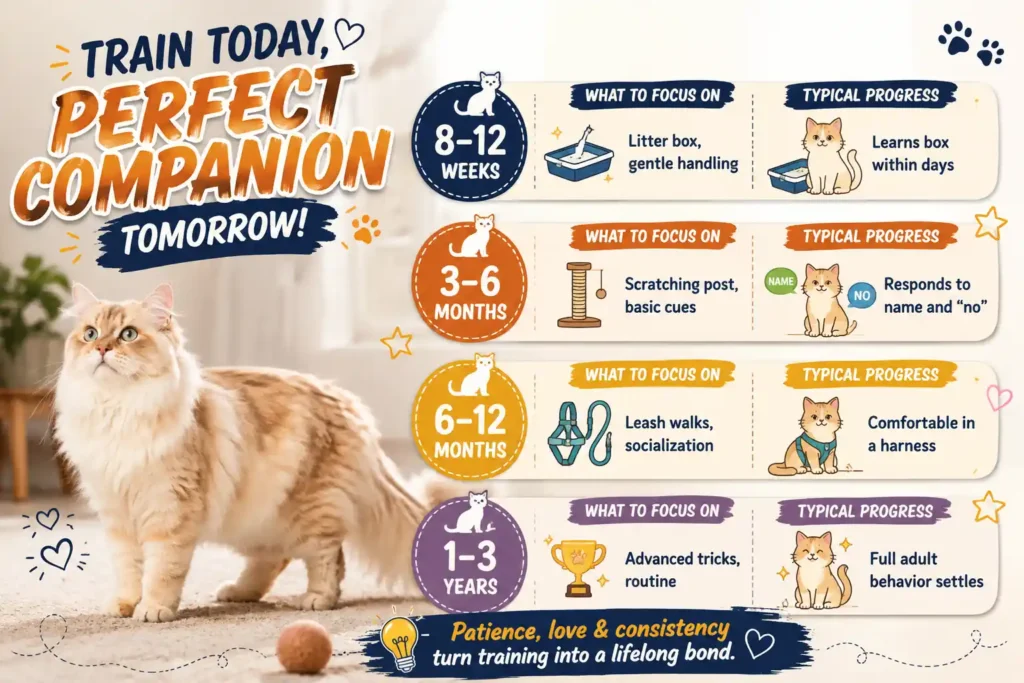
Wondering what to expect at each stage? The table below breaks down typical training milestones by age.
| Age | What to Focus On | Typical Progress |
| 8–12 weeks | Litter box, gentle handling | Learns box within days |
| 3–6 months | Scratching post, basic cues | Responds to name and “no” |
| 6–12 months | Leash walks, socialization | Comfortable in a harness |
| 1–3 years | Advanced tricks, routine | Full adult behavior settles |
Litter Training an Aphrodite Giant
Litter training is usually the easiest part of raising this breed, and most kittens figure it out within days of watching a parent or littermate. Choose an oversized, low-sided box early, since adult Aphrodite Giants can weigh nearly double a standard housecat. Place the box in a quiet, accessible spot and avoid moving it once your cat settles into a routine. Scoop daily; this breed is notably fastidious and may avoid a dirty box altogether.
If accidents happen, clean thoroughly with an enzymatic cleaner rather than scolding your cat. Multiple boxes help in larger homes, especially with more than one cat. Most owners report full litter training within one to two weeks.
How Long Does Aphrodite Giant Training Take?
Most Aphrodite Giants master litter box use within one to two weeks and basic commands within four to six weeks of consistent, positive training. Full leash confidence and social ease usually develop by around six months, though some cats keep refining their manners well into their second year.
Teaching Basic Commands
Aphrodite Giants pick up basic commands faster than many breeds, thanks to their sharp intelligence and eagerness to please. Start with “come” and “sit,” using a clicker or a consistent verbal marker paired with a treat. Keep commands short; one word works better than a full sentence. Practice in a distraction-free room before moving to busier spaces like the kitchen.
Repetition matters more than session length, so five short daily sessions beat one long weekly one. Celebrate progress with genuine enthusiasm, since these cats read tone of voice closely. Within a month, most cats respond reliably to two or three commands.
Positive Reinforcement Training
Positive reinforcement is the only training method recommended for this breed, or any cat, for that matter. Punishment-based methods damage trust and can trigger anxiety or aggression in a cat this size and strength. Use small, high-value treats, verbal praise, or a favorite toy immediately after the desired behavior. Timing matters: reward within one to two seconds so your cat connects the action to the reward. Vary rewards occasionally to keep your cat motivated rather than bored with the same treat.
The American Association of Feline Practitioners (AAFP) recommends reward-based methods for all cats, noting they produce more reliable, lasting results than correction-based approaches. Stick with positive reinforcement, and your training will progress steadily.
Leash Training an Aphrodite Giant
Leash training gives this active, mountain-bred cat safe access to the outdoors without the risks of free-roaming. Start indoors with a well-fitted harness, letting your cat wear it around the house for short stretches before attaching a leash. Reward calm behavior in the harness before ever stepping outside.
Choose quiet, low-traffic areas for the first few walks to avoid overwhelming your cat. Let your cat set the pace; Aphrodite Giants are curious and will want to explore, sniff, and pause often. Because of their long hind legs and climbing instinct, expect more jumping and perching than a typical stroll. Most cats adjust to a harness within two to three weeks of gradual exposure.
Socialization Training
Early socialization shapes how confidently your Aphrodite Giant handles new people, pets, and environments. Introduce your cat to different sounds, surfaces, and gentle handling before twelve weeks of age whenever possible. Because this breed is famously social and family-oriented, most Aphrodite Giants warm up to children and other pets faster than more independent breeds.
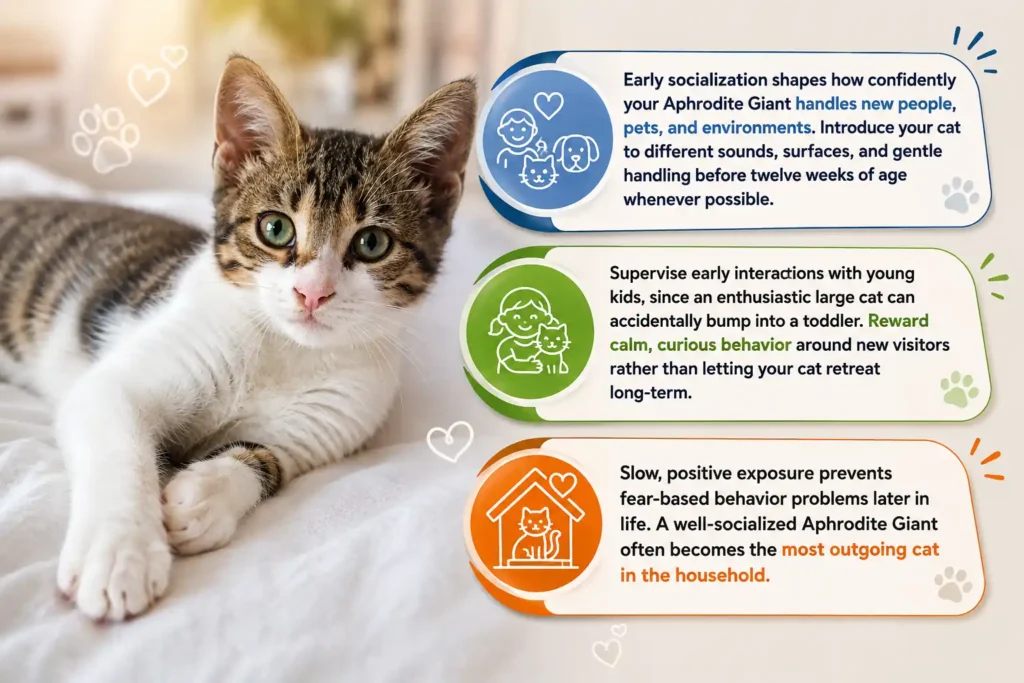
Supervise early interactions with young kids, since an enthusiastic large cat can accidentally bump into a toddler. Reward calm, curious behavior around new visitors rather than letting your cat retreat long-term. Slow, positive exposure prevents fear-based behavior problems later in life. A well-socialized Aphrodite Giant often becomes the most outgoing cat in the household.
Is the Aphrodite Giant Easy to Train?
Yes. The Aphrodite Giant ranks among the more trainable cat breeds thanks to its intelligence, food motivation, and closer-than-average bond with its family. Owners frequently compare its trainability to a dog’s, particularly for commands, leash walking, and litter habits.
Training an Aphrodite Giant to Use a Scratching Post
Scratching is instinctive, so redirect it rather than trying to eliminate it. Place a tall, sturdy scratching post near favorite furniture targets, since this breed’s size and strength can easily tip a flimsy one. Sprinkle catnip or rub the post with a treat to draw initial interest. Reward every scratch on the post immediately, even if it happens by accident.
Trim nails regularly to reduce damage while training is still in progress. Avoid declawing entirely—veterinary and welfare groups including the ASPCA oppose the procedure as painful and unnecessary. Most cats fully adopt a post within two to four weeks of consistent redirection.
Common Training Problems
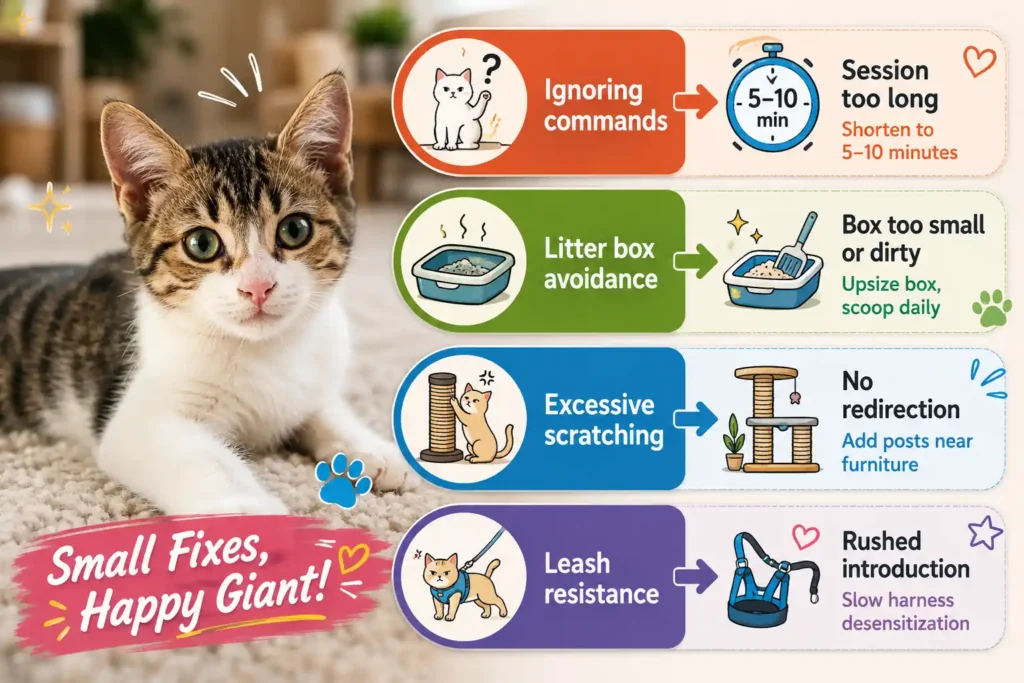
Even food-motivated cats hit training snags occasionally. Here’s a quick look at the most common problems and how to fix them.
| Problem | Likely Cause | Fix |
| Ignoring commands | Session too long | Shorten to 5–10 minutes |
| Litter box avoidance | Box too small or dirty | Upsize box, scoop daily |
| Excessive scratching | No redirection | Add posts near furniture |
| Leash resistance | Rushed introduction | Slow harness desensitization |
Most training problems trace back to environment rather than temperament. This breed’s size means underused space or clutter can quickly cause frustration and stall progress. Revisit the basics if things stall rather than escalating punishment. Consistency across every household member prevents the mixed signals that confuse a cat. If problems persist beyond a few weeks, a veterinary behaviorist can help rule out underlying medical causes.
What Age Should You Start Training an Aphrodite Giant?
Start as early as eight weeks old, right after a kitten joins the household. Training during the first three to six months builds habits that last a lifetime, though older cats and rescues can still learn with patience and consistent positive reinforcement.
Tips for Successful Aphrodite Giant Training
A little planning turns Aphrodite Giant training into a smooth, even enjoyable process rather than a chore. Keep sessions short, upbeat, and treat-based rather than long and repetitive. Match toys, posts, and litter boxes to this breed’s larger-than-average size from day one. Stay consistent; every household member should use the same commands and rules.
Track progress loosely so you notice small wins, especially during slower kitten growth phases. Avoid comparing your cat’s pace to smaller breeds, since Aphrodite Giants mature more slowly overall. With patience and positive reinforcement, most owners see a confident, well-mannered companion within their cat’s first year.
Still unsure where to focus your energy? This quick-reference table sums up the most effective habits recognized by the International Cat Association (TICA) and experienced Aphrodite breeders.
| Do | Don’t |
| Reward within seconds | Wait to reward later. |
| Use short 5–10 min sessions. | Force long lessons |
| Redirect scratching | Punish or yell |
| Start training young | Delay socialization |
Bringing It All Together
Aphrodite Giant training doesn’t need to feel complicated. With their sharp intelligence, food motivation, and dog-like loyalty, these gentle giants pick up litter habits, basic commands, and leash manners faster than most cat owners expect. The key is starting early, keeping sessions short and positive, and matching your approach to their larger size and slower maturity. Stay consistent, reward every small win, and skip punishment entirely, and you’ll end up with a confident, well-mannered companion who genuinely enjoys learning alongside you.
Frequently Asked Questions
How long does Aphrodite Giant training take?
Litter training usually takes one to two weeks, while basic commands take about four to six weeks of consistent practice.
Are Aphrodite Giants good with children?
Yes. They’re known for gentle, dog-like loyalty and generally do well with supervised children when socialized early.
Can Aphrodite Giants be leash trained?
Yes. Most adjust to a harness within two to three weeks of gradual, indoor exposure.
Do Aphrodite Giants need a lot of grooming?
It depends on coat length. Shorthair cats need minimal grooming, while semi-longhair cats benefit from weekly brushing.
Is professional training necessary?
Not usually. Most owners succeed with home-based positive reinforcement, though a veterinary behaviorist can help with persistent issues.