
An Australian Mist bicolor cat is not an official color pattern in the breed standard, but it happens naturally when white spotting genes mix with the classic misted tabby coat. The result is a cat with soft, blurred spots or ticking in shades of brown, blue, or caramel, combined with patches of clean white fur on the chest, paws, or face. Breeders sometimes call this a “mismarked” Australian Mist rather than a true bicolor, since major registries like the GCCF only recognize solid, unmarked coats in twelve approved colors.
If you find an Australian Mist bicolor cat for sale, expect it to cost less than a show-quality kitten, since the white markings are considered a fault, not a feature, for pedigree competition. Despite this, many owners choose these cats specifically for their unique look, and their personality, health, and care needs stay the same as any other Australian Mist.
What Is an Australian Mist Bicolor Cat?
Official Australian Mist breed standards, published by the Governing Council of the Cat Fancy (GCCF), recognize only two coat patterns: spotted tabby and marbled tabby, spread across seven agouti colors. White patching, commonly called bicolor, sits outside that standard entirely. Genetic diversity from the breed’s founding stock, a mix of Burmese, Abyssinian, and domestic shorthair cats, occasionally produces kittens carrying a white spotting gene that layers patches of white fur over the usual misted markings.
Show judges treat these kittens as pet-quality rather than show-quality, though the pattern does not affect health or personality. Breeders who do not select against the white spotting gene are the ones most likely to produce this look, so it pays to confirm exactly what a listing means before assuming it matches a registered pattern.
Australian Mist Bicolor Appearance
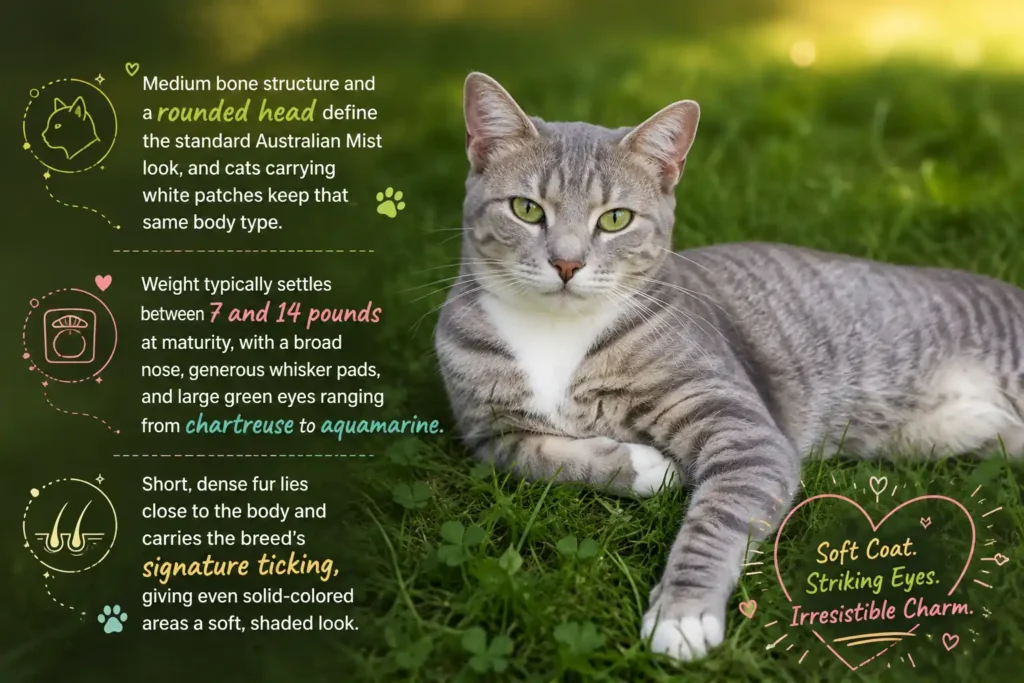
Medium bone structure and a rounded head define the standard Australian Mist look, and cats carrying white patches keep that same body type. Weight typically settles between 7 and 14 pounds at maturity, with a broad nose, generous whisker pads, and large green eyes ranging from chartreuse to aquamarine. Short, dense fur lies close to the body and carries the breed’s signature ticking, giving even solid-colored areas a soft, shaded look. White fur on an Australian Mist bicolor cat usually shows up on the chest, belly, paws, or muzzle, similar to the mitted or locket patterns seen in other breeds. Facial markings can look asymmetrical since white spotting does not follow a fixed template the way the tabby pattern does.
Bicolor Coat Pattern and Markings
Layered texture separates the standard Australian Mist coat from an ordinary bicolor pattern seen in non-pedigree cats. Three visual layers build the look: a pale agouti ground color, a distinct tabby marking in a darker shade, and a soft misted veil created by random ticking. White spotting adds a fourth layer on top of that structure, interrupting the tabby pattern wherever the gene expresses itself. Coverage can range from a tiny locket on the chest to large patches across the legs and underside, and the table below breaks down the general grading used across breeds for reference.
| White Spotting Grade | Approx. White Coverage | Typical Locations |
| Low-grade (mitted) | Under 10% | Paws, chin, small chest patch |
| Medium-grade (bicolor) | 10% to 50% | Chest, belly, legs, muzzle |
| High-grade (harlequin/van-like) | Over 50% | Body mostly white, color on head and tail |
Kittens born with heavier white coverage rarely qualify as breeding stock, so responsible catteries usually place them as desexed companions instead.
Australian Mist Bicolor Colors
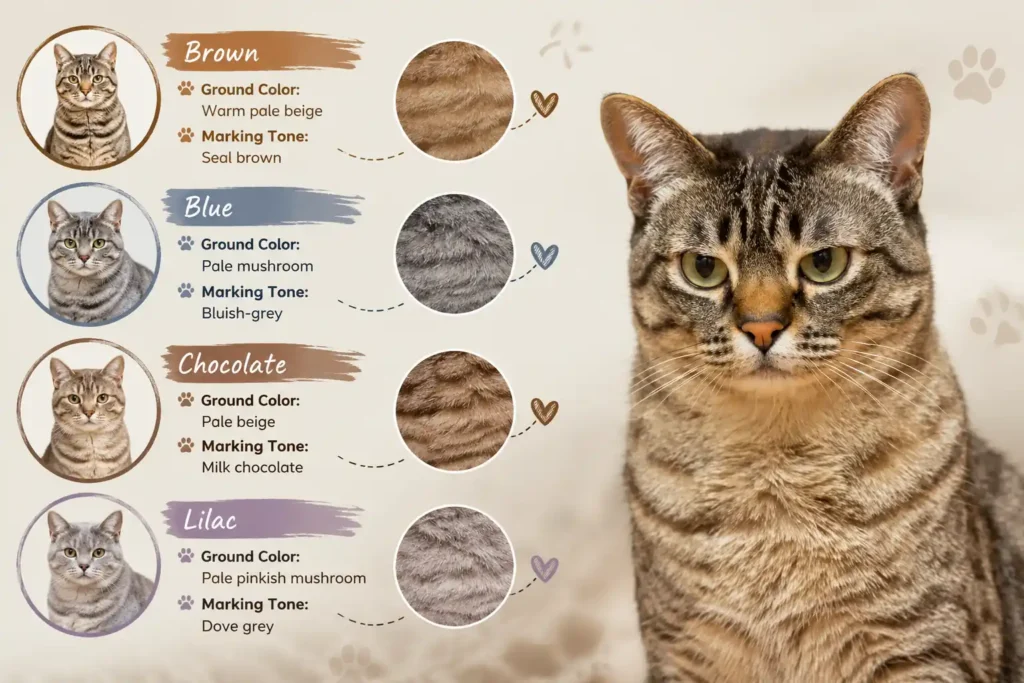
Seven base colors make up the official Australian Mist palette: brown, blue, chocolate, lilac, caramel, gold, and peach. Each carries the breed’s classic rufous, or reddish, toning around the nose, cheeks, and ears, even in the palest shades. The seven official colors all remain possible under this white-patched variation, since the spotting gene works independently of coat pigment. Chocolate and lilac tend to show the softest contrast against white fur, while brown and gold create a bolder look. Kittens are born with faint markings that darken over the first year, so a pale eight-week-old kitten often deepens noticeably by twelve months.
| Color | Ground Color | Marking Tone |
| Brown | Warm pale beige | Seal brown |
| Blue | Pale mushroom | Bluish-grey |
| Chocolate | Pale beige | Milk chocolate |
| Lilac | Pale pinkish mushroom | Dove grey |
| Caramel | Honey-brown base | Blue-grey metallic |
| Gold (Cinnamon) | Pale cinnamon | Rich golden cinnamon |
| Peach (Fawn) | Pale mushroom | Pinkish fawn |
Two cats carrying this white-patched pattern can look entirely different depending on which of these seven base colors sits underneath the patches.
Australian Mist Bicolor Personality and Temperament
Affectionate, people-focused behavior defines this breed regardless of coat pattern, and white patching has no documented effect on personality. Burmese ancestry contributes a chatty, people-oriented streak, while Abyssinian genetics add curiosity and playful energy that lasts into adulthood. Dog-like loyalty shows up often, with these cats following family members from room to room instead of hiding away. Tolerance for handling makes the breed a solid match for households with children, provided kids learn gentle handling early, and other pets are usually accepted without much fuss once introductions happen gradually.
Grooming and Care Requirements
Short, close-lying fur keeps grooming demands low compared to long-haired breeds. A weekly brush removes loose hair and keeps the ticked coat glossy, while nail trims and ear checks every two to three weeks catch problems early. Dental care deserves attention too, since periodontal disease ranks among the most common health complaints in adult cats. Indoor living suits this breed well, both for safety and because Australian Mists were deliberately bred to stay indoors and protect native Australian wildlife.
| Task | Frequency | Why It Matters |
| Brushing | Weekly | Removes loose hair, distributes skin oils |
| Nail trimming | Every 2-3 weeks | Prevents overgrowth and snagging |
| Ear cleaning | Every 2-3 weeks | Reduces wax buildup and infection risk |
| Teeth brushing | 2-3 times weekly | Lowers risk of periodontal disease |
| Litter box cleaning | Daily | Supports urinary health, reduces stress |
Health and Lifespan
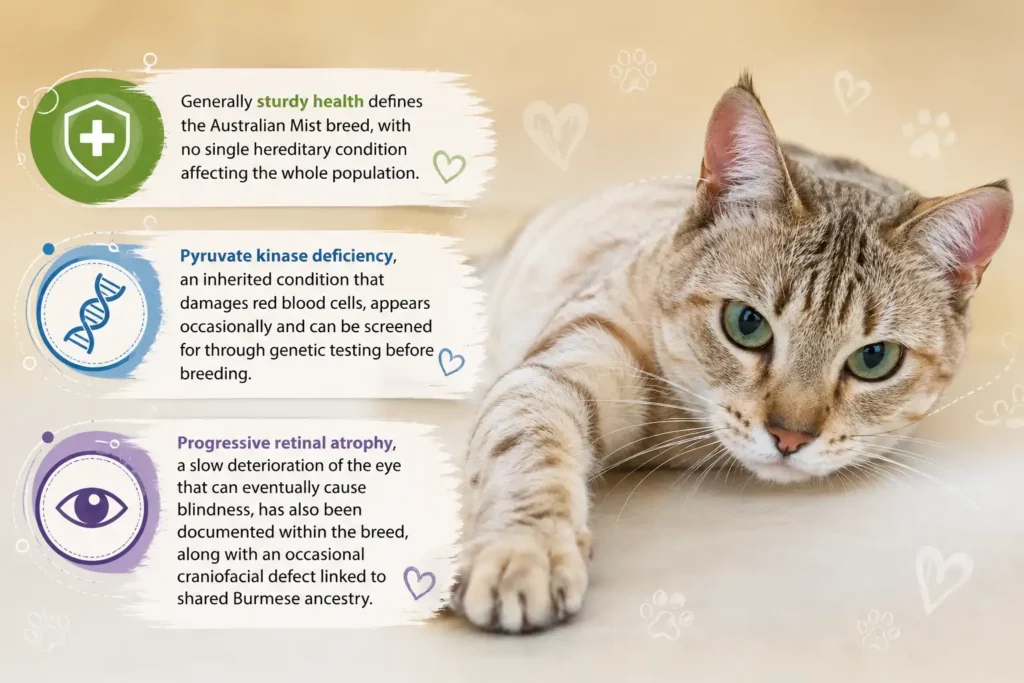
Generally sturdy health defines the Australian Mist breed, with no single hereditary condition affecting the whole population. Pyruvate kinase deficiency, an inherited condition that damages red blood cells, appears occasionally and can be screened for through genetic testing before breeding. Progressive retinal atrophy, a slow deterioration of the eye that can eventually cause blindness, has also been documented within the breed, along with an occasional craniofacial defect linked to shared Burmese ancestry. Routine veterinary care, alongside guidance from organizations like International Cat Care, remains the best defense against these inherited risks.
How Long Do Australian Mist Cats Live?
Australian Mist cats typically live between 12 and 16 years with proper veterinary care, a balanced diet, and an indoor lifestyle. Some individuals reach their late teens when genetic health risks are managed early through breeder screening and regular checkups.
Australian Mist Bicolor Kittens
Faint, barely-there markings characterize newborn Australian Mist kittens, with color and pattern intensifying over the first twelve months. White patches, when present, are usually visible from birth and do not shift in placement the way tabby markings deepen with age. Finding an Australian Mist bicolor cat kitten from a health-tested cattery takes patience, since most breeders do not select for this look and litters carrying the gene appear unpredictably.
Reputable catteries register kittens with organizations like TICA, the International Cat Association, and provide vaccination records, microchipping, and desexing before kittens leave at around twelve weeks old. Buyers should ask breeders directly about genetic testing for pyruvate kinase deficiency and progressive retinal atrophy before committing.
Australian Mist Bicolor Price
Standard Australian Mist kittens from registered breeders generally cost between $700 and $1,200 USD in the United States, with some listings reaching $2,000 USD depending on lineage and location. Australia, where the breed originated, tends to offer lower prices, often in the $250 to $500 USD range for pet-quality kittens.
White-patched kittens typically do not command a premium the way some bicolor patterns do in breeds like the Turkish Van, since the pattern falls outside the accepted standard rather than being a prized rarity. Rescue organizations occasionally place adult Australian Mists for $200 to $500 USD, and ongoing costs add roughly $50 to $80 USD per month for food, litter, and routine veterinary care.
How Much Does an Australian Mist Bicolor Cat Cost?
The price for this white-patched variation typically matches a standard-patterned kitten from the same breeder, usually landing between $700 and $1,200 USD in the United States. Lineage and health testing influence cost far more than the presence of white markings.
Is the Australian Mist Bicolor Cat Rare?
Rarity applies on two levels here, and both push in the same direction. Population numbers for the Australian Mist breed itself stay small outside Australia, with most catteries concentrated in its home country and only a handful active elsewhere. White spotting adds a second layer of scarcity, since breeders do not select for it and most avoid it when planning litters meant for showing. Genetic diversity from the breed’s original 30 or so foundation cats means the trait still surfaces occasionally, especially in lines with looser breeding standards, and finding one through a registered breeder often means getting lucky with an unplanned litter rather than searching a dedicated waiting list.
Australian Mist Bicolor vs. Other Australian Mist Patterns
Three coat looks now exist within casual discussions of this breed, even though only two hold official recognition. Spotted tabby shows distinct, randomly placed spots across the sides, flanks, and belly. Marbled tabby swaps spots for swirling, blotched patterns with minimal bullseye effect and a horizontal flow across the body. White patching layers on top of either base pattern, interrupting it wherever the spotting gene expresses itself, and it never appears as a standalone pattern on its own.
Key differences worth noting:
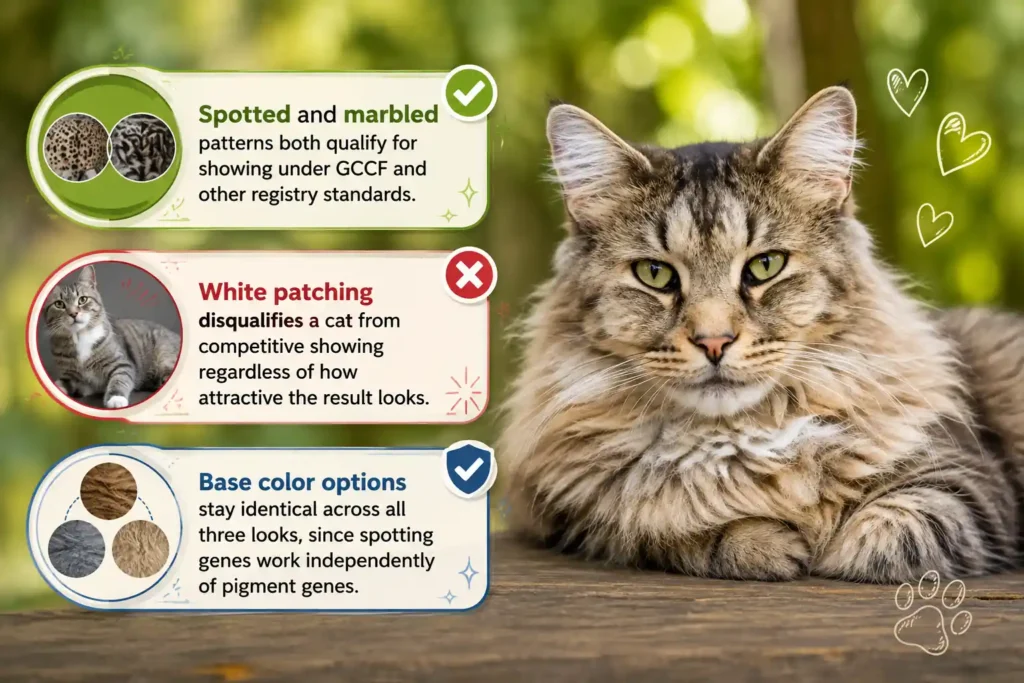
- Spotted and marbled patterns both qualify for showing under GCCF and other registry standards.
- White patching disqualifies a cat from competitive showing regardless of how attractive the result looks.
- Base color options stay identical across all three looks, since spotting genes work independently of pigment genes.
Is an Australian Mist Bicolor Right for You?
Personality-driven decisions usually work better than pattern-driven ones with this breed, since temperament stays consistent regardless of coat markings. An Australian Mist bicolor cat fits best with owners who value personality over pedigree perfection and who are not planning to show their cat competitively. Families with children or other pets tend to do well with this breed’s tolerant, social nature, and apartment dwellers benefit from its indoor-only temperament and low grooming needs. Show enthusiasts chasing breed-standard perfection should look toward classic spotted or marbled lines instead, since white patching disqualifies a cat from competition.
The Bottom Line on Australian Mist Bicolor Cats
Pulling everything together, an unofficial but eye-catching variation defines this cat far more than any registry paperwork. Breed standards from GCCF recognize only spotted and marbled tabby patterns, making white patching an unrecognized extra rather than a true breed variety. Appearance stays true to the classic Australian Mist build, just with white patches layered over the chest, belly, or paws.
Personality, grooming needs, and health risks, including pyruvate kinase deficiency and progressive retinal atrophy, remain identical to any other Australian Mist. Kittens carrying this look turn up unpredictably, usually priced the same as standard littermates at $700 to $1,200 USD. Rarity comes from two directions at once: the breed’s small population outside Australia and the unplanned nature of white spotting. Anyone prioritizing temperament over show credentials will likely find a wonderful companion in this pattern, white patches and all.
Frequently Asked Questions
Is bicolor an officially recognized Australian Mist pattern?
No major registry, including the GCCF, currently lists bicolor as a standard pattern. Only spotted and marbled tabby coats qualify for showing.
What causes white patches in Australian Mist cats?
A white spotting gene inherited from the breed’s mixed foundation stock creates the patches. The gene works independently of the base coat color and tabby pattern.
How much do Australian Mist kittens usually cost?
Prices in the United States typically range from $700 to $1,200 USD, with some pedigree lines reaching $2,000 USD. Australian prices tend to run lower.
How long do Australian Mist cats typically live?
Most live between 12 and 16 years with routine veterinary care and a balanced diet. Some healthy individuals reach their late teens.
Are Australian Mist cats good with children and other pets?
Yes, the breed is known for tolerant, affectionate behavior around children and generally adapts well to other cats and dogs.
Can a cat with white patches be shown in cat competitions?
No, white patching falls outside current breed standards, so cats with this pattern are considered pet-quality rather than show-quality.