
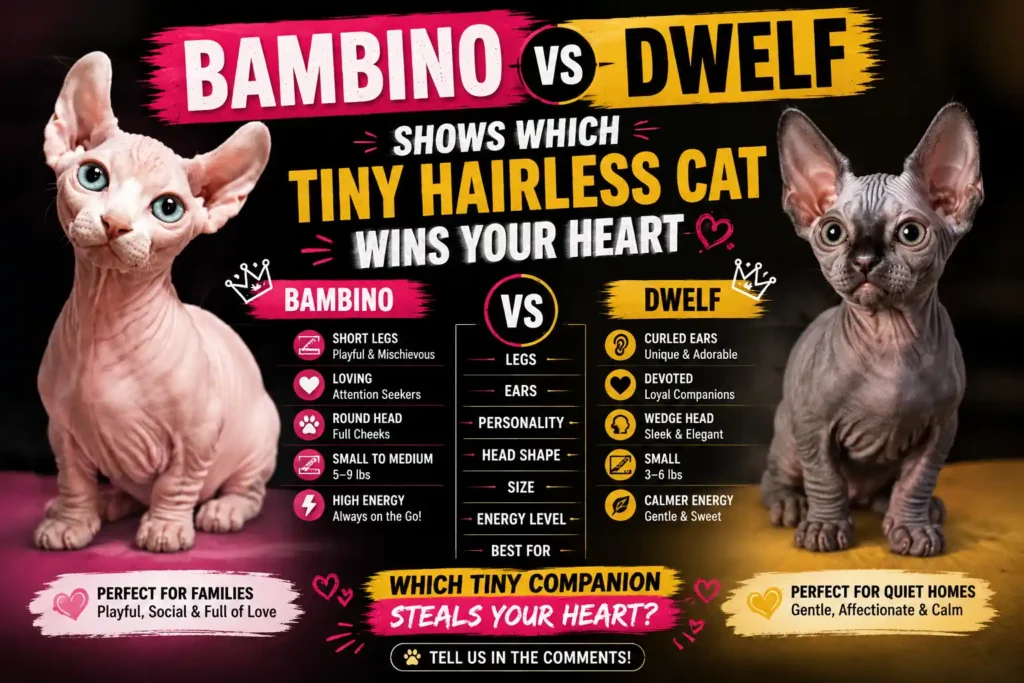
A Bambino kitten can cost close to $3,000, and a Dwelf with that same wrinkled skin and stubby legs often runs just as high, or higher. The real difference between them comes down to one small, curled detail. If you’re weighing Bambino vs Dwelf cats for your next pet, here’s the short version: both are hairless, short-legged hybrids built from the Sphynx and Munchkin, but the Dwelf adds a third breed, the American Curl, which gives it those folded-back ears.
That single extra ingredient changes more than looks. It shifts price, health risk, and even how much grooming you’ll be doing every week. This Bambino vs Dwelf guide breaks down everything worth knowing before you fall for either one of these rare, headline-stealing little cats.
Bambino vs Dwelf: A Quick Overview
Both breeds trace back to the same corner of the cat-fancy world. The Bambino was first bred in 2005 by Stephanie and Pat Osborne, who crossed a hairless Sphynx with a short-legged Munchkin. A few years later, the same breeders added a third ingredient, the American Curl, to create the Dwelf, whose name literally mashes together “dwarf” and “elf.” Both breeds currently sit in the experimental category with The International Cat Association (TICA), meaning neither is fully recognized yet, and both remain genuinely rare. You won’t find either one at a typical shelter; most come from small, specialized catteries.
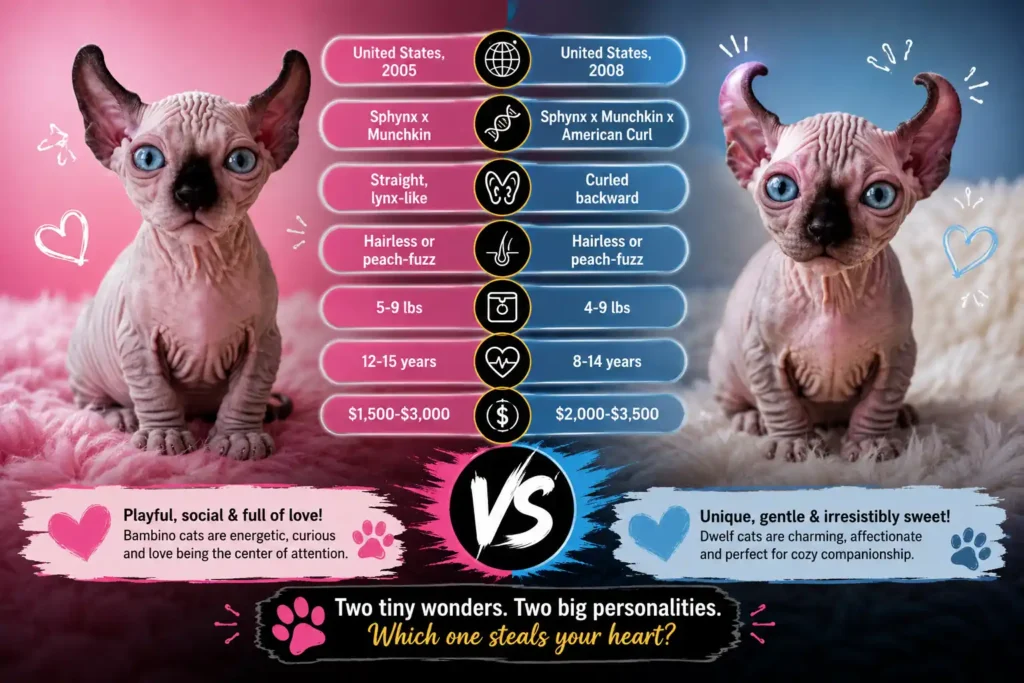
Bambino vs Dwelf: Quick Comparison Table
Before diving into the details, here’s a side-by-side look at how these two breeds stack up on the basics.
| Feature | Bambino | Dwelf |
| Origin | United States, 2005 | United States, 2008 |
| Parent Breeds | Sphynx x Munchkin | Sphynx x Munchkin x American Curl |
| Ears | Straight, lynx-like | Curled backward |
| Coat | Hairless or peach-fuzz | Hairless or peach-fuzz |
| Weight | 5-9 lbs | 4-9 lbs |
| Lifespan | 12-15 years | 8-14 years |
| Average Price | $1,500-$3,000 | $2,000-$3,500 |
Bambino vs Dwelf Appearance
At first glance, telling these two apart can be tricky, and honestly, even some breeders mix them up. Both cats share that same wrinkled, mostly hairless skin, oversized eyes, and a stocky little body sitting on short Munchkin legs. The giveaway is the ears. A Bambino’s ears sit upright and pointed, similar to a regular cat’s, while a Dwelf’s ears fold back and curl, courtesy of its American Curl ancestry. Skin tone varies widely in both breeds too, from pale pink to deep charcoal, often with mottled patches that shift slightly with the seasons.
Bambino vs Dwelf Size
Neither breed grows very large, which is part of the appeal. Here’s how their size measurements typically compare.
| Measurement | Bambino | Dwelf |
| Weight | 5-9 lbs (2.2-4 kg) | 4-9 lbs (1.8-4 kg) |
| Height | Up to 7-8 inches | 6-7 inches |
| Body Length | Up to 17 inches | Similar, slightly stockier |
Bambinos tend to run just a touch longer in the body, while Dwelfs are often described as more compact and rounded. Neither breed should be picked up carelessly by the middle, since their long torsos and short legs put some strain on the spine if handled wrong.
Quick Answer: Bambino vs Dwelf in One Sentence
In short, a Bambino is a hairless Sphynx-Munchkin mix with straight ears, while a Dwelf is that same mix plus American Curl genetics, giving it curled ears and a slightly higher chance of ear-related health issues.
Bambino vs Dwelf Personality
Good news here: both breeds are famously affectionate, and neither one does well being ignored. Bambinos tend to be playful, mischievous, and glued to their owner’s lap, often following people from room to room like a small, curious shadow. Dwelfs share that same clingy, people-first temperament, but many owners say they’re slightly more vocal, chattering or trilling to get attention. Both breeds get along well with children and other pets when introduced gradually, and neither tolerates being left alone for long stretches.
Bambino vs Dwelf Health Problems
Because both breeds are so new, long-term health data is still limited, though vets and organizations like the Cornell Feline Health Center have documented patterns in their parent breeds worth watching. Bambinos, inheriting genes from the Sphynx, carry some risk of hypertrophic cardiomyopathy, a thickening of the heart muscle. Munchkin genetics bring a small risk of lordosis, a spinal curvature, though the Bambino’s spinal cord length stays normal.
Dwelfs carry all of the above, plus one more concern: curled ears trap moisture more easily, raising the odds of ear infections. Reputable breeders should screen for heart disease and provide health documentation before you buy either breed.
Learn the Most Common Dwelf Cat Health Problems. Read more in Dwelf Cat Health Problems No Breeder Will Tell You (Heart, Spine & Skin Risks).
Quick Answer: Which Cat Breed Has More Health Risks?
The Dwelf generally carries slightly more health risk than the Bambino because its curled ears are prone to infection on top of the heart and spine concerns both breeds already share from their Sphynx and Munchkin ancestry.
Bambino vs Dwelf Grooming Needs
Neither of these cats is low-maintenance, no matter how little fur they have. Without a coat to absorb their skin’s natural oils, both breeds need:
- Weekly bathing to prevent oily buildup and skin infections
- Sunscreen or protective clothing outdoors, since bare skin burns easily
- Warm bedding and sweaters indoors, especially in cold climates
- Regular nail trims, since hairless cats can’t file their claws the usual way

Dwelfs need one extra step: curled ears should be checked and gently cleaned every week, since dirt and wax build up faster in a folded ear canal. Skip this step and ear infections become far more likely.
Bambino vs Dwelf Lifespan
On average, a Bambino tends to live a little longer than a Dwelf. Bambinos commonly reach 12 to 15 years with good care, while Dwelfs typically land somewhere between 8 and 14 years, according to breed profiles compiled by veterinary resource sites. That gap likely comes down to the added ear and joint complications in Dwelfs rather than any single dramatic health issue. Diet, exercise, and consistent vet checkups make a real difference either way, so a well-cared-for cat from either breed can comfortably beat these averages.
Learn the Secrets to a Longer, Healthier Dwelf Life. Read more in Is the Dwelf Cat Lifespan Really 12 Years or 15?
Bambino vs Dwelf Price
Rarity drives price here more than anything else. Because Dwelfs require an extra breeding step to combine three separate gene mutations, they’re generally the pricier of the two, and catteries registered with groups like the American Association of Feline Practitioners often recommend budgeting for health screening costs on top of the purchase price.
| Cost Type | Bambino | Dwelf |
| Kitten Price | $1,500-$3,000 | $2,000-$3,500 |
| Adoption Fee (if available) | $100-$500 | $150-$500 |
| Monthly Care Cost | $40-$60 | $40-$70 |
| Vaccinations (first year) | $50-$100 | $50-$100 |
Discover How Much a Dwelf Cat Really Costs. Read more in Dwelf Hairless Cat Price, Traits & Why This Rare Breed Costs $2,000+
Quick Answer: Which Cat Costs More?
Dwelfs typically cost more than Bambinos, often by several hundred dollars, because breeding three distinct mutations together is harder and rarer than combining just two.
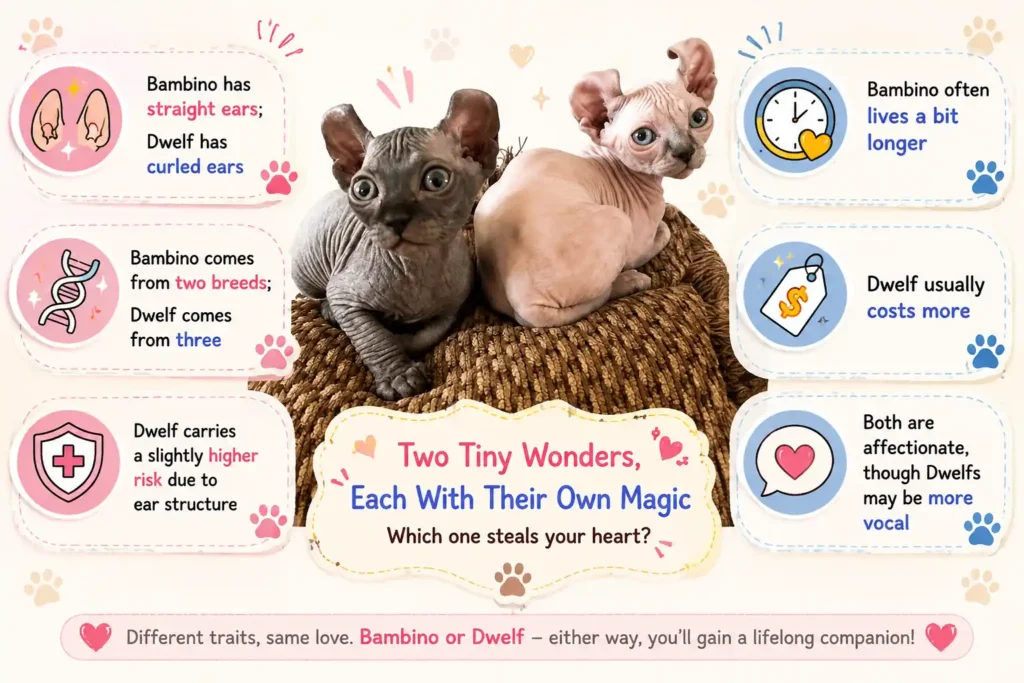
Bambino vs Dwelf: Key Differences at a Glance
- Ears: Bambino has straight ears; Dwelf has curled ears
- Parent breeds: Bambino comes from two breeds; Dwelf comes from three
- Health risk: Dwelf carries a slightly higher risk due to ear structure
- Lifespan: Bambino often lives a bit longer
- Price: Dwelf usually costs more
- Personality: Both are affectionate, though Dwelfs may be more vocal
Bambino vs Dwelf: Which One Is Right for You?
If you want a slightly hardier, slightly longer-living hairless cat and a marginally lower price tag, the Bambino is probably your pick. If you’re drawn to those unmistakable folded ears and don’t mind extra ear-cleaning duty and a somewhat higher price, the Dwelf might steal your heart instead. Either way, prioritize a breeder who offers health testing and documentation, since both breeds are still too new for long guesswork. Whichever you choose in this Bambino vs Dwelf decision, expect a demanding, deeply affectionate companion that will want to be wherever you are.
Choose the Right Dwelf Cat with Confidence. Read more in People Are Losing Their Minds (and $3,000) Over the Dwelf Cat.
Frequently Asked Questions
What is the difference between a Bambino and a Dwelf cat?
The main difference is ear shape and ancestry. A Bambino is a Sphynx-Munchkin mix with straight ears, while a Dwelf adds American Curl genetics, giving it curled-back ears and one additional health consideration.
Which is better, Bambino or Dwelf?
Neither is objectively better since both are affectionate, playful, and equally demanding to care for. The right choice comes down to whether you prefer straight or curled ears, and how much you want to spend.
Are Dwelf cats rarer than Bambino cats?
Yes, Dwelfs are generally rarer because they combine three separate gene mutations instead of two, which makes ethical, healthy breeding harder to achieve.
Do Bambino and Dwelf cats have the same health issues?
They share risks like heart and spine conditions from their Sphynx and Munchkin ancestry, but Dwelfs face an added risk of ear infections due to their curled ear structure.
Which cat is more affectionate, Bambino or Dwelf?
Both breeds bond closely with their owners, though Dwelfs are often described as slightly more vocal and expressive when seeking attention.
Which is more expensive, Bambino or Dwelf?
Dwelfs are usually more expensive, often costing several hundred dollars more than Bambinos, because of their rarer three-breed genetic makeup.