
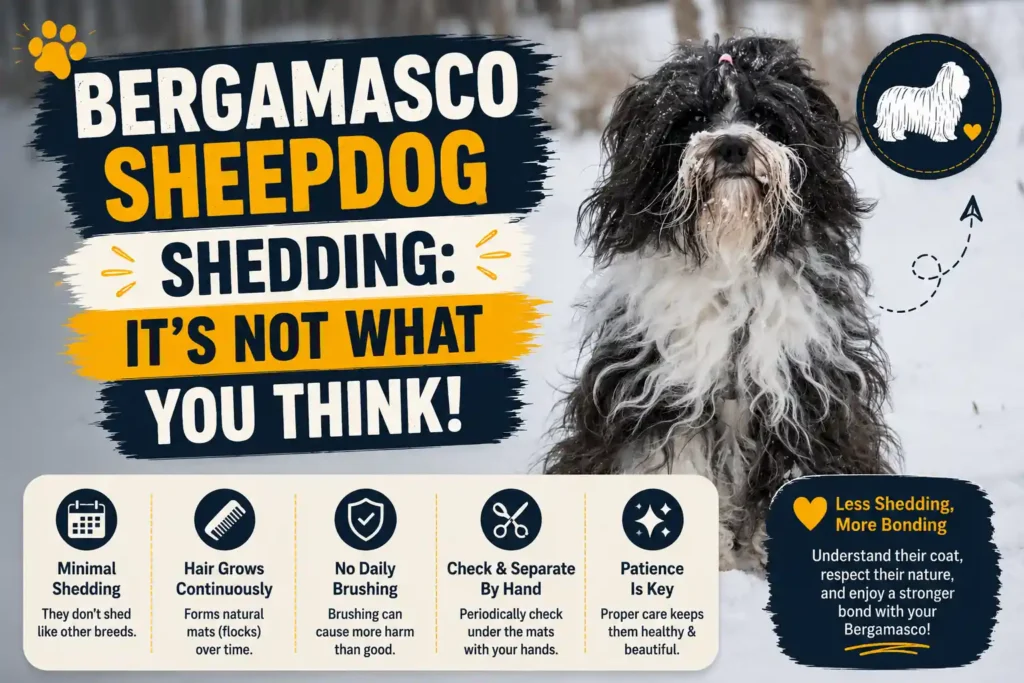
Bergamasco Sheepdog shedding is one of the most searched questions among prospective owners, and for good reason. With a coat made of dense, felted cords rather than smooth fur, this breed doesn’t fit the typical shedding pattern most dog owners are used to.
Many assume that a coat this thick must mean constant hair loss around the house, but the science behind Bergamasco Sheepdog shedding tells a very different story. To understand how much this breed really sheds, it helps to first look at what makes its coat so structurally unique.
Do Bergamasco Sheepdogs Shed?
Yes, but far less than almost any other breed. The Bergamasco’s coat is made up of three different hair types that weave together over time to form dense, flat mats called flocks. These flocks trap and hold loose hair inside the coat rather than releasing it into the air or onto furniture. So technically, shedding does happen, but you’ll rarely find clumps of hair on your sofa or floors.
It’s genuinely one of the most low-shed breeds in existence, which is part of why they’ve attracted attention from allergy sufferers and tidy-home owners alike.
Why Their Coat Looks Heavy but Sheds So Little
The Bergamasco coat consists of three hair types: “dog hair” (the undercoat), “goat hair” (long, coarser strands), and “wool” (fine, dense fibres). As the dog matures, these three layers mat together into rope-like flocks covering most of the body.
According to the American Kennel Club (AKC), these flocks form naturally between 9 months and 5 years of age and act as a self-contained system. Loose hair gets caught inside the mat rather than drifting into your home. That’s why the visual weight of the coat rarely matches the actual shedding output.
When Do Bergamasco Sheepdogs Shed the Most?
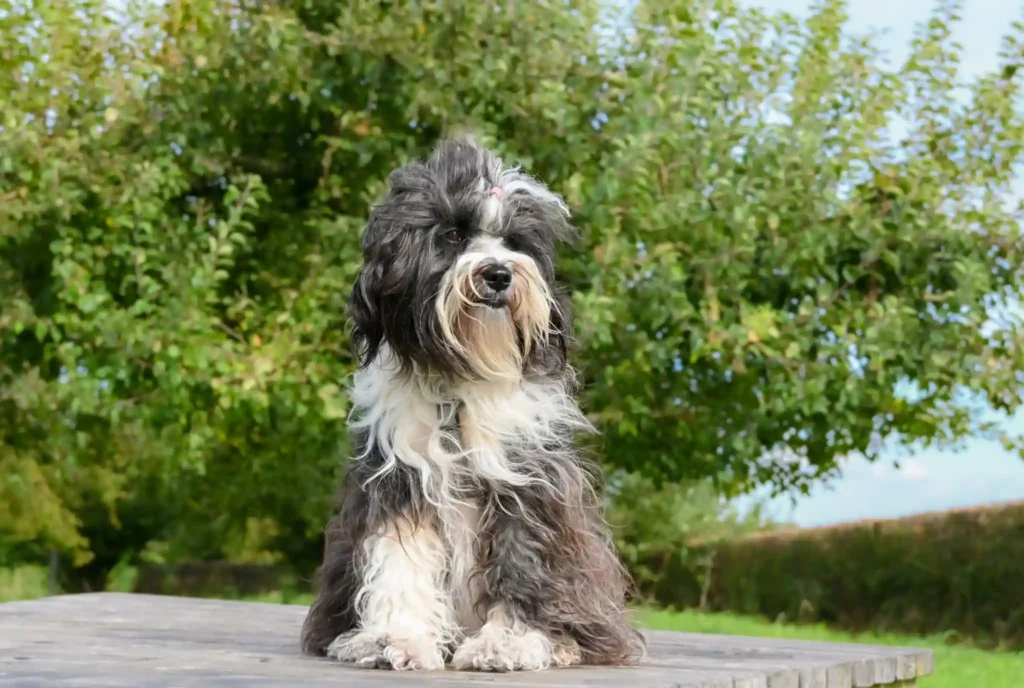
There is a small seasonal window where shedding becomes more noticeable, typically in spring. Most double-coated breeds blow their undercoat heavily during this period, and the Bergamasco is not entirely exempt, though the volume is dramatically lower than you’d see with a German Shepherd or Husky.
Stress, illness, hormonal changes like pregnancy or heat cycles, and nutritional deficiencies can also increase loose hair. These triggers are worth knowing because they’re manageable once identified.
This table shows the most common shedding triggers and what to expect from each:
| Trigger | Shedding Level | Duration |
| Spring coat change | Low–Moderate | 4–6 weeks |
| Post-whelping (females) | Moderate | 2–4 weeks |
| Poor nutrition/deficiency | Moderate–High | Ongoing until resolved |
| Stress or illness | Low–Moderate | Variable |
| Normal baseline year-round | Very Low | Continuous, minimal |
Puppy Coat vs. Adult Coat: Does Shedding Change?
Yes, and this is where new owners often get confused. Bergamasco puppies are actually fluffier and shed a bit more than adults. Before the flocks form fully, usually around age 5, the coat behaves more like a typical long-haired dog. Loose hair isn’t yet locked into the mat structure, so it can escape more easily.
Once the coat matures, shedding drops noticeably. Most adult Bergamascos living indoors leave barely any visible hair behind. This is the opposite of what happens with most breeds, where shedding only increases with age.
Quick Answer: Do Bergamasco Sheepdogs Shed a Lot?
No. Bergamasco Sheepdogs are considered one of the lowest-shedding dog breeds. Their matted flock coat traps loose hair inside, so very little ends up on floors or furniture. Puppies under 5 years old shed slightly more while the coat matures.
What Causes Excessive Shedding in a Bergamasco Sheepdog?
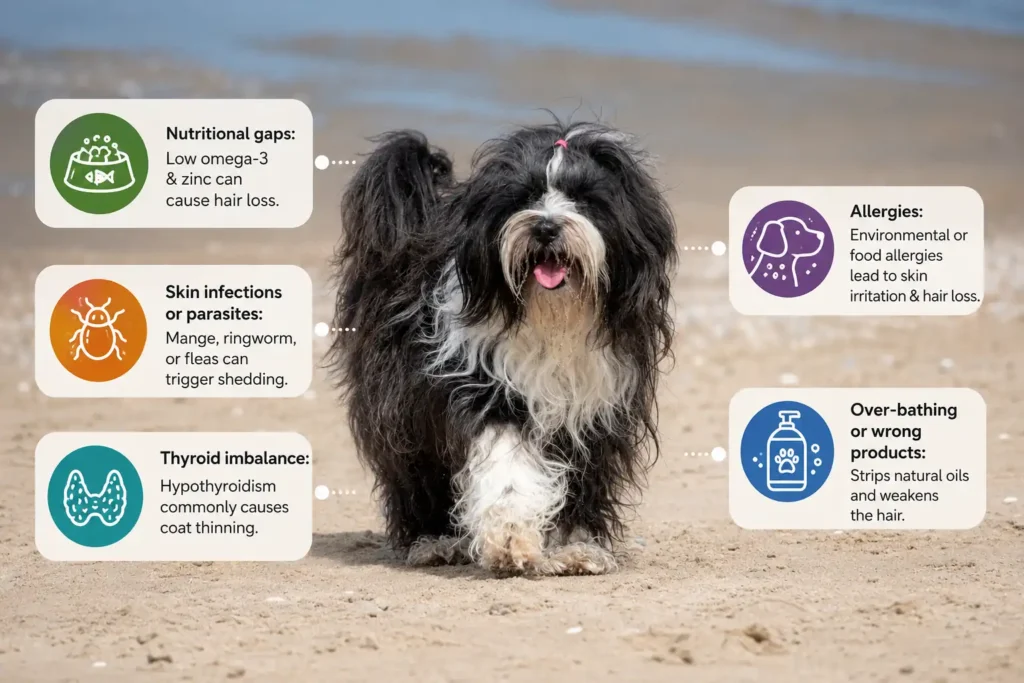
When a Bergamasco starts shedding more than usual, it’s almost always a sign that something’s off. The coat is quite self-regulating, so if you’re suddenly seeing more hair than normal, these are the most common culprits:
- Nutritional gaps: Diets low in omega-3 fatty acids and zinc are a leading cause of excess hair loss in dogs, per a 2021 review in Veterinary Dermatology.
- Skin infections or parasites: Mange, ringworm, or flea infestations can disturb the coat and trigger increased shedding.
- Thyroid imbalance: Hypothyroidism is one of the more common hormonal issues in herding breeds, and causes coat thinning.
- Allergies: Environmental or food allergies often show up first as skin irritation and increased hair loss.
- Over-bathing or wrong products: Using human shampoo or bathing too frequently strips natural oils and weakens the hair shaft.
Here’s how normal and abnormal Bergamasco Sheepdog shedding compares:
| Shedding Type | Signs | Action Needed |
| Normal seasonal shed | Slightly more loose hair in spring | Extra flock separation; wait it out |
| Stress-triggered | Clumps, dull coat, behaviour changes | Identify and reduce stressor |
| Nutritional deficiency | Dry, brittle hair; flaky skin | Dietary review; vet consult |
| Hormonal or medical | Patchy loss, symmetrical thinning | Vet bloodwork required |
How to Reduce Shedding Naturally
Even though Bergamasco Sheepdog shedding is already minimal, there are practical steps that keep it even lower. Most come down to diet and coat health:
- Add omega-3 fatty acids through fish oil, around 1,000 mg daily for a medium-sized adult dog.
- Feed a balanced diet with named meat (chicken, salmon, lamb) as the primary protein source.
- Keep hydration consistent; dehydrated skin is more prone to hair loss.
- Avoid frequent bathing; once every 3 to 4 months is typically enough for adults.
- Manage stress with consistent routines, enough daily exercise, and calm environments.
According to Dr. Judy Morgan, DVM, a well-known integrative veterinarian, omega-3 supplementation is one of the most reliably effective ways to reduce inflammatory shedding across all breeds.
Grooming Tips That Help Control Loose Hair
The Bergamasco coat is low-maintenance by dog standards, but not zero-maintenance. Once the flocks form, the main job is keeping them separated and clean, not brushing them out. Brushing would actually undo the natural matting that traps loose hair.
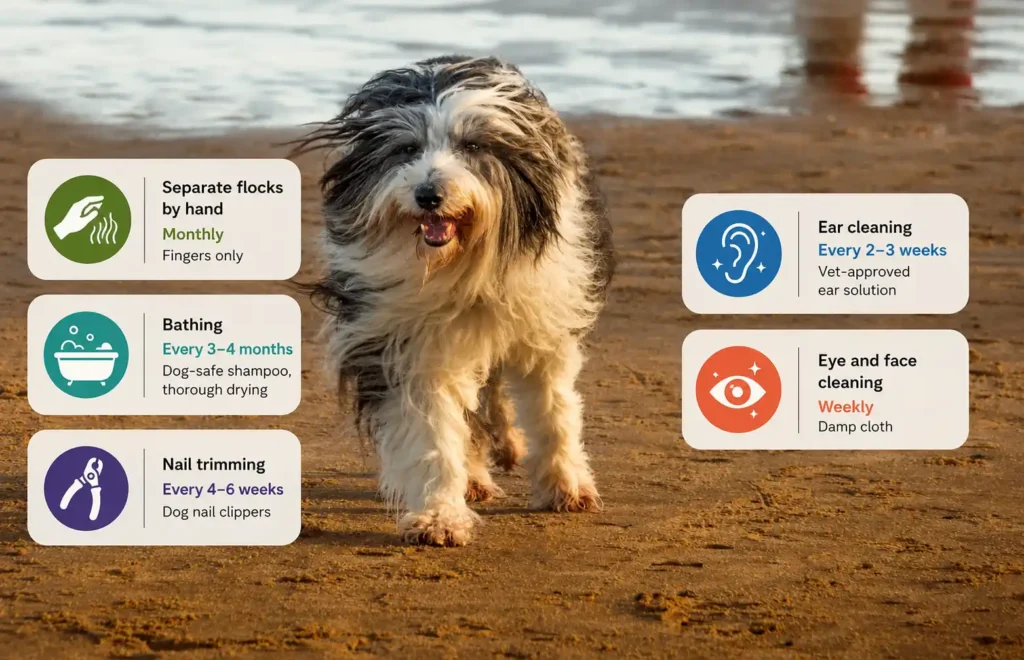
Here’s a simple monthly maintenance schedule most Bergamasco owners follow:
| Grooming Task | Frequency | Tools Needed |
| Separate flocks by hand | Monthly | Fingers only |
| Bathing | Every 3–4 months | Dog-safe shampoo, thorough drying |
| Nail trimming | Every 4–6 weeks | Dog nail clippers |
| Ear cleaning | Every 2–3 weeks | Vet-approved ear solution |
| Eye and face cleaning | Weekly | Damp cloth |
When Should You Groom a Bergamasco Puppy: Read more in Bergamasco Sheepdog Puppy Grooming: Before It’s Too Late.
One important note: never use a regular slicker brush on a fully matted Bergamasco coat. It won’t do much and can cause coat breakage. The flocks are meant to stay intact.
Quick Answer: How Often Should I Groom a Bergamasco Sheepdog?
Bathe a Bergamasco Sheepdog every 3 to 4 months, separate the flocks by hand monthly, and clean the ears every 2 to 3 weeks. Unlike most breeds, they don’t need regular brushing once the adult coat is fully formed.
Are Bergamasco Sheepdogs Good for People With Allergies?
This question comes up a lot, and the honest answer is: they’re better than most, but not entirely allergy-free. No dog breed is truly hypoallergenic. The allergen responsible for most dog allergies is Can f 1, a protein found in saliva, urine, and dander, not just hair.
That said, because Bergamasco Sheepdog shedding is so low, there’s significantly less airborne dander in homes with this breed. Many mild allergy sufferers report tolerating Bergamascos well, but anyone with moderate-to-severe allergies should spend time with the breed before committing.
The Asthma and Allergy Foundation of America (AAFA) notes that while no dog is 100% hypoallergenic, low-shedding breeds generally produce fewer airborne allergens, making them a more practical option for sensitive households.
Discover the Bergamasco Sheepdog Breed: Read more in Bergamasco Sheepdog: The Rare Dog With Dreadlocks.
Quick Answer: Is the Bergamasco Sheepdog Hypoallergenic?
Bergamasco Sheepdogs are considered low-allergen but not fully hypoallergenic. Their minimal shedding reduces airborne dander significantly, but the allergen Can f 1 is still present in saliva and skin oils. A better option for mild sufferers, not a guaranteed safe choice for everyone.
Final Word: Less Work Than You Think
Bergamasco Sheepdog shedding is one of those happy surprises that comes with owning this breed. The coat is unusual, yes, and takes some getting used to, but the trade-off is a dog that leaves your home remarkably hair-free compared to almost any other long-coated breed. Invest in a good diet, learn how the flock coat works, and don’t over-bathe. The rest mostly takes care of itself.
FAQs About Bergamasco Sheepdog Shedding
Do Bergamasco Sheepdogs shed all year?
Yes, but at very low levels. The flock coat traps most loose hair, so year-round shedding is nearly invisible. A slight increase in spring is the most noticeable period.
How often should I groom a Bergamasco Sheepdog?
Bathe every 3 to 4 months, separate flocks monthly by hand, trim nails every 4 to 6 weeks, and clean ears every 2 to 3 weeks. No brushing needed on a fully matted adult coat.
Can diet affect shedding?
Definitely. Low omega-3 intake, protein deficiencies, and poor-quality ingredients are all linked to increased shedding. Upgrading food quality or adding fish oil often shows results within 6 to 8 weeks.
Is heavy shedding ever normal for this breed?
Not really. If your Bergamasco is shedding heavily, that’s a signal something’s off, whether nutritional, hormonal, or a skin issue. A vet visit is the right next step.