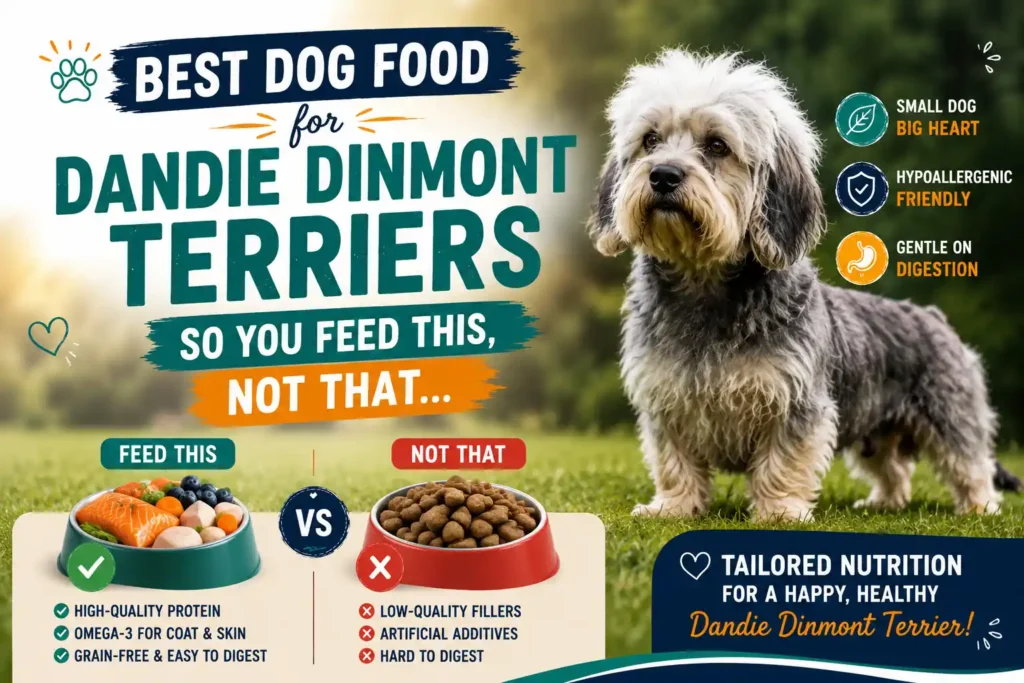
The best dog food for Dandie Dinmont Terriers contains high-quality animal protein, healthy fats, and low amounts of common allergens like wheat, soy, and corn. This breed is small, weighing between 18 and 24 pounds, so their food must be nutrient-dense but easy to digest.
A good diet also supports their long, silky coat and helps prevent skin problems, which are common in this breed. Choosing the best dog food for Dandie Dinmont Terriers early in their life can reduce the risk of allergies and digestive issues later on.
What Makes a Good Diet for a Dandie Dinmont Terrier?
A quality diet for Dandie Dinmont Terriers should start with real meat as the primary ingredient; chicken, lamb, or fish work well. These small dogs have high metabolic rates despite their modest size, meaning they burn calories quickly and need nutrient-dense food. Dandie Dinmonts also require adequate fat content for skin and coat health, but not so much that they become overweight, which is common in the breed.
Look for foods that include at least 18% protein and 5% fat for adults. If your Dandie has a sensitive stomach or shows signs of food allergies, you’ll want to avoid common triggers like wheat, corn, soy, and by-products. The best dog food for Dandie Dinmont Terriers typically costs a bit more upfront but saves money on vet bills down the road.
Key Nutrients Every Dandie Dinmont Terrier Needs
Understanding which nutrients matter most helps you evaluate any dog food label quickly.
| Nutrient | Why It Matters |
| Protein (18%+) | Builds muscle and maintains energy for active Dandies. |
| Omega-3 & 6 | Supports the iconic silky coat and prevents dry skin. |
| Fiber | Aids digestion in dogs prone to stomach sensitivity. |
| Calcium & Phosphorus | Supports bone health and prevents joint issues. |
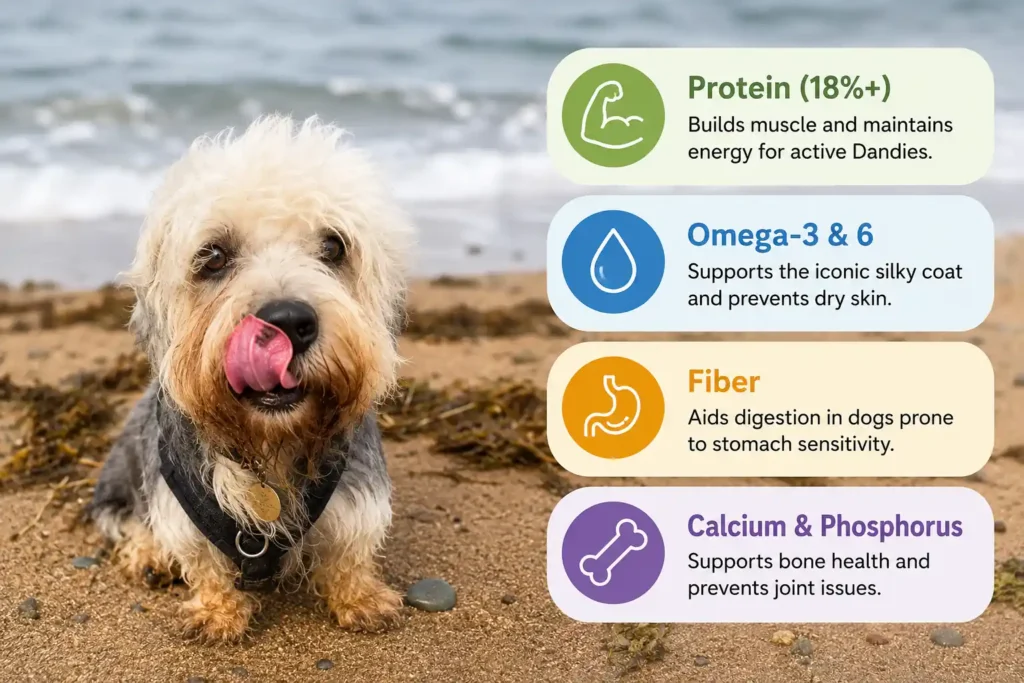
Dandie Dinmont Terriers should receive these nutrients in the right balance to support their active temperament, maintain their iconic silky coat, and avoid common breed-specific health issues.
Best Dog Food for Dandie Dinmont Terrier Puppies
Puppy formulas designed for small breeds work best for young Dandies, typically until 12 months. Look for foods with DHA and ARA, which support brain and eye development. Puppies need more calories per pound of body weight than adults, roughly 800 to 1000 calories daily for a growing Dandie, spread across three to four meals.
Switching to adult food too early stunts growth; waiting too long can lead to joint stress. The transition usually happens around the 12-month mark or when your vet gives the green light.
Best Dog Food for Adult Dandie Dinmont Terriers
Adult Dandies (1 to 7 years) typically thrive on 600 to 750 calories daily, depending on activity level and metabolism. This is when the best dog food for Dandie Dinmont Terriers really shows its value—it keeps your dog at an ideal body weight, maintains coat shine, and supports stable energy levels throughout the day.
Wet Food vs. Dry Food: Which Is Better?
Both formats have genuine advantages. Here’s an honest comparison to help you decide:
| Factor | Dry Food | Wet Food |
| Cost | More affordable per serving | Significantly pricier |
| Convenience | Easy to portion and store | Opens one can per meal |
| Digestibility | Good, varies by quality | Slightly easier on stomachs |
| Hydration | Requires drinking water | Higher moisture content |
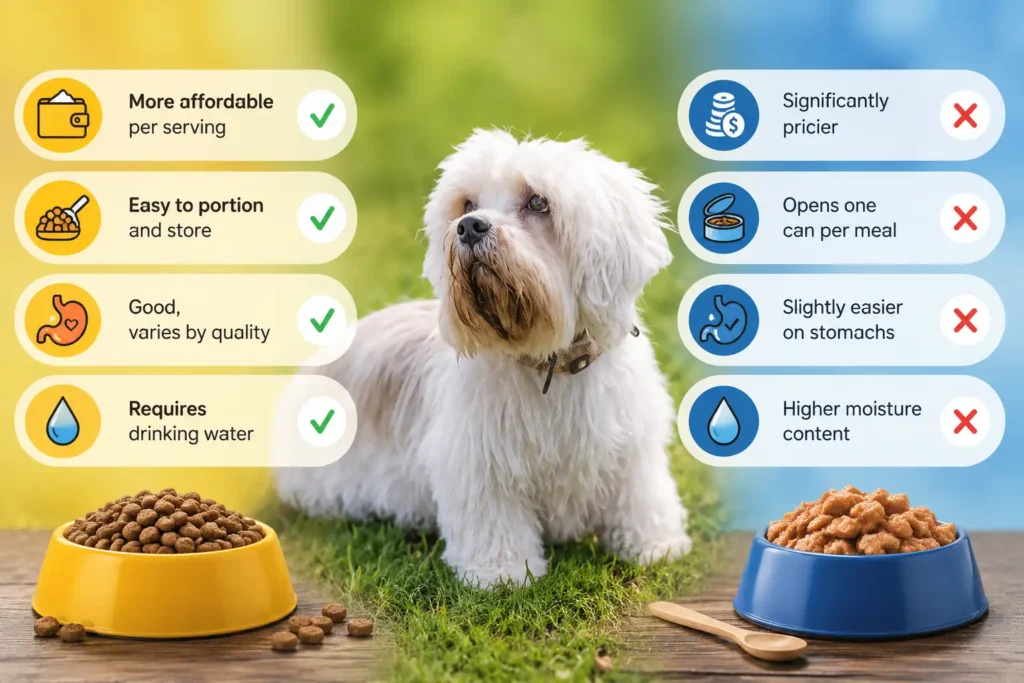
Many owners find a mixed approach works best: dry kibble as the foundation with occasional wet food toppers, which improves palatability and hydration.
How Much Should a Dandie Dinmont Terrier Eat Daily?
An adult Dandie Dinmont Terrier typically needs 600 to 750 calories daily, usually split into two meals of 300–375 calories each. Adjust portions based on your individual dog’s activity level, age, and body condition. If your Dandie looks chunky, reduce portions by 10%; if ribs are too visible, increase slightly. Most small-breed dog foods provide feeding guidelines on the bag; use those as a starting point, then customize for your dog.
Foods to Avoid Feeding a Dandie Dinmont Terrier
Never give your Dandie chocolate, grapes, raisins, onions, garlic, or xylitol; these are genuinely toxic to dogs. Avocado, macadamia nuts, and foods containing theobromine also belong on the avoid list. Beyond the obvious toxins, skip low-quality dog foods padded with cornmeal, soy, or unidentified meat by-products, which often trigger digestive upset in sensitive Dandies.
Common Food Allergies and Sensitive Stomachs
Dandie Dinmont Terriers show food sensitivities more often than many breeds. Common culprits include wheat, beef, chicken by-products, and artificial additives. Signs include itching, ear infections, vomiting, or chronic diarrhea. If you suspect allergies, work with your vet; they may recommend an elimination diet to identify triggers, then transition to hypoallergenic formulas with limited ingredients.
What Are the Best Limited-Ingredient Dog Foods for Dandie Dinmonts?
Limited-ingredient diets (LID) contain fewer components, making it easier to identify problem foods. Ideal options include single-protein sources like salmon, duck, or venison paired with sweet potato or pea as the carb source. Brands emphasizing transparency, clear ingredient lists, and AAFCO certification are your safest bet. Avoid anything with vague labels like “meat meal” or “animal by-products.” Always introduce new foods gradually over 7–10 days to prevent digestive upset.
Is Grain-Free Dog Food a Good Choice?
Grain-free doesn’t automatically mean healthier. Recent research suggests that some grain-free foods loaded with peas, lentils, and potatoes might increase the risk of dilated cardiomyopathy (DCM) in certain dogs. Unless your Dandie has a confirmed grain allergy, a high-quality grain-inclusive food with whole grains like brown rice or oats is often a safer choice. Always consult your vet before switching to grain-free formulas.
Best Treats for Dandie Dinmont Terriers
Treats should make up no more than 10% of daily calories. Small-breed dogs do well with treats like plain cooked chicken, carrots, apples (seeds removed), or commercially-made small-breed training treats under 5 calories each. Avoid anything with artificial colors, flavors, or excessive sodium.
Supplements That May Support Their Health
Omega-3 and omega-6 supplements genuinely improve coat quality and skin health in Dandies, especially those prone to dry skin. Joint supplements containing glucosamine and chondroitin can help prevent arthritis as the breed ages. Probiotics support digestive health for Dandies with sensitive stomachs. Always check with your vet before adding supplements to ensure they don’t interfere with any existing medications.
Do Dandie Dinmont Terriers Need Supplements for Coat Health?
While a high-quality diet with adequate omega fatty acids covers most nutritional needs, many Dandie owners see visible improvement in coat texture and shine when adding fish oil supplements. A dose of 500–1000 mg daily (depending on body weight) is typical, though your vet should confirm the right amount for your individual dog. Improvement usually appears within 4 to 6 weeks of consistent supplementation.
Essential Health Tips for Dandie Owners: Read more in Dandie Dinmont Terrier Health Issues Every Owner Should Know.
Homemade Diet vs. Commercial Dog Food
Homemade diets appeal to many owners concerned about commercial ingredients, but they require serious planning to meet all nutritional requirements. Unless formulated by a veterinary nutritionist, homemade diets often lack essential vitamins, minerals, and proper nutrient ratios. Commercial foods formulated by nutritionists and tested for AAFCO compliance are typically safer and more convenient, though premium options cost more.
A practical feeding schedule for each life stage:
| Life Stage | Meals Per Day | Daily Calories |
| 8–12 weeks | 4 meals | 500–600 calories |
| 3–6 months | 3 meals | 600–700 calories |
| 6–12 months | 2–3 meals | 700–800 calories |
| 1–7 years (Adult) | 2 meals | 600–750 calories |
| 7+ years (Senior) | 2 meals | 550–700 calories |
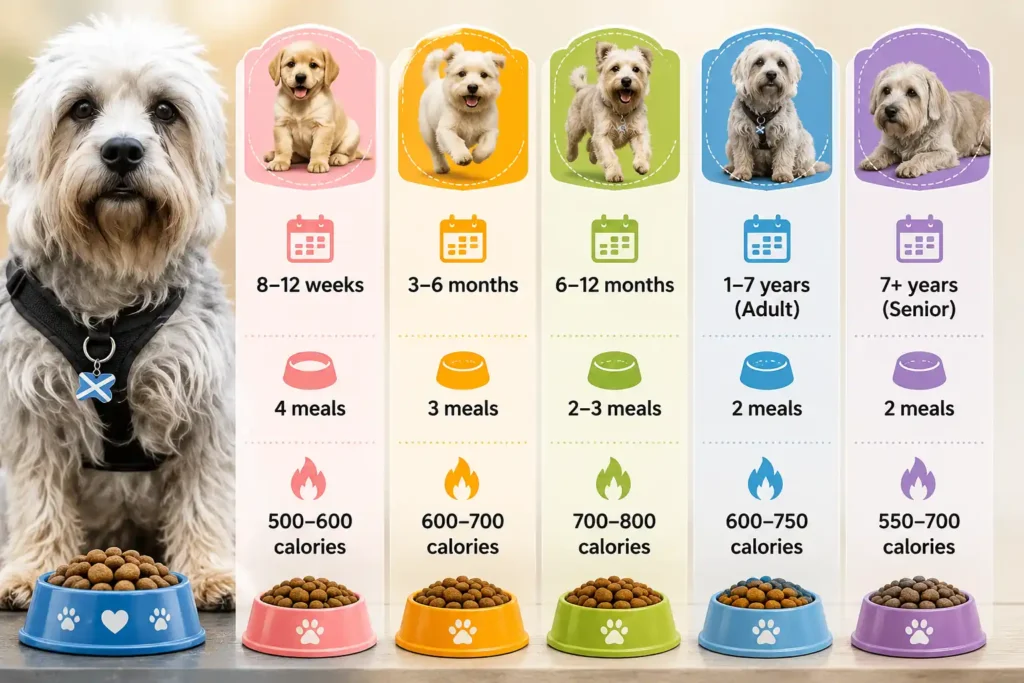
Consistency matters more than perfection. Stick to regular mealtimes, adjust portions as needed, and monitor your Dandie’s weight and energy levels.
Signs Your Dandie Dinmont Terrier Is Eating the Right Food
Healthy Dandies have shiny, soft coats with no excessive shedding. Their eyes are bright, energy is stable, and they maintain a lean body condition where ribs are easily felt but not visible. Digestive health shows up in regular, firm stools with minimal odor. If your Dandie seems sluggish, has dull fur, or shows signs of digestive upset, the current food might not be the right fit.
When to Change Your Dog’s Food
Never switch foods abruptly. Always transition gradually over 7 to 10 days; start with 75% old food mixed with 25% new, then adjust the ratio daily until you reach 100% new food. Quick switches cause digestive upset. Change food when moving between life stages (puppy to adult, adult to senior around age 7), when a vet recommends switching for health reasons, or if your current food is recalled or discontinued.
Common Feeding Mistakes to Avoid
Overfeeding is the biggest mistake; Dandies gain weight easily, and obesity leads to joint problems and shortened lifespan. Don’t free-feed; measure portions instead. Avoid switching foods constantly based on what looks trendy; consistency is healthier than variety. Never supplement meals with table scraps, which throws off nutritional balance and creates picky eaters.
Finally, don’t assume expensive always means better; some mid-range brands outperform premium ones in nutritional completeness.
Meet the Terrier Unlike Any Other: Read more in Is a Dandie Dinmont Terrier Right for You? Complete Breed Guide & Owner Insights.
A Final Word on Feeding Your Dandie Dinmont
Finding the best dog food for Dandie Dinmont Terriers takes time and sometimes trial and error, but it’s one of the most important investments you’ll make in your dog’s health and longevity. Start with high-quality small-breed formulas, monitor your Dandie’s response closely, and adjust as needed. When in doubt, your vet is your best resource for personalizing nutrition to your individual dog’s needs.
Frequently Asked Questions
What’s the healthiest food to feed a Dandie Dinmont Terrier?
A high-quality small-breed formula with named meat as the first ingredient, adequate omega fatty acids for coat health, and no artificial additives or low-quality fillers. The best dog food for Dandie Dinmont Terriers meets AAFCO standards and suits your individual dog’s digestive needs.
How often should I feed my Dandie Dinmont Terrier?
Puppies (under 6 months) eat three to four times daily. From 6 months to adulthood, two to three times daily. Adults thrive on two meals per day. Feeding twice daily helps prevent bloat and keeps energy levels steady.
Are Dandie Dinmont Terriers prone to food allergies?
Yes, more than many breeds. Common triggers include wheat, chicken by-products, beef, and artificial additives. If you notice itching, ear infections, or digestive issues, consult your vet about an elimination diet or limited-ingredient formula.