A healthy Blue and Gold Macaw Diet consists of 60–80% high-quality formulated pellets, with the rest made up of fresh vegetables, fruits, and healthy grains. Pellets give these large parrots balanced vitamins, minerals, and protein that seeds alone cannot provide, since seeds are high in fat but low in nutrients like calcium and vitamin A.
Fresh foods should include dark leafy greens, sweet potato, carrots, and bell peppers, cut into small bite-sized pieces the bird can hold and chew. Fruit should stay limited to about 5-10% of the diet because of its natural sugar. A proper Blue and Gold Macaw Diet also allows small amounts of cooked brown rice, whole wheat pasta, or plain beans as occasional extras. Clean water should always be available and changed daily to prevent bacterial growth.
What’s the Blue and Gold Macaw’s Diet?
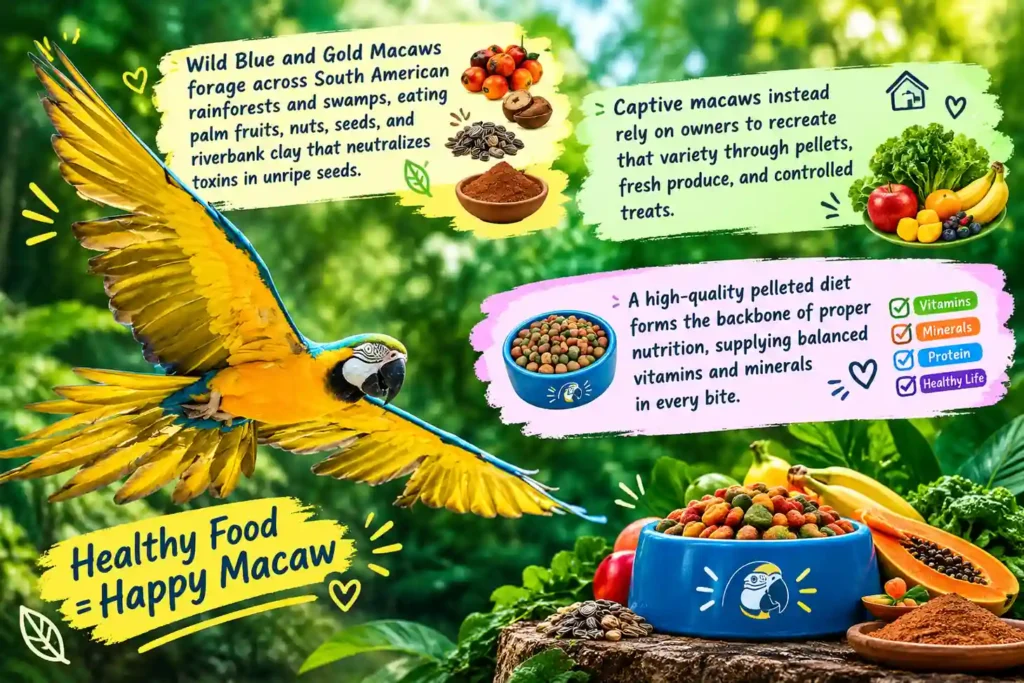
Wild Blue and Gold Macaws forage across South American rainforests and swamps, eating palm fruits, nuts, seeds, and riverbank clay that neutralizes toxins in unripe seeds. Captive macaws instead rely on owners to recreate that variety through pellets, fresh produce, and controlled treats. A high-quality pelleted diet forms the backbone of proper nutrition, supplying balanced vitamins and minerals in every bite.
Fresh vegetables, limited fruit, and the occasional nut round out a menu built for a large, intelligent parrot. Skipping this variety in favor of seed-only feeding remains one of the most common, and most damaging, mistakes new owners make.
Thinking About a Blue and Gold Macaw? Learn What to Expect. Read more in Blue and Gold Macaw That Lives Fifty Years and Needs Just as Much Attention.
What Is the Best Diet for a Blue and Gold Macaw?
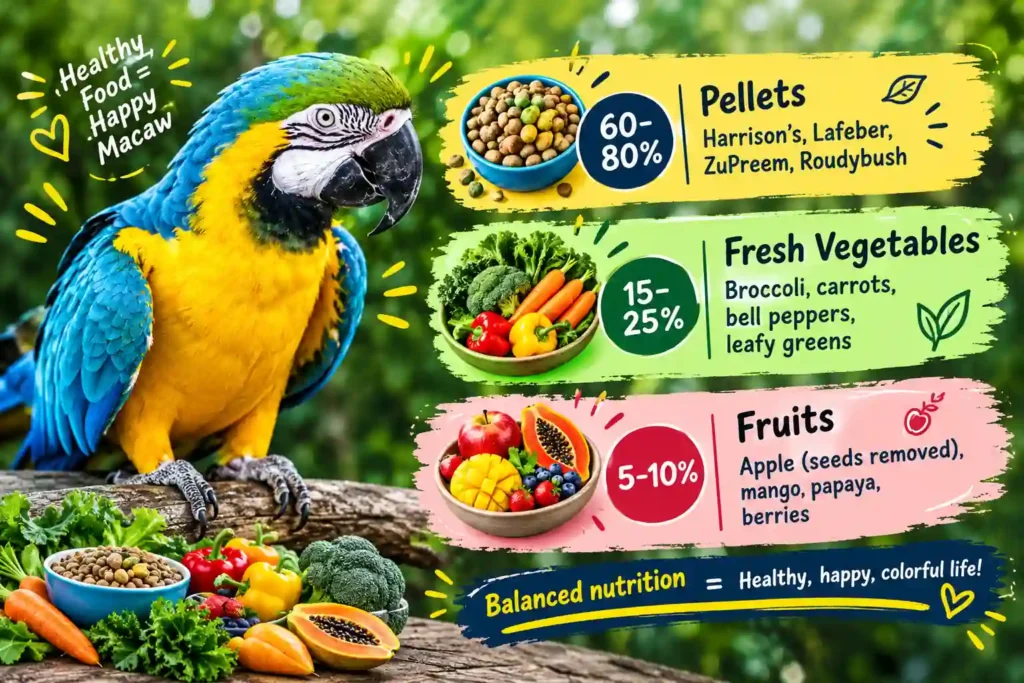
The healthiest approach combines 60 to 80 percent high-quality pellets with 15 to 25 percent fresh vegetables, a small amount of fruit, and occasional nuts as treats. Brands such as Harrison’s, Lafeber, ZuPreem, and Roudybush are commonly used as a pellet base, while seeds stay a minor supplement, never the main course.
Blue and Gold Macaw Food
Feeding a large parrot well means balancing four food groups: pellets, seeds, fresh produce, and occasional treats, none of which works well fed in isolation. Pellets deliver consistent vitamins and minerals that fresh food alone cannot guarantee, while fruits and vegetables add fiber and variety that keep a smart bird engaged at mealtime. Nuts and seeds bring healthy fats but pack too many calories for unlimited feeding. The sections below break down how much of each group belongs on the menu.
The table below breaks down the ideal share of each food group for a healthy adult macaw.
| Diet Component | Recommended Daily Share | Examples |
| Pellets | 60-80% | Harrison’s, Lafeber, ZuPreem, Roudybush |
| Fresh Vegetables | 15-25% | Broccoli, carrots, bell peppers, leafy greens |
| Fruits | 5-10% | Apple (seeds removed), mango, papaya, berries |
| Nuts and Seeds | 5-15% (treat-level) | Almonds, walnuts, Brazil nuts, safflower seed |
Blue and Gold Macaw Pellets
Pellets should make up roughly 60 to 80 percent of daily intake, according to guidance from VCA Animal Hospitals. Formulated diets deliver balanced protein, calcium, and vitamin A in every pellet, unlike seed mixes that birds pick through selectively. Adult birds switched over from seed-only diets often need weeks of patient transition, so mixing pellets with a favorite fresh food usually speeds up acceptance.
Blue and Gold Macaw Seeds
Seeds appeal strongly to a macaw’s natural foraging instinct, but nutrition tells a different story. Sunflower seeds and similar mixes run high in fat while lacking sufficient vitamin A, calcium, and protein for a bird this size. A small portion under ten percent of intake works well as a training reward, while unlimited seed access commonly leads to obesity and fatty liver disease.
Blue and Gold Macaw Fruits
Fresh fruit adds natural sweetness and antioxidants, though portion control matters here too. Apples, mango, papaya, berries, and melon make safe choices once seeds and pits are removed, while citrus works fine in small amounts. Two to three tablespoons of chopped fruit a few times a week keeps sugar intake in check.
Blue and Gold Macaw Vegetables
Vegetables should form a bigger share of the fresh-food portion than fruit does. Dark leafy greens, broccoli, carrots, bell peppers, zucchini, and sweet potato all deliver vitamins without excess sugar. Broccoli works best when offered no more than twice a week, since larger amounts can affect thyroid function in sensitive birds.
Blue and Gold Macaw Nuts
Nuts pack concentrated fat and calories, making them a treat rather than a staple. Almonds, walnuts, and Brazil nuts in their shells double as enrichment, since cracking them satisfies natural chewing behavior. Two or three raw, unsalted nuts a day is plenty, and peanuts in the shell should be skipped since they can harbor harmful mold.
Blue and Gold Macaw Treats
Treats reinforce training and strengthen the bond between bird and owner without needing to be unhealthy. Birdie bread, sprouted seed mixes, and nutri-berries all make satisfying, foraging-friendly rewards. Sugary, salty, or processed human snacks never belong in the treat rotation, no matter how much a macaw begs.
Blue and Gold Macaw Feeding Schedule
Adult macaws thrive on a predictable twice-daily feeding routine rather than food left out constantly. Morning feeding typically includes fresh pellets alongside chopped vegetables and fruit, while the evening meal refreshes pellets and swaps out anything that spoiled during the day. Fresh food should never sit in the cage longer than two to four hours, especially in warm weather, since bacteria multiply quickly on cut produce. Pellets and dry treats can stay available longer but should still be replaced every day or two. Consistent timing also helps owners notice appetite changes early, often the first sign something is wrong.
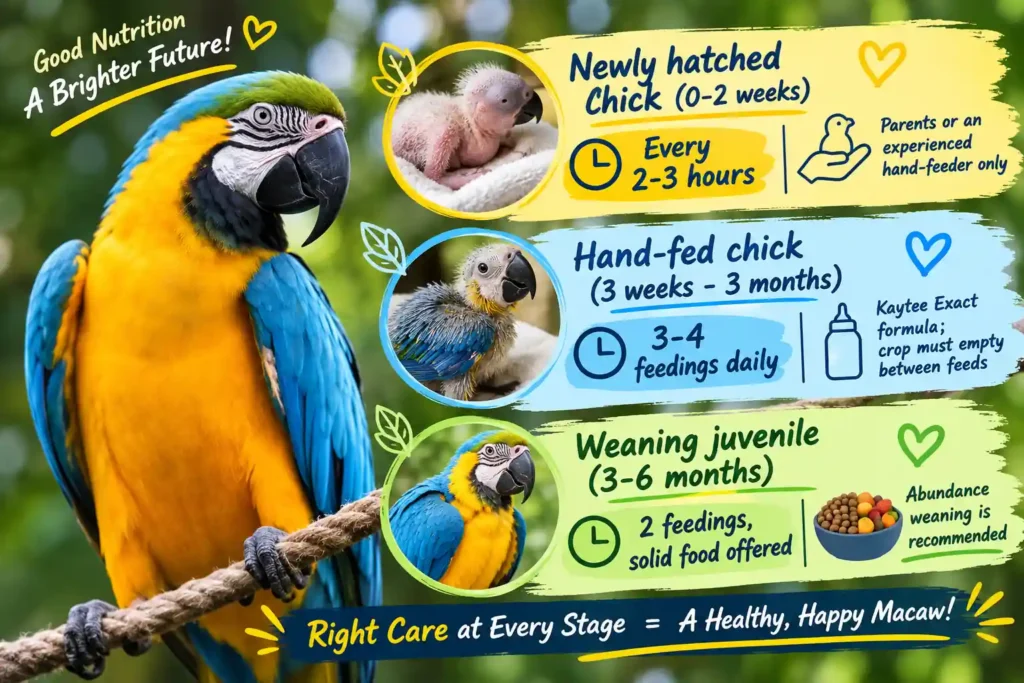
Feeding needs shift dramatically as a macaw grows, as the table below shows.
| Life Stage | Feeding Frequency | Notes |
| Newly hatched chick (0-2 weeks) | Every 2-3 hours | Parents or an experienced hand-feeder only |
| Hand-fed chick (3 weeks-3 months) | 3-4 feedings daily | Kaytee Exact formula; crop must empty between feeds |
| Weaning juvenile (3-6 months) | 2 feedings, solid food offered | Abundance weaning is recommended |
| Adult macaw | 1-2 meals daily | Pellets available all day; fresh chop morning and evening |
How Much Do Blue and Gold Macaws Eat?
Portion size is one of the most common questions new owners ask about the Blue and Gold Macaw Diet. An adult bird typically eats around half a cup of pellets combined with half a cup of fresh chopped vegetables and fruit daily. Body weight offers the best guide, since a healthy adult usually weighs 900 to 1,300 grams, and appetite naturally rises in colder months. Overfeeding fatty treats causes weight gain faster in a macaw than in a larger pet, since their metabolism runs differently. A kitchen scale for food and a bird scale for the macaw itself keep portions accurate over time.
How Much Should You Feed a Blue and Gold Macaw Each Day?
A typical adult needs about half a cup of pellets plus half a cup of fresh vegetables and fruit daily, adjusted for activity and body weight. Treats such as nuts should stay limited to two or three pieces, and uneaten fresh food should be removed within a few hours.
What Foods Are Toxic to Blue and Gold Macaws?
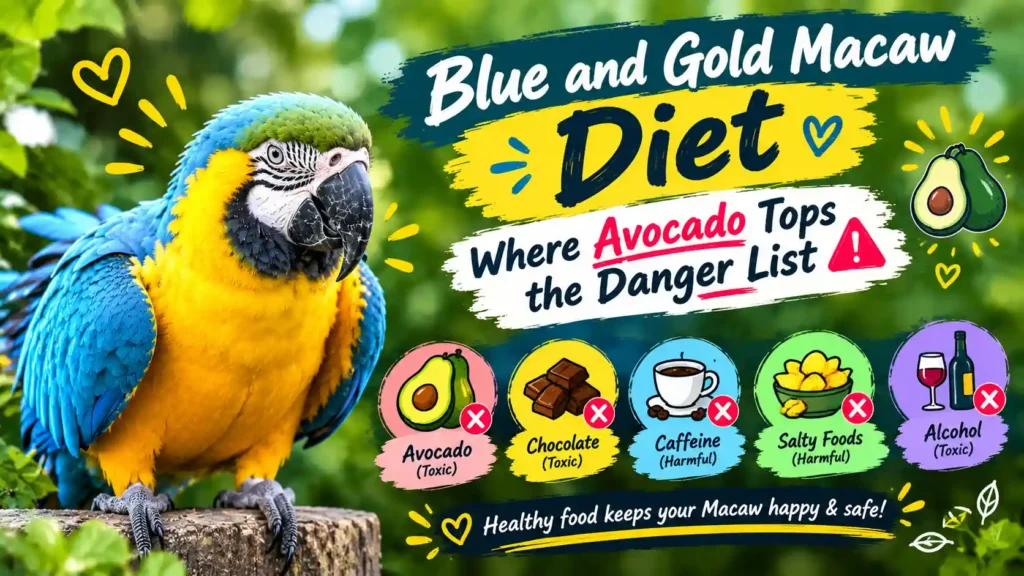
Avocado tops the danger list, since every part of the plant contains persin, a compound linked to fatal heart and lung damage in birds. Chocolate and caffeine contain methylxanthines, chemicals that can trigger seizures or an irregular heartbeat, according to the ASPCA Animal Poison Control Center. Onion and garlic damage red blood cells over time, while salty or fried human food strains a macaw’s kidneys and electrolyte balance.
Fruit pits and apple seeds convert to cyanide during digestion, so they should always be removed before fruit reaches the cage. Alcohol and xylitol, a sweetener in sugar-free gum, round out the list of items that should never touch a macaw’s food dish.
The comparison below makes it easy to see which everyday foods are safe and which ones are dangerous.
| Safe Foods | Toxic or Unsafe Foods |
| Apples, seeds removed | Avocado, all parts of the plant |
| Carrots and sweet potato | Chocolate and cocoa products |
| Broccoli, twice weekly | Caffeine in coffee, tea, and soda |
| Berries and melon | Onion and garlic, raw or cooked |
| Cooked quinoa or brown rice | Alcohol in any form |
| Leafy greens such as kale | Fruit pits and apple seeds |
| Plain cooked egg, occasional | Salty, fried, or sugary snacks |
Can Blue and Gold Macaws Eat Avocado?
No. Avocado is one of the most dangerous foods for any pet bird because persin, found in the flesh, skin, pit, and leaves, damages the heart and lungs. Even a small amount can cause fatal complications within a day or two, so avocado should never be offered in any form.
Can Blue and Gold Macaws Eat Human Food?
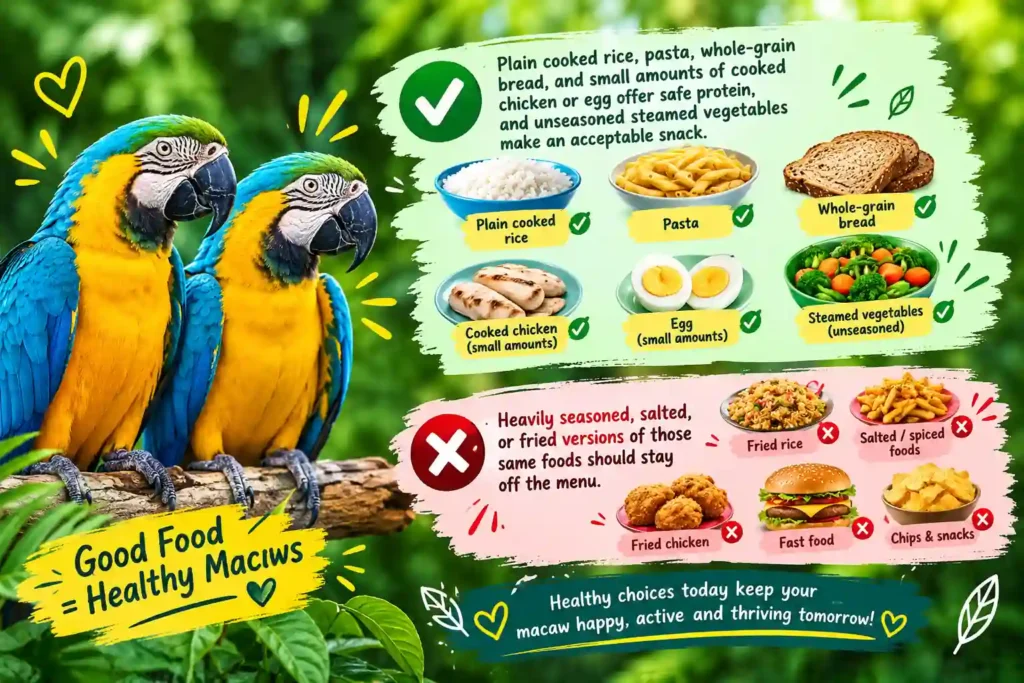
Some human food works fine as an occasional addition, while other items cross into dangerous territory. Plain cooked rice, pasta, whole-grain bread, and small amounts of cooked chicken or egg offer safe protein, and unseasoned steamed vegetables make an acceptable snack. Heavily seasoned, salted, or fried versions of those same foods should stay off the menu. Dairy products cause digestive upset in most parrots, since birds lack the enzyme needed to break down lactose.
Blue and Gold Macaw Diet in Captivity vs. the Wild
A consistent home feeding routine looks very different from the varied foraging these birds do across hundreds of acres in the wild. Wild macaws travel long distances daily searching for ripening fruit, seed pods, and mineral-rich clay licks, while captive birds burn far fewer calories, so matching that wild-style unlimited feeding would quickly cause obesity indoors.
Structured, measured meals paired with foraging toys give pet macaws a way to work for food, satisfying that instinct without unlimited calories. A captive diet built around pellets and fresh produce, rather than instinct alone, keeps indoor birds healthier than their wild counterparts often are.
Blue and Gold Macaw Baby Diet
A baby’s early Blue and Gold Macaw Diet sets the foundation for adult feather quality and bone strength. Chicks require hand-feeding formula, such as Kaytee Exact, starting shortly after hatching and continuing for several months. The Association of Avian Veterinarians recommends leaving hand-feeding to experienced breeders, since improperly fed formula can enter a chick’s airway with fatal results.
Feeding frequency drops from every two to three hours in the first weeks to two or three feedings a day by three months, and weaning typically finishes between five and nine months, paced by the chick’s own behavior. A weaned chick from a reputable breeder commonly costs 1,000 to 2,500 USD, already fully weaned and eating solid food.
Nutrition Essentials for Blue and Gold Macaws
Pulling every section together, a healthy Blue and Gold Macaw Diet comes down to a handful of core principles that keep a macaw thriving at the dinner bowl. Pellets remain the foundation, fresh produce fills the vitamin gaps, and treats stay genuinely occasional. Fresh water needs daily replacement, since bacteria build up quickly in a shared bowl, and weight checks every few months catch problems early. Consulting an avian vet before adding any supplement prevents accidental overdoses of vitamins like A and D3.
Blue and Gold Macaw Diet Requirements at a Glance
- Pellets: 60-80% of daily intake
- Fresh vegetables: 15-25% of daily intake
- Fruit: small, limited portions a few times weekly
- Nuts and seeds: two to three pieces daily, treat-level only
- Fresh water: replaced at least once every day
- Toxic foods: avocado, chocolate, caffeine, onion, garlic, alcohol, and salty snacks always avoided
Getting the Blue and Gold Macaw Diet Right
Pulling everything together, a well-balanced Blue and Gold Macaw Diet blends 60 to 80 percent pellets with fresh vegetables, limited fruit, and occasional nuts. Wild macaws forage constantly, while captive birds do best on structured, measured meals paired with foraging enrichment. Pellets, seeds, fruits, vegetables, nuts, and treats each play a distinct role, and none of them should dominate the bowl alone.
A consistent feeding schedule, correct portion sizes, and close attention to toxic foods like avocado and chocolate protect against the most common health problems. Human food has a small, safe place at the table when it stays plain and unseasoned, and baby macaws need specialized hand-feeding care during their first several months. Following these nutrition essentials gives any Blue and Gold Macaw the best possible shot at a long, vibrant life.
Blue and Gold Macaw FAQs
What is the healthiest base diet for a Blue and Gold Macaw?
A quality pellet, making up 60 to 80 percent of intake, paired with fresh vegetables and limited fruit, forms the healthiest foundation.
How often should a Blue and Gold Macaw be fed?
Twice daily works best for adults, with fresh food removed after two to four hours to prevent spoilage.
Can Blue and Gold Macaws eat seeds?
Yes, in small amounts, ideally under ten percent of total intake rather than as the main diet.
What human foods are safe for Blue and Gold Macaws?
Plain rice, pasta, cooked egg, and unseasoned steamed vegetables are safe in small, occasional portions.
What foods are most dangerous to Blue and Gold Macaws?
Avocado, chocolate, caffeine, onion, garlic, alcohol, and salty or sugary processed snacks top the list.