
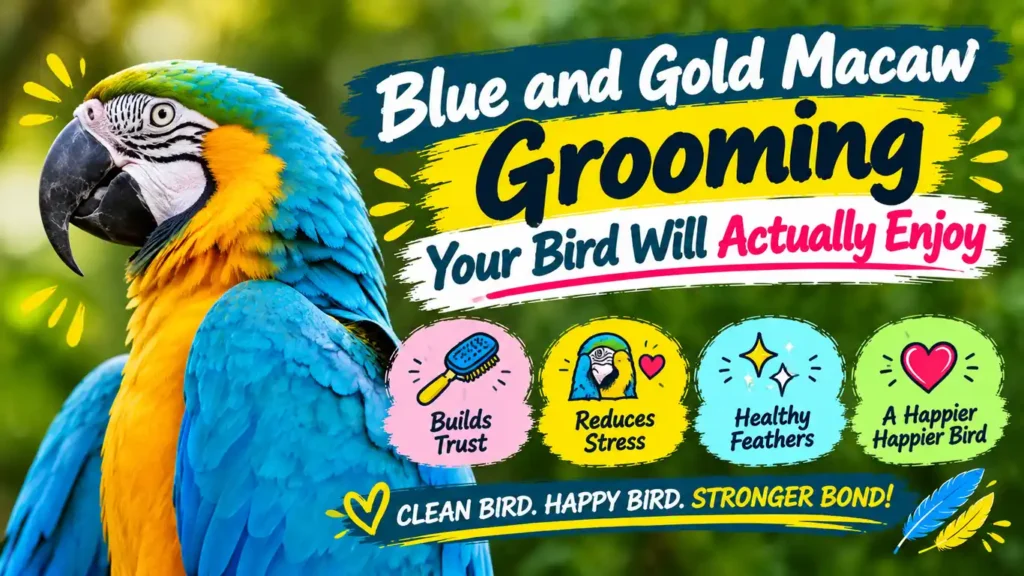
Blue and Gold Macaw Grooming covers four main areas: bathing, feather care, beak maintenance, and nail trimming, and each one needs regular attention to keep the bird healthy. These macaws come from humid rainforests, so their skin and feathers dry out fast in normal home air, which makes daily misting or a weekly bath an important part of Blue and Gold Macaw Grooming rather than an optional extra.
A healthy beak stays smooth and shiny through natural chewing on wood and fresh branches, while dull or flaky patches often point to poor diet or low humidity. Nails need regular checks too, since long nails can catch on cage bars or perches and cause injury. Owners who build these habits into a simple weekly routine will notice fewer skin problems, cleaner feathers, and a calmer, more confident bird overall.
Blue and Gold Macaw Grooming: Feather Care
Feather condition reveals almost everything about a macaw’s overall well-being. Bright ultramarine blue across the back and wings, paired with warm gold underparts, only looks vivid when the bird stays healthy and hydrated. Dull or frayed feathers usually point toward diet gaps or low humidity. Consistent Grooming habits, especially around diet and moisture, keep feather color rich year-round.
- Offer fresh fruit, vegetables, and a quality pelleted diet, since poor nutrition causes brittle feathers.
- Keep room humidity above dry winter-heating levels, since parched air pulls moisture from feather barbs.
- Check wings and tail weekly for snapped shafts or bald patches.
- Add omega-3 sources such as flaxseed or walnuts in moderation for healthy skin.
The Association of Avian Veterinarians publishes client-education material confirming that nutrition ranks among the top preventable causes of poor plumage in companion parrots.
Blue and Gold Macaw Bathing
Regular bathing keeps skin comfortable and feathers pliable for smooth preening afterward. Wild macaws bathe in rain and river spray almost daily, so captive birds benefit from a similar rhythm. Most keepers find that misting or a shallow bath two to three times weekly works well.
- Use lukewarm water only, since cold water stresses the skin and hot water strips oils.
- Skip soap or shampoo unless a vet prescribes a medicated wash.
- Let the bird air dry in a warm, draft-free spot rather than using a hairdryer.
- Increase bathing slightly during heavy air-conditioning or heating season.

Different birds respond to different bathing styles, so the quick comparison below helps narrow down a good starting method.
| Bathing Method | How It Works | Best For |
| Spray misting | Fine mist from a spray bottle | Birds nervous around water |
| Shallow bath dish | Wide, low dish on the cage floor | Independent bathers |
| Shower perch | Perch mounted near a gentle shower stream | Confident, well-socialized birds |
Blue and Gold Macaw Beak Care
Continuous growth defines a macaw’s powerful black beak, much like a fingernail keeps growing throughout life. Steady Grooming through chew toys and rough wood wears the beak down evenly, so healthy birds rarely need direct intervention. Diet imbalances, liver disease, and genetics can push beak growth off rhythm, so watch for flaking, overgrowth, or color changes.
- Supply fresh, untreated wood branches and destructible toys for natural wear.
- Offer a cuttlebone or mineral block, though a pelleted diet already supplies most needed calcium.
- Never attempt beak trims at home with clippers or files.
- Schedule a vet beak check if flaking looks deep or slow to resolve.
Light surface flaking is completely normal and simply means old keratin is shedding to reveal fresh beak underneath.
Blue and Gold Macaw Nail Trimming
Sharp, overly long nails can snag on perches, toys, or cage bars, occasionally causing painful sprains. Rough-barked natural perches at varying diameters help wear nails down between formal trims. A trained groomer or avian vet should handle trimming, since a struggling macaw can injure a handler or itself. Trimming too close to the quick, the nail’s blood vessel, causes bleeding and lasting fear.
- Ask an avian vet to demonstrate proper technique before attempting trims.
- Keep styptic powder on hand for accidental nicks.
- Trim only the sharp tip, never the full nail length.
- Reward calm behavior afterward so future sessions stay lower stress.
Two people typically manage a macaw more safely than one, since a secure towel wrap keeps the bird calm.
Blue and Gold Macaw Wing Clipping
Opinions vary among bird keepers over whether flight feathers should ever be trimmed. Indoor safety concerns, including window and ceiling-fan collisions, push some owners toward clipping, while others prioritize full flight for fitness.
The World Parrot Trust notes that flight plays a meaningful role in a parrot’s natural exercise, balance, and confidence, so the decision deserves careful thought. A qualified avian professional should always perform the procedure, since improper trims can cause crash landings or damaged follicles.
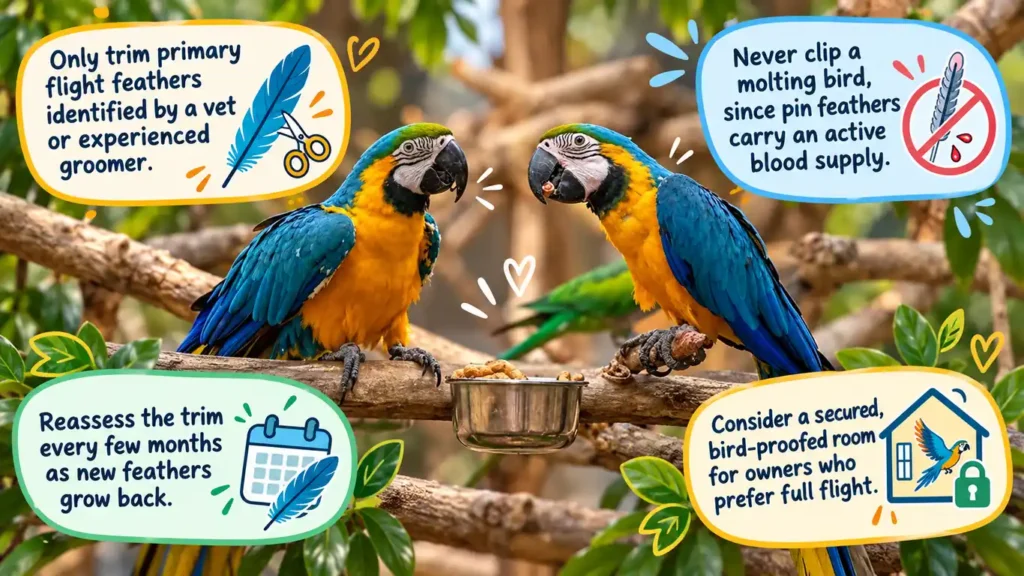
- Only trim primary flight feathers identified by a vet or experienced groomer.
- Never clip a molting bird, since pin feathers carry an active blood supply.
- Reassess the trim every few months as new feathers grow back.
- Consider a secured, bird-proofed room for owners who prefer full flight.
Is Wing Clipping Necessary for a Blue and Gold Macaw
Wing clipping is not medically required, though many owners choose it for household safety around windows and doors. A qualified avian vet or groomer should always perform the trim, and the decision depends on the home environment and supervision level.
Blue and Gold Macaw Preening
Preening occupies a large share of a macaw’s waking hours. Running each feather through the beak realigns barbs, removes debris, and spreads oil from the uropygial gland across the plumage. Paired macaws often preen each other’s head and neck feathers, an area a bird cannot reach alone, strengthening their bond. Excessive preening toward one spot can signal irritation or stress rather than normal upkeep.
- Support healthy preening with regular baths that keep feathers soft.
- Provide a calm environment, since anxious birds often over-preen specific spots.
- Watch for bald patches near the chest or under the wings.
- Avoid interrupting preening sessions, since they matter for hygiene and comfort.
Blue and Gold Macaw Molting
Feather replacement happens gradually throughout the year, so a molting macaw rarely looks patchy or bare for long. New pin feathers emerge encased in a protective keratin sheath, which the bird gradually preens away to reveal the mature feather underneath. Molting typically brings mild itchiness and appetite changes as energy shifts toward feather production.
- Expect scattered feathers around the cage floor during active molt.
- Avoid forcefully removing pin feathers, since damaging one can cause bleeding.
- Offer slightly more protein, such as cooked egg, during heavy molting.
- Mention a molt that never finishes to a vet.
How Long Does a Blue and Gold Macaw Molt Last
A full molt cycle typically stretches across several weeks to a few months, with feathers replaced gradually. Most healthy adult macaws molt once or twice yearly, though timing varies with diet, daylight, and individual health.
Blue and Gold Macaw Feather Plucking
Feather plucking differs sharply from ordinary molting, showing bare skin, chewed shafts, or self-inflicted damage rather than a smooth, even turnover. Veterinary researchers, including those at the Royal Veterinary College, report that most plucking cases trace back to an underlying medical issue rather than boredom alone. Skin infections, nutritional gaps, parasites, and painful conditions like arthritis can all trigger the behavior. Addressing the medical cause early keeps a Blue and Gold Macaw Grooming issue from hardening into a long-term behavioral habit.
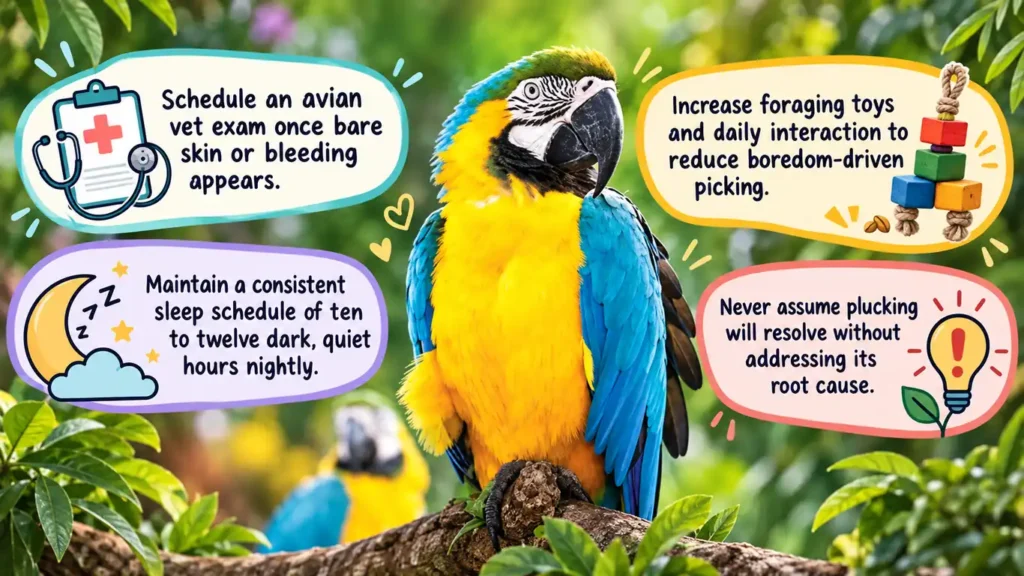
- Schedule an avian vet exam once bare skin or bleeding appears.
- Increase foraging toys and daily interaction to reduce boredom-driven picking.
- Maintain a consistent sleep schedule of ten to twelve dark, quiet hours nightly.
- Never assume plucking will resolve without addressing its root cause.
Blue and Gold Macaw Grooming Routine
Pulling every task into one predictable Grooming Routine keeps a large parrot comfortable without overwhelming an owner’s schedule. Daily diet and feather checks, paired with weekly bathing and monthly nail inspection, prevent most problems before they turn serious.
The table below offers a useful starting point that most keepers can adapt to their bird’s needs.
| Grooming Task | Suggested Frequency | Who Typically Handles It |
| Feather and skin check | Daily | Owner |
| Bathing or misting | 2 to 3 times weekly | Owner |
| Nail inspection | Weekly | Owner |
| Nail trim | Every 4 to 8 weeks, as needed | Avian vet or groomer |
| Beak check | Weekly | Owner |
| Wing feather review | Every 2 to 3 months | Avian vet or groomer |
What Does a Complete Blue and Gold Macaw Grooming Routine Include
A complete routine blends daily owner observation with periodic professional support for nails, beak checks, and wing feather trims. Bathing two to three times weekly, a balanced diet, enrichment toys, and prompt vet attention for skin or feather changes round it out.
Comparing normal versus concerning signs helps owners decide quickly whether a home fix or a vet visit makes more sense.
| Area | Normal Sign | Concerning Sign |
| Feathers | Even color, smooth barbs | Bald patches, chewed shafts |
| Beak | Light flaking, smooth shape | Deep cracks, uneven overgrowth |
| Nails | Gradual wear from perches | Curling, snagging, overgrowth |
| Behavior | Calm, thorough preening | Frantic picking at one spot |
The IUCN Red List currently classifies the Blue and Gold Macaw as a species of Least Concern in the wild, though captive birds still depend entirely on attentive owners for the daily care a wild flock would otherwise provide.
Final Notes on Macaw Grooming and Care
Healthy plumage, a well-worn beak, and trimmed nails trace back to the same handful of consistent habits covered throughout this guide. Feather Care starts with solid nutrition and humidity, while regular Bathing keeps skin comfortable and supports natural Preening behavior. Beak Care relies mostly on chew toys and natural wear, and Nail Trimming works best left to a steady, experienced hand. Wing Clipping remains a personal decision that deserves professional input and a clear look at household safety.
Molting and Feather Plucking can look similar at a glance, yet only one signals a problem worth a vet visit. Bringing every task into one steady Grooming Routine turns an overwhelming list into a manageable weekly habit. A watchful eye, paired with the right professional support, keeps this macaw comfortable and thriving for decades to come.
Frequently Asked Questions
How often should a Blue and Gold Macaw be bathed?
Most macaws do well with misting or a shallow bath two to three times weekly, though individual preference and humidity levels can shift that slightly.
Is wing clipping painful for a macaw?
A properly performed trim on mature flight feathers causes no pain, since only the feather shaft is cut, not living tissue, though a qualified professional should always handle it.
How can an owner tell molting apart from feather plucking?
Molting looks gradual and even with no bare skin, while plucking shows chewed shafts, bald patches, or self-inflicted damage that warrants a veterinary exam.
Does a Blue and Gold Macaw need a cuttlebone?
A cuttlebone offers extra calcium and light beak wear, though a balanced pelleted diet already supplies most of what a healthy macaw needs.
When should nail trimming happen?
Nails typically need attention every four to eight weeks, though natural perches can stretch that interval by wearing nails down gradually between sessions.