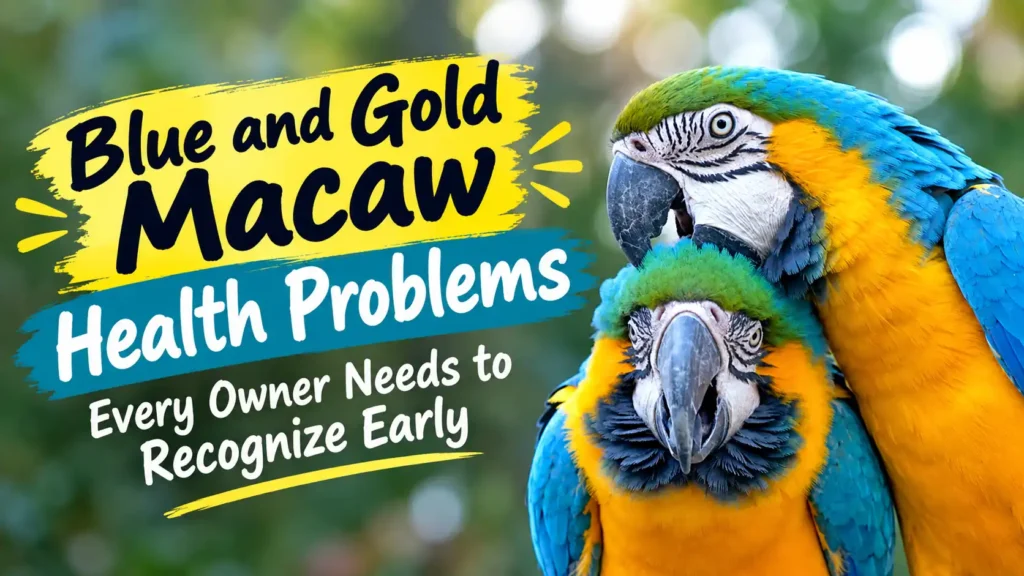
Blue and Gold Macaw Health Problems most commonly show up as digestive disorders, respiratory infections, and feather or skin conditions, and every owner should know the early signs of each. Proventricular Dilatation Disease sits at the top of the list, since it damages the nerves that control digestion and can cause a macaw to pass undigested seeds in its droppings. Respiratory issues like sinusitis and Aspergillosis often start with mild sneezing or nasal discharge, but can spread to the lungs within days if left untreated.
Psittacosis is another serious threat, spreading through dust from dried droppings and causing symptoms like lethargy, loss of appetite, and greenish stool. On the skin and feather side, Beak and Feather Disease weakens the immune system and causes abnormal feather growth, while feather plucking and feather cysts usually point to stress, poor diet, or an underlying medical problem rather than simple boredom. Because these problems can escalate fast, any change in breathing, droppings, or feather condition calls for a same-week visit to an avian vet.
Common Blue and Gold Macaw Health Problems at a Glance
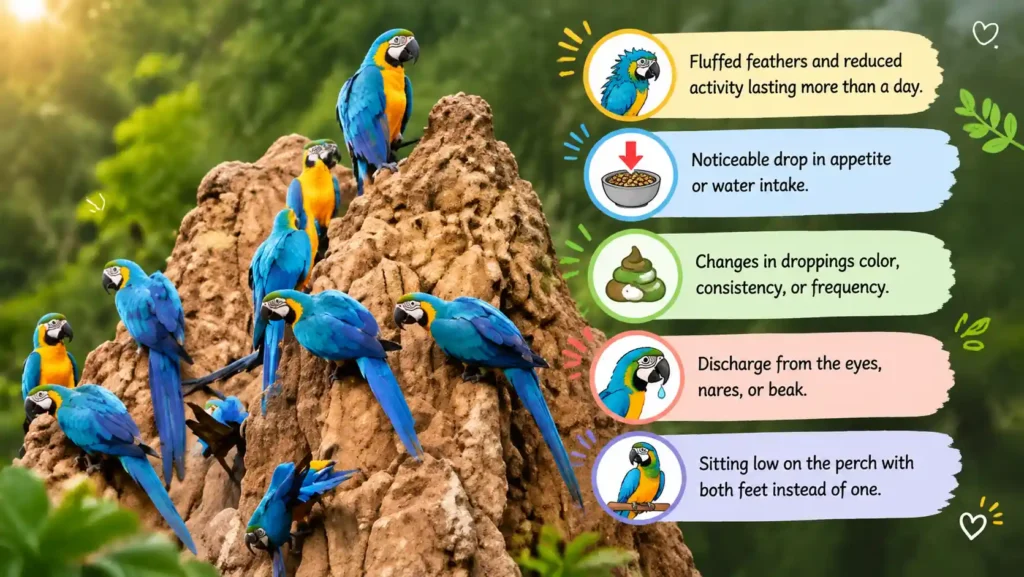
Several distinct conditions show up again and again in veterinary records for this species, and knowing the category each one falls into helps narrow down symptoms faster. Digestive, respiratory, bacterial, viral, and feather-related problems each come with a different set of warning signs and treatment paths. Catching a condition early almost always costs less and carries a better outcome than waiting until symptoms become obvious. General warning signs are worth monitoring no matter which specific condition ends up being the cause:
- Fluffed feathers and reduced activity lasting more than a day
- Noticeable drop in appetite or water intake
- Changes in droppings color, consistency, or frequency
- Discharge from the eyes, nares, or beak
- Sitting low on the perch with both feet instead of one
The table below organizes these conditions by category so owners can quickly identify where a symptom might fit.
| Health Problem | Body System Affected | Key Warning Signs |
| Proventricular Dilatation Disease | Digestive and nervous system | Undigested food in droppings, weight loss |
| Respiratory Infections | Respiratory system | Wheezing, nasal discharge, tail bobbing |
| Psittacosis | Systemic and respiratory | Lethargy, greenish droppings, labored breathing |
| Beak and Feather Disease | Immune system and feather follicles | Abnormal feather growth, beak deformities |
| Feather Plucking | Skin and behavior | Bald patches, skin irritation |
| Feather Cysts | Feather follicles | Swollen lumps along wings or body |
What Are the Most Common Blue and Gold Macaw Health Problems?
Proventricular Dilatation Disease, respiratory infections such as sinusitis and Aspergillosis, and feather-related conditions like plucking and cysts appear most frequently in veterinary records for this species, according to case data reported by avian veterinary organizations, including the World Parrot Trust.
Blue and Gold Macaw Proventricular Dilatation Disease
Proventricular Dilatation Disease, commonly shortened to PDD, ranks among the most serious Blue and Gold Macaw health problems because it attacks the nervous system controlling digestion. Avian bornavirus causes most confirmed cases, and the virus damages nerves in the proventriculus, the stomach chamber responsible for breaking down food before it reaches the gizzard.
Affected birds often pass whole, undigested seeds in their droppings despite eating normally, which is one of the clearest red flags. Weight loss continues even with a healthy appetite because food simply is not being processed correctly. Diagnosis typically requires bloodwork, contrast X-rays, or a crop biopsy performed by an avian specialist. No cure currently exists, though anti-inflammatory medication and a soft, easily digestible diet can extend quality of life for months or years.
Blue and Gold Macaw Respiratory Problems
Breathing difficulties rank as some of the most urgent Blue and Gold Macaw health problems because birds have a highly efficient but fragile respiratory system with air sacs extending throughout the body. A single infection in the sinuses or lungs can spread quickly through this interconnected network. Poor air quality from cigarette smoke, aerosol sprays, or non-stick cookware fumes makes birds especially vulnerable to these conditions. Three respiratory conditions appear most often in this species, each with a slightly different cause and treatment approach. Immediate veterinary care is warranted when a macaw shows:
- Open-mouth breathing or audible clicking sounds
- Tail bobbing with every breath
- Thick or discolored nasal discharge
- Sudden reluctance to talk, whistle, or vocalize
Sinusitis
Sinus infections develop when bacteria, fungi, or irritants inflame the tissue around a macaw’s nasal passages. Swelling around the eyes, sneezing, and discharge from the nares are the earliest visible signs. Chronic sinusitis sometimes links back to poor cage hygiene or prolonged exposure to dusty bedding. Treatment usually involves antibiotics or antifungals depending on culture results, along with improving air quality in the bird’s living space.
Hypersensitivity Pneumonitis
This condition develops as an allergic reaction in the lungs, often triggered by feather dust, mold spores, or airborne chemicals. Coughing, rapid breathing, and reduced energy typically appear gradually rather than overnight. Removing the triggering allergen from the environment is the first and most important treatment step. Veterinarians may also prescribe anti-inflammatory medication to calm the immune response while the lungs recover.
Aspergillosis
A fungal organism called Aspergillus fumigatus causes this disease, usually taking hold after a bird’s immune system is already weakened by stress or poor nutrition. Damp bedding, moldy food, or poor ventilation create the ideal breeding ground for this fungus. Labored breathing, clicking sounds, and sudden weight loss often point toward a chronic case already in progress. Antifungal treatment can run for months, and survival rates improve significantly when the infection is caught before it spreads to the air sacs.
A side-by-side comparison makes the differences between these three respiratory conditions easier to spot.
| Condition | Primary Cause | Typical Treatment |
| Sinusitis | Bacterial or fungal irritation | Antibiotics or antifungals |
| Hypersensitivity Pneumonitis | Allergic reaction to dust or mold | Allergen removal plus anti-inflammatories |
| Aspergillosis | Aspergillus fungus | Long-term antifungal therapy |
Blue and Gold Macaw Psittacosis
Psittacosis, also called parrot fever, comes from the bacterium Chlamydia psittaci and ranks among the more serious infectious diseases affecting this species because it can spread to humans. Infected birds may show only mild lethargy at first, though greenish, watery droppings and labored breathing often follow within days. The Centers for Disease Control and Prevention (CDC) tracks psittacosis cases in the United States because of its zoonotic potential, especially among bird owners and pet store workers.
Doxycycline remains the standard antibiotic treatment, typically given for 45 days to fully clear the bacteria from the bird’s system. Owners handling a sick bird should wash hands frequently and avoid close contact with droppings until a veterinarian confirms the infection has cleared. Anyone in the household who develops flu-like symptoms after exposure to a sick bird should mention this to a doctor right away.
How Can You Tell If a Blue and Gold Macaw Is Sick?
Fluffed feathers held for more than a day, a sudden drop in appetite, changes in droppings, labored breathing, and reduced vocalization together signal that a veterinary exam is needed right away, since these birds naturally hide illness until it becomes advanced.
Blue and Gold Macaw Beak and Feather Disease
Beak and Feather Disease stands out among Blue and Gold Macaw health problems because it is viral, highly contagious, and currently has no cure. Circovirus, the pathogen responsible, attacks the cells that produce feathers, beak keratin, and immune function, leaving birds vulnerable to secondary infections. Early signs include abnormal feather growth, retained feather sheaths, and feathers that look stress-barred or discolored compared to normal molts.
As the disease progresses, the beak may become overgrown, flaky, or structurally weak enough to fracture. A blood test or feather follicle biopsy confirms diagnosis, and infected birds typically need lifelong isolation from other parrots to prevent spread. Supportive care, including a stress-free environment and nutritional support, remains the main option since no antiviral cure currently exists.
Blue and Gold Macaw Feather Plucking and Feather Cysts
Feather-related issues affect appearance without necessarily involving infection, though both conditions below deserve prompt attention.
Feather Plucking
Feather plucking describes a bird pulling out its own feathers, often down to bare, irritated skin on the chest or legs. Boredom, stress, inadequate cage size, or an underlying medical condition frequently drives this behavior in captive macaws. A veterinary exam should rule out pain, parasites, or hormonal imbalances before assuming the cause is purely behavioral. Enrichment items, foraging toys, and a consistent daily routine often reduce plucking once medical causes are ruled out. Chronic cases sometimes require behavioral therapy alongside veterinary treatment for lasting improvement.
Feather Cysts
A feather cyst forms when a new feather grows abnormally beneath the skin instead of emerging normally through the follicle. The trapped feather curls inward, creating a firm, swollen lump that can become infected or rupture if left untreated. Genetics play a role in some macaws, though trauma to a follicle can also trigger cyst formation. Surgical removal by an avian veterinarian is usually the most effective long-term solution, especially for recurring cysts. Left untreated, a ruptured cyst can lead to chronic infection or permanent feather loss in that follicle.
Keeping a Blue and Gold Macaw Healthy Long Term
A consistent care routine prevents many of the conditions covered above from ever developing in the first place. Annual wellness exams with an avian veterinarian catch subtle changes long before they become emergencies. Diet plays a bigger role in prevention than most new owners expect, since a pellet-based diet with fresh vegetables supports immune function far better than an all-seed diet. Quarantining any new bird for 30 to 45 days before introducing it to an existing flock also lowers the risk of spreading Psittacosis or Beak and Feather Disease. The Association of Avian Veterinarians (AAV) recommends annual checkups along with routine bloodwork for macaws over the age of 10.
- Schedule annual avian vet exams, twice yearly after age 10
- Offer a pellet-based diet with fresh vegetables daily
- Keep housing dry, clean, and well-ventilated
- Avoid cigarette smoke, aerosols, and non-stick cookware fumes
- Quarantine new birds for 30 to 45 days
A quick prevention checklist ties these habits together in one place.
| Care Area | Recommended Practice |
| Diet | Pellet-based diet with fresh vegetables, limited seeds |
| Housing | Dry, well-ventilated space with routine cleaning |
| Vet Visits | Annual exams, bloodwork after age 10 |
| New Bird Introduction | 30 to 45-day quarantine period |
Can Blue and Gold Macaw Health Issues Be Prevented?
Many conditions, including respiratory infections and nutritional deficiencies, become far less likely with a balanced diet, clean housing, quarantine protocols for new birds, and annual avian veterinary checkups, though genetic conditions like Beak and Feather Disease cannot be fully prevented.
Key Takeaways for Macaw Owners
Recognizing Blue and Gold Macaw health problems early consistently makes the biggest difference in outcome, whether a bird is dealing with the digestive breakdown caused by Proventricular Dilatation Disease or a sudden bout of Sinusitis, Hypersensitivity Pneumonitis, or Aspergillosis. Respiratory distress deserves urgent attention given how quickly infections spread through a macaw’s interconnected air sac system.
Psittacosis adds another layer of concern since the bacteria can pass from bird to owner, making prompt treatment and careful hygiene equally important for the whole household. Beak and Feather Disease remains one of the more heartbreaking diagnoses because no cure exists, which makes prevention and isolation protocols essential for any multi-bird household. Feather plucking often signals stress or an underlying medical issue rather than simple bad behavior, while feather cysts usually call for surgical correction before they rupture or become infected.
Building a relationship with an avian veterinarian, feeding a balanced pellet-based diet, and keeping the living space clean and well-ventilated go a long way toward preventing most of these conditions. Every one of these conditions becomes far more manageable when caught in its earliest stage, which is exactly why daily observation matters as much as any scheduled vet visit.
Frequently Asked Questions
What is the most common health problem in Blue and Gold Macaws?
Proventricular Dilatation Disease and respiratory infections such as sinusitis and Aspergillosis are among the most frequently diagnosed conditions in this species by avian veterinarians.
Is Beak and Feather Disease contagious to other birds?
Yes, the circovirus responsible spreads easily through feather dust, direct contact, and contaminated surfaces, so infected birds usually need lifelong isolation from other parrots.
Can Psittacosis in Blue and Gold Macaws be treated?
Yes, a 45-day course of doxycycline under veterinary supervision typically clears the infection, though the household should follow hygiene precautions since the disease can spread to humans.
How often should a Blue and Gold Macaw visit an avian veterinarian?
An annual wellness exam is recommended for healthy adults, moving to twice-yearly visits once a bird passes age 10 or has an existing health condition.
Do all Blue and Gold Macaws pluck their feathers?
No, feather plucking is not universal and usually points to boredom, stress, inadequate cage size, or an underlying medical issue that needs veterinary evaluation.