
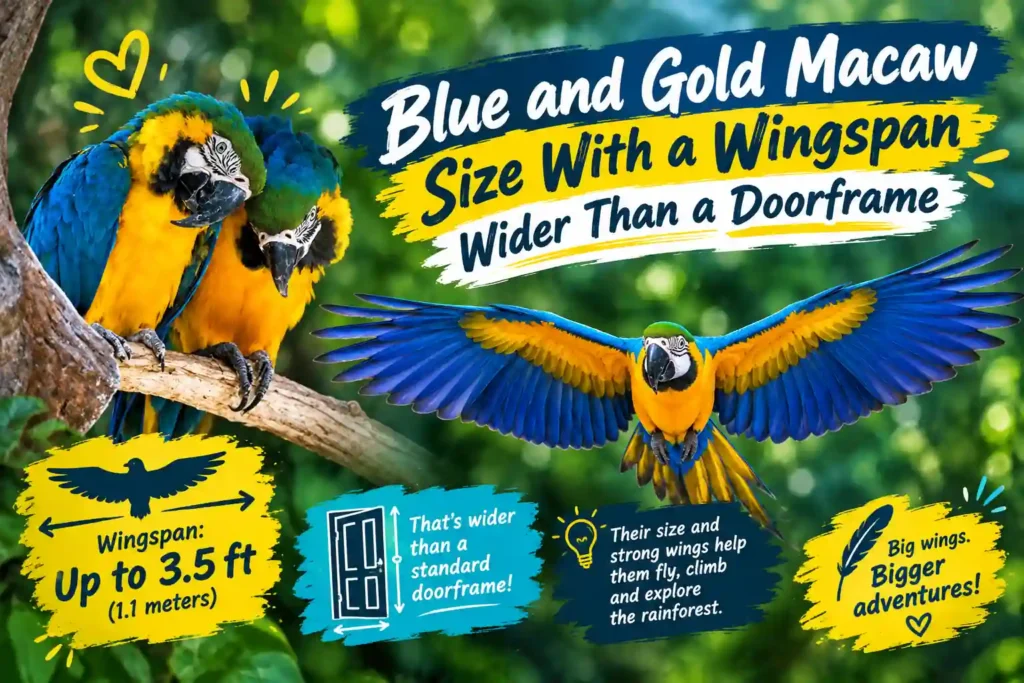
Blue and gold macaws typically reach 30–36 inches in length, weigh 900–1,300 grams (2–2.9 pounds), and have a 41–45-inch wingspan as adults. That combination makes them dramatically larger than most companion parrots, with a long tail, broad wings, and a powerful beak that adds to their impressive appearance.
Their size becomes even more noticeable when they fully stretch their wings. A 41–45-inch wingspan can take up considerable space in a home, so owners need to think beyond cage size and provide enough room for safe movement, exercise, and play.
Blue and gold macaw size also changes quickly during the first few months of life. Chicks start remarkably small and gain weight rapidly before reaching their adult proportions, making their growth just as interesting as their final size.
What Drives Blue and Gold Macaw Size So High
Genetics set the ceiling for how large this species grows, and few companion parrots come close to matching it. Ara ararauna ranks among the largest of the true macaws, trailing only giants like the hyacinth macaw in overall bulk. Diet and activity level then shape where an individual bird lands within that normal range.
Wild populations across Panama, Colombia, Venezuela, Brazil, and Bolivia show fairly consistent measurements, giving breeders and vets a reliable baseline. Captive-bred birds sometimes run slightly heavier due to calorie-dense diets and less daily flying, so a home-raised macaw is not automatically unhealthy just for sitting near the top of the weight range.
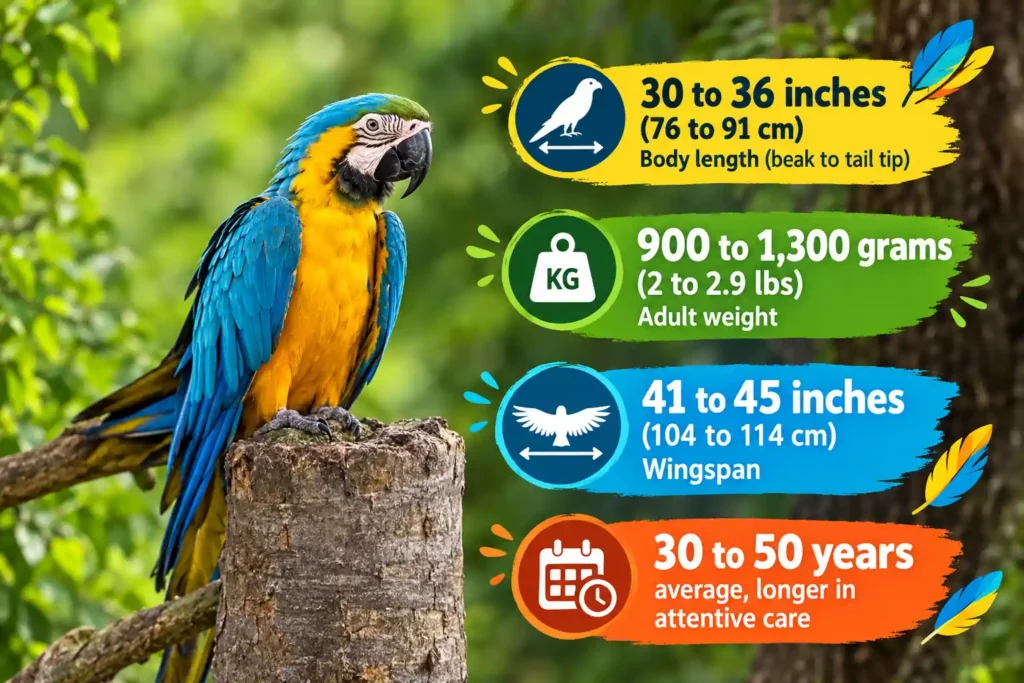
Here is a quick reference table covering the core numbers most owners search for first.
| Measurement | Typical Range |
| Body length (beak to tail tip) | 30 to 36 inches (76 to 91 cm) |
| Adult weight | 900 to 1,300 grams (2 to 2.9 lbs) |
| Wingspan | 41 to 45 inches (104 to 114 cm) |
| Lifespan | 30 to 50 years average, longer in attentive care |
What Is the Average Blue and Gold Macaw Size
An average adult measures roughly 34 inches long from beak to tail tip, weighs close to 1,000 grams, and carries a wingspan approaching 43 inches. Blue and gold macaw size varies a little by individual bird and region, but this middle-of-the-range figure works well as a quick mental benchmark for prospective owners.
Blue and Gold Macaw Weight
Adult weight typically lands between 900 and 1,300 grams, or roughly 2 to 2.9 pounds, with most healthy birds settling close to the 1-kilogram mark. Bone structure in parrots stays surprisingly light and hollow, so despite an imposing wingspan, these birds never feel as heavy as their size suggests when perched on an arm.
Home scales matter more than eyeballing a bird’s shape, since dense feathers hide weight loss extremely well. Tracking blue and gold macaw size through weekly gram-scale readings gives the clearest early warning of illness, long before physical symptoms become visible. Vets typically recommend weighing at the same time of day for consistency.
A few practical weight-tracking tips help keep a macaw in a healthy range:
- Weigh weekly using a perch scale that reads in grams, not ounces.
- Record results in a simple log or phone note to spot slow trends.
- Watch for sudden drops of more than 10% body weight, which warrants a vet visit.
- Avoid seed-heavy diets, since excess fat packs on weight quickly.
How Much Does a Blue and Gold Macaw Weigh
A healthy adult typically weighs between 900 and 1,300 grams, roughly 2 to 2.9 pounds, making it one of the heavier commonly kept pet parrots. Chicks start at a mere 14 to 20 grams at hatching and reach near-adult weight by around 10 weeks old.
Blue and Gold Macaw Length and Wingspan
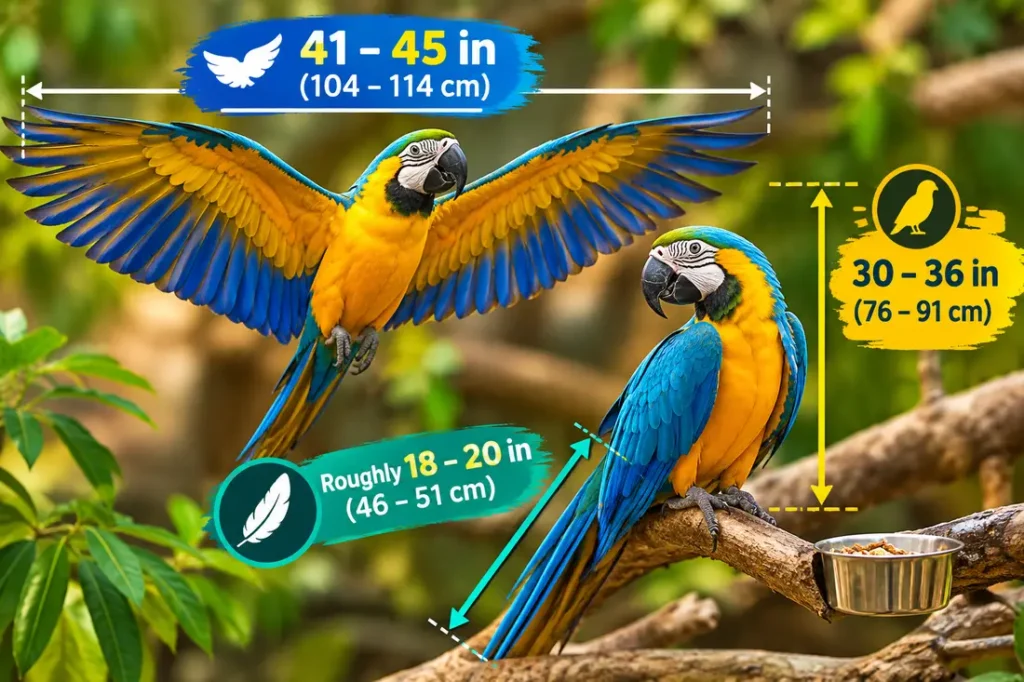
Total body length runs from about 30 to 36 inches, and more than half of that comes from the long, tapering tail feathers rather than the torso. Removing the tail from the equation, the actual body looks noticeably more compact than the overall length number implies.
Wingspan tells a different story about size, since a fully extended macaw can stretch 41 to 45 inches from tip to tip. Because blue and gold macaw size includes such a long tail alongside that wide wingspan, many first-time owners underestimate how much flight clearance a home actually needs, especially near ceiling fans, open windows, and narrow hallways.
The table below breaks length and wingspan down side by side for easy comparison.
| Category | Range (Inches) | Range (Metric) |
| Body length (beak to tail) | 30 – 36 in | 76 – 91 cm |
| Wingspan (fully extended) | 41 – 45 in | 104 – 114 cm |
| Tail length (portion of body) | Roughly 18 – 20 in | 46 – 51 cm |
How Long Is a Blue and Gold Macaw Wingspan
A fully extended wingspan measures between 41 and 45 inches, or about 104 to 114 centimeters, which is wider than most adult humans are tall when standing with arms raised. That reach makes flighted macaws impressive to watch but also means bird-proofing a room takes real planning.
How Tall Does a Blue and Gold Macaw Stand
Height gets measured differently across sources, since a perched, upright macaw looks noticeably shorter than its full nose-to-tail length suggests. Most of the commonly cited 30 to 36 inch figure includes the tail trailing down or out behind the bird rather than true standing height.
A relaxed macaw sitting upright on a perch typically presents somewhere around 14 to 18 inches from the top of the head to the base of the tail, though no single authoritative standing-height figure exists the way length and wingspan are documented. Body posture and whether the tail hangs straight down or fans outward both affect how tall the bird appears in any given moment.
Large cages and stands account for this variability by offering generous vertical clearance rather than a fixed number.
Blue and Gold Macaw Baby Size and Growth Rate
Hatchlings emerge blind, featherless, and pink-skinned, weighing only 14 to 20 grams, lighter than an AA battery. Growth during the first two weeks happens at a startling pace, with chicks commonly gaining around 10 grams per day and roughly doubling their hatch weight in that short window.
Feather development starts around 10 days of age, and by 10 to 13 weeks most chicks fledge, leaving the nest for the first time. Near-adult body weight is reached by roughly 10 weeks, though full plumage and coordination keep developing for months afterward.
This table lays out the general growth timeline from hatching through independence.
| Age | Approximate Weight | Milestone |
| Hatching | 14- 20 grams | Blind, featherless, fully dependent |
| 2 weeks | Roughly double hatch weight | Rapid daily weight gain |
| 10 days | — | Feathers begin emerging |
| 10 – 13 weeks | Near 900 – 1,000 grams | Fledging, first flights |
| 6 months post-fledge | Full adult weight range | Independent feeding, adult plumage |

Growth rate slows considerably after fledging, and owners raising a hand-fed chick should expect steady but far less dramatic gains from that point forward. Weight can fluctuate normally during weaning, so occasional small dips are not automatically a health concern.
Male vs Female Size Differences
Sexual dimorphism in this species stays minimal, meaning males and females look almost identical in color, pattern, and general proportions. Males run slightly larger on average in both weight and length, but overlap between sexes is substantial enough that visual guessing fails more often than it succeeds.
DNA testing or surgical sexing remains the only reliable method for determining gender, since even experienced breeders cannot consistently tell males from females by sight alone. A slightly broader head or thicker beak sometimes suggests a male, but this trait varies too much between individual birds to serve as proof.
| Trait | Males | Females |
| Average weight | Slightly higher, often near upper range | Slightly lower, often near lower-mid range |
| Average length | Marginal difference, rarely more than an inch | Marginal difference |
| Reliable sexing method | DNA or surgical only | DNA or surgical only |
How Size Changes by Age
Growth unfolds across several distinct stages, each tied to specific behavioral and physical milestones rather than age alone. Chicks progress from a featherless 20-gram hatchling to a near-full-sized juvenile within roughly ten weeks, an astonishingly fast climb for a bird that eventually lives for decades.
Juveniles between three months and two years continue refining coordination and feather condition even though body size has largely plateaued. Sexual maturity typically arrives between 2 and 4 years, though many breeders consider a bird fully mature closer to 5 to 7 years once hormone-driven traits stabilize.
- Hatchling (0–10 days): blind, featherless, around 20 grams.
- Nestling (2–10 weeks): rapid daily weight gain, feathers emerging.
- Fledgling (10–13 weeks): near-adult weight, first flights from the nest.
- Juvenile (3 months–2 years): full body size reached, skills still developing.
- Adult (2–4 years onward): sexual maturity, full behavioral maturity by 5–7 years.
Housing and Space Needs for This Large Parrot
Cage dimensions need to account for full wingspan, not just body length, since a bird unable to extend its wings fully develops stress and feather damage over time. Minimum recommended cage size for this species starts around 36 inches wide, 48 inches deep, and 60 inches tall, though bigger is always safer for a bird this active.
Bar spacing matters just as much as footprint, and anything wider than 1 to 1.5 inches risks trapping a curious beak or toe. Daily time outside the cage on a stand or play gym helps compensate for even a generously sized enclosure.
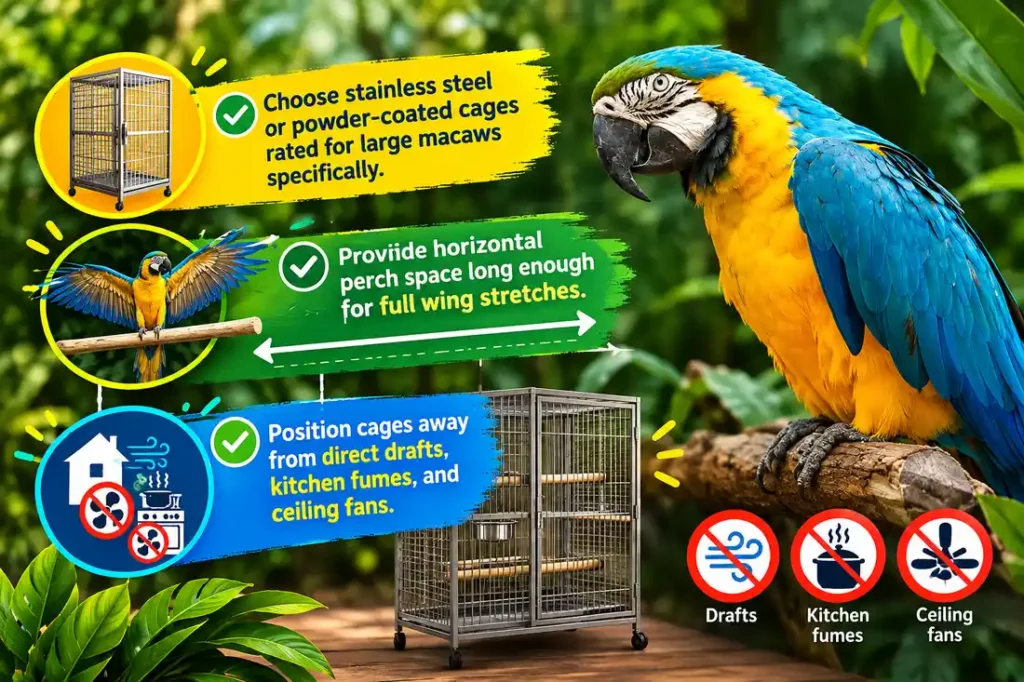
A few housing essentials worth prioritizing:
- Choose stainless steel or powder-coated cages rated for large macaws specifically.
- Provide horizontal perch space long enough for full wing stretches.
- Position cages away from direct drafts, kitchen fumes, and ceiling fans.
Health Considerations Tied to Body Size
Obesity ranks among the most common preventable health problems in large pet parrots, often driven by seed-heavy diets paired with limited flight or exercise. Excess weight strains joints and organs over time, shortening quality of life even when a bird otherwise appears outwardly healthy.
Routine veterinary checkups, ideally annual, help track weight trends and catch subtle changes before they become serious problems.
Consulting an avian veterinarian remains the safest path whenever a bird’s weight shifts unexpectedly, since underlying illness can hide behind normal-looking feathers for weeks. The Association of Avian Veterinarians publishes general wellness guidance that many exotic bird vets reference when building species-specific care plans.
Conservation status also ties indirectly to size and habitat needs, since a bird this large requires substantial wild territory to thrive. The IUCN currently lists the species as Least Concern, while the CITES Appendix II listing restricts international commercial trade to help protect wild populations from overharvesting.
A Complete Look at Their Growth and Size
Blue and gold macaw size, taken as a whole, explains why this species commands such serious commitment from prospective owners. Weight typically settles between 900 and 1,300 grams, while length stretches 30 to 36 inches and wingspan reaches a dramatic 41 to 45 inches at full extension. Standing height proves harder to pin down than length or wingspan, though a perched bird generally presents well under two feet tall.
Hatchlings arrive at a fragile 14 to 20 grams and rocket toward near-adult weight within about ten weeks, a growth rate that surprises most first-time chick owners. Males edge out females slightly in average measurements, though the overlap is wide enough that DNA testing remains the only dependable way to confirm gender.
Size shifts predictably across life stages, from blind hatchling to fledgling to a sexually mature adult by roughly 3 to 4 years old. Housing and daily care hinge on respecting that full wingspan and weight range, from cage dimensions down to bar spacing. Health monitoring rounds out the picture, since tracking weight consistently often catches problems long before visible symptoms appear.
Frequently Asked Questions
How big do Blue and Gold Macaws get?
Adults typically reach 30 to 36 inches in length, weigh between 900 and 1,300 grams, and carry a wingspan of 41 to 45 inches.
At what age does a Blue and Gold Macaw reach full size?
Most chicks reach near-adult weight by around 10 weeks old, though full behavioral and sexual maturity takes another 2 to 7 years.
Are male Blue and Gold Macaws bigger than females?
Males run slightly larger on average, but the overlap between sexes is significant enough that DNA or surgical sexing is needed for certainty.
How much does a baby Blue and Gold Macaw weigh at hatching?
Hatchlings weigh only about 14 to 20 grams, roughly the weight of a small battery, and grow rapidly over the following weeks.
Do Blue and Gold Macaws keep growing after their first year?
Body size plateaus well before the first birthday, though feather condition, coordination, and hormonal maturity continue developing for several more years.
How long is a Blue and Gold Macaw’s wingspan compared to its body length?
Wingspan, at 41 to 45 inches, actually exceeds the bird’s own body length of 30 to 36 inches once fully extended.