

People call the Dandie Dinmont Terrier hypoallergenic because of its soft, curly coat that does not shed much. This breed loses much less hair than most other dogs. That is why it often shows up on lists of dogs that are good for people with allergies. But it is important to know that the Dandie Dinmont Terrier hypoallergenic label does not mean the dog is completely safe for allergies.
No dog is 100% allergy-free. All dogs make some dander, saliva, and dead skin cells, and this breed does too. The good thing is that it sheds less hair around your house, so it may cause fewer allergy problems for some people. Still, if you have allergies, it is a good idea to spend time with this dog before you bring one home.
What Does “Hypoallergenic” Really Mean?
The word sounds official, but it is more of a marketing term than a medical one. No dog breed is completely free of allergens. What people react to is usually not the hair itself. Instead, the trigger is a protein called Can f 1, found in a dog’s dander, saliva, and urine.
So when a breed is called hypoallergenic, it really means it tends to release fewer of these allergens into the home. Low-shedding coats trap dead skin flakes instead of scattering them everywhere. That is the whole idea behind it.
The American Kennel Club is clear on this point: they list breeds that generally do better with allergy sufferers, but they never promise a reaction-free experience. That honesty is useful when setting expectations.
Are the Dandie Dinmont Terrier Hypoallergenic?
Yes, mostly. This breed is widely considered one of the better options for allergy-prone homes, and for good reason. Their coat is a soft, low-shedding mix of hard and soft hair that holds onto loose fur rather than dropping it across your sofa.
Still, keep expectations realistic. People with severe dog allergies may still react, especially to saliva after a friendly lick. The breed lowers the risk. It does not remove it.
What Every Dandie Owner Should Expect: Read more in Is a Dandie Dinmont Terrier Right for You? Complete Breed Guide & Owner Insights.
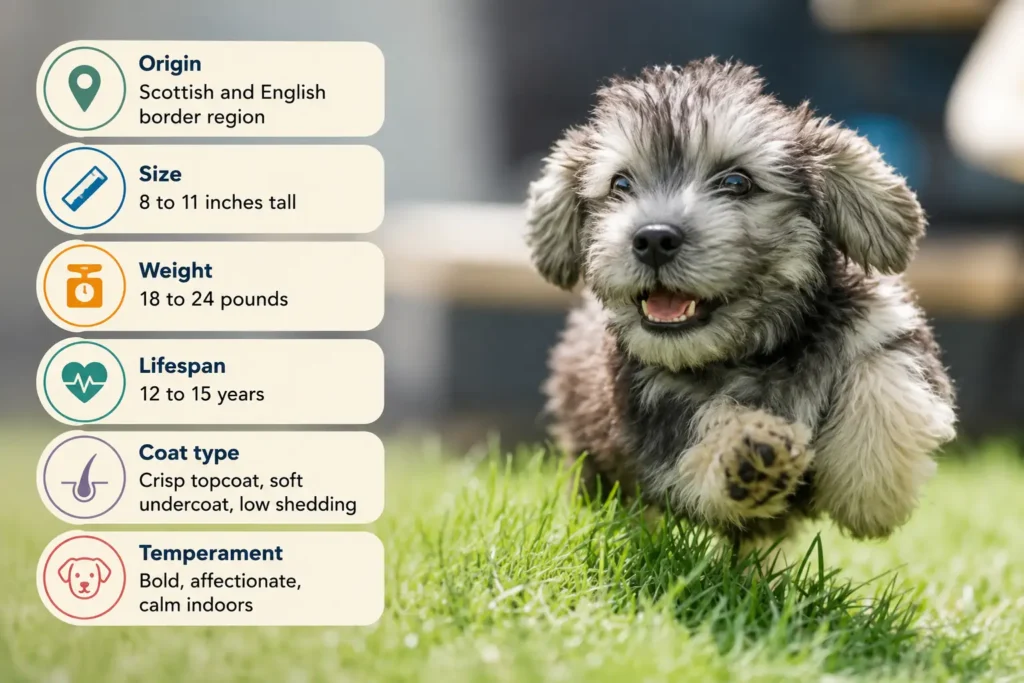
Here is a quick snapshot of the core breed facts that matter most for allergy planning.
| Trait | Detail |
| Origin | Scottish and English border region |
| Size | 8 to 11 inches tall |
| Weight | 18 to 24 pounds |
| Lifespan | 12 to 15 years |
| Coat type | Crisp topcoat, soft undercoat, low shedding |
| Temperament | Bold, affectionate, calm indoors |
Quick Answer: Are Dandie Dinmont Terriers Hypoallergenic?
Dandie Dinmont Terriers are considered low-allergen and hypoallergenic-friendly because they shed minimally and produce less airborne dander. However, no dog is fully hypoallergenic, so mild reactions are still possible in sensitive people.
How Much Does a Dandie Dinmont Terrier Shed?
Very little, which is exactly what allergy sufferers want to hear. Their double coat is designed to be hand-stripped or trimmed rather than shed naturally. Loose hairs stay caught in the coat until grooming removes them.
Because of this, you will not find piles of fur on your clothes or furniture. That reduces the amount of dander released into the air, which is the real win here.
This table compares shedding levels across a few popular small breeds to give the Dandie some context.
| Breed | Shedding Level | Allergy-Friendly? |
| Dandie Dinmont Terrier | Low | Usually yes |
| Poodle (Toy) | Very low | Yes |
| Beagle | High | No |
| Bichon Frise | Low | Usually yes |
| Pug | High | No |
How Often Should You Groom a Dandie Dinmont Terrier?
A Dandie Dinmont Terrier should be brushed 2 to 3 times per week and hand-stripped or professionally groomed every 6 to 8 weeks. Regular grooming removes trapped dander and keeps allergen levels low inside the home.
Do Dandie Dinmont Terriers Produce Less Dander?
On the whole, yes. Since they shed so little, dead skin cells stay attached to the coat instead of floating around your rooms. Consistent grooming then removes that buildup safely, usually outdoors or in a well-ventilated space.
That said, dander is only one piece of the puzzle. Saliva and urine also carry allergens. So even a low-dander dog can trigger symptoms if you are very sensitive to their saliva. It helps to know your specific trigger before choosing any breed.
Can People With Dog Allergies Live With a Dandie Dinmont Terrier?
For many people with mild to moderate allergies, yes. This breed is calm, loyal, and compact, which makes it manageable in smaller homes and apartments. Their low-shedding coat gives sensitive owners a fighting chance.
Before you commit, though, spend real time around one. The American College of Allergy, Asthma and Immunology recommends direct exposure before adopting any dog, since individual reactions vary a lot. A short visit tells you more than any breed label ever could.
Grooming Tips to Help Reduce Allergens
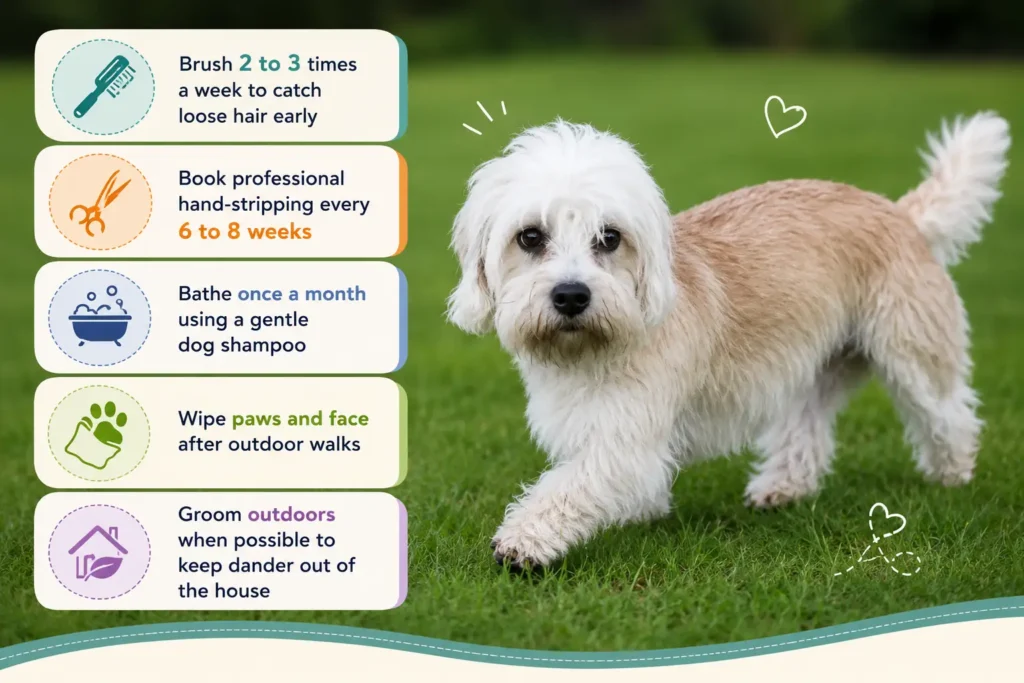
Good grooming is honestly your strongest tool here. A clean coat means fewer allergens in the air and on your furniture. The routine does not need to be complicated, but it does need to be consistent.
- Brush 2 to 3 times a week to catch loose hair early
- Book professional hand-stripping every 6 to 8 weeks
- Bathe once a month using a gentle dog shampoo
- Wipe paws and face after outdoor walks
- Groom outdoors when possible to keep dander out of the house
Learn how regular grooming can minimize allergens. Read more in Dandie Dinmont Terrier grooming mistakes are costing you hundreds.
One realistic caution: over-bathing can dry the skin and actually increase flaking. So stick to a monthly rhythm unless your vet suggests otherwise.
Other Things That Can Trigger Dog Allergies
Sometimes the dog is not the whole problem. Pets carry outdoor allergens indoors, and those can hit just as hard. It helps to look at the full picture before blaming the breed.
- Pollen and dust trapped in the dog’s coat
- Saliva left behind after licking
- Dander building up in carpets and bedding
- Poor home ventilation and air filtration
A good HEPA air purifier and frequent washing of dog bedding can cut symptoms noticeably. The Asthma and Allergy Foundation of America highlights air filtration as one of the most effective steps for pet-allergic households.
Who Is the Dandie Dinmont Terrier Best Suited For?
This breed fits a specific kind of owner. They are affectionate but independent, alert but not hyperactive, and generally good with respectful children and other calm pets. Their moderate exercise needs make them flexible.
They suit apartment living well, tolerate most mild climates, and bond deeply with their people. Trainability is decent, though their terrier stubbornness means patience helps. First-time owners can manage them with steady, reward-based training.
Are Dandie Dinmont Terriers Good for First-Time Owners?
Yes, Dandie Dinmont Terriers suit first-time owners who want a calm, loyal small dog. They need moderate exercise, weekly grooming, and consistent positive training to manage their independent terrier streak.
Pros and Cons for Allergy Sufferers
Every breed involves trade-offs, and this one is no exception. Here is a balanced look before you decide.
| Pros | Cons |
| Low shedding coat | Needs regular hand-stripping |
| Less airborne dander | Not fully allergy-proof |
| Calm, apartment-friendly | Can be stubborn to train |
| Long 12 to 15 year lifespan | Rare breed, harder to find |

Should You Choose a Dandie Dinmont Terrier if You Have Allergies?
If your allergies are mild to moderate, this breed is a reasonable and rewarding choice. Their low-shedding coat and reduced dander make daily life easier than with heavy-shedding breeds. Add solid grooming habits and clean air, and most owners cope well.
But if your allergies are severe, be cautious. Meet one first, watch how your body reacts, and talk to an allergist. This breed lowers your risk. It never fully erases it, and honest expectations lead to the happiest homes.
Frequently Asked Questions
Is a Dandie Dinmont Terrier fully hypoallergenic?
No dog is fully hypoallergenic. Dandie Dinmont Terriers are low-shedding and produce less dander, which makes them friendlier for allergy sufferers, but mild reactions are still possible.
Do Dandie Dinmont Terriers shed a lot?
No. They shed very little because their coat is meant to be hand-stripped rather than shed naturally, so loose hair stays trapped until grooming.
How often should a Dandie Dinmont Terrier be groomed?
Brush them 2 to 3 times a week and arrange professional grooming or hand-stripping every 6 to 8 weeks to keep dander low.
Are Dandie Dinmont Terriers good apartment dogs?
Yes. They are compact, calm indoors, and need only moderate exercise, which makes them well suited to apartment living.
Can severe dog allergy sufferers own this breed?
It is risky. People with severe allergies should spend time around the breed first and consult an allergist before committing.