

Dwelf cat training is the process of teaching this small, hairless, elf-eared breed good habits like using the litter box, coming when called, walking on a leash, and staying calm around new people or loud noises. The Dwelf is a mix of the Munchkin, Sphynx, and American Curl, so it has short legs, no fur, and curled ears, but it is also very smart and loves food, which makes learning fast when you use the right method.
Because Dwelf cats have very little fur and less body fat, they also need extra warmth and gentle handling during training sessions, so short and calm lessons work best. Good dwelf cat training also helps stop bad habits early, such as scratching furniture, jumping on kitchen counters, or crying for attention at night. With patience, small treats, and short daily sessions, most owners see real progress within just a few weeks.
What Makes Dwelf Cat Training Different?
Unlike an average shorthair, the Dwelf is a mix of Sphynx, Munchkin, and American Curl genes, which means it combines high intelligence with a fast metabolism and very little body fat. As a result, Dwelf cat training works best with short sessions, warm rooms, and food-based rewards, since these cats burn energy quickly and lose focus if they get cold or bored.
Is Dwelf Cat Training Harder Than Training a Regular Cat?
No, if anything, it’s usually easier. Dwelfs are highly food-driven and people-oriented, so they pick up cues faster than many typical breeds. The main difference is that sessions need to stay short and warm, since their hairless coat drains energy faster than a furred cat’s.
Can You Train a Dwelf Cat?
American Association of Feline Practitioners (AAFP) notes that most cats, regardless of breed, respond well to reward-based methods, and Dwelfs are no exception.
Discover How Easy It Is to Train a Dwelf Cat. Read more in People Are Losing Their Minds (and $3,000) Over the Dwelf Cat.
When Should You Start Dwelf Cat Training?
Start as early as 8 weeks old, right after your kitten settles into its new home. Early socialization between 8 and 16 weeks shapes lifelong behavior, so the sooner you begin gentle dwelf cat training, the calmer and more confident your adult cat tends to become.
How to Prepare Before Training a Dwelf Cat
Before your first session, set up a quiet, draft-free space (Dwelfs chill easily due to their hairless skin), gather small soft treats, and choose one consistent word per behavior. Keep every session under five minutes, since Dwelfs tend to lose focus quickly once the novelty wears off.
Best Rewards for Dwelf Cat Training
The table below breaks down the most effective reward types for Dwelf cats, based on their food drive and affectionate personality.
| Reward Type | Example | Why It Works |
| Soft treats | Freeze-dried chicken or salmon bits | High-value, easy to chew, supports extra calorie needs |
| Verbal praise | A happy, upbeat “good job!” | Builds trust and strengthens the bond |
| Play reward | 2-minute feather wand chase | Matches the breed’s high energy level |
| Physical affection | Chin or cheek scratches | Dwelfs are unusually affectionate and touch-seeking |

Positive Reinforcement vs Punishment: What Works Best?
ASPCA recommends reward-based methods for all cats, and Dwelfs respond especially well because they genuinely crave approval from their owners.
What’s the Number One Rule of Dwelf Cat Training?
Consistency beats intensity. Ten short, five-minute sessions spread across a week teach a Dwelf far more than one long, one-hour session, and they keep the experience fun instead of frustrating for your cat.
How to Litter Train a Dwelf Cat
Most Dwelf kittens pick up litter habits within a few days, since the instinct is largely natural. Place the box in a quiet, warm spot, use unscented clumping litter, and offer a treat immediately after each successful use.
How to Teach a Dwelf Cat Its Name
Say your cat’s name in a warm tone, followed instantly by a treat, several times a day. Within one to two weeks, most Dwelfs reliably turn or approach when called, since this breed is unusually attentive to human voices.
How to Train a Dwelf Cat to Come When Called
Pair a specific cue, a clicker or a short whistle, with a treat every single time, starting close and gradually increasing distance. Consistency matters more than speed here; skipping days noticeably slows progress.
How to Teach a Dwelf Cat to Sit
Hold a treat just above your cat’s head so it naturally sits to look up, then say “sit” the instant it does. Repeat five to ten times per session; most Dwelfs learn this within a week thanks to their sharp problem-solving skills.
Can You Clicker Train a Dwelf Cat?
Yes, and it works especially well. Clicker training gives your cat a precise, consistent signal, which suits the Dwelf’s need for structure. Click the moment the desired behavior happens, then reward within two to three seconds for the clearest results.
How to Leash Train a Dwelf Cat Safely
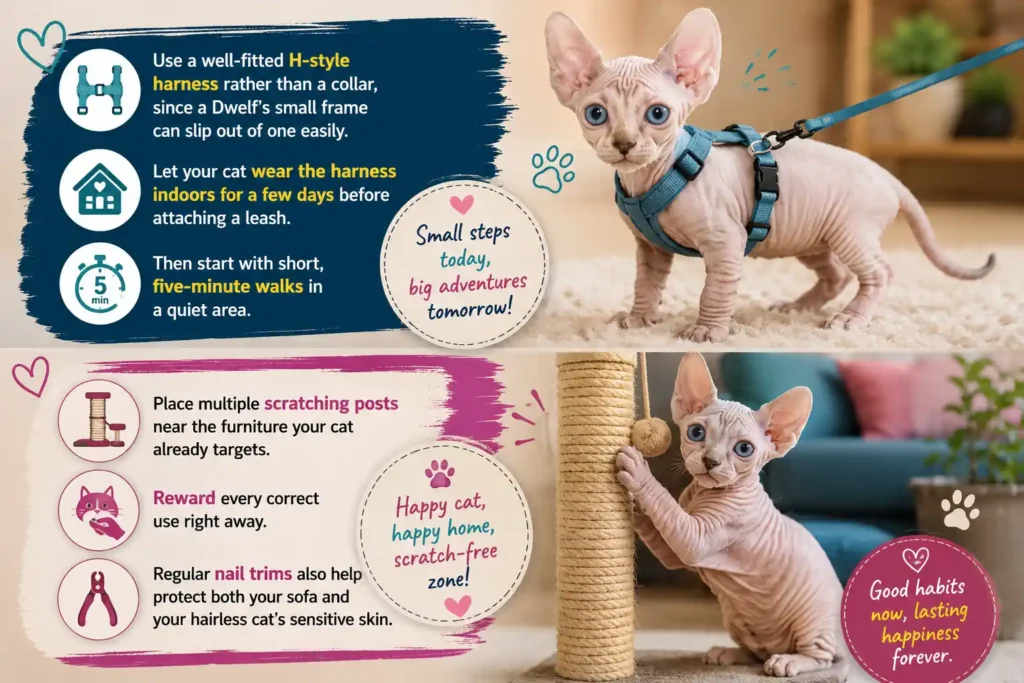
Use a well-fitted H-style harness rather than a collar, since a Dwelf’s small frame can slip out of one easily. Let your cat wear the harness indoors for a few days before attaching a leash, then start with short, five-minute walks in a quiet area.
How to Stop a Dwelf Cat From Scratching Furniture
Place multiple scratching posts near the furniture your cat already targets, and reward every correct use right away. Regular nail trims also help protect both your sofa and your hairless cat’s sensitive skin.
How to Stop Biting and Aggressive Play
Redirect bites onto a toy immediately, and pause play the second teeth touch skin; this teaches bite inhibition fast. Never let your cat use hands as toys, since that only confirms biting is an acceptable game.
Can You Over-Train a Dwelf Cat?
Yes. Sessions longer than 10–15 minutes, or more than two to three per day, can overwhelm a Dwelf and cause it to disengage. Short, frequent, upbeat sessions consistently outperform long, tiring ones.
How to Prevent Counter Jumping
Keep counters clear of food, and use double-sided tape or aluminum foil as a temporary deterrent, since most cats dislike that texture underfoot. Provide an approved high perch instead, so the natural urge to climb still has an outlet.
How to Keep a Dwelf Cat Mentally Stimulated
Cornell Feline Health Center points out that environmental enrichment reduces stress-related behaviors in cats of every breed, and a bored Dwelf is far more likely to develop problem habits.
Common Dwelf Cat Training Mistakes to Avoid
- Skipping consistency between family members and their cues
- Using punishment instead of rewards
- Training for too long in a single sitting
- Ignoring cold sensitivity, which affects focus and comfort
How Long Does Dwelf Cat Training Take?
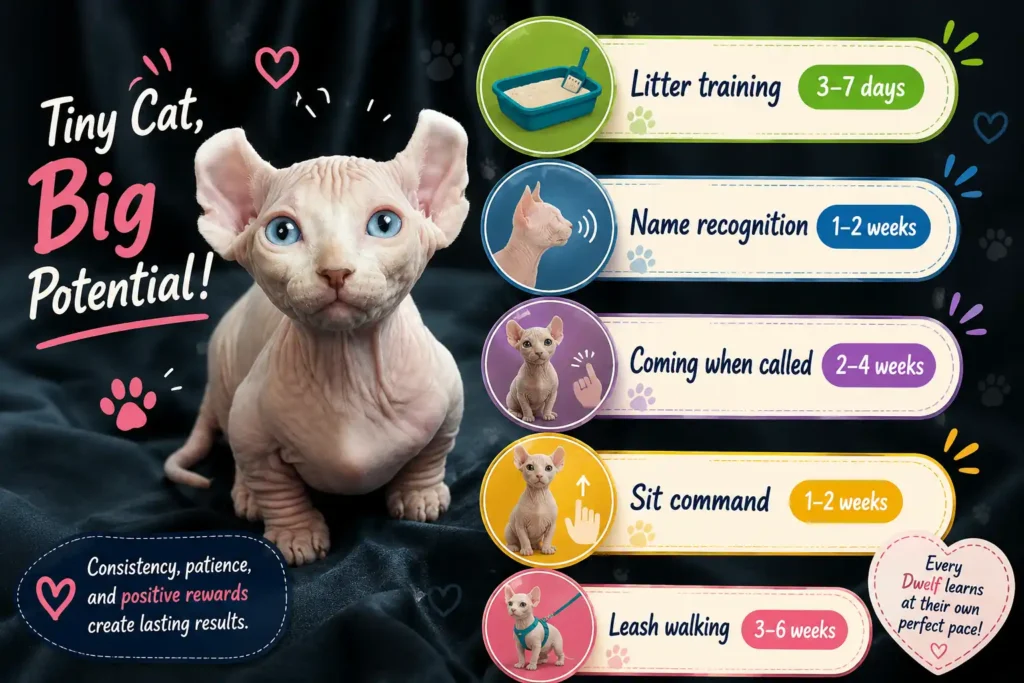
The timeline below shows roughly how long it takes most Dwelf cats to learn each core skill.
| Skill | Average Time to Learn |
| Litter training | 3–7 days |
| Name recognition | 1–2 weeks |
| Coming when called | 2–4 weeks |
| Sit command | 1–2 weeks |
| Leash walking | 3–6 weeks |
Can Adult Dwelf Cats Be Trained?
Yes. While kittens learn fastest, adult Dwelfs can absolutely pick up new commands; it just takes a bit more patience and repetition, since existing habits need to be gently unlearned first.
Common Training Problems and Easy Solutions
Here’s a quick-reference table for the training hurdles owners report most often.
| Problem | Likely Cause | Solution |
| Ignoring cues | Low-value treats | Switch to higher-value, meat-based rewards |
| Litter regression | Stress or a dirty box | Clean daily and check for stressors |
| Won’t stop biting | Reinforced by rough play | Redirect to toys; end play instantly |
| Loses interest fast | Sessions running too long | Shorten sessions to 3–5 minutes |
Key Takeaways for Dwelf Cat Training Success
Dwelf cat training doesn’t have to be hard. This smart, food-driven breed learns fast when you keep sessions short, warm, and reward-based. Stay patient and consistent, and you’ll soon have a calm, confident, and loving Dwelf by your side.
Frequently Asked Questions
Are Dwelf cats easy to train?
Yes. Their intelligence and strong food motivation make Dwelf cat training easier than average, especially when sessions stay short and reward-based.
Are Dwelf cats intelligent?
Very. As a Sphynx-Munchkin-American Curl mix, Dwelfs are known for quick problem-solving and strong memory, both of which speed up training.
How often should you train a Dwelf cat?
Aim for one to two short sessions daily, each lasting three to five minutes, rather than one long weekly session.
What treats are best for Dwelf cat training?
Small, high-protein treats like freeze-dried chicken or salmon work best, since Dwelfs need extra calories to maintain body heat.
Can you leash train a Dwelf cat?
Yes, using a secure H-style harness and short, gradual indoor-then-outdoor sessions.
Can older Dwelf cats learn new tricks?
Yes. Adult and senior Dwelfs can still learn, though it typically takes more repetition than it does with kittens.
Why is my Dwelf cat ignoring training?
Usually it’s low-value treats, sessions that run too long, or an overly cold room distracting your cat’s focus.
Do Dwelf cats respond to clicker training?
Yes, very well; the clear, consistent signal suits their structured, food-driven learning style.
How do you stop a Dwelf cat from biting?
Redirect every bite onto a toy immediately and end play the moment teeth touch skin, so biting never gets rewarded with continued attention.
Can Dwelf cats be left alone after training?
Briefly, yes, but this breed bonds closely with its family and generally does best with company or a feline companion for longer stretches.