
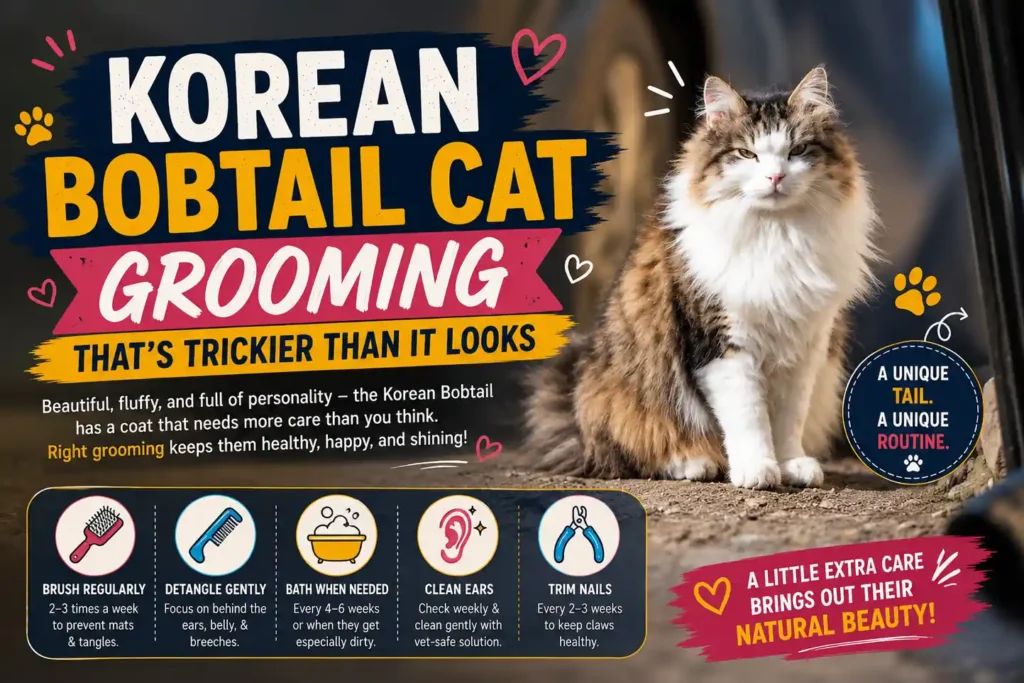
Korean Bobtail cat grooming takes about 15 minutes a week and focuses on four simple tasks: brushing, nail trims, ear cleaning, and teeth checks. Because this breed has a short to semi-long silky coat with little undercoat, one brushing session per week is enough to remove loose hair and prevent mats.
Good Korean Bobtail cat grooming also means trimming the nails every two to three weeks, wiping the ears with a damp cotton pad to clear dirt and wax, and brushing the teeth two to three times a week to stop tartar from building up. Bathing is only needed once every couple of months, since the coat naturally resists dirt and stays fairly clean on its own. During spring and fall shedding seasons, brush a bit more often to catch the extra loose fur before it ends up on your furniture.
Do Korean Bobtail Cats Need a Lot of Grooming?
Good news first: this breed is not high-maintenance. Korean Bobtails carry a soft, silky coat that rarely tangles, so most owners get by with one solid brushing session a week. That said, “low-maintenance” doesn’t mean “no maintenance.” Skipping grooming altogether can lead to loose hair around the house, dull-looking fur, and, in some cases, ear wax buildup that goes unnoticed until it becomes uncomfortable.
A few minutes here and there keep small issues from turning into vet visits. Think of it less like a chore and more like a quick bonding ritual this people-loving breed genuinely enjoys.
Everything You Need to Know About the Korean Bobtail. Read more in Korean Bobtail Cat That Looks Rare but Isn’t Officially Recognized.
Quick Answer: How Much Grooming Does a Korean Bobtail Need?
A Korean Bobtail needs roughly 15 to 20 minutes of grooming per week: one brushing session, plus quick checks on ears, eyes, and nails. Bathing is only needed every 2 to 3 months unless the cat gets visibly dirty.
Brushing a Korean Bobtail Cat
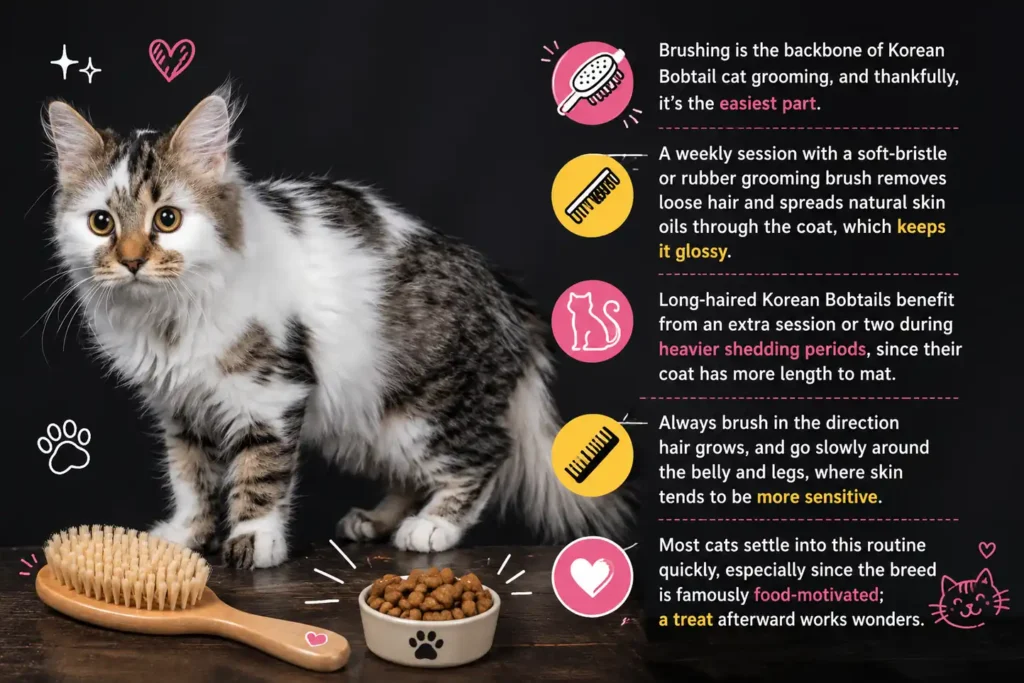
Brushing is the backbone of Korean Bobtail cat grooming, and thankfully, it’s the easiest part. A weekly session with a soft-bristle or rubber grooming brush removes loose hair and spreads natural skin oils through the coat, which keeps it glossy. Long-haired Korean Bobtails benefit from an extra session or two during heavier shedding periods, since their coat has more length to mat.
Always brush in the direction hair grows, and go slowly around the belly and legs, where skin tends to be more sensitive. Most cats settle into this routine quickly, especially since the breed is famously food-motivated; a treat afterward works wonders.
Bathing a Korean Bobtail Cat
Unlike hairless breeds, a Korean Bobtail doesn’t need frequent baths. Every 2 to 3 months is typically enough, or sooner if your cat gets into something messy outdoors. Use a cat-specific shampoo, since human products can strip natural oils and irritate sensitive skin. Warm, not hot, water works best, and it helps to have a non-slip mat in the tub or sink so the cat feels steady. Dry thoroughly with a towel afterward, and if your cat tolerates it, a low-heat blow dryer on the lowest setting speeds things along. Overbathing can actually dry out the skin, so resist the urge to wash more than needed.
Nail Trimming Tips
Monthly nail trims are a core habit in Korean Bobtail cat grooming, especially since this breed’s active, climbing nature wears down claws unevenly. Use cat-specific clippers rather than human nail scissors, and trim only the sharp white tip, avoiding the pink “quick,” which contains blood vessels and nerves.
If you’re nervous about cutting too much, trim a small amount at a time over a few sessions rather than rushing. Pairing each trim with a treat helps build a positive association, which matters for a breed this food-driven. A sturdy scratching post also naturally files down nails between trims.
Ear Cleaning Routine
Check your Korean Bobtail’s ears weekly and clean them roughly every 2 to 4 weeks, or as needed. Use a vet-approved ear cleaning solution and a cotton ball, never a cotton swab, which can push debris deeper into the canal. A small amount of brown wax is normal; a strong odor, dark discharge, or excessive scratching at the ears could point to mites or infection and is worth a vet visit. The American Association of Feline Practitioners recommends routine ear checks as part of any regular wellness routine, since ear issues can escalate quickly if left unaddressed.
Eye Cleaning and Care
Korean Bobtails have large, expressive eyes that occasionally develop mild tearing or crust in the corners, especially overnight. Gently wipe the area with a damp, soft cloth or a cotton pad, using a fresh section for each eye to avoid spreading any irritation. This only needs to happen a couple of times a week for most cats. Watch for excessive discharge, redness, or squinting, since these can signal an infection or minor injury rather than the harmless buildup that’s common in most healthy cats.
Dental Grooming Basics
Dental care doesn’t get enough attention in most grooming guides, but it’s just as important as brushing fur. Brushing your Korean Bobtail’s teeth two to three times a week with a cat-safe toothpaste helps prevent tartar buildup and gum disease, which affects a large share of adult cats by age three, according to veterinary dental studies.
Start slowly by letting your cat lick the toothpaste off your finger before introducing a small finger brush or soft-bristled cat toothbrush. Dental treats and vet-approved chews can support the routine between brushings, though they shouldn’t fully replace it.
Shedding and Coat Maintenance
Korean Bobtails are moderate shedders year-round, with noticeable increases during spring and fall coat changes. Regular brushing is the single best defense against loose hair on furniture and clothing. A weekly deshedding tool or comb during peak shedding season can cut down on loose fur significantly. Their coat doesn’t mat as easily as some long-haired breeds, but semi-long-haired individuals still benefit from checking behind the ears and around the legs, where light tangling can develop unnoticed.
Best Grooming Tools for a Korean Bobtail Cat
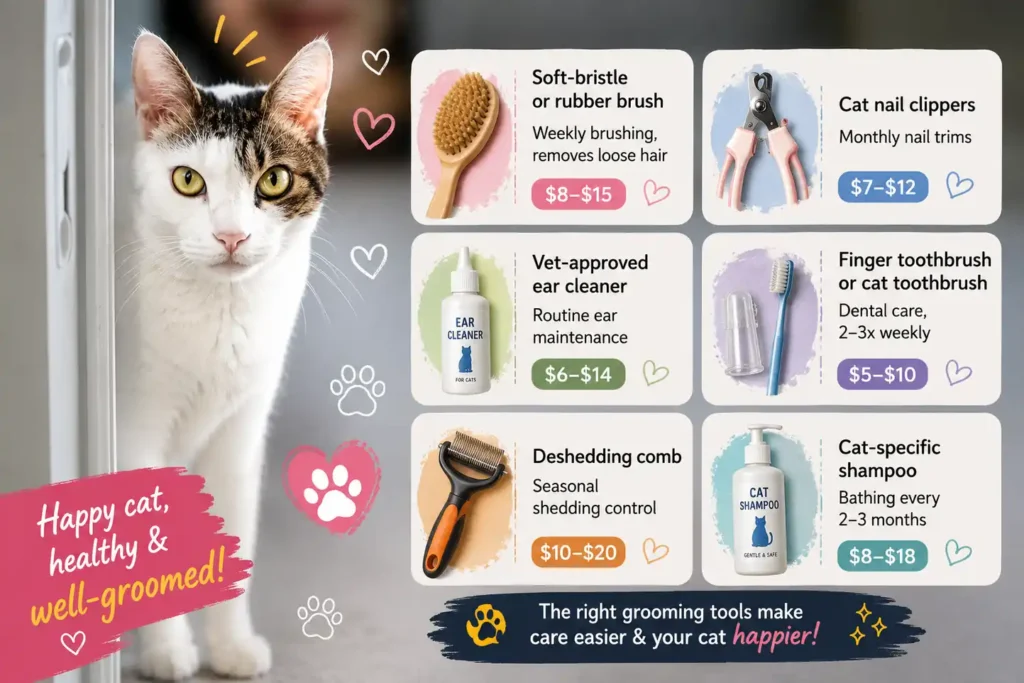
Having the right tools on hand makes Korean Bobtail cat grooming faster and far less stressful for both of you. Below is a quick breakdown of what’s genuinely useful for this breed, so you’re not overspending on gear designed for coats this cat doesn’t have.
| Tool | Purpose | Approx. Price (USD) |
| Soft-bristle or rubber brush | Weekly brushing, removes loose hair | $8–$15 |
| Cat nail clippers | Monthly nail trims | $7–$12 |
| Vet-approved ear cleaner | Routine ear maintenance | $6–$14 |
| Finger toothbrush or cat toothbrush | Dental care, 2–3x weekly | $5–$10 |
| Deshedding comb | Seasonal shedding control | $10–$20 |
| Cat-specific shampoo | Bathing every 2–3 months | $8–$18 |
How Often Should You Groom a Korean Bobtail Cat?
Consistency matters more than intensity here. A predictable weekly rhythm, rather than occasional deep-cleaning sessions, keeps coat, skin, and hygiene in check without overwhelming your cat. Below is a simple breakdown that covers the full Korean Bobtail cat grooming schedule at a glance, from daily habits to seasonal deep cleans.
| Grooming Task | Recommended Frequency |
| Brushing | Once weekly (more during shedding season) |
| Bathing | Every 2–3 months |
| Nail trimming | Monthly |
| Ear cleaning | Every 2–4 weeks |
| Eye wiping | 2–3 times weekly |
| Teeth brushing | 2–3 times weekly |
Korean Bobtail Cat Grooming Frequency at a Glance
For a healthy adult Korean Bobtail, the full grooming schedule breaks down to: weekly brushing, monthly nail trims, ear cleaning every 2 to 4 weeks, and a bath every 2 to 3 months. Teeth and eyes need light attention two to three times a week.
Common Korean Bobtail Cat Grooming Mistakes
Even well-meaning owners slip into habits that work against good Korean Bobtail cat grooming. Recognizing these early keeps small issues from becoming bigger, costlier problems down the line.
- Bathing too often, which strips natural skin oils and can trigger dryness or irritation
- Using cotton swabs inside the ear canal instead of a cloth or cotton ball
- Skipping nail trims until claws overgrow and start curling into paw pads
- Ignoring dental care until tartar or bad breath becomes obvious
- Brushing against the direction of hair growth, which can irritate skin
Seasonal Korean Bobtail Cat Grooming Tips
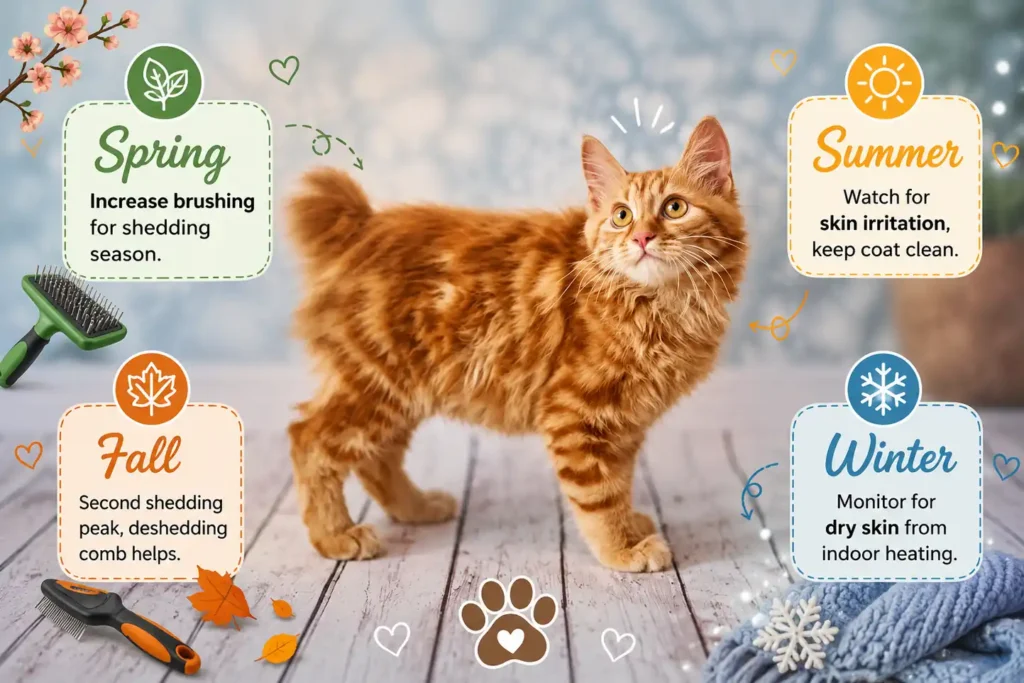
Grooming needs shift a little with the seasons, particularly around shedding cycles. Spring and fall bring heavier coat turnover, so stepping up brushing frequency during these windows helps manage loose hair before it spreads across furniture. Summer heat calls for a bit more attention to skin health, since matted or oily fur can trap heat. Winter, meanwhile, tends to dry out skin indoors due to heating systems, so a touch more attention to coat condition is worthwhile.
| Season | Grooming Focus |
| Spring | Increase brushing for shedding season. |
| Summer | Watch for skin irritation, keep coat clean. |
| Fall | Second shedding peak, deshedding comb helps. |
| Winter | Monitor for dry skin from indoor heating. |
Grooming a Long-Haired vs. Short-Haired Korean Bobtail
The Korean Bobtail comes in both short and semi-long coat varieties, recognized as valid variations by breed groups such as The International Cat Association (TICA). Short-haired Bobtails are the lower-maintenance option, needing just a weekly brush to stay glossy.
Semi-long-haired individuals need slightly more frequent attention, particularly around the ruff, britches, and tail, where light matting can develop if brushing is skipped for more than a week or two. Bathing frequency stays roughly the same for both coat types, though longer coats may take a bit more time to dry fully afterward.
Why Korean Bobtail Cat Grooming Doesn’t Have to Be Hard
At its core, Korean Bobtail cat grooming is refreshingly manageable: a weekly brush, monthly nail trim, and a few small habits around ears, eyes, and teeth. This isn’t a high-maintenance breed, but consistency beats intensity every time. Build these small routines into your week, and your Korean Bobtail will reward you with a shiny coat, healthy skin, and one more excuse to bond with a cat that already loves being close to you.
Frequently Asked Questions About Korean Bobtail Cat Grooming
Do Korean Bobtail cats shed a lot?
They’re moderate shedders, with heavier shedding during spring and fall coat changes. Weekly brushing keeps loose hair manageable year-round.
How often should I bathe my Korean Bobtail?
Every 2 to 3 months is generally enough, unless your cat gets visibly dirty or greasy sooner.
Do Korean Bobtails need professional grooming?
Most owners can handle Korean Bobtail cat grooming at home. Professional groomers are optional and mainly useful for nail trims if you’re not comfortable doing them yourself.
Are Korean Bobtails prone to matting?
Short-haired Bobtails rarely mat. Semi-long-haired ones can develop light tangles if brushing is skipped, particularly around the legs and tail.
What’s the biggest grooming mistake new owners make?
Overbathing is common and can dry out skin. Sticking to a bath every 2 to 3 months, paired with weekly brushing, works better long-term.