
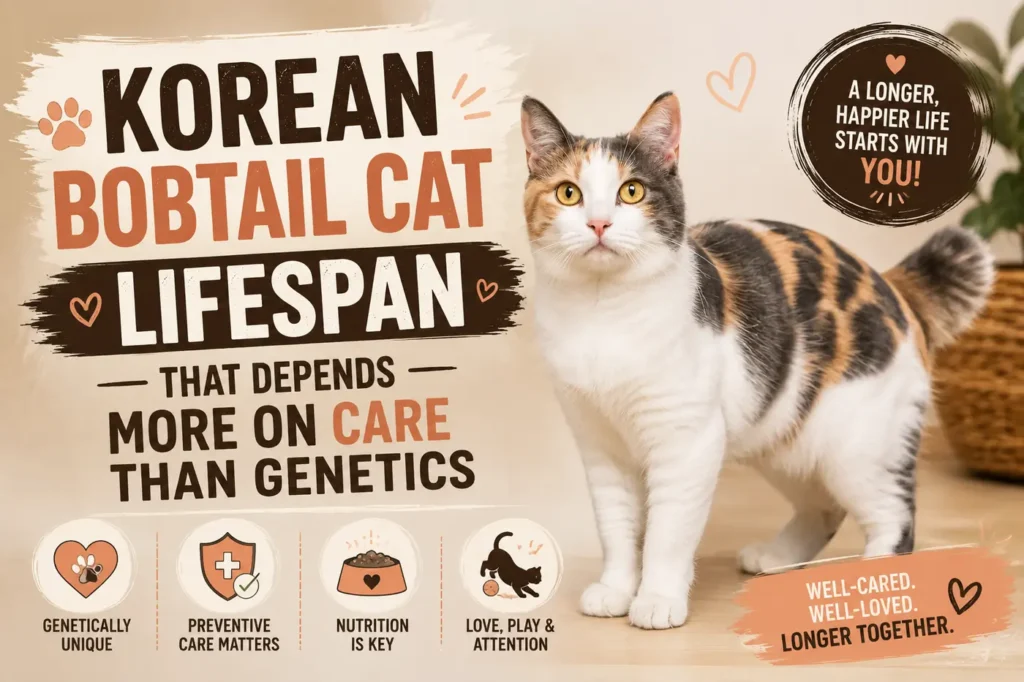
A Korean Bobtail cat lifespan usually ranges from 9 to 15 years, making this rare breed a fairly long-lived companion when cared for well. Many things affect the actual Korean Bobtail cat lifespan, including genetics, daily diet, healthy weight, and whether the cat lives indoors or spends time outside.
Indoor cats tend to live longer because they avoid traffic accidents, fights with other animals, and exposure to diseases. Regular vet checkups also help catch health problems early, before they become serious. Simple habits like feeding balanced food, keeping your cat active, and maintaining a healthy weight can add extra years to your cat’s life. With good care, many Korean Bobtails stay playful and alert well into their senior years.
What Is the Average Korean Bobtail Cat Lifespan?
Most breed sources put the Korean Bobtail cat lifespan at roughly 9 to 15 years, with many individuals comfortably reaching the higher end when they’re kept indoors and fed a balanced diet. That’s slightly above what the average mixed-breed house cat manages, though it’s fairly typical for a medium-sized, naturally athletic breed. Because the Korean Bobtail is still uncommon outside Korea and Southeast Asia, long-term population data is limited compared to more established breeds.
Still, veterinarians generally agree that a cat with no major congenital defects and consistent preventive care has a strong shot at living into its mid-teens. Body condition, spay or neuter status, and early dental care all nudge that number in one direction or another. In short, genetics set the ceiling, but daily habits decide how close a cat gets to it.
Quick Answer: Korean Bobtail Cat Lifespan at a Glance
The typical Korean Bobtail cat lifespan is 9 to 15 years, and cats that stay indoors with regular veterinary checkups often live toward the longer end of that range.
Korean Bobtail Cat Lifespan by Life Stage
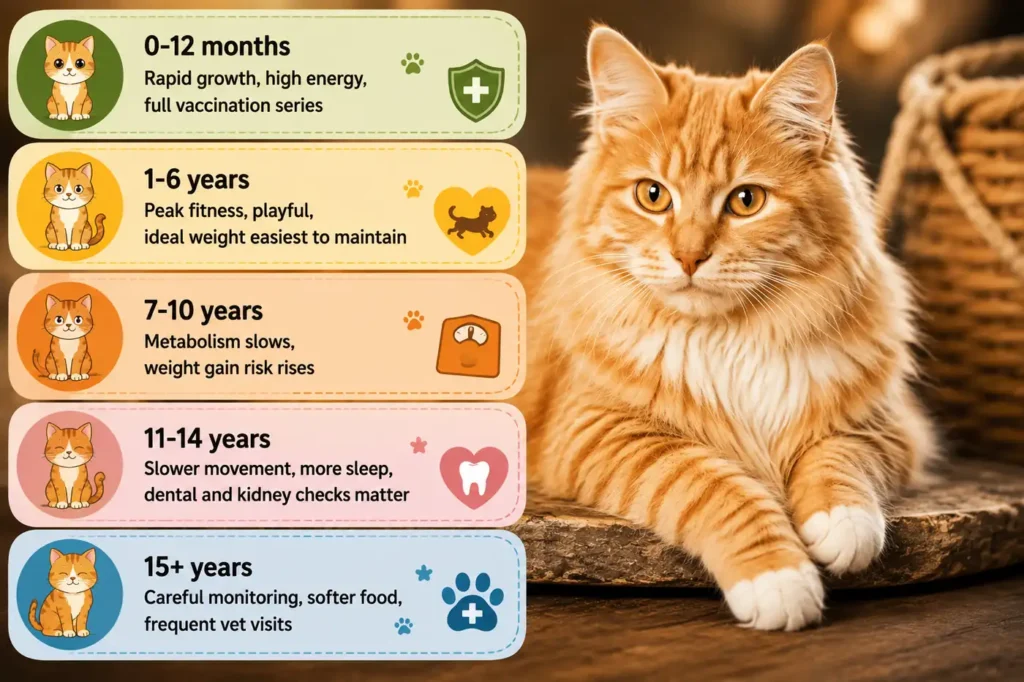
Like most cats, the Korean Bobtail moves through fairly distinct life stages, and knowing what’s normal at each one helps you catch problems early. Here’s a simple breakdown of what to expect as your cat ages.
| Life Stage | Age Range | What’s Typical |
| Kitten | 0-12 months | Rapid growth, high energy, full vaccination series |
| Young adult | 1-6 years | Peak fitness, playful, ideal weight easiest to maintain |
| Mature adult | 7-10 years | Metabolism slows, weight gain risk rises |
| Senior | 11-14 years | Slower movement, more sleep, dental and kidney checks matter |
| Geriatric | 15+ years | Careful monitoring, softer food, frequent vet visits |
A cat that’s active and eating well at 12 wasn’t just lucky. It usually reflects years of steady weight management and routine care.
Factors That Affect a Korean Bobtail Cat’s Lifespan
Several things influence how long a Korean Bobtail actually lives, and most of them are within an owner’s control. Genetics set a baseline, but everyday choices matter just as much, if not more.
- Diet quality and portion control, since overfeeding is one of the biggest shorteners of feline lifespan
- Body weight, as obesity raises the risk of diabetes and joint strain
- Spay or neuter status, which lowers certain cancer and infection risks
- Indoor versus outdoor living, given the dangers cats face outside
- Access to routine veterinary care and early disease screening
- Genetics and breeding practices from a responsible cattery
Common Health Issues That May Shorten Lifespan
The Korean Bobtail is generally considered a hardy, healthy breed without a long list of breed-specific genetic disorders, which is good news for prospective owners. That said, it’s still a cat, and cats in general are prone to certain age-related conditions. Dental disease is extremely common and, left untreated, can affect the heart and kidneys over time.
Obesity is another frequent culprit, since extra weight strains joints and raises diabetes risk considerably. Chronic kidney disease and hyperthyroidism tend to show up more often in cats over ten, so senior screening blood work catches these early. Heart conditions like hypertrophic cardiomyopathy can affect any breed, which is why the American Association of Feline Practitioners recommends annual wellness exams and twice-yearly visits once a cat turns seven.
Protect Your Korean Bobtail with the Right Care. Read more in Korean Bobtail Cat Health Problems That Often Go Unnoticed.
How to Help Your Korean Bobtail Cat Live Longer
There’s no single trick to extending a cat’s life, but a handful of consistent habits make a real difference over time. Keeping your Korean Bobtail at a healthy weight is probably the single biggest lever you can pull, since even a couple of extra pounds raises health risks noticeably. Fresh water, a stimulating environment, and regular play sessions keep both body and mind engaged.
Routine vaccinations, parasite prevention, and dental cleanings round out the basics that most vets recommend for every life stage. None of this is glamorous advice, but it’s the boring, repeatable stuff that actually adds years.
Diet and Nutrition for a Longer Lifespan
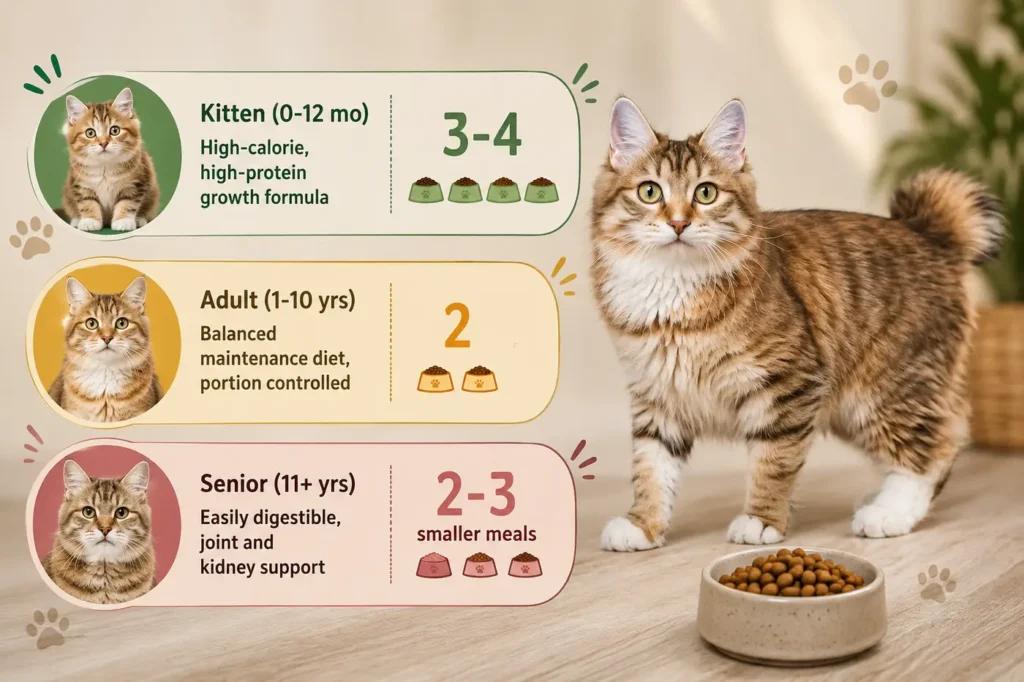
Feeding a complete, age-appropriate diet is one of the most practical ways to support a longer Korean Bobtail cat lifespan. Kittens need calorie-dense food to fuel rapid growth, while adults do better on portion-controlled meals that match their activity level. Senior cats often benefit from diets with adjusted protein and phosphorus levels, especially if kidney function starts to decline.
Measuring meals rather than free-feeding helps prevent the slow, sneaky weight gain that catches a lot of owners off guard.
| Life Stage | Feeding Focus | Meals per Day |
| Kitten (0-12 mo) | High-calorie, high-protein growth formula | 3-4 |
| Adult (1-10 yrs) | Balanced maintenance diet, portion controlled | 2 |
| Senior (11+ yrs) | Easily digestible, joint and kidney support | 2-3 smaller meals |
Regular Veterinary Care and Preventive Health
Annual wellness visits catch small problems before they become expensive, painful ones, and that’s really the whole point of preventive care. Core vaccinations, parasite control, and routine bloodwork should start in kittenhood and continue for life. Once a Korean Bobtail reaches senior age, most vets recommend bumping checkups to twice a year, since conditions like kidney disease progress quietly.
Dental cleanings deserve more attention than most owners give them, since periodontal disease is linked to broader organ stress. Organizations like the American Veterinary Medical Association publish updated preventive care guidelines each year, and following them closely is one of the most evidence-based things an owner can do.
Indoor vs Outdoor: Which Helps Korean Bobtail Cats Live Longer?
This one isn’t really a close call. Indoor cats avoid traffic accidents, predators, parasites, and fights with other animals, all of which shorten lifespan considerably for cats allowed to roam. Outdoor cats also face a higher risk of contracting infectious diseases and getting into physical altercations that lead to costly injuries.
Keeping a Korean Bobtail indoors, or offering supervised outdoor time in a secure enclosure, meaningfully improves its odds of reaching the upper end of its expected lifespan. It’s not the most exciting advice, but it’s one of the most effective.
Quick Answer: Do Indoor Cats Live Longer?
Yes. Indoor cats typically live significantly longer than outdoor cats because they avoid traffic, predators, and disease exposure that outdoor cats regularly face.
Signs of Healthy Aging in Korean Bobtail Cats
A cat aging well usually shows it in small, everyday ways rather than anything dramatic. Watching for these signs helps you catch subtle changes before they become bigger issues.
- Maintains a steady, healthy weight without sudden gain or loss
- Coat stays glossy and free of excessive shedding or bald patches
- Keeps a consistent appetite and regular litter box habits
- Moves comfortably, without obvious stiffness or reluctance to jump
- Stays curious and playful, even if energy levels dip slightly with age
Korean Bobtail Cat Lifespan Compared to Other Bobtail Breeds
It helps to see how the Korean Bobtail cat lifespan stacks up against its bobtail cousins, since buyers often compare these breeds side by side.
| Breed | Typical Lifespan | Origin |
| Korean Bobtail | 9-15 years | Korea |
| Japanese Bobtail | 9-13+ years | Japan |
| American Bobtail | 13-18 years | United States |
| Kurilian Bobtail | 15-20 years | Russia (Kuril Islands) |
The Korean Bobtail sits comfortably in the middle of the pack, roughly matching its Japanese relative while trailing the notably long-lived Kurilian and American Bobtails.
The Honest Truth About Korean Bobtail Longevity
At the end of the day, the Korean Bobtail cat lifespan comes down to a mix of genetics and daily habits, and owners have far more influence over the second part than they might think. Keep your cat lean, feed it well, stay on top of vet visits, and keep it safely indoors, and you’re giving it a genuinely strong shot at a long, happy life. This is a resilient, affectionate breed that rewards a little consistent effort with years of companionship.
Meet the Playful, Loyal, and Intelligent Korean Bobtail. Read more in Korean Bobtail Cat That Looks Rare but Isn’t Officially Recognized.
Frequently Asked Questions
How long do Korean Bobtail cats usually live?
Most Korean Bobtail cats live between 9 and 15 years, with indoor cats and those receiving regular veterinary care often reaching the longer end of that range.
Can Korean Bobtail cats live more than 15 years?
Yes, it’s possible. Cats with excellent genetics, a healthy weight, and consistent preventive care sometimes live into their late teens, though this isn’t guaranteed.
What affects a Korean Bobtail cat’s lifespan the most?
Weight management, diet quality, indoor living, and routine veterinary checkups tend to have the biggest combined impact on lifespan.
Do indoor Korean Bobtail cats live longer?
Yes. Indoor cats avoid many of the accidents, predators, and diseases that shorten the lives of cats allowed to roam outdoors freely.