
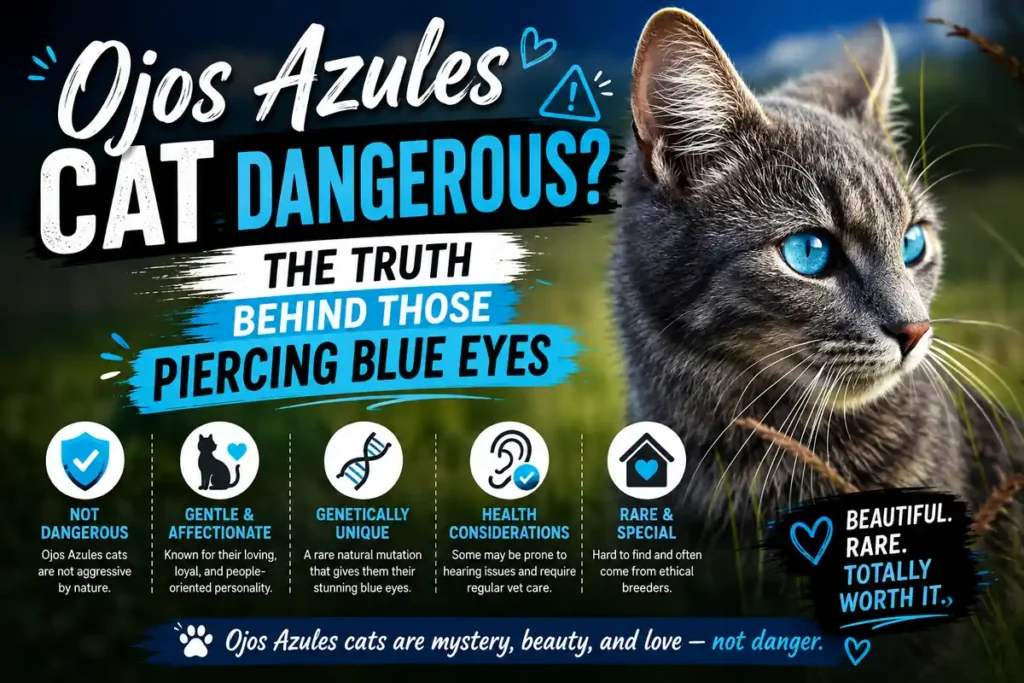
An ojos azules cat dangerous search usually turns up no real danger at all, since this breed carries no documented genetic link to aggression, only to eye color. The blue-eye trait comes from a single dominant gene, first recorded in a Mexican stray named Cornflower in the 1980s, and breeders later found that cats with two copies of the gene often have skull and health defects, not behavior problems.
Ojos Azules cats are typically medium-sized, weigh between 6 and 12 pounds, and bond closely with their owners, often following them from room to room. Bites or scratches happen only in the same situations that trigger any cat: sudden movement, pain, fear, or overstimulation during petting. Vets and breeders who work with this rare line report calm, social temperaments, which is why the real answer to “ojos azules cat dangerous” is that the reputation comes from looks, not conduct.
Are Ojos Azules Cats Dangerous?
Let’s clear this up right away: an ojos azules cat is not considered a dangerous breed by any veterinary organization, cat registry, or animal welfare group. There’s simply no data linking this breed to higher bite or scratch rates compared to other domestic shorthairs. Most reports describe them as affectionate, curious, and eager to be near their people, which is honestly the opposite of what you’d expect from a “risky” cat.
That said, genetics only shape part of the story. Environment, handling, and early socialization matter just as much, if not more. A poorly socialized kitten of any breed can grow up wary or reactive, and the ojos azules is no exception. So the real answer isn’t about the breed itself; it’s about how the individual cat is raised and treated.
Is an Ojos Azules Cat Dangerous to Own?
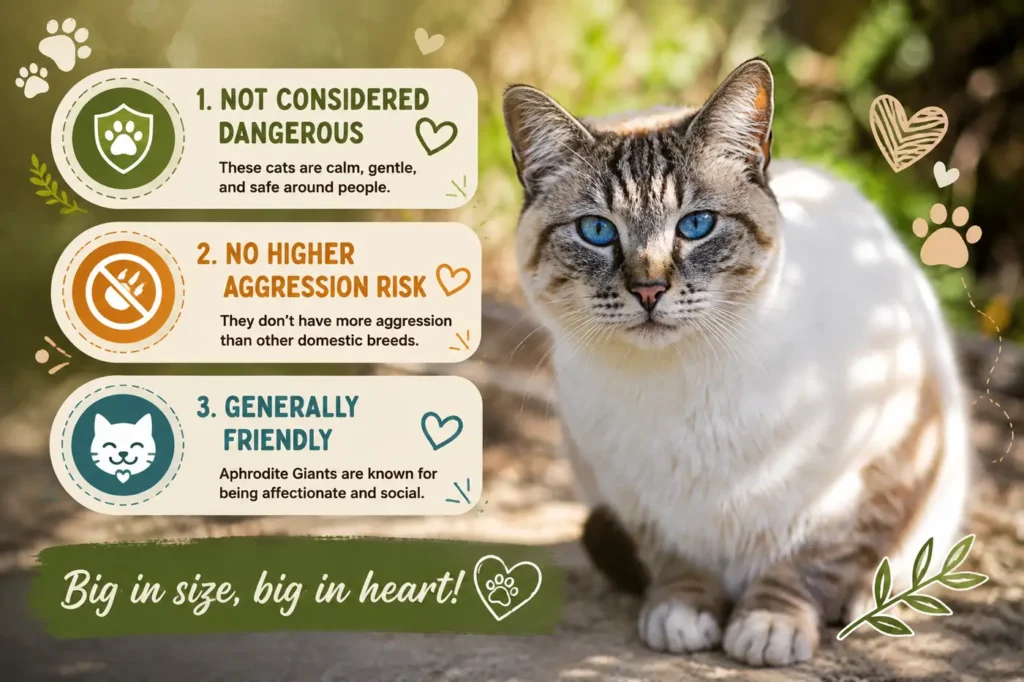
No. Reputable sources, including the Cat Fanciers’ Association (CFA), do not classify the ojos azules as an aggressive or high-risk breed. Like all cats, individual behavior varies based on upbringing, health, and environment rather than breed alone.
Can Ojos Azules Cats Be Aggressive?
Technically, yes, any cat can be aggressive under certain conditions, and ojos azules cats are no different. However, aggression in this breed tends to be situational rather than built into their personality. If a cat feels cornered, startled, or in pain, it may hiss, swat, or bite regardless of pedigree. What sets a well-adjusted ojos azules apart is that these moments are usually rare and predictable, not random outbursts.
Owners and breeders generally describe the temperament as gentle, social, and even a bit dog-like in how much they crave interaction. Because the breed is still quite rare, though, formal behavioral studies are limited, so most of what we know comes from breeder observation and general feline behavior research rather than large-scale data specific to this breed.
Everything You Need to Know About Ojos Azules Cat Temperament. Read more in Ojos Azules Cat Temperament Proves Looks Can Be Deceiving.
Do Ojos Azules Cats Bite or Scratch?
Ojos azules cats can bite or scratch, just like every other cat on the planet, but this isn’t unique or heightened for the breed. Biting and scratching are normal feline communication tools, not signs of a dangerous temperament. A gentle nip during play, a quick scratch when overstimulated, or a defensive swat when handled roughly are all common cat behaviors that show up across nearly every breed.
What matters more than the act itself is the context surrounding it. Was the cat startled? Overtired? In pain? Trying to end an interaction that went on too long? Understanding these triggers helps you respond appropriately instead of assuming something is wrong with the cat’s personality.
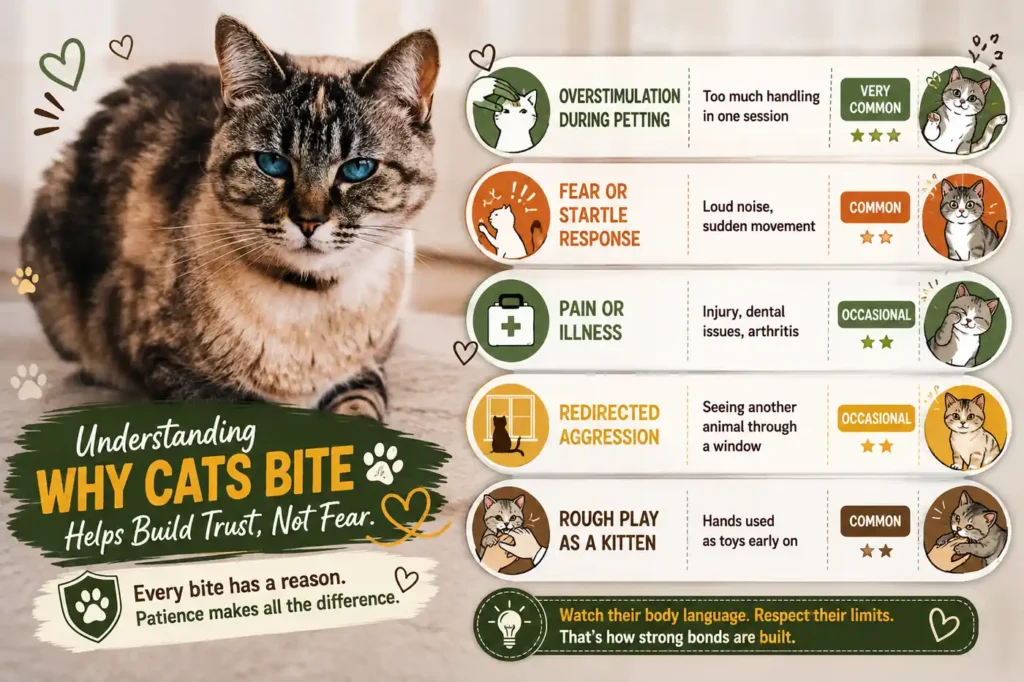
Here’s a quick look at common bite and scratch triggers across most domestic cats, including the ojos azules.
| Trigger | Typical Cause | How Common |
| Overstimulation during petting | Too much handling in one session | Very common |
| Fear or startle response. | Loud noise, sudden movement | Common |
| Pain or illness | Injury, dental issues, arthritis | Occasional |
| Redirected aggression | Seeing another animal through a window | Occasional |
| Rough play as a kitten | Hands used as toys early on | Common |
Why Might an Ojos Azules Cat Become Aggressive?
Several everyday factors can push even a naturally friendly ojos azules cat toward defensive or aggressive behavior. Understanding these causes helps you prevent problems before they start, and it also stops you from misreading normal cat communication as a temperament flaw. Most triggers fall into a handful of categories that apply to nearly every domestic cat breed.
- Lack of early socialization during the first 2 to 7 weeks of life
- Underlying pain, such as dental disease or joint stiffness
- Stressful home changes, like moving, new pets, or new babies
- Territorial conflict with other household animals
- Fear built up from past mishandling or rough play
According to general guidance from the American Association of Feline Practitioners (AAFP), sudden behavior changes in any cat often point to an underlying medical issue rather than a personality shift, which is why a vet visit should always be your first step if aggression appears out of nowhere.
Are Ojos Azules Cats Dangerous to Children?
Ojos azules cats generally do well with children, especially when kids are taught how to handle cats gently and calmly. This breed tends to be sociable and tolerant, often seeking out attention rather than avoiding it. Still, no cat breed should be left completely unsupervised with very young children, not because the cat is dangerous, but because toddlers can unintentionally pull fur, grab tails, or startle a resting cat.
Teaching kids to approach slowly, avoid loud noises near the cat, and recognize warning signs like flattened ears or a swishing tail goes a long way toward keeping everyone happy and scratch-free.
Are Ojos Azules Cats Dangerous to Other Pets?
In most households, ojos azules cats adjust well to other cats and even dogs, particularly when introductions happen gradually. Their social nature usually works in their favor here, since they tend to seek companionship rather than conflict. That said, territorial tension can happen with any cat when a new animal is introduced too quickly or without a proper transition period. A slow, scent-first introduction followed by short supervised visits tends to produce the smoothest results, regardless of breed.
The table below compares typical multi-pet compatibility traits for the ojos azules against two other well-known breeds.
| Breed | Compatibility With Cats | Compatibility With Dogs |
| Ojos Azules | Generally good | Generally good |
| Siamese | Good, can be vocal | Good with early exposure |
| Persian | Good, low-energy match | Moderate, prefers calm dogs |

How to Handle an Aggressive Ojos Azules Cat
If your ojos azules cat suddenly starts hissing, swatting, or avoiding contact, the first move should always be ruling out pain or illness with a veterinarian. Once health issues are off the table, focus on identifying the specific trigger rather than punishing the behavior, since punishment tends to increase fear-based aggression in cats. Give the cat space when it shows warning signs, and let it initiate contact again once it feels calm.
- Schedule a veterinary check to rule out pain or illness
- Avoid punishment, which increases fear and worsens aggression
- Identify and remove the specific trigger where possible
- Offer a quiet retreat space, like a covered bed or high perch
- Reward calm behavior with treats or gentle praise
Consistency matters more than speed here. Most behavior changes take a few weeks of steady, low-stress handling before you see real improvement, so patience genuinely pays off.
What Should You Do If Your Cat Bites?
Stop the interaction immediately, avoid pulling away sharply, and check for injury. Clean any bite wound with soap and water, and see a doctor if it breaks the skin, since cat bites carry a notable infection risk according to the Centers for Disease Control and Prevention (CDC).
How to Prevent Aggressive Behavior in Ojos Azules Cats
Prevention is far easier than correction, and it starts with early, positive handling. Kittens exposed to gentle human contact, varied sounds, and different people during their first few weeks tend to grow into more confident, less reactive adults. For an ojos azules cat specifically, breeders often note that consistent daily interaction keeps this naturally social breed happy and reduces the chance of frustration-based behavior.
- Socialize kittens early with gentle, varied handling
- Keep a predictable daily routine for feeding and play
- Provide scratching posts and climbing spaces to release energy
- Watch body language and stop play before it escalates
- Schedule regular wellness checkups to catch pain early
A well-exercised, mentally stimulated cat is simply less likely to act out, and that holds whether you’re talking about an ojos azules or any other breed on the planet.

Are Ojos Azules Cats Safe Family Pets?
Yes, ojos azules cats are generally considered safe, affectionate family pets. Their sociable, people-oriented nature makes them a good fit for households that want an interactive companion rather than an aloof, independent cat. They typically weigh between 6 and 12 pounds, live around 12 to 16 years with proper care, and come in a range of coat colors, since the breed’s defining trait is eye color rather than coat pattern. Because the breed remains rare, and pairing two ojos azules cats together can cause health issues in kittens, potential owners should seek breeders who prioritize health testing over appearance alone.
Discover Whether Ojos Azules Cats Are Safe to Own. Read more in Ojos Azules Cats With Eyes That Break Every Rule.
Here’s a snapshot of the ojos azules breed profile for quick reference.
| Trait | Detail |
| Origin | Mexico, first documented in the 1980s |
| Distinguishing feature | Deep blue eyes, often paired with a kinked or bobbed tail. |
| Coat colors | Any color or pattern except pure white |
| Weight | 6-12 lbs |
| Lifespan | 12-16 years |
| Temperament | Affectionate, social, people-oriented |
| Grooming needs | Low to moderate, weekly brushing |
| Good with children | Yes, with supervision |
| Good with other pets | Yes, with gradual introduction |
Ojos Azules Cats: Dangerous Myth or Gentle Reality?
Based on everything vets, breeders, and cat registries currently report, an ojos azules cat is not dangerous by nature. Its reputation is built on striking blue eyes and a warm, social personality, not on bite statistics or aggression reports. Like any cat, individual behavior depends on genetics, environment, and how it’s raised, so responsible breeding and thoughtful handling matter more than the breed label itself.
If you’re considering bringing one home, focus on finding a reputable breeder, socializing early, and staying attentive to your cat’s body language, and you’ll likely end up with a loving, low-drama companion.
FAQs
Is the ojos azules cat breed rare?
Yes, it’s considered one of the rarer cat breeds worldwide, partly because breeding two ojos azules cats together can cause health complications in kittens, so breeders must pair them carefully with other breeds.
Do all ojos azules cats have blue eyes?
Not always. Some carry the gene without expressing full blue eye color, and eye shade can range from pale to deep sapphire blue.
Is an ojos azules cat dangerous around babies?
No, but supervision is still recommended with any cat and infant, simply to prevent accidental scratches during unpredictable movements.
Are ojos azules cats hypoallergenic?
No, there’s no verified evidence that this breed produces less dander than other domestic cats.
How much does an ojos azules cat cost?
Prices typically range from about $800 to $1,500 USD, depending on the breeder, location, and lineage, though exact figures vary since the breed is not widely recognized by major registries.