
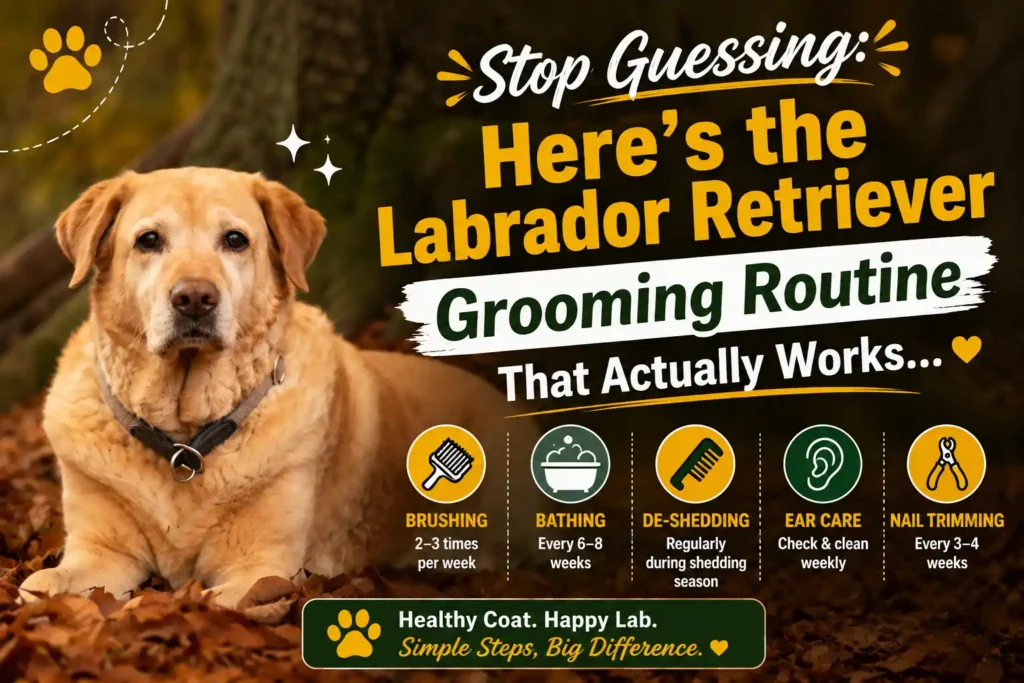
If you own a Lab, you already know the drill: fur on the couch, fur on your clothes, and somehow fur in your coffee. A consistent Labrador Retriever grooming routine is the only thing standing between you and that chaos. The good news? Labs are actually one of the easier large breeds to groom. Their double coat is low-maintenance compared to a Golden Retriever or a Husky, but it still needs regular attention.
A proper Labrador Retriever grooming routine doesn’t just keep your dog looking great; it prevents skin infections, catches health issues early, and honestly makes your Lab happier. According to the American Kennel Club (AKC), regular grooming sessions also strengthen the bond between dog and owner.
How to groom a Labrador retriever?
Brush your Labrador 2–3 times a week, bathe every 6–8 weeks, trim nails monthly, clean ears weekly, and brush teeth regularly to keep them healthy and clean.
Understanding Your Labrador’s Double Coat
Labradors have a dense, water-resistant double coat. The outer coat is short and slightly coarse; the undercoat is soft and thick. This design kept them warm while retrieving waterfowl in cold Canadian lakes, but it also meant they shed. A lot. Twice a year, during spring and fall, they go through a ‘blowing coat’ phase that feels like a fur tornado. Outside of that, expect moderate shedding year-round.
Knowing this upfront helps you set realistic expectations and build a grooming schedule that actually works for your lifestyle.
Discover What Makes Labradors Exceptional: Read more in Labrador Retriever Personality and Care Guide for First-Time Owners.
Quick overview of Labrador coat traits and what they mean for grooming:
| Coat Feature | What It Means for You | Grooming Response |
| Double coat (outer + under) | High year-round shedding | Brush 2–3x per week |
| Water-resistant outer layer | Repels dirt well between baths | Bathe every 6–8 weeks |
| Dense undercoat | Heavy seasonal shedding (spring/fall) | Use a de-shedding tool weekly |
| Short, dense hair | Low tangle risk | No detangling needed |
Grooming Tools Every Labrador Owner Should Keep at Home
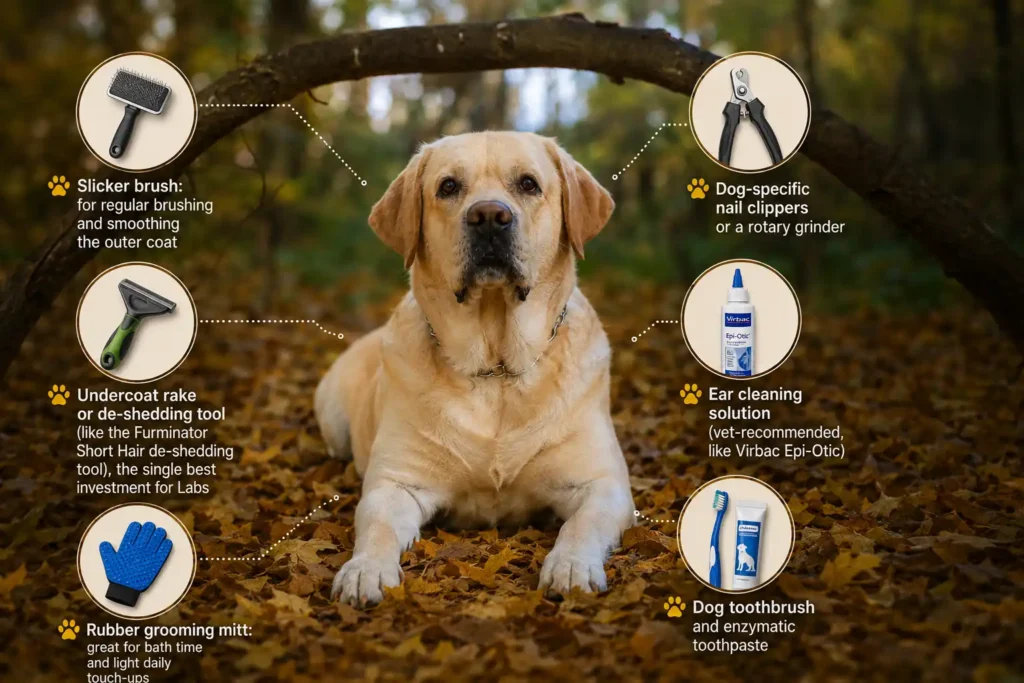
You don’t need a professional-grade setup. But having the right tools makes a real difference. Here’s what actually works for Labs specifically:
- Slicker brush: for regular brushing and smoothing the outer coat
- Undercoat rake or de-shedding tool (like the Furminator Short Hair de-shedding tool), the single best investment for Labs
- Rubber grooming mitt: great for bath time and light daily touch-ups
- Dog-specific nail clippers or a rotary grinder
- Ear cleaning solution (vet-recommended, like Virbac Epi-Otic)
- Dog toothbrush and enzymatic toothpaste
Brushing Your Lab: How Often and What Technique Works
For most of the year, brushing 2–3 times per week is enough. During shedding season (spring and fall), bump that up to daily. Start with the rubber mitt or slicker brush to loosen surface fur, then follow with the undercoat rake to pull out the dead undercoat. Always brush in the direction of hair growth. Work section by section, don’t just skim the surface.
It usually takes 10–15 minutes per session. Labs often enjoy it once they’re used to it, especially if you start them young and make it a calm, positive experience.
How Often Should You Groom a Labrador Retriever?
Brush 2–3 times per week (daily during shedding season). Bathe every 6–8 weeks. Trim nails every 3–4 weeks. Clean ears weekly. Brush teeth 3–4 times per week. A full grooming session takes around 20–30 minutes.
Bath Time: How Often Is Too Often for a Lab?
This is where a lot of Lab owners go wrong: they bathe too frequently. Labs’ coats produce natural oils that protect their skin and coat. Over-bathing strips those oils and leads to dryness and itching. Every 6–8 weeks is the sweet spot for most Labs. If your dog rolls in something gross, obviously bathe them, but try not to make it a weekly habit unless your vet recommends it.
Use a gentle, pH-balanced dog shampoo. Human shampoos, even gentle ones, are formulated for a different pH than dog skin and can irritate it over time. The
Veterinary Dermatology journal has noted that shampoo pH compatibility is one of the most overlooked factors in canine skin health. Rinse thoroughly; leftover shampoo residue is a common cause of itching in Labs.
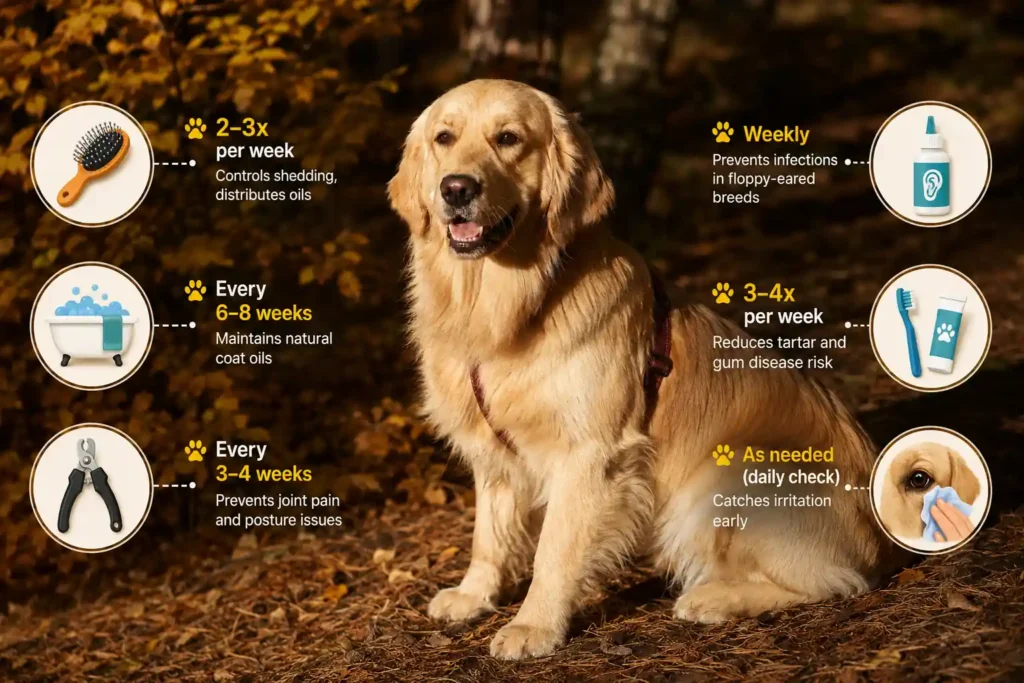
Lab grooming frequency at a glance: save this as your reference chart:
| Task | Frequency | Why It Matters |
| Brushing | 2–3x per week | Controls shedding, distributes oils |
| Bathing | Every 6–8 weeks | Maintains natural coat oils |
| Nail trimming | Every 3–4 weeks | Prevents joint pain and posture issues |
| Ear cleaning | Weekly | Prevents infections in floppy-eared breeds |
| Teeth brushing | 3–4x per week | Reduces tartar and gum disease risk |
| Eye cleaning | As needed (daily check) | Catches irritation early |
Ear Cleaning and Why Labs Are Prone to Ear Problems
Labs have floppy ears that trap moisture and warm air, the perfect setup for yeast and bacterial infections. Weekly ear checks are non-negotiable. You’re looking for redness, odor, or dark discharge. To clean, put a few drops of ear cleaning solution into the ear canal, massage gently at the base for about 30 seconds, then let your dog shake their head. Wipe out the visible part of the ear with a cotton ball. Never use cotton swabs inside the ear canal.
How to Clean a Labrador’s Ears at Home
Apply 4–5 drops of vet-approved ear cleaning solution (e.g., Virbac Epi-Otic Advanced Ear Cleaner) into the ear canal. Massage the base of the ear for 30 seconds. Let your Lab shake. Wipe the outer ear with a clean cotton ball. Repeat weekly. If you notice a foul smell or persistent scratching, see your vet; this may be a sign of otitis externa, which is common in Labradors.
How to trim a Labrador retriever’s nails?
Trim only the tip of each nail with a dog nail clipper or grinder, avoiding the quick. Trim a little at a time and reward your Labrador with treats. Repeat every 3–4 weeks.
Nail Trimming: The Step Most People Dread
Long nails change the way your dog walks. Over time, they can cause joint stress and back problems, not ideal for a breed already predisposed to hip dysplasia. Trim every 3–4 weeks. If you can hear clicking on hard floors, that’s your cue.
Use a sharp pair of scissor-style clippers and cut small amounts at a time. The biggest risk is hitting the quick, the blood vessel inside the nail. On black nails (common in Labs), you can’t see it, so cut in 1–2mm increments. Keep styptic powder nearby just in case.
If nail trimming causes major stress for your dog, consider a rotary grinder instead. Many Labs tolerate the vibration better than the clipping sensation.
Managing Shedding Year-Round
Shedding is the #1 grooming complaint for Lab owners. Here’s what actually helps:
- Brush with an undercoat rake 2–3x per week
- Use a de-shedding shampoo during bath time
- Vacuum your home with a pet-specific vacuum (the Dyson Ball Animal is popular among Lab owners for a reason)
- Feed a high-quality diet with omega-3s—skin health and coat quality are directly connected
- During heavy shedding season, consider a professional de-shed treatment at a groomer (often called a ‘Furminator treatment’)
You won’t stop the shedding, but you can manage it so it doesn’t take over your life.
Seasonal grooming changes help you stay ahead of coat cycles throughout the year:
| Season | What’s Happening | Grooming Adjustment |
| Spring | Heavy coat blow—shedding peaks | Daily brushing, de-shed bath, and increased vacuuming |
| Summer | Lighter coat, more outdoor exposure | Check for ticks, rinse paws after walks |
| Fall | Second coat blow begins | Resume daily brushing, check for dry skin |
| Winter | Undercoat thickens for warmth | Reduce bath frequency; protect paws from salt/ice |
Dental Care: The Grooming Step Most Lab Owners Skip
Periodontal disease affects over 80% of dogs by age 3, according to the American Veterinary Medical Association (AVMA). Brush your Lab’s teeth 3–4 times a week using a soft-bristle toothbrush and enzymatic toothpaste made for dogs. Never use human toothpaste; xylitol is toxic to dogs.
If your dog resists the brush, start by rubbing the toothpaste on their gums with your finger. Build up slowly. Dental chews like Greenies can supplement brushing, but they’re not a replacement.
Paw Care and Eye Cleaning
Labs are active dogs; their paws take a beating. Check paw pads weekly for cracking, cuts, or debris lodged between the toes. In winter, rinse paws after walks to remove road salt, which causes irritation and can be toxic if licked. A thin layer of paw balm (like Musher’s Secret) protects pads in both winter cold and summer heat.
For eyes, wipe away any discharge daily with a soft, damp cloth. A little eye gunk in the morning is normal. Persistent redness, swelling, or excessive discharge is not. Call your vet.
Simple Weekly Labrador Grooming Schedule
Monday: Brush coat (10 min). Wednesday: Brush coat + ear check (15 min). Friday: Brush coat + wipe eyes and face (10 min). Sunday: Full session, brush, teeth, paw check, and ear clean (30 min). Monthly: Bath + nail trim. This routine takes under 2 hours per week and covers every major grooming need your Lab has.
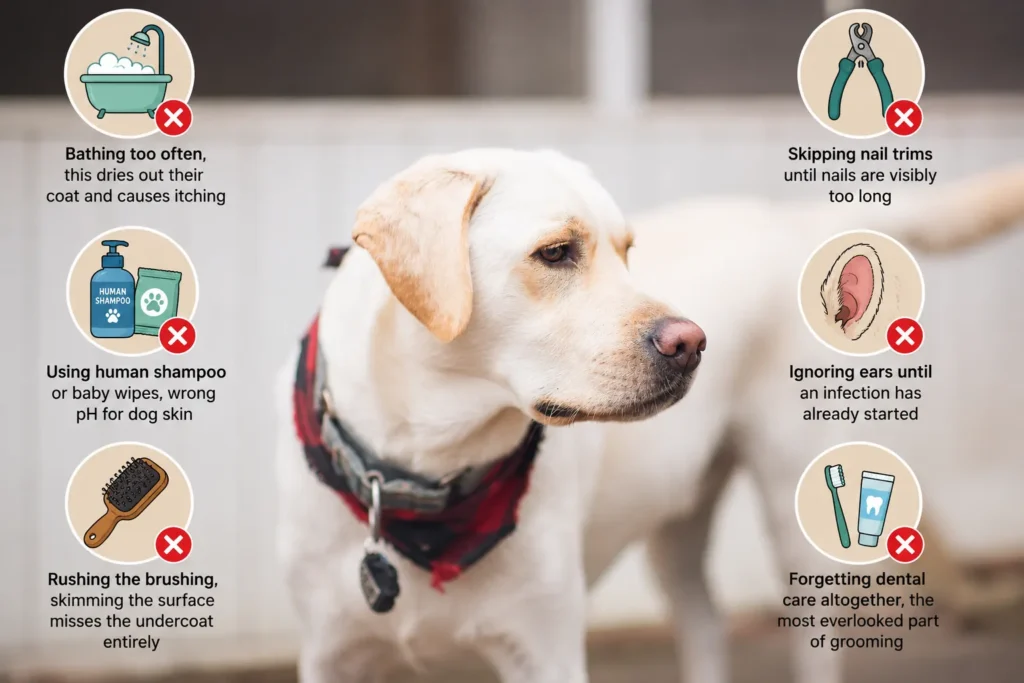
Common Grooming Mistakes to Avoid
- Bathing too often, this dries out their coat and causes itching
- Skipping nail trims until nails are visibly too long
- Using human shampoo or baby wipes, wrong pH for dog skin
- Rushing the brushing, skimming the surface misses the undercoat entirely
- Ignoring ears until an infection has already started
- Forgetting dental care altogether, the most overlooked part of grooming
Building a Routine Your Labrador Actually Enjoys
The best grooming routine is one you’ll actually stick to. Start slow if your Lab isn’t used to it, introduce tools one at a time, and pair grooming with treats and praise. Most Labs warm up quickly. Once it’s part of your regular rhythm, you’ll spend less time managing shedding and skin issues and more time just enjoying your dog.
The Labrador Retriever grooming routine doesn’t have to be complicated. Consistent, simple habits beat the occasional marathon grooming session every time.
FAQs: Labrador Retriever Grooming Routine
Q: How often should I brush my Labrador Retriever?
A: Brush 2–3 times per week during regular periods and daily during spring/fall shedding season.
Q: What’s the best shampoo for a Labrador?
A: Use a pH-balanced dog shampoo. Look for gentle formulas like Burt’s Bees Hypoallergenic Shampoo or any vet-recommended brand. Avoid anything with artificial fragrances.
Q: How do I stop my Labrador from shedding so much?
A: You can’t stop it entirely, but regular brushing with an undercoat rake, a high-quality diet with omega-3 fatty acids, and de-shedding baths every 6–8 weeks make a significant difference.
Q: Can I use a Furminator on a Labrador?
A: Yes. The Furminator Short Hair de-shedding tool is one of the most recommended tools for Labs. Use it 1–2 times per week, especially during shedding season. Don’t over-use it; excessive de-shedding can irritate skin.
Q: How do I know if my Labrador has an ear infection?
A: Signs include head shaking, scratching at the ear, redness inside the ear canal, dark brown or yellow discharge, and a yeasty or foul smell. See your vet promptly; ear infections respond well to early treatment.
Q: Is professional grooming necessary for Labradors?
A: Not essential, but useful 2–3 times a year, especially for a professional de-shed treatment during peak shedding season. A professional groomer can also trim nails if you’re not comfortable doing it yourself.