

My first Labrador Retriever chewed through a pair of leather boots in under nine minutes. I timed it, mostly out of disbelief. That’s the thing nobody tells you about a Labrador Retriever before you bring one home: they’re brilliant, loving, and occasionally a complete menace, all before lunchtime. After more than a decade living with two different Labs (one yellow, one chocolate, both equally chaotic), I’ve learned a lot the hard way. This guide covers what actually matters.
Why Labrador Retrievers Are One of the Most Loved Dogs
There’s a reason the Labrador Retriever has topped the AKC’s most popular dog breed list for over three decades. They’re not flashy show dogs. They’re not yappy lapdogs either. They just… fit. Into families, into apartments (sort of), into the back of a pickup truck on a Saturday morning duck hunt. That versatility is rare.
Is a Labrador Retriever the Right Dog for You?
Honestly? Probably yes, with conditions. You need space, time, and a sense of humor. Labs do best with an hour of daily exercise and don’t love 9-hour workdays alone. Mostly couch life? A Lab will drive you a little crazy.
Meet the Labrador Retriever: Personality, Size & What to Expect
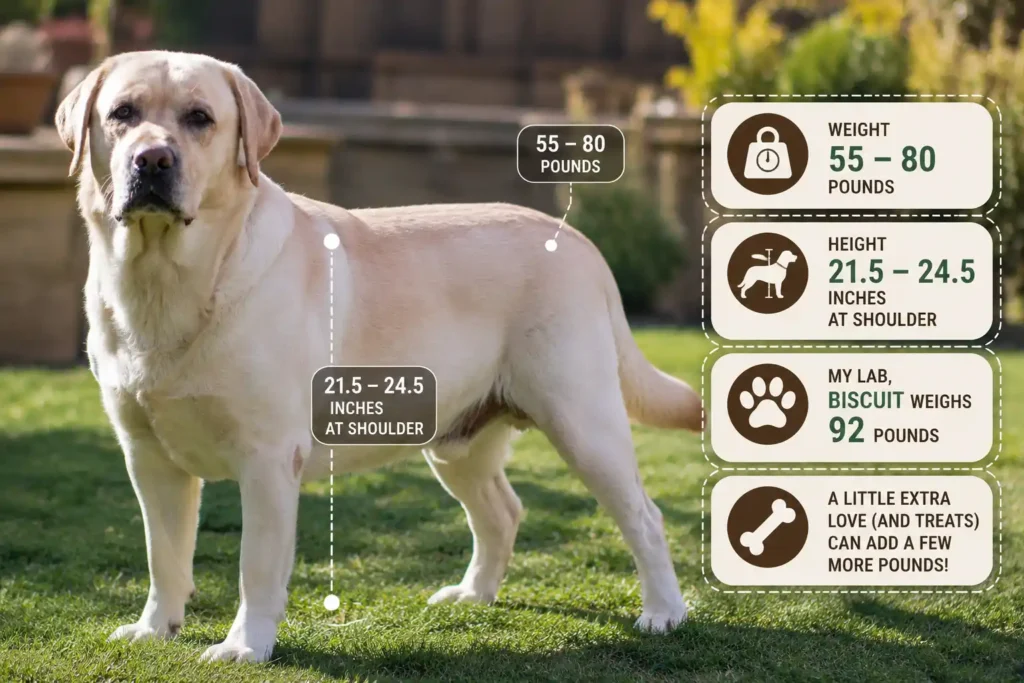
A full-grown Labrador Retriever usually lands between 55 and 80 pounds, standing 21.5 to 24.5 inches at the shoulder, though my chocolate Lab, Biscuit, blew past that and hit 92 pounds because, well, I’m a soft touch with treats. Males run bigger than females. Coat colors come in black, yellow, and chocolate, and contrary to what some breeders claim, there’s no meaningful personality difference between them; that’s mostly internet folklore.
Personality-wise, expect: friendly almost to a fault, food-motivated (seriously, hide the bread), high energy for the first three years, and a tendency to think every human is their best friend. If you want a guard dog, look elsewhere.
Quick Answer: How Long Do Labrador Retrievers Live?
Most Labrador Retrievers live between 10 and 12 years, with some reaching 14 with good genetics, a lean body weight, and regular vet care.
Labrador Retriever Health Tips
This is the section I genuinely wish I’d read before adopting. Labs are sturdy dogs, but they’re prone to a handful of specific issues that catch new owners off guard.
Common Health Issues to Watch For
- Hip and elbow dysplasia: common in larger breeds; ask for OFA hip scores from the breeder
- Obesity: Labs have a genetic mutation (POMC gene) linked to overeating, confirmed by a 2016 University of Cambridge study
- Exercise-induced collapse (EIC): more common than people realize in working lines
- Ear infections: those floppy ears trap moisture, especially after swimming
- Progressive retinal atrophy: a genetic eye condition worth screening for
Common Health Issues to Watch for in Labrador Retrievers: Read more in 7 Labrador Retriever Health Problems Every Owner Must Know (Before It’s Too Late).
Simple Ways to Keep Your Labrador Healthy Longer
Honestly, the single biggest lever you control is weight. A 2019 lifetime study from Purina (the famous “Lifespan Study”) found lean-fed Labs lived nearly 2 years longer on average than their overfed littermates. That’s not a small number for a dog you love.
- Keep ribs easily feelable but not visible
- Dry the ears thoroughly after every swim
- Schedule annual vet checkups, twice yearly after age 7
- Don’t skip joint supplements once they hit middle age
Labrador Retriever Pet Food Guide
If there’s one question I get asked constantly by new Lab owners, it’s this one.
What Should a Labrador Retriever Eat?
A Labrador Retriever needs a high-protein, moderate-fat diet built around real meat as the first ingredient. I switched Biscuit to a large-breed formula around 12 weeks and noticed a real difference in his joints by adulthood. Look for foods with named meat sources (chicken, salmon, lamb) rather than vague “meat meal,” and avoid anything padded heavily with corn or soy fillers.
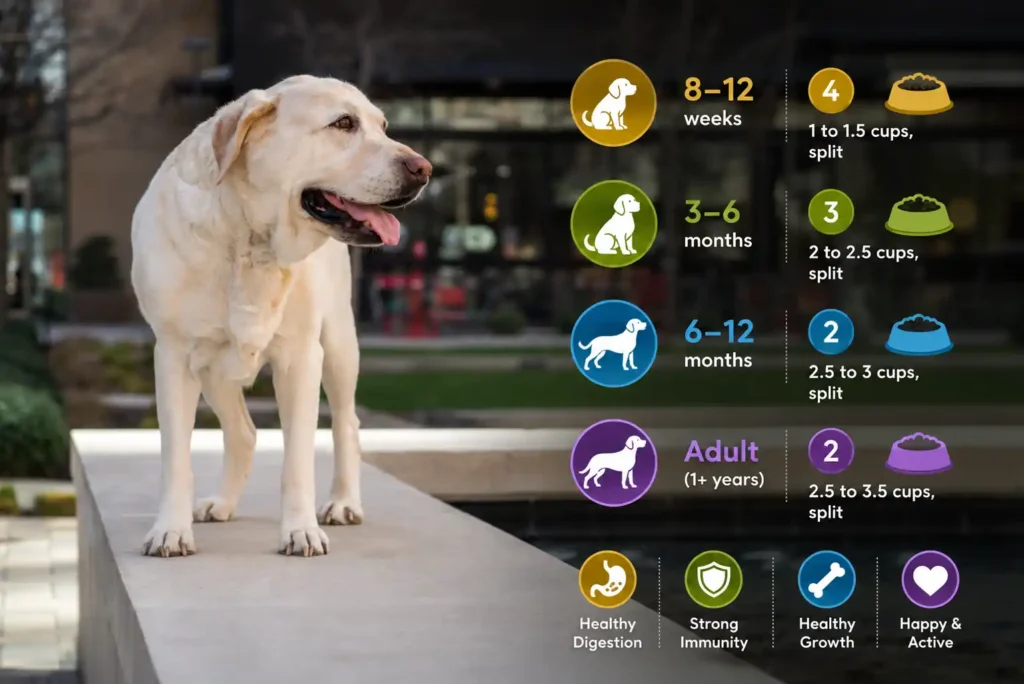
Here’s a quick breakdown of daily feeding amounts by life stage, since this trips up almost every new owner.
| Age | Meals Per Day | Approx. Daily Amount |
| 8–12 weeks | 4 | 1 to 1.5 cups, split |
| 3–6 months | 3 | 2 to 2.5 cups, split |
| 6–12 months | 2 | 2.5 to 3 cups, split |
| Adult (1+ years) | 2 | 2.5 to 3.5 cups, split |
The Best Diet for a Healthy Labrador Retriever: Read more in Labrador Retriever Diet Plan: What to Feed, How Much & When (Vet-Backed).
Foods to Avoid
- Grapes and raisins: even small amounts can cause kidney failure
- Chocolate: Labs will absolutely eat the whole bar if given the chance
- Onions and garlic: damage red blood cells over time
- Xylitol-sweetened products: found in some peanut butters now, always check labels
Avoid These Foods to Keep Your Labrador Healthy: Read more in Labrador Foods to Avoid: Is Your Labrador Eating These? Read This First.
Quick Answer: How Much Should a Labrador Retriever Eat Per Day?
An adult Labrador Retriever typically needs 2.5 to 3.5 cups of high-quality kibble daily, split into two meals, adjusted for activity level and body condition.
Labrador Retriever Grooming Guide
People assume short coats mean low maintenance. Not quite.
Coat Care and Brushing Routine
A Labrador Retriever has a double coat, a coarse outer layer, and a dense, insulating undercoat. Brush two to three times a week with a slicker brush or undercoat rake. During shedding season, you’ll want to do this daily, or your floors will look like a craft store exploded.
Bathing, Nail Care & Ear Cleaning
- Bathe every 4 to 6 weeks, more often if they’ve rolled in something questionable (they will)
- Trim nails every 3 to 4 weeks
- Clean ears weekly with a vet-approved solution, especially after water play
Essential Bathing and Hygiene Tips for Labradors: Read more in How Often Should You Bathe and Brush a Labrador Retriever?.
How to Manage Labrador Shedding?
There’s no fully avoiding it. Labs shed year-round and “blow” their coat twice a year, usually in spring and fall. A good deshedding tool and a robot vacuum on standby genuinely help.
A Beginner’s Guide to Labrador Retriever Grooming: Read more in Stop Guessing: Here’s the Labrador Retriever Grooming Routine That Actually Works.
Labrador Retriever Training Tips
Labs are smart and eager to please, which makes them genuinely easy to train compared to a lot of breeds, according to canine researcher Stanley Coren, who ranked them among the top 10 most trainable breeds.
Common Labrador Training Mistakes to Avoid: Read more in Struggling With Your Lab? These 9 Labrador Retriever Training Tips Really Work.
Basic Commands Every Labrador Should Learn
- Sit, stay, come, and leave it, the non-negotiables
- Loose-leash walking, ideally before they hit 50 pounds and start pulling you
- Drop it, especially important given their love of eating anything
Potty Training and Daily Routine
Consistency wins here. A predictable schedule, frequent outdoor breaks, and praise the second they go in the right spot. Most Labs are reliably house-trained by 5 to 6 months, though accidents happen longer than people expect.
How to Handle Jumping and Excess Energy?
This was my biggest struggle, honestly. Turning away and ignoring the jump (no eye contact, no touching) worked better than anything else for us, paired with rewarding all four paws on the ground.
Labrador Retriever Guide for New Pet Owners
First Week Checklist
Keep the first week low-key. New sights, new smells, new routine, it’s overwhelming for a puppy. Stick close to home, establish a sleep and feeding schedule, and don’t invite the whole neighborhood over on day one.
First Time Labrador Owner Here’s Where to Start: Read more in Labrador Vet Schedule: The Complete Age-by-Age Care Timeline Every Lab Owner Needs.
Essential Supplies Before Bringing One Home
- Crate sized for an adult Lab (they grow fast)
- Durable chew toys, several, because they will destroy the first ones
- Large-breed puppy food
- A sturdy leash and properly fitted harness
Common Beginner Mistakes to Avoid
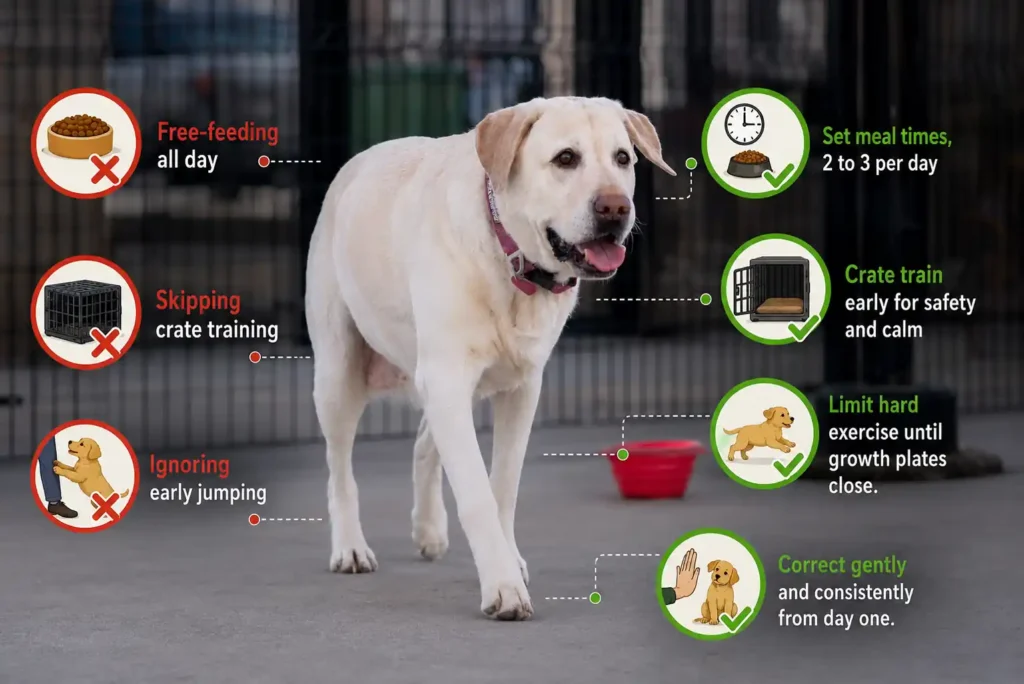
Below is a quick comparison of mistakes I see constantly versus what actually works better in practice.
| Common Mistake | Better Approach |
| Free-feeding all day | Set meal times, 2 to 3 per day |
| Skipping crate training | Crate train early for safety and calm |
| Over-exercising young puppies | Limit hard exercise until growth plates close. |
| Ignoring early jumping | Correct gently and consistently from day one. |
Daily Exercise Needs and Fun Activities
Aim for 60 to 90 minutes daily, once they’re fully grown, a mix of walks, fetch, and swimming if you have access to water. Labs were bred as retrievers, after all, and swimming is basically their love language.
Daily Exercise Guide for a Healthy and Happy Labrador: Read more in Labrador Retriever Exercise Needs: How Much Activity Does Your Lab Really Need?
Quick Answer: Are Labrador Retrievers Good With Kids?
Yes, the Labrador Retriever is widely considered one of the best family dogs because of its patient, gentle, and tolerant temperament around children, though early socialization still matters.
Living With a Labrador: Family Life, Kids & Other Pets
My Lab grew up alongside two cats and, somehow, became their unofficial bodyguard. That’s fairly typical. Labs generally do well with other pets and children, though puppies can be mouthier and more boisterous than smaller breeds, so early socialization classes genuinely help smooth things out.
Quick Answer: Why Are Labrador Retrievers Used as Guide Dogs?
Labrador Retrievers are used as guide dogs because of their trainability, calm temperament, strong work ethic, and low aggression, traits that make them reliable in high-focus, public environments.
The Real Reasons Behind Labrador Behavior Issues: Read more in 5 Unexpected Labrador Retriever Behavior Problems (and How to Fix Them).
Final Thoughts: What Makes Labrador Retrievers So Special
A Labrador Retriever isn’t a low-maintenance pet, despite the reputation. They need training, exercise, and a real-time investment. But the payoff, a dog that genuinely adores your entire family, learns fast, and somehow makes every bad day feel a little lighter, is hard to beat. Mine has eaten three remote controls, and I’d still do it all again.
FAQs
How big does a Labrador Retriever get?
Most adults weigh between 55 and 80 pounds and stand 21.5 to 24.5 inches tall, though individual dogs vary.
Is a Labrador Retriever a good first dog?
Yes, for most active households. Their trainability and friendly nature make them a solid choice for first-time owners willing to commit to daily exercise.
How often should I groom my Labrador Retriever?
Brush 2 to 3 times weekly, bathe every 4 to 6 weeks, and increase brushing during seasonal shedding.
What is the best dog food for Labrador Retrievers?
Look for large-breed formulas with named meat as the first ingredient and controlled fat content to manage their tendency toward weight gain.
Do Labrador Retrievers bark a lot?
Not typically. They’re moderate barkers compared to many breeds, usually vocal only when excited or alerting you to something.