
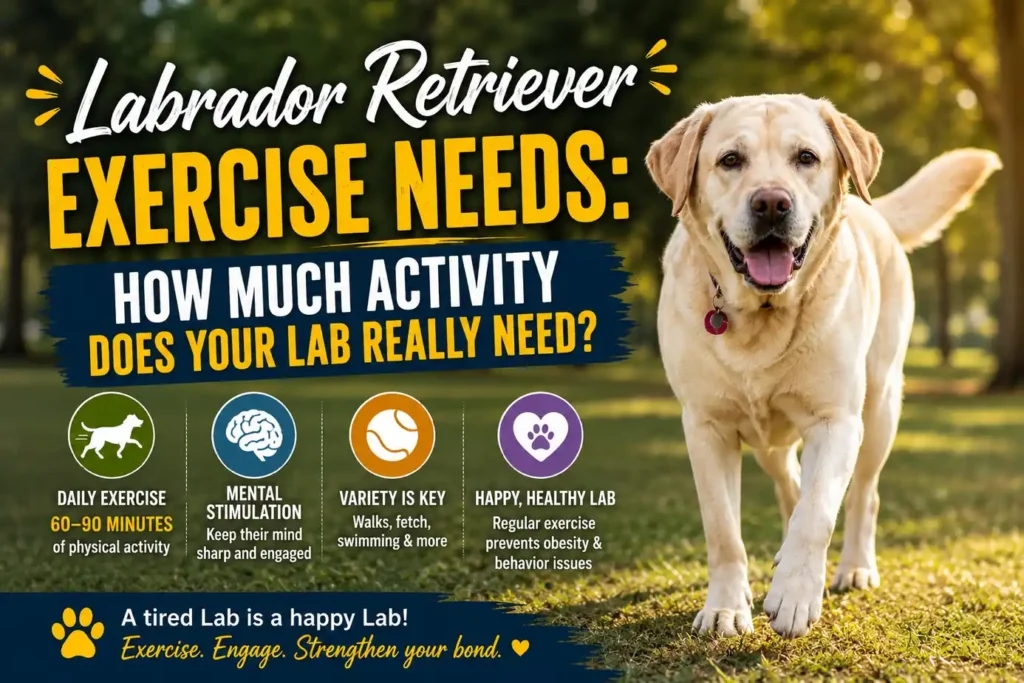
If you own a Labrador, you already know that these dogs do not do idle. They chew things, bounce off walls, and stare at you with that please take me outside look. That’s not bad behavior. That’s just what happens when Labrador Retriever exercise needs go unmet. Labrador Retrievers were bred in 19th-century Newfoundland to retrieve fish from icy water all day. That working drive doesn’t disappear just because your Labrador now lives in a suburb.
Understanding your dog’s true Labrador Retriever exercise needs isn’t just about keeping them thin; it’s about keeping them sane. A well-exercised calmer, easier to train, and genuinely happier. So let’s break down exactly what your Labrador needs, by age, season, and lifestyle.
Understanding the Energy Levels of a Labrador Retriever
Labs rank consistently among the most energetic breeds. According to the American Kennel Club (AKC), Labradors are rated 5 out of 5 for energy level, placing them in the highest tier alongside Border Collies and Australian Shepherds. That energy peaks between ages 1–3 and gradually mellows after age 7.
Their drive isn’t just physical. Labs have a strong need for mental stimulation, too. Without both, they get bored, and a bored Labrador Retriever is a destructive Lab. Chewed shoes, dug-up gardens, and incessant barking are classic signs.
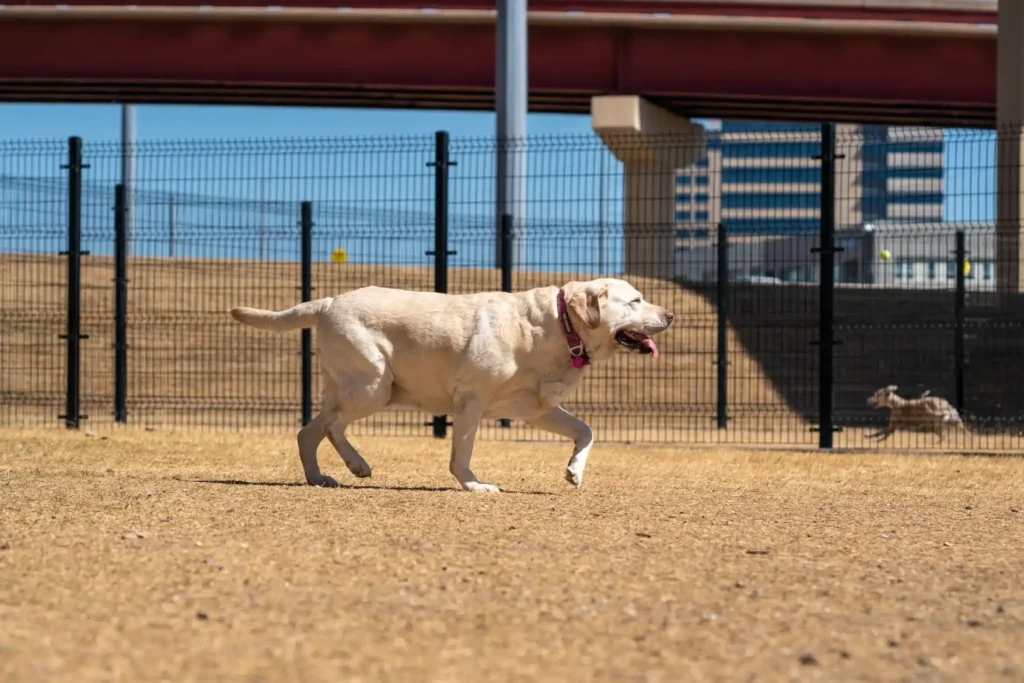
How Much Exercise Does a Labrador Retriever Really Need? Read more in Labrador Retriever Personality and Care Guide for First-Time Owners.
Daily Exercise Requirements for a Healthy Lab
Most healthy Labrador Retrievers need between 1 and 2 hours of exercise per day. Understanding these Labrador Retriever exercise needs helps prevent boredom, obesity, and behavioral problems. This doesn’t have to happen all at once; two 30–45 minute sessions work great for most owners. The key is consistency. Skipping exercise for a few days in a row leads to a noticeably more restless (and demanding) dog.
Quick reference: Recommended daily exercise for the Labrador age group
| Life Stage | Age Range | Daily Exercise | Intensity |
| Puppy | 2–6 months | 5 min × age in months, twice daily | Light, short walks only |
| Adolescent | 6–18 months | 45–60 min | Moderate, avoid hard running |
| Adult | 2–7 years | 1–2 hours | High, fetch, swim, run |
| Senior | 7+ years | 30–45 min | Low to moderate, gentle walks |
Puppy vs Adult vs Senior Labrador Exercise Needs
A 3-month-old Lab puppy and a 5-year-old adult Lab need very different things. Getting this wrong, especially under-exercising an adult or over-exercising a puppy, can cause real health problems.
The Labrador Retriever exercise needs of a puppy differ greatly from those of an adult or senior dog, making age-specific routines essential.
Puppy Exercise: The 5-Minute Rule
Vets and breeders widely recommend the 5-minute rule: 5 minutes of exercise per month of age, twice a day. So a 4-month-old pup gets 20 minutes, twice daily. Their growth plates are still developing, and hard running on pavement can cause joint damage that lasts a lifetime. Stick to soft grass and gentle play.
Adult Labrador Exercise Needs
This is the prime phase. Adult Labs between 2 and 7 years old can handle vigorous daily activity, such as long runs, fetch sessions, swimming, or hiking. The Journal of Veterinary Internal Medicine notes that regular aerobic exercise in adult dogs significantly reduces obesity-related conditions, which is especially important for Labs who are genetically predisposed to weight gain.
Senior Labs: Slow Down, But Don’t Stop
Lab age 7 and older still need daily movement. Arthritis and joint stiffness are common, so shorter, gentler walks are better than full sessions. Swimming is excellent for seniors; it’s low-impact but keeps muscles strong.
Best Types of Exercise for Labrador Retrievers
Walking and Running Routines
Walking is the foundation. Two brisk walks per day, morning and evening, cover the basics for most adult Labs. Running works well for Labs aged 18 months and older. Start with 1–2 miles and build from there. Avoid hot pavement in summer; Labs can overheat faster than you’d expect.
Fetch and Play-Based Activities
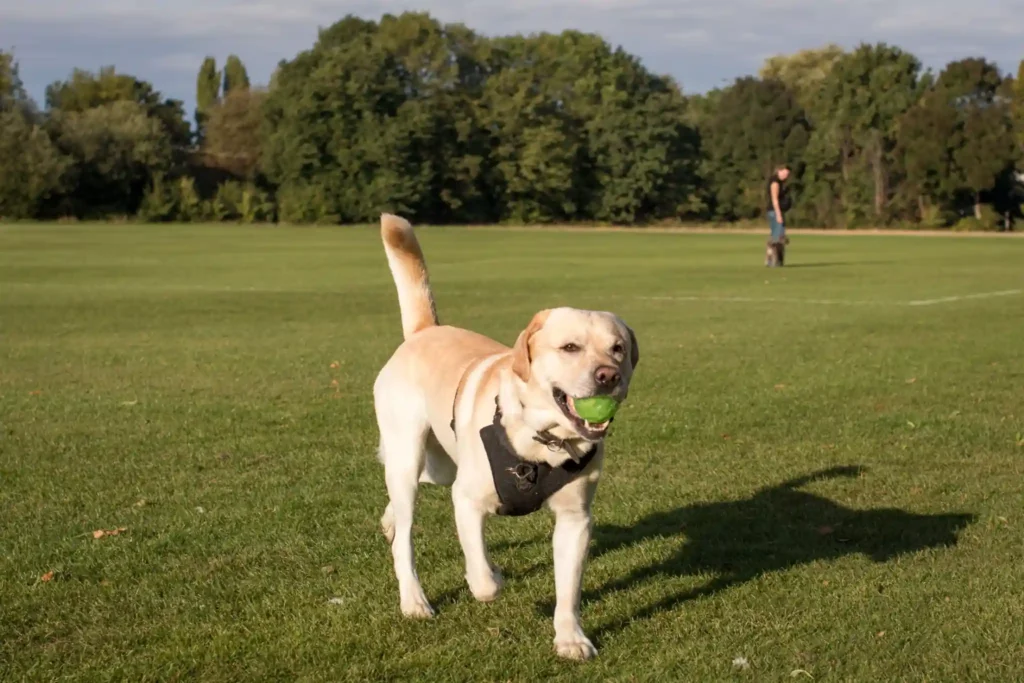
Fetch might be the single best exercise for a Lab. It combines sprinting, chasing, and retrieving, exactly what they were bred for. A 20-minute fetch session can burn as much energy as a 45-minute walk. Use a ball launcher if your arm gets tired. Labs certainly won’t.
- Use a soft rubber ball; tennis balls can wear down enamel over time
- Play in a fenced yard or enclosed park to avoid bolting
- Alternate throwing distances to keep things interesting
Swimming as a Natural Fit for Labs
Labs are natural swimmers; they even have webbed feet. Swimming is one of the most complete workouts a dog can get, engaging nearly every muscle group with zero joint impact. If you live near a lake, river, or have pool access, this is gold. The Canine Sports Medicine and Rehabilitation organization (CSMR) lists hydrotherapy as a top recovery and fitness tool for dogs of all ages.
Mental Exercise: Keeping Your Labrador’s Mind Active Too
Physical exercise alone isn’t enough for a Lab. Their intelligence needs an outlet, too. A mentally tired Lab is often calmer than one that’s only been walked. Here are some options that work:
- Puzzle feeders and snuffle mats, slow feeding with a side of problem-solving
- Nose work and scent games, hide treats around the yard or house
- Basic obedience training, even 10 minutes of sit/stay/heel, drains mental energy
- Interactive toys that dispense food as a reward for problem-solving
How Much Exercise Does a Labrador Retriever Need Per Day?
A healthy adult Labrador Retriever needs between 1 and 2 hours of exercise daily. This can be split into two sessions of 30–45 minutes each. Labs also benefit from 10–15 minutes of mental stimulation (training, puzzles, scent work) on top of physical activity.
Signs Your Labrador Is Not Getting Enough Exercise
When LabradorRetriever exercise needs are not met, dogs often show physical and behavioral signs that owners shouldn’t ignore. Not sure if your Lab is getting enough? Their behavior will tell you. Watch for these warning signs:
- Destructive chewing on furniture, shoes, or baseboards
- Excessive barking, whining, or demanding attention constantly
- Hyperactivity indoors, zooming, jumping, unable to settle
- Weight gain, Labs love food and will put on weight fast without activity
- Pulling hard on the leash (more than usual)
Can Too Much Exercise Be Harmful for Labradors?
Yes, and it’s more common than people think, especially with enthusiastic owners who mean well. Over-exercising puppies damages growing joints. Even adult Labs can show signs of overexertion: excessive panting, limping, reluctance to move, or lagging on walks they usually love.
A good rule: if your Lab seems sore or tired the day after exercise, reduce intensity. Rest days are healthy. One full rest day per week for active adult Labs is completely fine.
Signs of Over-Exercising in Labradors
Signs that your Lab may be getting too much exercise include: excessive panting that lasts more than 10 minutes post-exercise, limping or stiffness the following day, refusing to continue a walk mid-way, muscle soreness, or loss of interest in normally enjoyable activities.
How to Build a Balanced Exercise Routine for Your Lab
Sample weekly Lab exercise routine, mix it up to avoid boredom and overuse injuries.
| Day | Morning | Evening | Mental Activity |
| Monday | 30-min walk | 20-min fetch | Puzzle feeder |
| Tuesday | 45-min run/jog | Short walk | Training (10 min) |
| Wednesday | Swim session (30 min) | Rest walk | Scent game |
| Thursday | 45-min walk | Fetch (15 min) | Puzzle feeder |
| Friday | 30-min walk | Play at the dog park | Training (10 min) |
| Saturday | Long hike (60–90 min) | Rest | Free sniff time |
| Sunday | Rest day, light 20-min stroll | — | Chew toy / calm play. |
Exercise Tips for Busy Owners (Making It Work in Real Life)
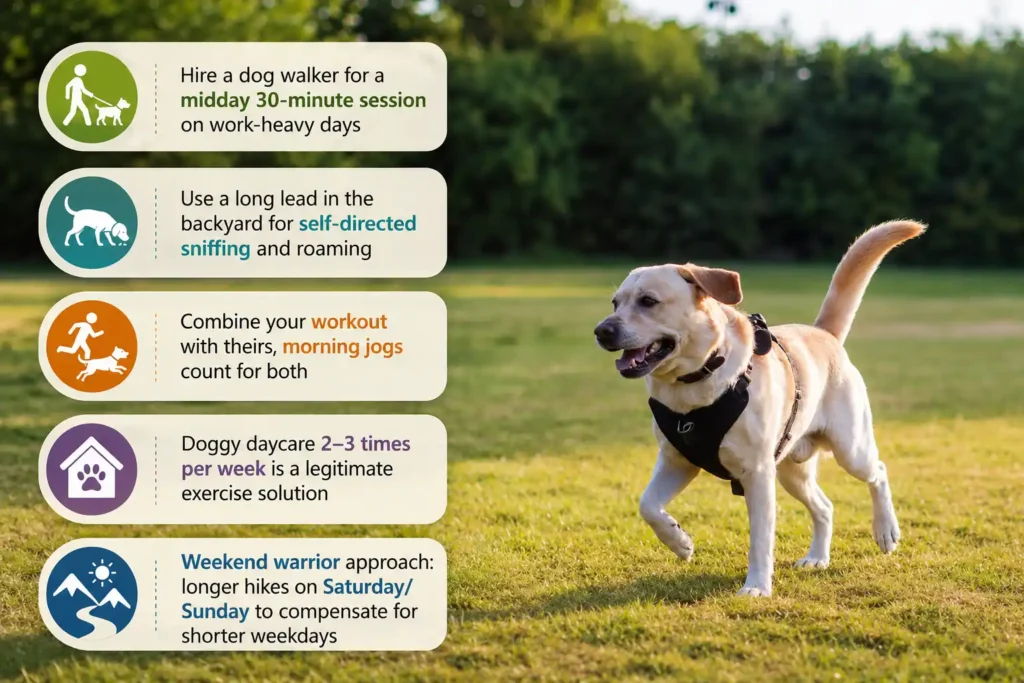
Life gets busy. Here’s how to keep your Lab active even on hectic days:
- Hire a dog walker for a midday 30-minute session on work-heavy days
- Use a long lead in the backyard for self-directed sniffing and roaming
- Combine your workout with theirs, morning jogs with the dog count for both
- Doggy daycare 2–3 times per week is a legitimate exercise solution
- Weekend warrior approach: longer hikes on Saturday/Sunday to compensate for shorter weekdays
Seasonal Exercise Adjustments (Summer vs Winter Care)
How to adjust your Lab’s exercise routine by season
| Season | Main Concern | Best Time to Exercise | Tips |
| Summer | Overheating, hot pavement | Before 9 am or after 6 pm | Carry water, avoid asphalt, swim when possible |
| Winter | Cold paws, ice, hypothermia (rare) | Midday when warmest | Booties for icy walks, keep sessions shorter |
| Spring/Fall | Mud, allergies, and ticks | Anytime | Wipe paws after walks, check for ticks |
Labs actually do well in mild cold; their double coat was built for it. But in extreme heat above 85°F (29°C), be cautious. Flat surfaces like asphalt can reach 140°F on a hot day, which can burn paw pads in under a minute.
What Is the Best Exercise for a Labrador Retriever?
The best exercises for Labrador Retrievers are swimming, fetch, and brisk walking or jogging. Swimming provides full-body, low-impact conditioning ideal for all ages. Fetch mimics their natural retrieving instinct and burns high energy quickly. Combine these with daily walks and 10–15 minutes of mental stimulation for a complete routine.
Final Thoughts: Keeping Your Labrador Happy and Healthy
Labs don’t ask for much: food, your company, and enough daily movement to burn that boundless energy. When you meet their exercise needs, everything else gets easier. They sleep better. They listen better. They’re just… better dogs.
Start where you are. Even adding one extra 20-minute walk per day makes a real difference. As you build consistency, your Lab’s behavior, weight, and mood will reflect it. And honestly? The daily fresh air isn’t bad for you either.
Frequently Asked Questions
Q: How much exercise does a Labrador Retriever need daily?
A: Adult Labs need 1–2 hours of exercise daily, ideally split into two sessions. Puppies follow the 5-minute-per-month-of-age rule, and seniors do well with 30–45 minutes of gentler activity.
Q: Can a Labrador get too much exercise?
A: Yes. Signs include limping, extreme fatigue, and reluctance to walk. Puppies are especially vulnerable; over-exercising before 18 months can damage developing joints.
Q: What is the best exercise for a Labrador Retriever?
A: Swimming, fetch, and brisk walking or jogging are the top choices. Swimming is especially great for seniors because it’s joint-friendly while still building muscle.
Q: How do I exercise my Labrador if I have a small yard?
A: Focus on fetch in a compact space, use a long hallway for ball rolling, or sign up for dog daycare a few days a week. Sniff walks and training sessions also help drain energy without needing large spaces.
Q: Do Labradors need mental exercise as well as physical?
A: Absolutely. Labs are intelligent dogs. Puzzle feeders, scent games, and short training sessions (even 10 minutes) significantly improve their behavior and reduce restlessness.