
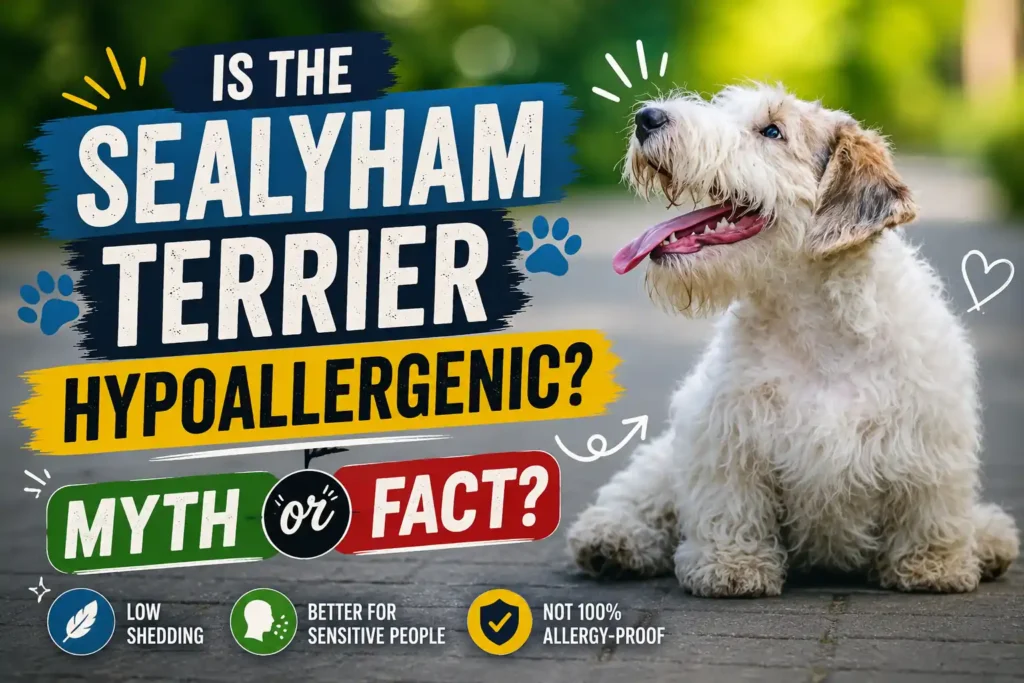
The Sealyham Terrier’s hypoallergenic reputation comes from real facts about this small terrier breed. Unlike many dogs, the Sealyham Terrier has a wiry double coat that sheds very little hair into your home. This means fewer allergens floating in the air compared to heavy-shedding breeds.
However, no dog is 100% allergy-free, and the Sealyham Terrier’s hypoallergenic trait works best when paired with regular grooming and coat care. Many allergy sufferers still enjoy life with this breed because it produces less dander than most dogs.
Are Sealyham Terriers Hypoallergenic?
Technically, no dog breed is truly 100% hypoallergenic; even hairless breeds produce allergens. However, Sealyham Terriers come close because of their unique double coat structure. These small terriers, originally bred in Wales for hunting, have a wiry outer coat and a soft undercoat that traps dander and reduces the amount released into your home.
The name “Sealyham Terrier hypoallergenic” actually refers to this low-shedding characteristic rather than a complete absence of allergens. Still, for many people with mild to moderate allergies, this reduction is genuinely life-changing.
Why Do People With Dog Allergies Consider Sealyham Terriers?
The Sealyham Terrier’s coat type makes a real difference. Unlike breeds that shed heavily year-round, Sealyham Terriers shed minimally. Their wiry coat naturally contains loose hair and dander, so you’re not dealing with constant fur tumbleweeds on your furniture.
Beyond allergies, these dogs are also known for their loyal, affectionate temperament. They’re medium-sized (typically 18-24 pounds for adults), adaptable to apartment living, and intelligent enough to train without excessive frustration.
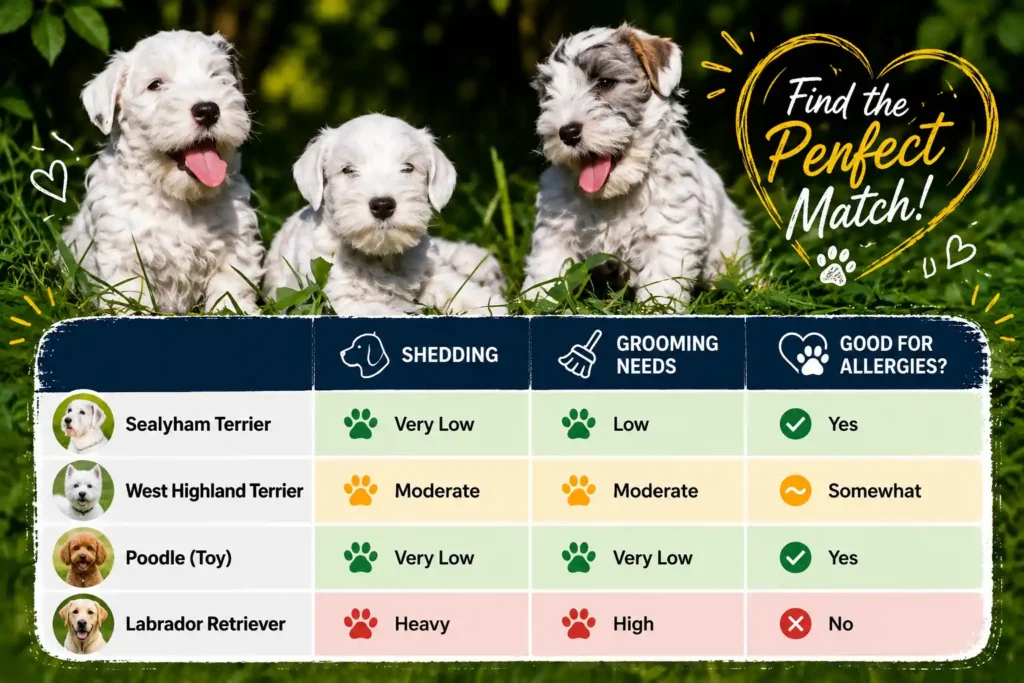
Here’s how the Sealyham Terrier compares to other popular low-shedding terrier breeds in terms of hypoallergenic qualities and allergy-friendliness:
| Breed | Shedding Level | Dander Production | Best for Allergies? |
| Sealyham Terrier | Very Low | Low | Yes |
| West Highland Terrier | Moderate | Moderate | Somewhat |
| Poodle (Toy) | Very Low | Very Low | Yes |
| Labrador Retriever | Heavy | High | No |
Do Sealyham Terriers Shed a Lot?
Not really, and this is where their appeal for allergy sufferers becomes clear. Sealyham Terriers are considered minimal to light shedders. During spring and fall (shedding season), you might notice a bit more loose hair, but it’s nothing compared to breeds like German Shepherds or Golden Retrievers.
The reason? That wiry double coat holds onto loose hair much better than silky or smooth coats do. The undercoat is where most shedding occurs, but the structure of their coat means dander particles stay closer to the skin rather than floating freely into the air and landing on your furniture, clothes, and lungs.
What Actually Triggers Dog Allergies?
Here’s something most people get wrong: it’s not actually the hair itself that causes allergies; it’s dog dander, saliva, and urine. Dog dander is the dead skin cells that all dogs shed constantly. If a breed sheds less hair, it typically sheds less dander too. That’s the connection.
According to the American Academy of Allergy, Asthma & Immunology, dog allergies are triggered by a protein found in dog dander, not the fur itself. So choosing a low-shedding breed like a Sealyham Terrier hypoallergenic dog reduces the amount of dander circulating in your home.
Dander vs. Hair: What’s the Real Culprit?
Dog hair itself isn’t allergenic; it’s the dander (microscopic skin flakes) attached to the hair that causes reactions. Low-shedding breeds like the Sealyham Terrier produce fewer of these dander particles. This is why shedding level directly correlates with allergy severity in dog owners.
Can People With Allergies Live Comfortably With a Sealyham Terrier?
The answer depends on allergy severity. People with mild to moderate allergies often do great with Sealyham Terriers. Those with severe allergies might still experience symptoms, though they’re usually manageable with proper grooming and home care routines.
Before committing to a Sealyham Terrier, spend time with the breed. Visit breeders, arrange a weekend visit if possible, and see how your body reacts. This real-world test beats any online research.
How to Reduce Allergens in a Home With a Sealyham Terrier
Even with a Sealyham Terrier hypoallergenic coat, you’ll want to implement some practical strategies to minimize allergen buildup:
Regular grooming is non-negotiable. Professional grooming every 6-8 weeks keeps the undercoat in check. Between appointments, brush your dog 2-3 times weekly to remove loose hairs before they shed around your house. Use a HEPA filter vacuum and replace filters monthly. Wash dog bedding weekly in hot water. Keep your Sealyham out of bedrooms, especially yours. Consider air purifiers with HEPA filters in high-traffic areas.
Here’s a practical monthly allergen management schedule for Sealyham Terrier owners:
| Frequency | Task | Cost |
| 2-3 times weekly | Brush coat at home | $0 (one-time brush purchase) |
| Every 6-8 weeks | Professional grooming/stripping | $60–$100 USD |
| Weekly | Wash bedding in hot water | $0 |
| Monthly | Replace HEPA vacuum filter | $20–$35 USD |

Sealyham Terrier Grooming Tips for Allergy Control
Grooming is your best weapon against allergens. Sealyham Terriers need hand-stripping (removal of dead hair by pulling it out rather than cutting) to maintain their coat’s texture and minimize shedding. Some owners also choose clipping, though hand-stripping is traditionally considered superior for this breed.
Between professional appointments, use a slicker brush and metal comb. Work on small sections, starting from the skin outward. This helps remove loose undercoat before it falls out naturally.
Hand-Stripping vs. Clipping: Which Is Better for Allergies?
Hand-stripping removes the dead undercoat completely, reducing shedding and dander production for 6-8 weeks. Clipping is faster and cheaper but less effective for allergy sufferers since it doesn’t remove as much dead hair. For maximum allergen control, hand-stripping is the better choice.
Are Sealyham Terriers Better Than Other Low-Shedding Breeds?
Not necessarily “better,” just different. Poodles and Bichon Frises are also excellent for allergies. Sealyham Terriers stand out because they combine low shedding with a smaller size, terrier-like personality, and lower grooming costs than Poodles. They’re also less energy-intensive than some other terrier breeds.
Common Questions About Sealyham Terriers and Allergies
It’s possible but risky. Severe allergies might still trigger symptoms even with a low-shedding breed. Start with extended visits to breeders or current owners to test your reaction. If you experience symptoms during a weekend stay, a Sealyham Terrier probably isn’t the right fit.
Who Should (and Shouldn’t) Get a Sealyham Terrier?
Sealyham Terriers are ideal for apartment dwellers, families with moderate allergies, and people willing to commit to regular grooming. They’re loyal, adaptable, and genuinely affectionate without being overly demanding.
They’re not ideal for people with severe allergies, those unable to groom regularly, or families who don’t have time for consistent training and socialization. Sealyham Terriers aren’t aggressive, but they do need boundaries.
Is the Sealyham Terrier a Good Hypoallergenic Dog?
For people with mild to moderate allergies who are willing to commit to regular grooming, the Sealyham Terrier’s hypoallergenic reputation is well-deserved. These dogs produce fewer allergens than most breeds, making them a genuine option for allergy sufferers.
Just remember: hypoallergenic doesn’t mean allergen-free. You’ll need to invest time and money in grooming, use HEPA filters, and implement good household practices. But if you’re prepared for that, you might finally get the dog companionship you’ve been longing for.
See If a Sealyham Terrier Puppy Belongs in Your Home. Read more in Sealyham Dog: Everything New Owners Need to Know.

Here’s what to expect from a Sealyham Terrier in terms of basic breed characteristics:
| Characteristic | Details |
| Size | Small (18–24 lbs, 10–12 inches tall) |
| Lifespan | 12–14 years |
| Coat Type | Double coat, wiry outer, soft undercoat; low shedding |
| Colors | Primarily white, often with red or badger markings |
| Temperament | Affectionate, intelligent, loyal, independent-minded |
| Exercise Needs | Moderate, daily walks and playtime, not a couch potato |
| Family-Friendly | Yes, good with families; better with older children than toddlers |
Frequently Asked Questions
Are Sealyham Terriers hypoallergenic or just low shedding?
Technically, they’re low-shedding rather than truly hypoallergenic. However, because they shed less, they produce fewer allergens, making them suitable for many allergy sufferers.
Do Sealyham Terriers cause allergies?
Like all dogs, they produce dander and saliva that can trigger allergies. However, their low-shedding coat means less dander circulates in your home.
How much do Sealyham Terriers shed?
They shed minimally year-round, with slightly more shedding during spring and fall. Regular brushing and professional grooming dramatically reduce this.
Do Sealyham Terriers need regular grooming?
Yes, professional grooming every 6–8 weeks is essential. Between appointments, brush 2–3 times weekly. This is non-negotiable for allergy control and coat health.
Can someone with pet allergies own a Sealyham Terrier?
Yes, many allergy sufferers successfully own Sealyham Terriers. Mild to moderate allergies are manageable with proper grooming and household practices. Severe allergies might still be problematic.
Are Sealyham Terriers better than Westies for allergies?
Sealyham Terriers are generally better for allergies because they shed even less than West Highland Terriers. Both are low-shedding, but Sealyham’s coat structure is more effective at trapping dander.
Is dog dander or dog hair the real allergy trigger?
Dog dander (dead skin cells), not hair itself, triggers allergies. Low-shedding breeds like Sealyham Terriers produce less dander, making them better for allergy sufferers.
What is the best terrier breed for allergy sufferers?
Sealyham Terriers are among the best. Other excellent options include the Miniature Schnauzer and Soft Coated Wheaten Terrier. All produce fewer allergens than heavier-shedding breeds.