

The Sealyham dog is one of those breeds you don’t see every day, and honestly, that’s a shame. Bred in Wales in the 1850s by Captain John Edwardes, this compact white terrier packs a huge personality into a small frame.
If you’ve just brought home a Sealyham dog or you’re seriously thinking about it, this guide covers everything, from grooming and feeding to health risks most owners don’t know about until it’s too late. Let’s get into it.
Sealyham Activity Centre History
Captain John Edwardes developed the Sealyham terrier at Sealyham House, Pembrokeshire, Wales, between 1850 and 1891. His goal? A fearless dog that could hunt otters, badgers, and foxes alongside hounds. The breed had to be low to the ground, tough, and stubborn enough not to back down. By the early 1900s, the Sealyham had made its way into dog shows and eventually the hearts of celebrities. Cary Grant and Alfred Hitchcock both owned them.
Today, the breed is on the UK Kennel Club’s Vulnerable Native Breeds list, with fewer than 300 puppies registered annually as of 2023. That history of working alongside hunters shaped the personality you’ll live with today, confident, independent, and surprisingly fearless.
Meet the Sealyham – Personality
Don’t let the fluffy white coat fool you. The Sealyham terrier is stubborn in the best and worst ways. They’re charming, genuinely funny, and deeply loyal to their family. But they will absolutely ignore a command if something more interesting is happening nearby.
They tend to do well with older children and bond closely with one or two people. They’re not always great with small animals; that hunting instinct runs deep. One owner once told me her Sealyham had a ‘selective hearing’ problem that mysteriously resolved when treats were involved. Sounds about right.
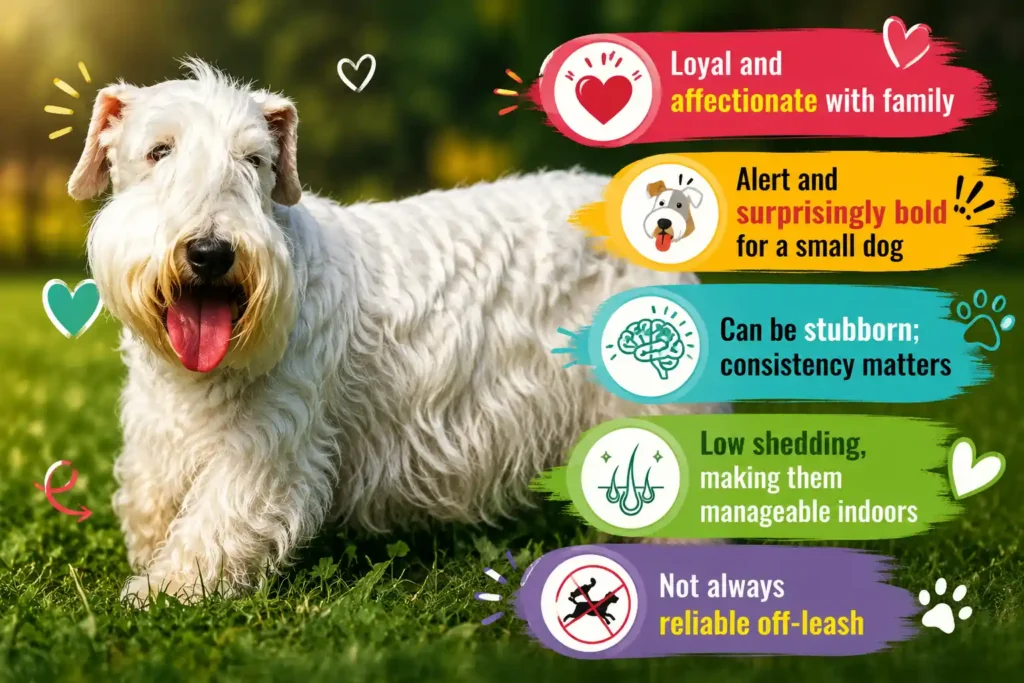
- Loyal and affectionate with family
- Alert and surprisingly bold for a small dog
- Can be stubborn; consistency matters
- Low shedding, making them manageable indoors
- Not always reliable off-leash
Separate the Myths from the Facts About Sealyham Temperament. Read more in Is the Sealyham Terrier Temperament an Adorable Underdog or a Stubborn Nightmare?
Why Is a Sealyham Dog a Good Choice?
If you want a small dog that doesn’t act small, the Sealyham is genuinely worth considering. They don’t need hours of daily exercise like some terriers. They adapt reasonably well to apartment living if given daily walks. And unlike many high-energy terriers, they actually like relaxing with you in the evening.
According to the American Kennel Club, Sealyhams rank among the most adaptable small terrier breeds for urban living, provided mental stimulation is consistent. They also tend to be quieter than similar terriers, which neighbours appreciate.
See What Makes the Sealyham Terrier So Special. Read more in Sealyham Terrier Traits That Make This Rare Breed So Lovable.
Find Out What Makes the Sealyham Such a Great Companion. Read more in Why Is a Sealyham Dog a Good Choice?
What to Expect as a New Sealyham Pet Owner
The first few weeks can feel a bit chaotic. Sealyhams like routine but take time to trust new people. Be patient. Don’t push too hard or too fast.
They’re not destructive by nature, but boredom makes any dog difficult. Budget for regular grooming, every 6 to 8 weeks, for a proper clip. And mentally prepare yourself: a Sealyham will have opinions about your schedule.
- Expect a settling-in period of 2–4 weeks
- Set a consistent daily routine from day one
- Have a groomer lined up before you bring them home
- Socialise early; it matters enormously with this breed
Discover Why Sealyham Terrier Puppies Steal Hearts. Read more in Why the Sealyham Terrier Puppy Is One of the World’s Most Endangered Breeds.
Sealyham Health Tips to Keep Your Dog Active and Healthy
Annual vet check-ups aren’t optional; they’re essential. Weight management is genuinely important for this breed since obesity puts serious strain on their compact frame. Keep them moving daily, even if the walks are short.
The British Veterinary Association recommends eye and hearing screening for Sealyhams at least once a year due to their genetic predispositions. Regular dental care is also a must; small breeds are notorious for dental disease.
Sealyham Terrier Health Problems
What Health Issues Does a Sealyham Terrier Commonly Face?
This is the section most breeders don’t fully explain upfront. Sealyhams carry a handful of inherited conditions worth knowing before you commit.
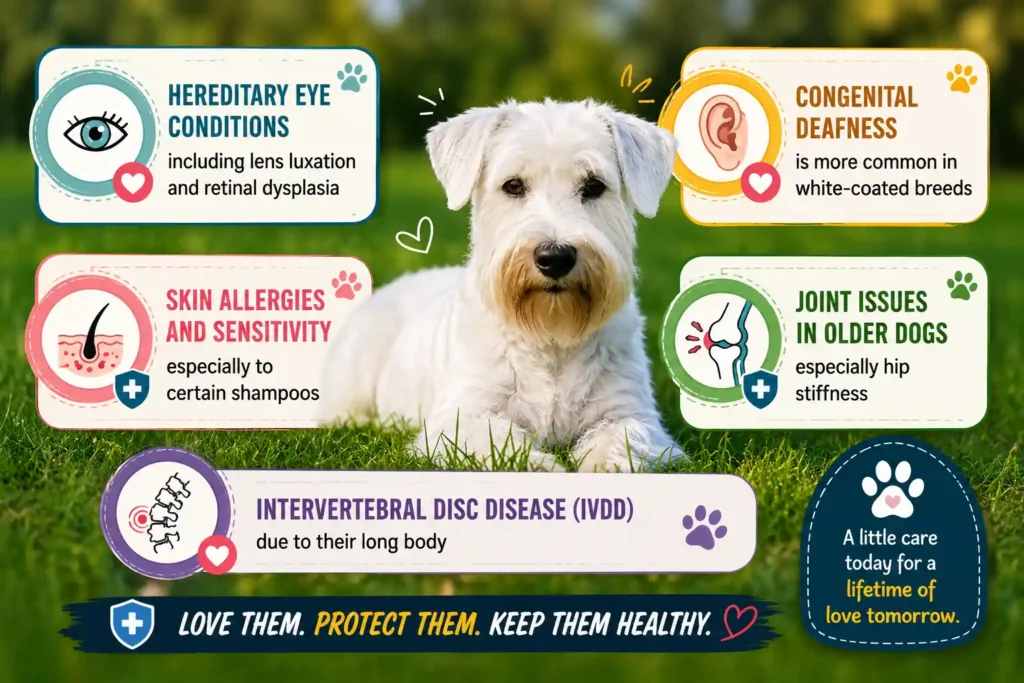
- Hereditary eye conditions, including lens luxation and retinal dysplasia
- Congenital deafness is more common in white-coated breeds
- Skin allergies and sensitivity, especially to certain shampoos
- Joint issues in older dogs, especially hip stiffness
- Intervertebral disc disease (IVDD) due to their long body
Learn the Most Common Sealyham Terrier Health Problems. Read more in Sealyham Terrier Health Problems That Every Owner Can’t Afford to Ignore.
DNA testing has become more accessible. Reputable breeders now screen for lens luxation and always ask for certificates.
Here’s a quick overview of common Sealyham health concerns and how to manage them:
| Health Issue | Risk Level | Management |
| Lens Luxation | Moderate–High | Annual eye exam, DNA test for parents |
| Congenital Deafness | Low–Moderate | BAER hearing test as a puppy |
| Skin Allergies | Moderate | Hypoallergenic shampoo, vet guidance |
| IVDD | Moderate | Avoid jumping, maintain a healthy weight |
| Dental Disease | High in small breeds | Daily brushing, dental chews |
Everything You Need to Know About Sealyham Allergies. Read more in Is the Sealyham Terrier Hypoallergenic? Myth or Fact?
Sealyham Pet Food: What to Feed and What to Avoid
Feeding a Sealyham isn’t complicated, but it does require some attention. They’re not the type to self-regulate; most will eat everything you put in front of them and then look for more.
High-quality dry kibble with real meat as the first ingredient works well for most adults. Avoid grain-free diets unless your vet specifically recommends one. The FDA flagged potential links between grain-free food and heart issues in dogs back in 2019, and it’s still worth being cautious.
- Avoid: onions, grapes, raisins, xylitol, chocolate
- Limit: high-fat treats and table scraps
- Good options: chicken, salmon, brown rice-based foods
- Fresh water available at all times, non-negotiable
The Best Diet for a Healthy Sealyham Terrier. Read more in Best Dog Food for Sealyham Terriers to Get This Right From Day One.
How Much Should a Sealyham Eat Each Day?
Adult Sealyhams typically weigh between 8 and 11 kg. Most do well on around 200–250g of quality dry food split across two meals. Puppies need smaller, more frequent meals, three to four times a day until six months old.
Use this feeding guide as a starting point; always adjust based on your dog’s weight and activity level:
| Age / Weight | Daily Amount | Meals Per Day |
| Puppy (2–6 months) | 100–150g | 3–4 times |
| Puppy (6–12 months) | 150–200g | 2–3 times |
| Adult (8–11 kg) | 200–250g | 2 times |
| Senior (7+ years) | 175–220g | 2 times (monitor weight) |
Discover the Best Foods, and the Ones to Avoid. Read more in How Sealyham Terrier Puppy Food Mistakes Are Costing Your Pup’s Health.
Sealyham Grooming: Coat Care, Bathing & Maintenance
That white double coat looks gorgeous, and it takes effort to keep it that way. The Sealyham has a wiry outer coat and a soft undercoat. Without regular brushing, the coat mats quickly, especially around the face and legs.
Bathe every 4–6 weeks using a whitening shampoo designed for wire-coated dogs. Rinse thoroughly; any residue irritates their sensitive skin. Most owners find that learning to hand-strip at home saves money in the long run.
Essential Grooming Tips Every Sealyham Owner Should Know. Read more in Sealyham Terrier Grooming Mistakes That Are Ruining Your Dog’s Coat.
How to Groom a Sealyham Terrier?
Professional groomers recommend stripping rather than clipping to maintain the correct coat texture. Clipping softens the wiry coat over time, which changes the look and reduces natural weather resistance.
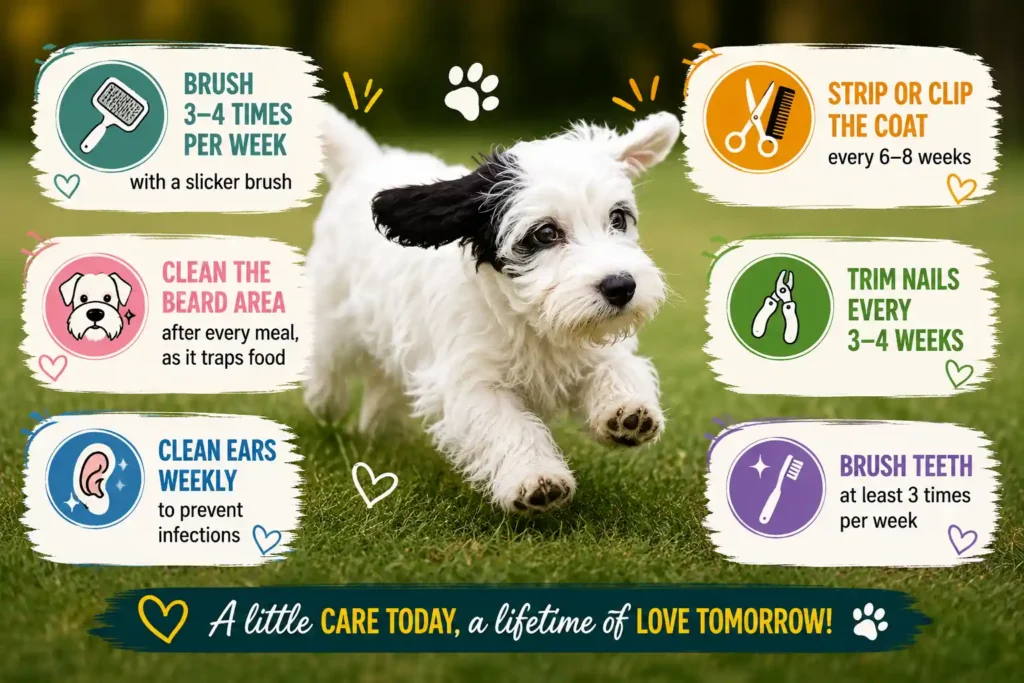
- Brush 3–4 times per week with a slicker brush
- Strip or clip the coat every 6–8 weeks
- Clean the beard area after every meal, as it traps food
- Trim nails every 3–4 weeks
- Clean ears weekly to prevent infections
- Brush teeth at least 3 times per week
The Sealyham Terrier Club of America provides detailed, illustrated grooming guides on their website — well worth bookmarking if you plan to groom at home.
Sealyham Training Tips for Better Behavior and Daily Routine
Training a Sealyham is rewarding but requires patience. They are intelligent, sometimes too intelligent. They figure out quickly what you want and then decide whether it’s worth their effort.
Keep sessions short: 10–15 minutes max. Use high-value treats. End on a win. If you push too long, they switch off completely, and you’ve lost the session.
- Start obedience training at 8–10 weeks
- Use positive reinforcement only; they shut down with harsh correction
- Recall training is essential, start early and repeat often
- Crate training helps with overnight settling
Find Out How Much a Sealyham Terrier Really Costs. Read more in Sealyham Terrier Cost Ranges From $1,500 Puppy to $30,000 Lifetime (2026).
What Training Methods Work Best for Stubborn Sealyhams?
Reward-based training wins every time with this breed. Clicker training works particularly well because it gives a precise, consistent signal. Mix up your reward types, food, play, and praise, so they stay engaged and don’t learn to game the system.
Learn the Best Ways to Train a Strong-Willed Sealyham. Read more in Sealyham Terrier Training for Pups Who Ignore You (And How to Fix It).
Socialization Tips for Sealyham Puppies and Adult Dogs
Socialisation isn’t optional; it’s one of the most important things you can do in the first 16 weeks of a puppy’s life. Sealyhams that miss this window can become suspicious of strangers and reactive around other dogs.
Introduce new sounds, surfaces, people, and animals gradually. Puppy classes are brilliant for this. Even adult rescues benefit from controlled, positive new experiences over time. Don’t flood them — slow and steady wins.
Exercise Needs: How Active Is a Sealyham?
Moderate, honestly. A Sealyham needs around 30–45 minutes of exercise per day; two decent walks work well. They enjoy sniffing more than sprinting, so pavement pounding isn’t really their style.
Mental exercise matters as much as physical. Puzzle feeders, scent games, and training sessions count. A bored Sealyham will find something to destroy or just sulk at you, and neither is particularly enjoyable.
Learn the Ideal Exercise Routine for a Sealyham Terrier. Read more in Sealyham Terrier Exercise Needs Just 40 Minutes? Here’s the Catch.
Indoor Living, Space Needs & Daily Care
Sealyhams adapt well to smaller homes and apartments. They don’t need a garden, but access to outdoor walks is important. They do enjoy a comfortable spot near you, preferably on the sofa, if you let them get away with it.
Daily care checklist:
- Morning walk (20–25 mins)
- Feeding twice daily
- 5–10 minute training session
- Evening walk (15–20 mins)
- Brush teeth or dental chew
- Quick beard clean if needed

Signs Your Sealyham Is Happy and Healthy
A happy Sealyham is curious, engaged, and occasionally ridiculous. Watch for these signs:
- Bright, clear eyes and clean ears
- Healthy appetite without obsessing over food
- Relaxed body language around family
- Playful but able to settle calmly
- Consistent energy levels day to day
See How Proper Care Can Boost Your Sealyham’s Lifespan. Read more in The Sealyham Terrier Lifespan and Why Some Live Longer Than Others.
Sudden changes, loss of appetite, unusual lethargy, and constant scratching are worth a vet call. Trust your instincts. You know your dog best.
Quick reference for daily activity and care needs by life stage:
| Life Stage | Exercise Per Day | Key Focus |
| Puppy (under 12 months) | 5 min per month of age | Socialisation + basic training |
| Adult (1–7 years) | 30–45 minutes | Consistency + mental stimulation |
| Senior (7+ years) | 20–30 minutes | Joint care + weight management |
Learn the Signs of a Happy, Healthy Sealyham. Read more in Sealyham Terrier Characteristics That Prove Small Dog, Big Personality.
Final Thoughts: Living with a Sealyham
Living with a Sealyham dog is genuinely one of the more entertaining experiences in dog ownership. They have opinions. They have preferences. And they will absolutely manipulate you with those dark eyes when they want something. But they’re also deeply loyal, surprisingly low-maintenance compared to many breeds, and endlessly entertaining.
If you go in informed about the grooming commitment, the training patience required, and the health checks they need, you’re set up for a wonderful relationship. The Sealyham doesn’t ask for much. Just consistency, love, and ideally, a spot on the couch.
FAQs About the Sealyham Dog
Are Sealyham dogs good for first-time owners?
Yes, with caveats. They’re manageable in size and not overly demanding for exercise, but their stubborn streak requires consistent training. First-time owners who research the breed thoroughly and commit to positive reinforcement do well.
How rare is a Sealyham terrier?
Very. The UK Kennel Club listed fewer than 300 Sealyham puppies registered in 2023, making it one of Britain’s most endangered native dog breeds. Finding a reputable breeder often means joining a waiting list.
Do Sealyham terriers bark a lot?
Fewer than many terriers, but they will alert and bark at strangers or unusual sounds. With proper training and socialisation, excessive barking is manageable.
How long does a Sealyham dog live?
Typically 12–15 years. Good nutrition, regular vet care, and appropriate exercise significantly contribute to reaching the higher end of that range.
Can a Sealyham terrier live with cats?
It depends on the individual dog and early socialisation. Many Sealyhams coexist peacefully with cats they’ve grown up with. Introducing one to an adult cat requires careful management and patience.