
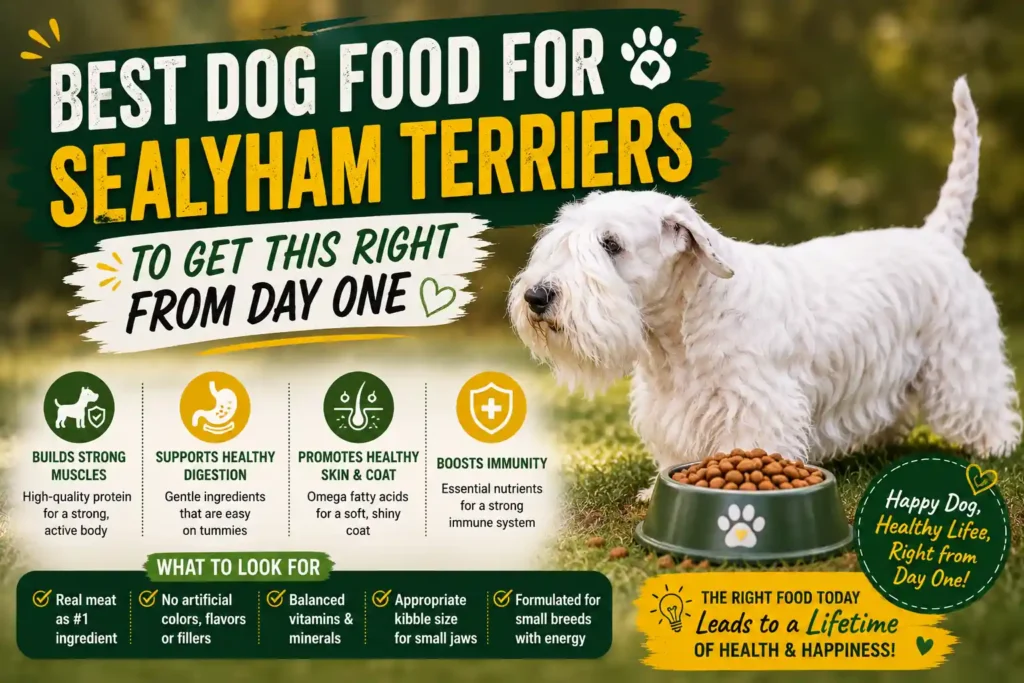
Sealyham Terriers are small but sturdy dogs, and picking the right meals matters more than most owners realize. The best dog food for Sealyham Terriers gives this breed the protein, healthy fats, and fiber it needs to stay lean, since Sealyhams gain weight fast if they eat too much or eat the wrong food. This breed also tends to have sensitive skin and a coat that needs support from omega fatty acids, so a low-quality diet can cause itching, dryness, or dull fur over time.
Because Sealyhams often live 12 to 14 years, small daily choices add up, and feeding a balanced diet from puppyhood through the senior years helps prevent joint problems, digestive issues, and unwanted weight gain. That is why so many vets and experienced owners spend time comparing options before settling on the best dog food for Sealyham Terriers, since the right formula truly can add healthy years to your dog’s life.
What Makes a Good Diet for a Sealyham Terrier?
Sealyhams are small, sturdy terriers with short legs and a wiry white coat, first bred in Wales to hunt badgers and foxes. That working history still matters at dinnertime. Rather than large bowls padded with filler, they need dense, high-quality nutrition in small portions. So look for a food where a named meat, such as chicken, lamb, or salmon, sits first on the ingredient label. Since Sealyhams gain weight easily, especially after being spayed or neutered, their calories should stay firmly under control.
According to the American Kennel Club, the breed stands about 10.5 inches tall and should look lean and muscular, never round.
A quality small-breed formula should also meet the standards set by the Association of American Feed Control Officials. Check the packaging for an AAFCO statement confirming the food is complete and balanced for your dog’s current life stage.
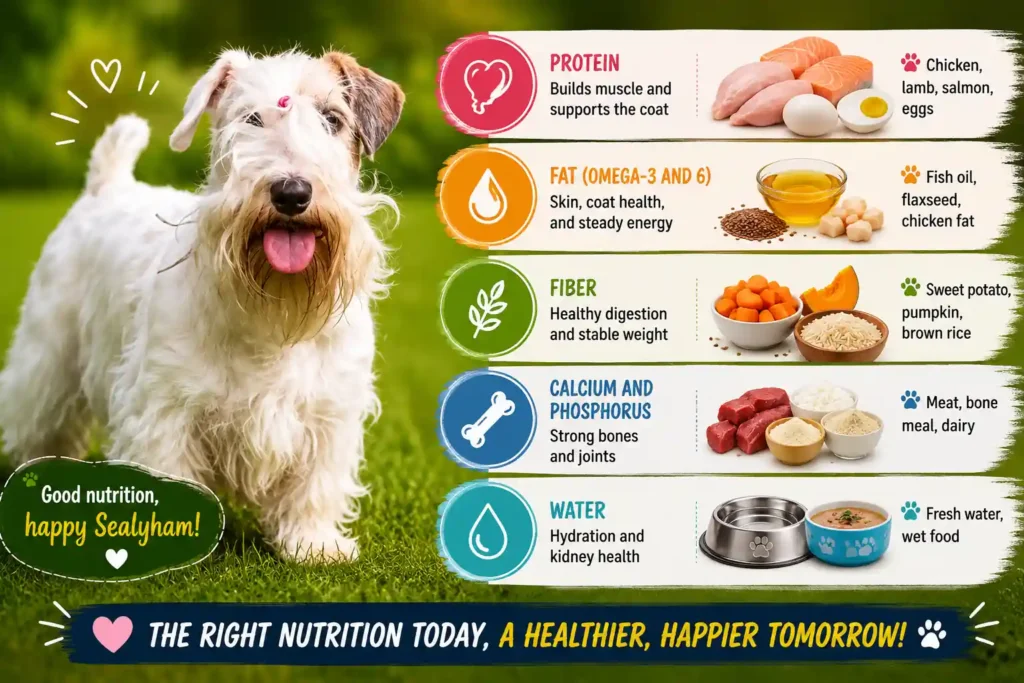
Here is a simple look at the key nutrients a Sealyham Terrier needs and why each one matters.
| Nutrient | Why It Matters | Good Sources |
| Protein | Builds muscle and supports the coat | Chicken, lamb, salmon, eggs |
| Fat (omega-3 and 6) | Skin, coat health, and steady energy | Fish oil, flaxseed, chicken fat |
| Fiber | Healthy digestion and stable weight | Sweet potato, pumpkin, brown rice |
| Calcium and phosphorus | Strong bones and joints | Meat, bone meal, dairy |
| Water | Hydration and kidney health | Fresh water, wet food |
What should a Sealyham Terrier eat every day?
A Sealyham Terrier should eat a complete, balanced small-breed food built around real meat, healthy fats, and limited fillers. Most adults do well on roughly half a cup to one cup of quality dry food a day, split into two meals and adjusted for weight and activity.
Best Dog Food for Sealyham Terriers by Life Stage
A puppy, an adult, and a senior Sealyham have very different needs. Puppies grow fast, so they need more protein and calories, plus smaller, frequent meals to prevent low blood sugar. Around 11 to 12 months, most Sealyhams move to an adult formula. Seniors, meanwhile, usually need fewer calories and often benefit from added joint support.
This table shows how feeding should change as your Sealyham Terrier grows.
| Life Stage | Meals Per Day | Food Focus |
| Puppy (8 weeks to 11 months) | 3 to 4 | High-protein small-breed puppy formula |
| Adult (1 to 7 years) | 2 | Balanced small-breed maintenance food |
| Senior (7 years and older) | 2 | Lower calorie, joint and digestion support |
How much should a Sealyham Terrier eat per day?
Most adult Sealyham Terriers eat about half a cup to one cup of dry food daily, divided into two meals. Puppies eat more often, usually three to four small meals. Always follow the portion guide printed on the label, then adjust for your dog’s weight and activity level.
Dry, Wet, or Fresh Food: Which Is Best?
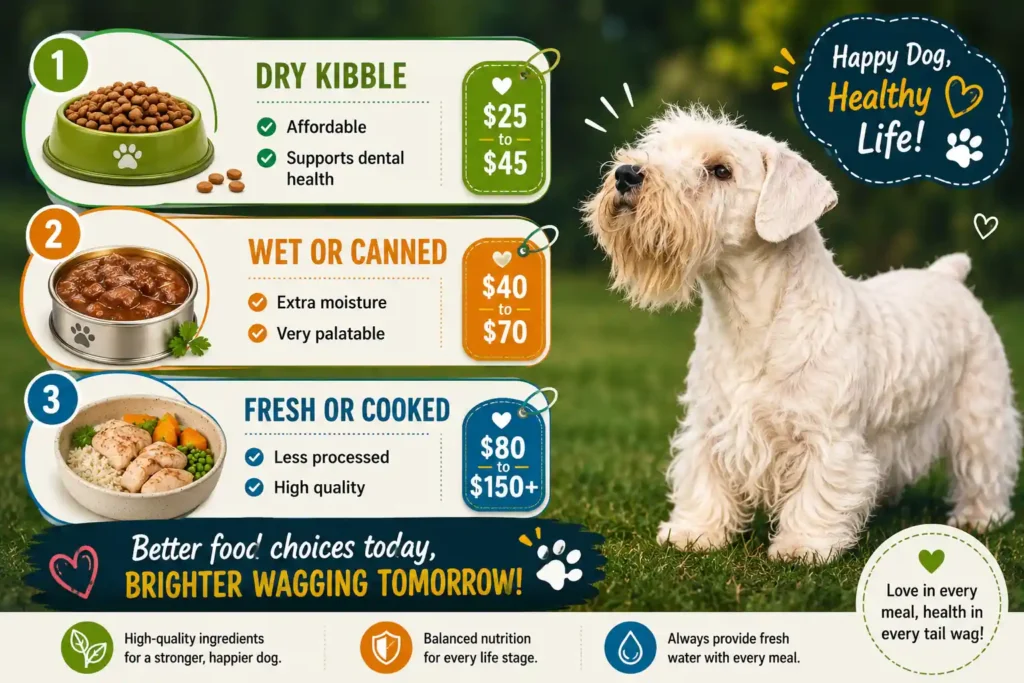
Each food type has trade-offs. Dry kibble is affordable, helps clean the teeth, and is easy to portion. Wet food adds moisture and tempts fussy eaters, but it costs more and spoils faster. Fresh or cooked food can be excellent, though it is pricier and needs care to stay balanced. Because of this, many owners mix kibble with a spoonful of wet food.
Here is how the main food types compare for a small breed like the Sealyham Terrier. Costs are rough monthly estimates in USD for a 20 to 24 pound dog.
| Food Type | Main Benefit | Rough Monthly Cost (USD) |
| Dry kibble | Affordable, supports dental health | $25 to $45 |
| Wet or canned | Extra moisture, very palatable | $40 to $70 |
| Fresh or cooked | Less processed, high quality | $80 to $150+ |
Feeding Sealyhams With Sensitive Stomachs, Allergies, or Weight Gain
Sealyhams can develop atopic dermatitis and food sensitivities, which often show up as itchy skin, recurring ear issues, or an upset stomach. If you spot these signs, a limited-ingredient diet with a single protein and no artificial additives can help. Introduce any new food slowly over about a week to avoid digestive upset. Weight gain is another genuine risk for this breed, so measure every meal and go easy on treats.
For sensitive dogs, the World Small Animal Veterinary Association recommends choosing foods from companies that employ qualified nutritionists and run proper feeding trials. That is a useful filter when a reactive Sealyham needs a reliable diet.
What is the best dog food for Sealyham Terriers with a sensitive stomach?
The best dog food for Sealyham Terriers with a sensitive stomach is usually a limited-ingredient, single-protein formula free from common triggers like wheat, corn, and artificial additives. Options built on salmon or lamb with added fish oil often ease both itchy skin and digestion. Introduce it gradually.
Foods Sealyham Terriers Should Never Eat
Some everyday human foods are toxic to dogs, and a curious terrier will happily try to grab them off the counter. Keep these well out of reach.
- Chocolate, coffee, and anything else with caffeine
- Grapes and raisins, which can trigger kidney failure
- Xylitol, a sweetener hidden in sugar-free gum and some peanut butters
- Onions, garlic, and chives
- Alcohol and raw bread dough
- Macadamia nuts, along with very salty or fatty foods
If your Sealyham does swallow any of these, contact your vet or a pet poison helpline straight away.
Common Feeding Mistakes to Avoid
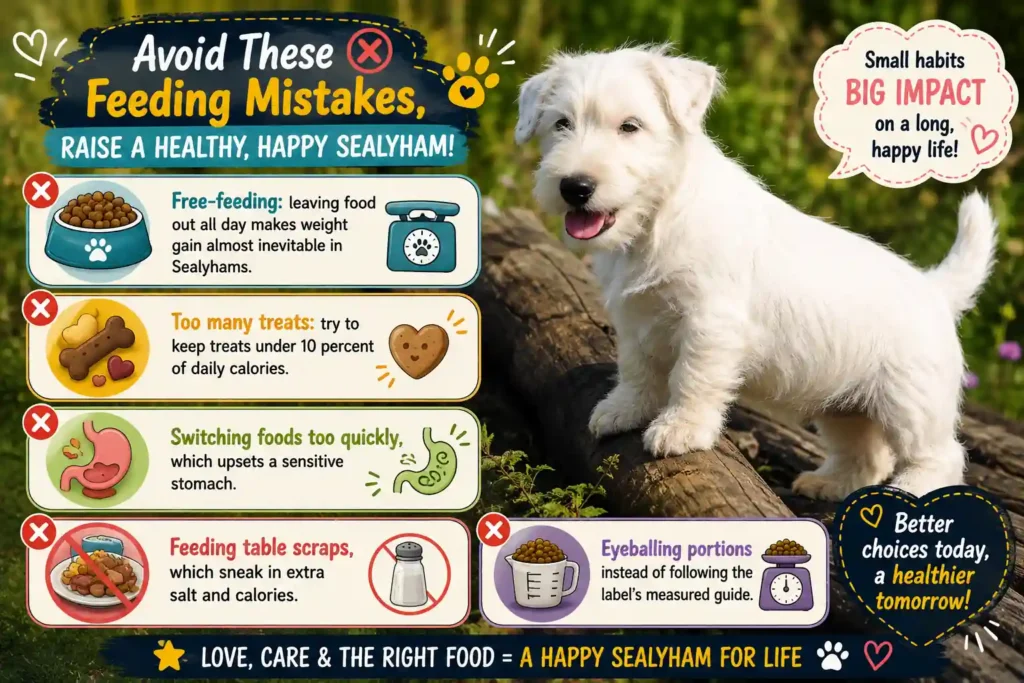
Even careful owners slip into a few habits that work against this weight-prone breed. Watch out for these.
- Free-feeding: leaving food out all day makes weight gain almost inevitable in Sealyhams
- Too many treats: try to keep treats under 10 percent of daily calories
- Switching foods too quickly, which upsets a sensitive stomach
- Feeding table scraps, which sneak in extra salt and calories
- Eyeballing portions instead of following the label’s measured guide
A Final Word on Feeding Your Sealyham Terrier
The best dog food for Sealyham Terriers is a complete, balanced, small-breed diet that keeps them lean, protects their skin and coat, and matches their life stage. So measure every meal, limit treats, and check labels for that AAFCO statement. Do that consistently, and this rare, spirited breed has every chance to stay healthy through its 12 to 14 years. When in doubt, your vet remains the best guide for your dog.
Learn the Traits That Make the Sealyham Terrier Unique. Read more in Sealyham Dog: Everything New Owners Need to Know.
Frequently Asked Questions
How often should you feed a Sealyham Terrier?
Adults do best with two meals a day, one in the morning and one in the evening. Puppies need three to four smaller meals to keep their blood sugar stable while they grow.
Are Sealyham Terriers prone to food allergies?
Some are. Atopic dermatitis and food sensitivities show up in the breed, often as itchy skin or stomach upset. A limited-ingredient diet plus a vet visit usually brings relief.
Should Sealyham Terriers eat grain-free food?
Not usually. Grain-free is only needed for a diagnosed grain allergy, which is rare. The FDA has investigated possible links between some grain-free diets and heart problems, so check with your vet first.
How do I know if my Sealyham is at a healthy weight?
You should feel the ribs easily without pressing hard, and see a slight waist when you look down from above. If the ribs are hidden under fat, trim the portions and treats.
When should a Sealyham switch from puppy to adult food?
Most Sealyhams move to adult food around 11 to 12 months of age. Your vet can confirm the right timing based on your dog’s size and growth.