
Sealyham terrier health problems are something every owner should understand before bringing this breed home. This small, strong dog can face serious issues like eye disease, joint pain, and skin allergies. Many of these Sealyham terrier health problems can be managed well if you catch them early. Regular vet checkups and simple daily care can make a big difference in how your dog feels and how long it lives.
The breed is rare, rarer than most people realize. According to the UK Kennel Club, the Sealyham terrier is listed as a Vulnerable Native Breed, with fewer than 300 puppies registered annually in recent years. That limited gene pool plays a direct role in some of the genetic health conditions that appear repeatedly in the breed.
Common Health Problems in Sealyham Terriers
Several conditions show up consistently in Sealyham terriers, and most have a genetic component. Knowing what to watch for puts you ahead of the curve before symptoms become serious.
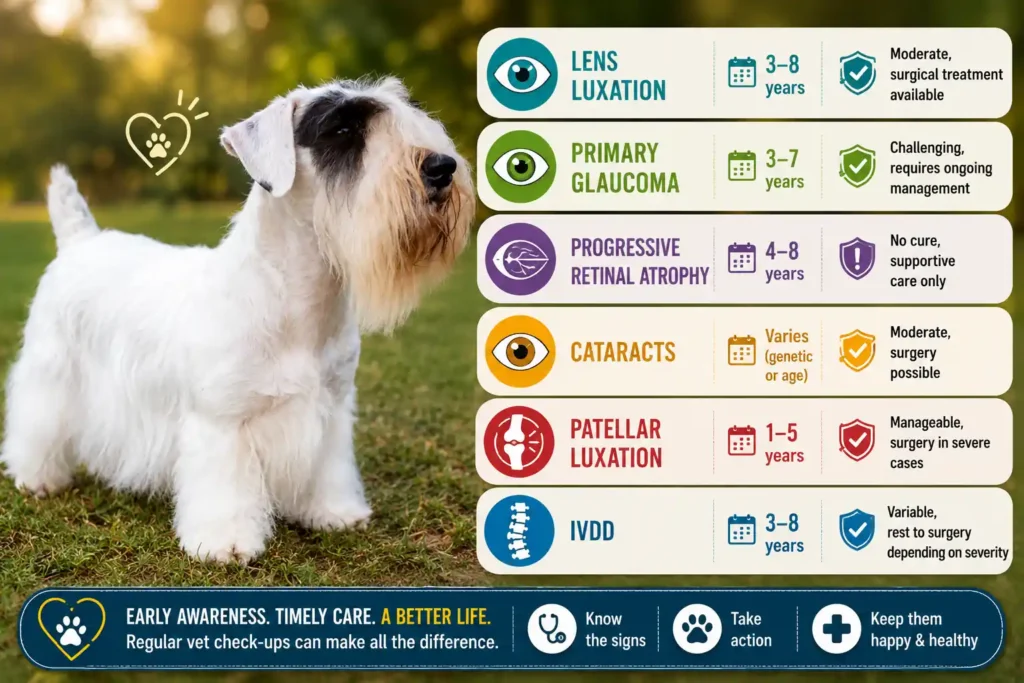
The table below summarizes the most frequently reported health issues, their general onset age, and how manageable they tend to be with veterinary care.
| Health Condition | Typical Onset Age | Manageability |
| Lens Luxation | 3–8 years | Moderate, surgical treatment available |
| Primary Glaucoma | 3–7 years | Challenging, requires ongoing management |
| Progressive Retinal Atrophy | 4–8 years | No cure, supportive care only |
| Cataracts | Varies (genetic or age) | Moderate, surgery possible |
| Patellar Luxation | 1–5 years | Manageable, surgery in severe cases |
| IVDD | 3–8 years | Variable, rest to surgery depending on severity |
Lens Luxation
This is one of the most serious eye conditions in Sealyham terriers. It happens when the lens of the eye shifts out of its normal position due to weakened or broken zonular fibers. Primary lens luxation (PLL) in this breed is often hereditary.
Symptoms include sudden squinting, watery eyes, eye redness, and visible cloudiness. Left untreated, it can lead to secondary glaucoma and blindness within days. The Animal Health Trust developed a DNA test for PLL that responsible breeders now use routinely; always ask to see PLL test results before buying a puppy.
Primary Glaucoma
Glaucoma in Sealyhams involves increased pressure inside the eye. It’s painful and progresses quickly. In some cases, it develops after or alongside lens luxation. Signs include a red eye, tearing, apparent headache behavior like rubbing the face, and eventually a visibly enlarged or cloudy eye.
Treatment options include medicated eye drops, laser therapy, or surgical drainage implants. Without prompt treatment, permanent vision loss is likely within 24 to 72 hours of a pressure spike.
Progressive Retinal Atrophy (PRA)
PRA causes the retina to slowly degenerate over time, eventually leading to complete blindness. It’s inherited and painless, which means many dogs adapt well, but there’s no cure or way to slow it down significantly once it’s progressing.
Early signs are typically poor night vision and reluctance to move in low-light conditions. DNA screening exists for several PRA mutations, and the Orthopedic Foundation for Animals (OFA) maintains a CAER eye registry where breeders can submit test results for public verification.
Cataracts
Cataracts in Sealyham terriers can appear due to genetics, aging, or as a complication of other eye diseases like PRA. Hereditary cataracts typically develop earlier, sometimes before age three. Surgical removal is possible in healthy dogs and can restore significant vision, though it’s not always necessary unless the cataract is causing discomfort or significant vision loss.
Allergies and Sensitive Skin
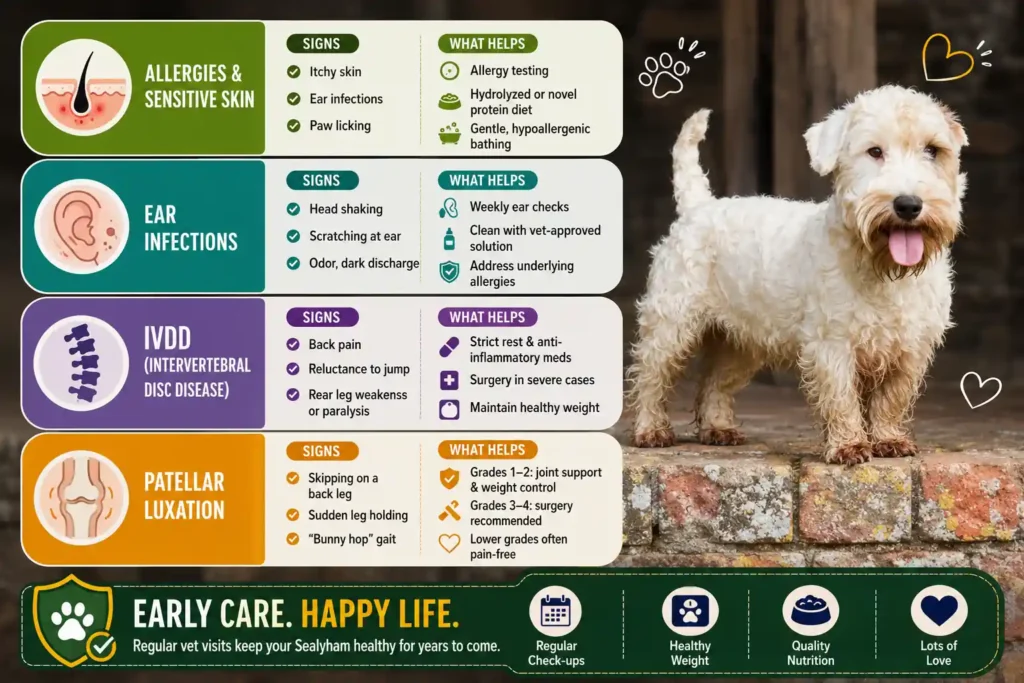
Sealyham terriers are prone to environmental and food allergies. Itchy skin, recurring ear infections, and paw licking are common early signs. Some dogs react to grass pollens and dust mites; others respond to protein sources in their food like chicken or beef.
A veterinary dermatologist can conduct allergy testing, and a hydrolyzed protein or novel protein diet is often the first dietary recommendation. Frequent bathing with a gentle, hypoallergenic shampoo can also reduce surface allergen load.
Ear Infections
Those thick, folded ears don’t allow much airflow, which creates a warm, moist environment perfect for bacteria and yeast. Sealyhams that swim regularly are especially at risk. Signs include head shaking, scratching at the ear, odor, and dark discharge.
Weekly ear checks and cleaning with a vet-approved solution after baths or water play can prevent most infections. Chronic or recurring infections may point to an underlying allergy rather than just poor hygiene.
Intervertebral Disc Disease (IVDD)
IVDD occurs when the cushioning discs between vertebrae bulge or rupture, pressing on the spinal cord. Sealyham terriers, like many short-legged breeds, carry some elevated risk. Symptoms range from back pain and reluctance to jump to rear leg weakness or paralysis in severe cases.
Mild cases respond well to strict rest and anti-inflammatory medication. More severe cases may require surgery. Keeping your dog at a healthy weight significantly reduces spinal load and long-term IVDD risk.
Patellar Luxation
Patellar luxation, when the kneecap slips out of its groove, is common across small and toy breeds, and Sealyhams are no exception. It’s graded on a scale of 1 to 4. Grades 1 and 2 are often managed conservatively with joint support and weight control. Grades 3 and 4 typically need surgical correction to prevent long-term joint damage.
Watch for intermittent skipping on a back leg, sudden leg holding, or a characteristic “bunny hop” gait. Many dogs show no pain at lower grades.
Dental Disease
Small-breed dogs pack a lot of teeth into a small jaw, and Sealyhams are no exception. Overcrowding leads to faster plaque buildup and a higher rate of periodontal disease than in larger breeds. By age three, the majority of dogs show some signs of dental disease if brushing has been inconsistent.
Daily brushing with a dog-safe toothpaste is the gold standard. Dental chews and water additives can help supplement but should not replace brushing.
Obesity and Weight-Related Problems
Sealyhams are not a high-energy breed. They enjoy activity but don’t demand it, which means weight can creep up without much notice. Obesity worsens joint conditions like patellar luxation and IVDD, adds strain to the heart, and can contribute to breathing difficulties.
An adult Sealyham terrier should weigh between 18 and 24 pounds (roughly 8 to 11 kg). You should be able to feel the ribs without pressing hard, but not see them.
What Are the Most Common Eye Problems in Sealyham Terriers?
The three most common eye problems in Sealyham terriers are lens luxation, primary glaucoma, and progressive retinal atrophy (PRA). Lens luxation is often hereditary and can cause blindness within days without treatment. PRA causes gradual, painless vision loss with no current cure. Glaucoma frequently develops alongside or following lens luxation. DNA testing is available for all three conditions and should be completed before breeding.
How Long Do Sealyham Terriers Live?
Sealyham terriers generally live between 12 and 14 years. Dogs that receive regular veterinary care, maintain a healthy weight, and are screened for hereditary conditions early tend to reach the higher end of that range. Eye diseases and spinal issues are the most likely health factors to impact quality of life as they age.
Are Sealyham Terriers a Healthy Breed?
Sealyham terriers carry a moderate health risk profile. They are prone to several hereditary eye conditions, joint problems, and skin sensitivities. However, with proper DNA health testing from responsible breeders, routine vet care, and weight management, many Sealyhams live long, healthy lives with minimal complications.
When to See a Veterinarian
Some signs warrant same-day or emergency veterinary attention. The following symptoms in a Sealyham terrier should never be monitored at home and waited out.
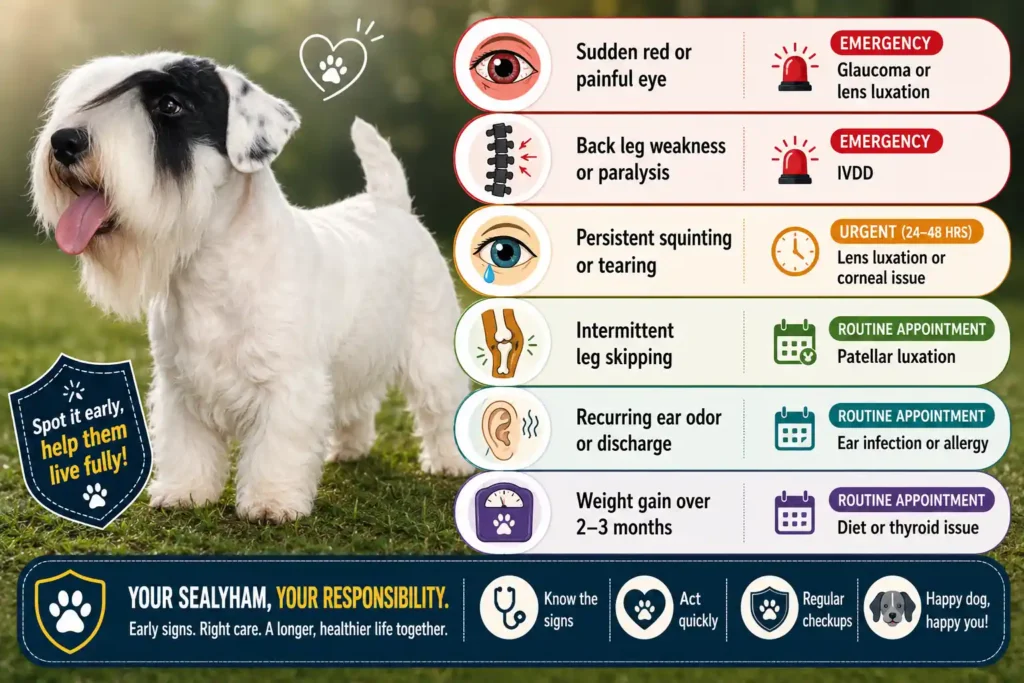
Use this quick reference to know when a condition is urgent versus something that can wait for a routine appointment.
| Symptom | Urgency Level | Likely Cause |
| Sudden red or painful eye | Emergency | Glaucoma or lens luxation |
| Back leg weakness or paralysis | Emergency | IVDD |
| Persistent squinting or tearing | Urgent (24–48 hrs) | Lens luxation or corneal issue |
| Intermittent leg skipping | Routine appointment | Patellar luxation |
| Recurring ear odor or discharge | Routine appointment | Ear infection or allergy |
| Weight gain over 2–3 months | Routine appointment | Diet or thyroid issue |
How to Keep Your Sealyham Terrier Healthy
Prevention goes much further than treatment with this breed. A proactive routine makes a measurable difference in long-term health outcomes.
- Schedule an annual veterinary eye exam, even if no symptoms are present. Eye diseases in Sealyhams can progress quickly.
- Get DNA health testing done before purchasing a puppy. Ask the breeder for PLL, PRA, and other relevant test certificates.
- Keep weight in the ideal range of 18 to 24 pounds. Weigh your dog monthly and adjust portions before problems develop.
- Clean ears weekly and always dry them thoroughly after bathing or swimming.
- Brush teeth daily or at minimum three times a week to prevent periodontal disease.
- Limit high-impact jumping in young dogs to reduce IVDD and joint stress as they age.
Everything You Need to Know About the Sealyham Terrier. Read more in Sealyham Dog: Everything New Owners Need to Know.
The table below gives a quick overview of key Sealyham terrier characteristics relevant to health and care planning.
| Characteristic | Detail |
| Origin | Wales, UK (developed in the mid-1800s) |
| Weight | 18–24 lbs (8–11 kg) |
| Lifespan | 12–14 years |
| Coat Type | Double coat, wiry outer, soft undercoat |
| Exercise Needs | Moderate, 30–45 minutes daily |
| Grooming Frequency | 2–3 times per week brushing; professional trim every 8–12 weeks |
| Good With Children | Yes, best with older children |
| Apartment Suitable | Yes, adapts well to smaller spaces. |
Living Well With a Sealyham Terrier
Sealyham terriers are affectionate, courageous little dogs with a bit of an independent streak and a lot of personality packed into a small frame. Their health needs are manageable, but they do require attention, particularly around the eyes. Knowing the risks early, choosing a health-tested puppy from a responsible breeder, and keeping up with routine vet visits makes an enormous difference over the course of a 12- to 14-year lifespan.
If you already own one, the best thing you can do right now is book an eye exam if it’s been more than a year. These problems move fast, and catching them early is the difference between a straightforward fix and a genuine emergency.
Frequently Asked Questions
What health problems are most common in Sealyham terriers?
The most common Sealyham terrier health problems include lens luxation, primary glaucoma, progressive retinal atrophy, patellar luxation, IVDD, allergies, ear infections, and dental disease.
Are Sealyham terriers prone to blindness?
Yes, Sealyham terriers have a hereditary predisposition to several eye conditions, including PRA and lens luxation, both of which can lead to blindness. DNA testing and annual eye exams significantly reduce this risk.
How much does it cost to treat lens luxation in a dog?
Surgical treatment for lens luxation typically ranges from $1,500 to $3,500 USD per eye, depending on the clinic, the dog’s overall health, and whether secondary glaucoma is present.
Is the Sealyham terrier a rare breed?
Yes. The Sealyham terrier is classified as a Vulnerable Native Breed by the UK Kennel Club, with very low annual registration numbers. This limited gene pool contributes to higher rates of hereditary health conditions.
At what age do Sealyham terriers develop eye problems?
Eye problems like lens luxation and PRA typically present between ages 3 and 8, though some conditions like cataracts can appear earlier or later depending on whether they are hereditary or age-related.