
Sealyham Terrier training is different from training most other dogs. This breed comes from Wales, where it was bred in the 1800s to hunt badgers and otters. That history is still inside every Sealyham Terrier today. It makes them brave, smart, and a little stubborn. Your puppy may look right at you and then do the opposite of what you asked.
This is normal for the breed, not bad behavior. The good news is that Sealyham Terrier training works well once you understand what makes this dog tick. With short, simple, and consistent sessions, most owners see real change in just a few weeks.
Before diving into commands, it helps to know exactly what kind of dog you’re working with, so here’s a quick snapshot of the breed’s core traits.
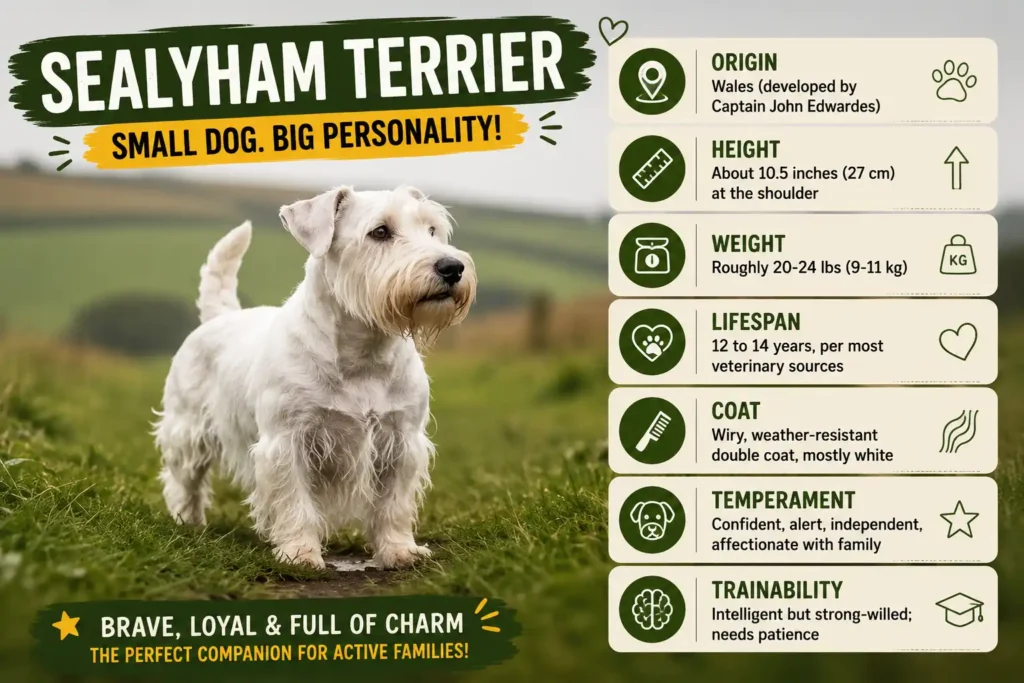
| Trait | Details |
| Origin | Wales (developed by Captain John Edwardes) |
| Height | About 10.5 inches (27 cm) at the shoulder |
| Weight | Roughly 20-24 lbs (9-11 kg) |
| Lifespan | 12 to 14 years, per most veterinary sources |
| Coat | Wiry, weather-resistant double coat, mostly white |
| Temperament | Confident, alert, independent, affectionate with family |
| Trainability | Intelligent but strong-willed; needs patience |
Why Is Sealyham Terrier Training Different?
Unlike retrievers bred to work closely alongside a handler, Sealyhams were bred to think for themselves underground, often out of earshot. That independent streak is baked into the breed standard maintained by The Kennel Club, which describes the breed as alert, confident, and full of self-esteem. In practice, this means a Sealyham won’t repeat a command just because you asked twice; it wants to know what’s in it for him. Short, high-value sessions consistently beat long drilling with this breed.
Why Dog Lovers Adore the Sealyham Terrier. Read more in Sealyham Dog: Everything New Owners Need to Know.
When Should You Start Training a Sealyham Terrier Puppy?
Start the moment your puppy comes home, usually around 8 weeks old. Early socialization and simple house manners matter more than formal obedience at this stage. The American Kennel Club recommends exposing puppies to new sounds, surfaces, and people during the critical socialization window that runs from roughly 8 to 16 weeks, before it naturally starts to close.
What’s the Best Age to Start Sealyham Terrier Training?
The ideal age is 8 weeks old, right as the socialization window is widest open. Formal commands like sit and stay can begin around 10 to 12 weeks, once the puppy settles into its new home and routine.
Are Sealyham Terriers Easy to Train?
Not exactly easy, but not impossible either. Sealyhams are sharp and pick up new commands quickly, yet their terrier independence means they’ll often test a boundary before complying. Consistency, patience, and short motivating sessions tend to turn that stubbornness into genuine cooperation within a few weeks.
Best Positive Reinforcement Training Methods
Reward-based methods remain the safest and most effective approach for Sealyham terrier training. Mark the exact moment your dog gets something right with a clicker or a cheerful “yes,” then follow immediately with a small treat. Food, praise, and quick play breaks all work, though it helps to rotate rewards, since terriers bore easily.
- Keep sessions under 10 minutes so focus doesn’t fade
- Always end on a success rather than a struggle
- Save high-value treats, like boiled chicken, for tougher behaviors

How to Stop a Sealyham Terrier from Barking
Sealyhams were originally bred as vocal watchdogs, so some barking is instinct rather than defiance. Teach a calm “quiet” cue by rewarding silence after one or two barks, instead of shouting over the noise, which many terriers read as their owner joining in.
Do Sealyham Terriers Bark a Lot?
Yes, somewhat. They were bred as alert, vocal terriers with a big bark for their size, but a consistent quiet cue can noticeably reduce excessive barking within a few weeks of practice.
Potty Training a Sealyham Terrier
Stick to a strict schedule: outside first thing in the morning, after every meal, and after naps. Crate training speeds this process up considerably, since most dogs avoid soiling the space they sleep in. Expect fairly reliable habits by around 4 to 6 months with consistent routine.
Teaching Basic Commands (Sit, Stay, Come & Leave It)
Teach one command at a time, in a quiet room first, before adding distractions. “Leave it” deserves extra attention with this breed, since terriers are natural scavengers and diggers, and a reliable leave-it can prevent a trip to the vet down the road.
Recall Training: Can You Trust Them Off-Leash?
Honestly, use caution here. Sealyhams retain a strong prey drive from their badger-hunting past, so recall needs heavy, ongoing reinforcement. Even a well-trained adult may ignore a call the moment a squirrel appears, so keep dogs leashed near wildlife or unfenced areas.
how to train dog to walk on leash without pulling?
Stop walking the instant the leash goes tight, and only move again when your dog loosens it and returns to your side.
Leash Training Without Pulling
Reward loose-leash walking generously and stop moving the second the leash goes tight, rather than yanking back. Sealyhams learn quickly that pulling gets them nowhere, while a slack leash keeps the walk moving forward.
How to Socialize a Sealyham Terrier Properly
Introduce new people, dogs, and environments gradually and positively during puppyhood, and keep reinforcing it into adulthood. Sealyhams tend to stay reserved with strangers by nature, so early, low-pressure exposure helps them stay confident rather than defensive.
Managing Stubborn Terrier Behavior
When training a stubborn Sealyham, avoid repeating commands or raising your voice, since both simply teach the dog to tune you out. Instead, make the reward more interesting than whatever distracted him, and keep sessions short enough that he stays engaged.
How to Stop Digging and Chasing Instincts
Digging and chasing are hardwired hunting instincts, not bad manners, so redirect rather than punish. A designated digging pit, scent games, and supervised play channel that instinct somewhere appropriate instead of the flower bed.
How to crate train a dog ?
- Pick the right crate: big enough for your dog to stand, turn, and lie down comfortably.
- Introduce it slowly: leave the door open, put in a soft blanket and toys, let your dog explore on its own.
- Feed meals in the crate: this builds a positive association.
- Add short, timed sessions: close the door for a few minutes while you’re nearby, then slowly increase the time.
- Use a command word: like “crate” or “kennel,” paired with a treat each time.
- Never use it as punishment: the crate should feel safe, not scary.
- Build up to longer periods: including short times when you leave the house.
- Crate at night: once your dog is comfortable, use it for overnight sleeping too.

Is crate training worth it?
Yes, in most cases. A crate gives a Sealyham a den-like retreat, speeds up housetraining, and makes travel and vet visits far less stressful. Introduce it gradually with treats and short stays so it never feels like punishment.
Mental Stimulation Games for Sealyham Terriers
This breed was built for scent work, so puzzle feeders, snuffle mats, and simple nose-work games tire the brain in ways a walk alone can’t. A mentally worn-out Sealyham is far less likely to dig, bark, or invent his own entertainment.
Common Training Mistakes to Avoid
A few habits quietly undermine even well-intentioned training, so here’s a quick comparison of common mistakes and better alternatives.
| Common Mistake | Better Approach |
| Repeating a command over and over | Ask once, wait, then reset calmly |
| Long, 30-minute training sessions | Several short 5-10 minute sessions daily |
| Punishing barking with shouting | Reward quiet with a calm “quiet” cue |
| Skipping socialization after puppyhood | Keep exposing the dog throughout adulthood |
Training Schedule by Age (8 Weeks to Adult)
Training priorities shift as a Sealyham grows, and this age-by-age breakdown shows what to focus on at each stage.
| Age | Training Focus |
| 8-12 weeks | Socialization, name recognition, crate introduction |
| 3-6 months | Sit, stay, come, leash basics, bite inhibition |
| 6-12 months | Recall reliability, impulse control, leave it |
| 1-2 years | Reinforcing manners, advanced tricks, mental games |
| Adult (2+) | Maintenance training and ongoing mental stimulation |
How Long Does Sealyham Terrier Training Really Take?
Most puppies learn basic commands, such as sit, stay, and come, within 4 to 6 weeks of daily short sessions. Full reliability, including solid off-leash recall, often takes closer to 6 to 12 months given the breed’s independent streak.
Frequently Asked Questions About Sealyham Terrier Training
How long does it take to train a Sealyham Terrier?
Basic commands take about 4 to 6 weeks with daily practice, while full reliability, especially recall, can take 6 to 12 months.
Do Sealyham Terriers bark a lot?
They can, since they were bred as alert watchdogs, but a consistent “quiet” cue reduces excessive barking fairly quickly.
Are Sealyham Terriers good for first-time owners?
They can work well for first-time owners who are patient and consistent, though their independence suits an owner willing to put in early training effort.
Can Sealyham Terriers be left alone?
Yes, for a few hours once house-trained and crate-trained, but they can develop separation-related behaviors if left alone too long or too often.
What’s the best age to start Sealyham Terrier training?
Around 8 weeks old, right as the puppy’s socialization window is at its widest.
How much exercise does a Sealyham Terrier need for good behavior?
About 30 to 45 minutes daily, split between walks and mental stimulation, keeps most Sealyhams calm and well-behaved indoors.
Why is my Sealyham Terrier so stubborn?
It’s bred-in independence from generations of solo hunting work, not defiance, so patient, reward-based training usually wins him over.