

The sealyham terrier temperament is a mix of confidence, courage, and warmth that makes this rare breed truly special. These dogs were once used to hunt small animals in tight burrows, so they grew up brave, alert, and quick to think on their own. This history still shapes their behavior today. They are playful with their family, protective of their home, and often show a stubborn side when they don’t want to follow rules.
At the same time, they are affectionate, loyal, and full of energy, which makes them fun companions for people who understand dogs with strong personalities. Anyone thinking about this breed should first learn about the sealyham terrier temperament, because it helps you know what to expect before you bring one into your home.
What Is the Sealyham Terrier Temperament Like?
The Sealyham Terrier is often described as the most serene and dignified of all the terrier breeds, and that’s fair, but it’s only part of the picture. Yes, they’re calmer than a Jack Russell or a Border Terrier. But they still carry that trademark terrier confidence: opinionated, independent, and occasionally convinced they know better than you do. The American Kennel Club describes the breed’s temperament as alert, outgoing, and friendly, which is accurate in the right environment, with the right owner.
Sealyhams are deeply affectionate with their families. They bond strongly with their people, love being included in household activities, and have a quiet sense of humor that tends to delight everyone they meet. They’re not hyperactive, but they’re definitely not couch potatoes either. A bored Sealyham will find entertainment, usually in ways you won’t appreciate.
Meet the Rare and Charming Sealyham Terrier. Read more in Sealyham Dog: Everything New Owners Need to Know.
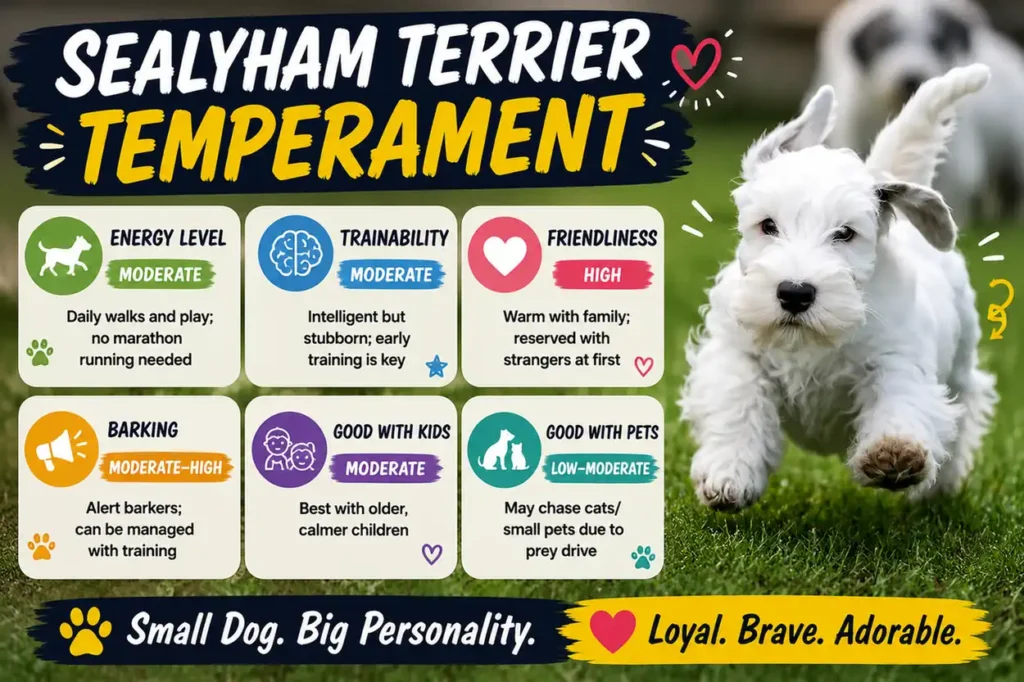
The table below gives a quick overview of core Sealyham Terrier traits to help you assess fit at a glance.
| Trait | Rating | Notes |
| Energy Level | Moderate | Daily walks and play; no marathon running needed |
| Trainability | Moderate | Intelligent but stubborn; early training is key |
| Friendliness | High | Warm with family; reserved with strangers at first |
| Barking | Moderate–High | Alert barkers; can be managed with training |
| Good With Kids | Moderate | Best with older, calmer children |
| Good With Pets | Low–Moderate | May chase cats/small pets due to prey drive |
Are Sealyham Terriers Good Family Dogs?
They can be, but it really depends on your family setup. Sealyhams tend to do best in homes where they get consistent attention, calm energy, and clear rules. They’re not the kind of dog who thrives in chaos. Households with very young children who might pull ears or startle them can be tricky. That said, with older kids who understand boundaries, Sealyhams are genuinely warm and entertaining companions.
How Do Sealyham Terriers Behave Around Children?
The sealyham terrier temperament around kids is generally gentle but not endlessly patient. These dogs tolerate a reasonable amount of activity and noise, but they’re not the kind of breed that will absorb rough play without a reaction. With children aged 8 and older who’ve been taught to interact respectfully with dogs, Sealyhams can form genuinely sweet bonds. Supervision is always recommended, particularly in early interactions.
Do Sealyham Terriers Get Along With Other Dogs?
Generally, yes, with some caveats. Sealyhams tend to get on fine with other dogs of similar or larger size, especially when socialized early. They can be assertive or scrappy toward dogs that challenge them, and same-sex pairings sometimes need more careful management. The terrier tendency to hold their ground means they won’t always back down from confrontation, even when they probably should.
Are Sealyham Terriers Good With Cats and Other Pets?
This is where that hunting heritage really comes through. Sealyhams were bred to pursue and flush out small animals, and that instinct doesn’t disappear in a domestic setting. Cats, rabbits, hamsters, guinea pigs, anything small and fast is potentially a target. Some Sealyhams raised alongside cats from puppyhood do learn to tolerate them reasonably well, but it’s never a guarantee. Smaller caged animals should always be kept well out of reach.
Are Sealyham Terriers Friendly With Strangers?
Reserved is the better word. Sealyhams aren’t aggressive toward strangers, but they’re not the type to run up to every new person with tail wagging. They tend to observe first, then warm up once they’ve decided someone is trustworthy. This actually makes them decent watchdogs, they’ll alert you to visitors without being unnecessarily reactive. Early socialization helps a lot here and keeps that reserved quality from tipping into anxious or standoffish behavior.
Do Sealyham Terriers Bark a Lot?
Moderate to yes. Like most terriers, Sealyhams are alert barkers. They’ll sound off at visitors, strange noises, and sometimes at nothing in particular that you can identify. The good news is that consistent training from a young age does make a real difference. Teaching a “quiet” command early and not inadvertently rewarding barking, by rushing over every time, keeps things manageable.
This comparison shows how Sealyham Terrier behavior stacks up against similar small terrier breeds across key personality traits.
| Trait | Sealyham Terrier | West Highland Terrier | Scottish Terrier |
| Energy Level | Moderate | Moderate–High | Moderate |
| Stubbornness | Moderate | High | High |
| Barking | Moderate–High | High | Moderate |
| Stranger Friendliness | Reserved | Moderate | Reserved |
| Family Affection | High | High | Moderate |
| Prey Drive | High | High | High |

Can Sealyham Terriers Be Left Alone?
For reasonable stretches, yes, they’re less velcro-like than some breeds. Most adult Sealyhams handle 4 to 6 hours alone without major issues, provided they’ve had adequate exercise beforehand. Puppies are a different story and shouldn’t be left alone for long periods. If your household is empty for 8+ hours daily, this breed will likely develop boredom behaviors like digging or excessive barking. A dog walker or midday check-in helps significantly.
Are Sealyham Terriers Easy to Train or Stubborn?
Honest answer: both. They’re genuinely intelligent, canine psychologist Stanley Coren has noted that terrier breeds require motivational training approaches rather than strict command repetition, and Sealyhams fit that profile exactly. They learn quickly when training is engaging, reward-based, and varied. Ask them to repeat the same exercise 20 times in a row and they’ll simply stop cooperating. Short, positive sessions with high-value treats work far better than long drilling sessions. Patience is non-negotiable with this breed.
- Start basic obedience training from 8 weeks onward
- Use food rewards and genuine praise, they respond to enthusiasm
- Keep sessions under 10 minutes to hold attention
- Avoid repetitive drills; mix commands to keep them engaged
- Enroll in a puppy class for early socialization and professional guidance
How Intelligent Are Sealyham Terriers?
Sealyham Terriers are above-average in intelligence, with a particular strength in problem-solving and independent thinking. They were bred to make field decisions without handler direction, which means they’re wired to think for themselves rather than wait for instruction. This makes them quick learners in the right context, but it also means they’ll find workarounds to rules they don’t agree with. Mental stimulation through puzzle feeders, scent work, and varied training activities helps channel this intelligence productively.
Do Sealyham Terriers Have a Strong Prey Drive?
Yes, noticeably so. The breed was specifically developed to hunt small, fast-moving prey underground, and that instinct remains strong in modern Sealyhams. Off-leash time in unfenced areas is risky; a scent or movement can trigger a chase response faster than recall commands can kick in. A secure, fenced yard is strongly recommended. This also affects their compatibility with small pets in the household.
How Much Exercise Does Their Personality Need?
Less than you might expect from a terrier. Sealyhams are one of the more moderate-energy terrier breeds, typically needing around 30 to 45 minutes of exercise per day. Two shorter walks daily, combined with some interactive play at home, usually keeps them well-balanced. They’re physically capable of more, but they don’t demand it the way a working terrier or sporting breed would. Mental exercise, training sessions, puzzle games, nose work, matters just as much as physical activity for this breed.
Common Sealyham Terrier Behavior Problems
The most commonly reported behavior issues in Sealyham Terriers are excessive barking, digging, stubbornness during training, and reactivity toward small animals. Most of these stem directly from under-stimulation or insufficient early socialization rather than inherent aggression. The British Veterinary Association recommends that new terrier owners begin socialization and positive-reinforcement training before 12 weeks of age to reduce the likelihood of persistent behavioral issues in adulthood.
The following table summarizes Sealyham Terrier suitability across common living situations and owner profiles.
| Living Situation / Owner Type | Suitability | Notes |
| Apartment living | Good | Moderate energy; adequate daily walks needed |
| House with yard | Excellent | Secure fencing essential due to prey drive |
| Families with young children | Moderate | Better with calm children aged 8+ |
| Families with older children | Good | Bonds well with respectful older kids |
| First-time dog owners | Low–Moderate | Stubbornness needs experienced handling |
| Experienced terrier owners | Excellent | Ideal match for this personality type |
| Homes with cats/small pets | Low | Strong prey drive poses risks |
| Active singles or couples | Good | Thrives with consistent companionship |

Tips for Raising a Well-Behaved Sealyham Terrier
- Socialize early and broadly, people, children, dogs, sounds, environments
- Set household rules from day one and stick to them consistently
- Use positive reinforcement exclusively; harsh corrections backfire with this breed
- Provide both physical walks and mental challenges daily
- Secure the yard, their prey drive makes containment essential
- Manage barking from puppyhood before it becomes a deeply ingrained habit
Is the Sealyham Terrier the Right Match for Your Lifestyle?
A Sealyham Terrier suits owners who want a compact, affectionate companion with genuine personality and some independence. They adapt well to apartment living if exercised adequately, fit households with older children, and can thrive in both city and suburban settings. They’re not ideal for first-time dog owners who expect easy, instant compliance, or for homes with cats and small pets. If you value a dog with character, loyalty, and a dry sense of humor, and you’re ready to train consistently, the Sealyham Terrier is a remarkable, rarely regretted choice.
Frequently Asked Questions
Is the Sealyham Terrier aggressive?
Sealyham Terriers are not typically aggressive toward people. They can be assertive with other dogs and have a strong prey drive toward small animals, but with proper socialization, aggression toward humans is uncommon. Reactivity without socialization is more likely than true aggression.
Are Sealyham Terriers cuddly?
Yes, more so than many terrier breeds. Sealyhams are genuinely affectionate with their families and often enjoy settling in close to their people after exercise. They’re not as velcro-like as a Cavalier King Charles Spaniel, but they’re warmer and more tactile than most working terriers.
Do Sealyham Terriers calm down with age?
Generally, yes. Most Sealyhams show a noticeable shift toward calmer behavior after age 2 to 3. The terrier energy of puppyhood and adolescence does settle, though their alertness and independent spirit remain throughout their lives.
Are Sealyham Terriers good for first-time owners?
They’re manageable for first-time owners who research the breed thoroughly, commit to early training, and are patient with stubbornness. They’re not the easiest breed to start with, but they’re far less demanding than many other terrier types.
Can Sealyham Terriers live in apartments?
Yes. Their moderate energy levels make them one of the more apartment-compatible terrier breeds, provided they get two daily walks of around 20 minutes each and some mental stimulation at home. Barking is the main management challenge in shared-wall living situations.
Do Sealyham Terriers have separation anxiety?
Some do, particularly if they’ve not been conditioned to alone time from a young age. They’re social dogs who enjoy company, but most adults handle 4 to 6 hours alone reasonably well. Gradual training from puppyhood helps prevent anxiety from developing.