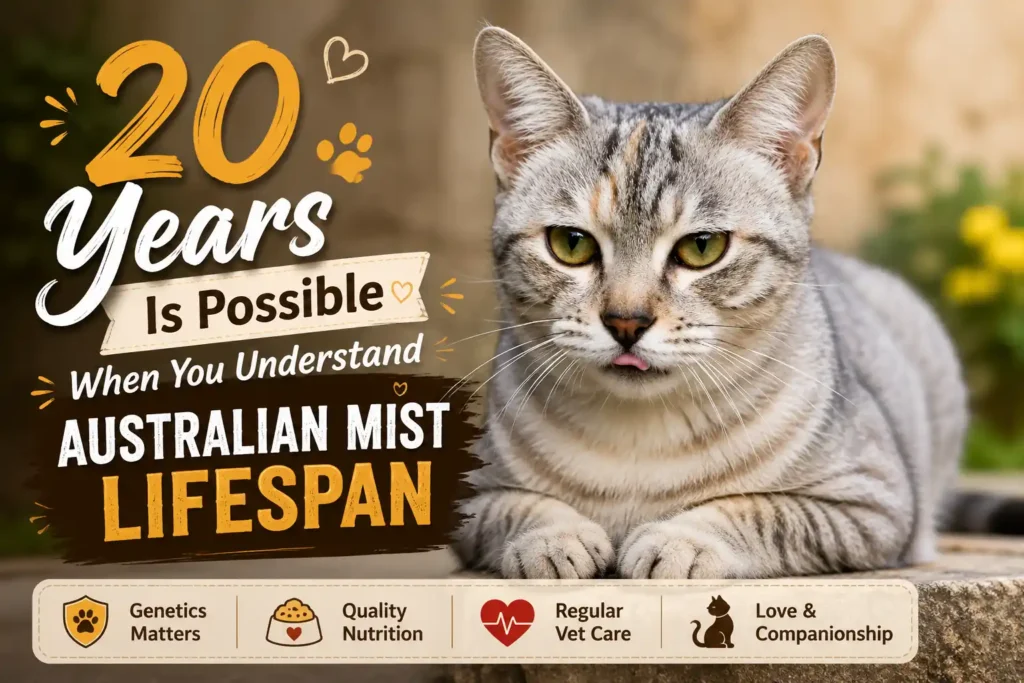
Australian Mist cats typically live 12–18 years, with some reaching 20 years or more. This breed is generally healthy and strong, so a long Australian Mist lifespan is common when owners focus on good food, a healthy weight, and regular vet visits. Genetics also matter, since cats from responsible breeders are less likely to carry health problems that can shorten a cat’s life.
Cats that stay indoors tend to live longer too, because they avoid dangers like traffic, fights, and disease. With steady care at every stage of life, from kitten to senior years, your Australian Mist has a real chance of reaching the higher end of that range.
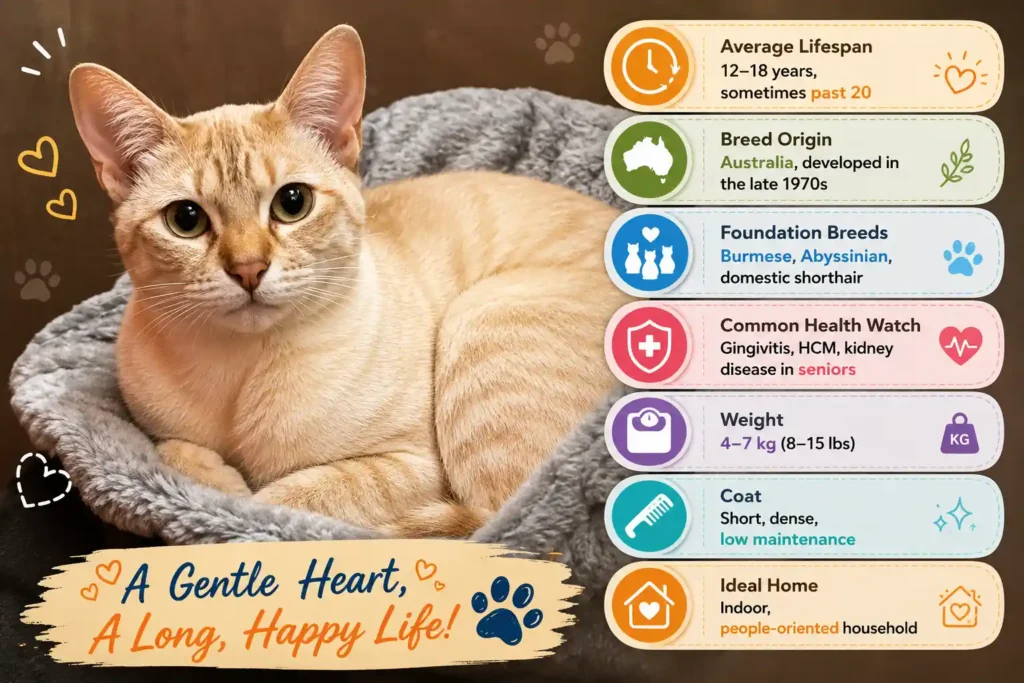
Quick Facts
| Fact | Detail |
| Average Lifespan | 12–18 years, sometimes past 20 |
| Breed Origin | Australia, developed in the late 1970s |
| Foundation Breeds | Burmese, Abyssinian, domestic shorthair |
| Common Health Watch | Gingivitis, HCM, kidney disease in seniors |
| Weight | 4–7 kg (8–15 lbs) |
| Coat | Short, dense, low maintenance |
| Ideal Home | Indoor, people-oriented household |
What Is the Average Australian Mist Lifespan?
The average lifespan sits between 12 and 18 years, a range reflected in breed information published by the Governing Council of the Cat Fancy, one of the world’s oldest cat registries. Some individual cats, particularly those kept indoors with consistent veterinary care, have reportedly lived past 20. That places the breed comfortably ahead of the average domestic cat, which typically lives around 13 to 17 years depending on lifestyle and genetics.
Genetic diversity plays a real role here: the Australian Mist was deliberately created by crossing Burmese, Abyssinian, and domestic shorthair cats, which reduced the concentration of inherited health problems common in older, more inbred pedigree lines. That mixed heritage is likely one reason vets and breeders describe the Mist as a comparatively low-maintenance, long-lived companion. Still, averages are only starting points; individual health, environment, and preventive care shift the number in either direction.
Australian Mist Lifespan by Life Stage
Veterinarians typically divide a cat’s life into distinct stages, and knowing where your Australian Mist falls helps you tailor feeding, exercise, and check-up schedules accordingly. Kittens grow fast and need frequent monitoring, while adults settle into a stable routine that can last for years.
Once a Mist reaches its senior years, small changes in appetite, mobility, or coat condition become far more meaningful, and tracking these stages helps catch problems early, when treatment tends to work best. The table below breaks down what to expect at each point in an Australian Mist’s life.
| Life Stage | Age Range | What to Expect |
| Kitten | 0–12 months | Rapid growth, high energy, core vaccinations and first vet visits |
| Junior | 1–2 years | Reaches adult size; ideal window for spay or neuter follow-up |
| Adult | 3–6 years | Stable weight and energy; annual wellness checks recommended |
| Mature | 7–10 years | Metabolism slows; weight gain risk increases |
| Senior | 11–14 years | Watch for dental disease and early kidney or thyroid changes |
| Geriatric | 15+ years | Twice-yearly vet visits; comfort and mobility become priorities |
Factors That Affect an Australian Mist’s Lifespan
No single factor determines how long a cat lives, but several consistently show up in longevity research. Genetics set the baseline, but daily choices around food, activity, and healthcare do the heavy lifting from there. Cats kept strictly indoors avoid traffic accidents, predators, and infectious diseases spread outdoors, which meaningfully extends survival odds.
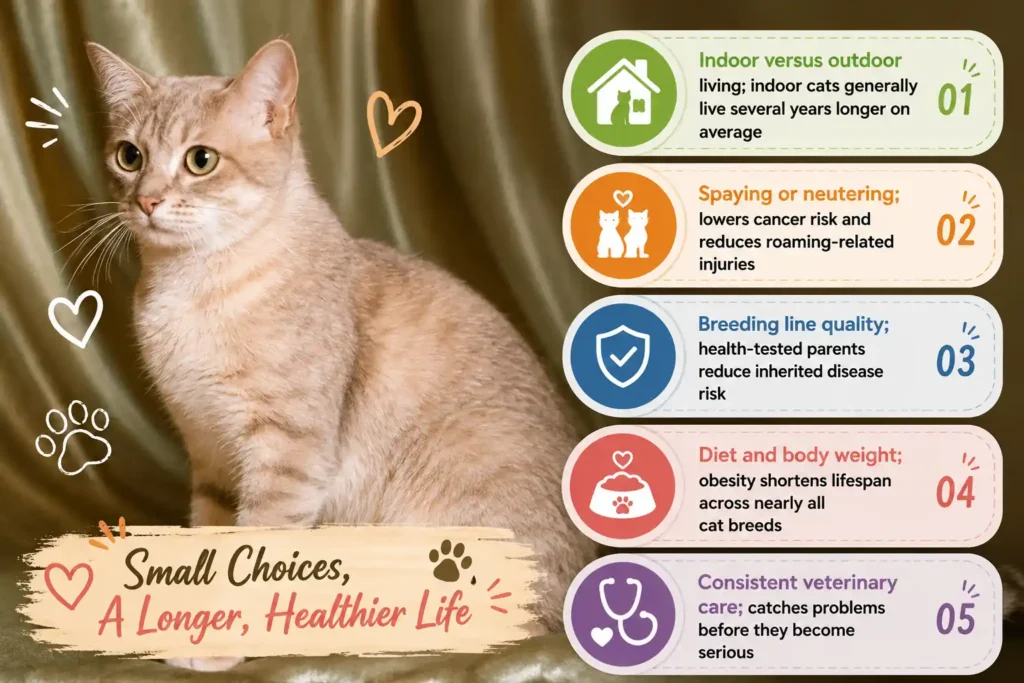
Spaying or neutering also reduces the risk of certain reproductive cancers and behavior-related injuries. Reputable breeders who screen parent cats for inherited conditions give kittens a healthier genetic starting point. The list below summarizes the biggest influences on this breed’s lifespan.
- Indoor versus outdoor living; indoor cats generally live several years longer on average
- Spaying or neutering; lowers cancer risk and reduces roaming-related injuries
- Breeding line quality; health-tested parents reduce inherited disease risk
- Diet and body weight; obesity shortens lifespan across nearly all cat breeds
- Consistent veterinary care; catches problems before they become serious
Common Health Problems That Can Affect Longevity
Australian Mists are generally considered a healthy and robust breed, thanks largely to their diverse hybrid ancestry. However, a few Australian Mists’ health issues occur often enough to deserve attention. Dental disease, especially gingivitis, is among the most frequently reported problems and can cause gum inflammation and tooth loss if left untreated. Hypertrophic cardiomyopathy (HCM), which causes the heart muscle to thicken, has also been observed in the breed and may remain unnoticed without regular veterinary screening. Progressive retinal atrophy (PRA) can occasionally occur as well, leading to gradual and irreversible vision loss, although it is relatively uncommon.
As cats enter their senior years, kidney disease, hyperthyroidism, and diabetes become more likely, mirroring trends seen across nearly all cat breeds. The Cornell Feline Health Center notes that early detection through routine bloodwork significantly improves outcomes for these age-related conditions.
How Diet Affects an Australian Mist’s Lifespan
Nutrition is one of the few longevity factors an owner controls almost entirely. Australian Mist cats are obligate carnivores, meaning their bodies are built to run on animal protein rather than heavy carbohydrate fillers. Kittens need calorie-dense, protein-rich food to fuel rapid growth, while adult cats do better on a balanced maintenance diet fed in two measured meals a day.
Seniors often benefit from slightly lower calories but higher-quality protein to protect aging kidneys and muscle mass. Because the breed genuinely enjoys food and can overeat given the chance, portion control matters more here than with many other breeds. A high-quality commercial diet formulated for the correct life stage, checked against your vet’s recommendations, remains the safest approach.
Exercise and Weight Management
Even though Australian Mists have a famously relaxed, easygoing temperament, they still need regular movement to stay lean. Short daily play sessions with a wand toy or ball keep joints mobile and prevent the slow weight creep that shortens lifespan in indoor cats. Climbing shelves, scratching posts, and puzzle feeders encourage natural movement without requiring constant supervision.
Weighing your cat every few months, or asking your vet to check at each visit, catches gradual gain before it becomes a medical issue. Because obesity is directly linked to diabetes, joint strain, and reduced life expectancy, keeping your Mist at a healthy weight is one of the simplest ways to protect its long-term health.
Veterinary Care and Preventive Health
Routine veterinary care is arguably the single biggest lever owners have over Australian Mist lifespan. Annual wellness exams catch subtle changes in weight, bloodwork, and dental health long before symptoms become obvious at home. The American Association of Feline Practitioners recommends that cats aged seven and older move to twice-yearly checkups, since age-related disease can progress quickly in that window.
Core vaccinations, including protection against feline viral rhinotracheitis, calicivirus, and panleukopenia, remain essential throughout life, alongside parasite prevention for fleas, ticks, and worms. Dental cleanings under anesthesia, though they sound intimidating, are often the most effective way to prevent the gingivitis this breed is prone to.
What Is the Most Common Health Issue in Australian Mists?
Dental disease, particularly gingivitis, is the most commonly reported health issue in Australian Mist cats. Regular tooth brushing, dental treats, and professional cleanings significantly reduce the risk of gum inflammation and tooth loss.
How to Help Your Australian Mist Live Longer
Small, consistent habits add up to real years over a cat’s lifetime. None of the following steps require special equipment or expensive products, just routine and attention paid early rather than after a problem shows up.
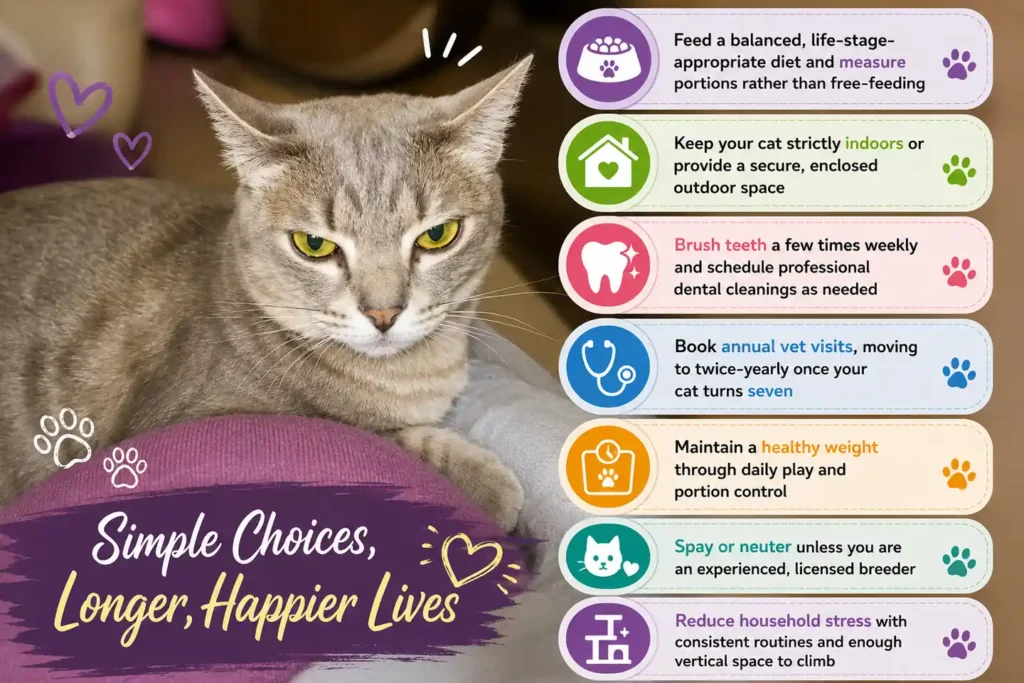
- Feed a balanced, life-stage-appropriate diet and measure portions rather than free-feeding
- Keep your cat strictly indoors or provide a secure, enclosed outdoor space
- Brush teeth a few times weekly and schedule professional dental cleanings as needed
- Book annual vet visits, moving to twice-yearly once your cat turns seven
- Maintain a healthy weight through daily play and portion control
- Spay or neuter unless you are an experienced, licensed breeder
- Reduce household stress with consistent routines and enough vertical space to climb
Discover What Life With an Australian Mist Cat Is Really Like. Read more in 7 Australian Mist Cat Facts, Including One Big Hypoallergenic Myth.
Signs Your Australian Mist Is Aging
Aging in cats is often subtle at first, which is exactly why owners need to know what to watch for. A senior Australian Mist may sleep more, move more stiffly on stairs, or show less interest in play than before. Increased thirst or urination can point to early kidney changes, while unexplained weight loss despite a normal appetite sometimes signals hyperthyroidism.
Cloudy eyes, bad breath, or visible tartar buildup usually mean it’s time for a dental check. Coat texture can also shift, becoming duller or slightly greasy as grooming habits change with age. Any sudden behavior change in an older cat is worth a vet visit rather than waiting it out.
How Can I Help My Australian Mist Live Longer?
The most effective steps are keeping your cat indoors, feeding a portion-controlled protein-rich diet, maintaining a healthy weight, and scheduling regular veterinary checkups, twice yearly after age seven. Consistent dental care also plays an outsized role in this breed.
Australian Mist Lifespan Compared With Other Cat Breeds
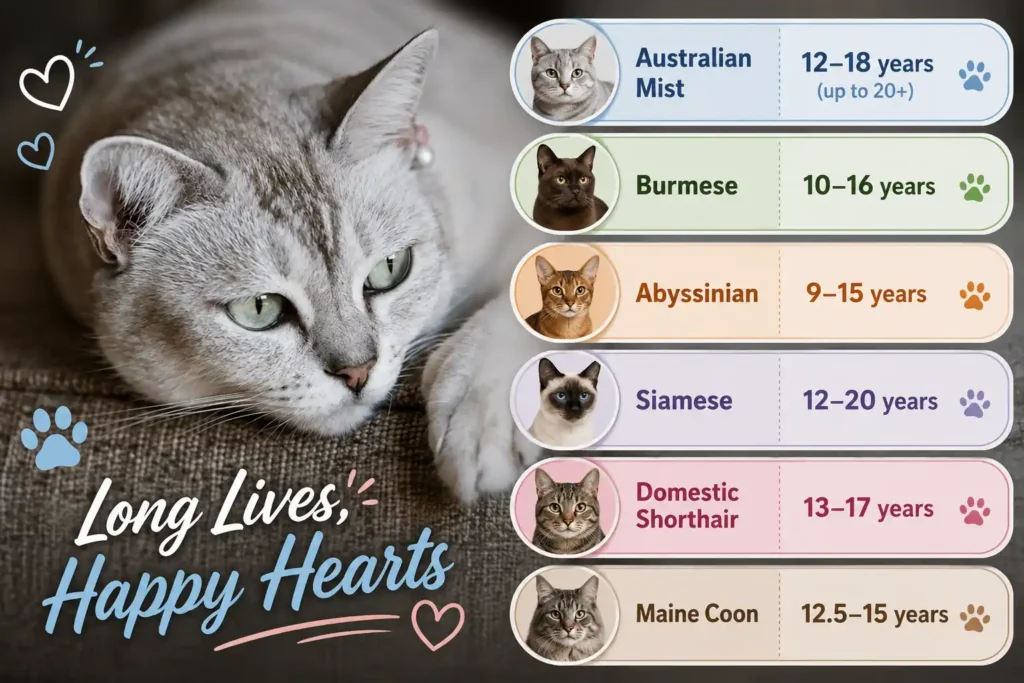
Seeing this breed’s lifespan next to other popular breeds helps put the numbers in perspective. The comparison below uses averages compiled from breed registries and veterinary breed guides, and actual outcomes still depend heavily on individual care.
| Breed | Average Lifespan |
| Australian Mist | 12–18 years (up to 20+) |
| Burmese | 10–16 years |
| Abyssinian | 9–15 years |
| Siamese | 12–20 years |
| Domestic Shorthair | 13–17 years |
| Maine Coon | 12.5–15 years |
The Real Key to a Long Australian Mist Lifespan
Australian Mist lifespan comes down to a mix of genetics and everyday care, and the good news is that most of what shapes those years is well within your control. With an average range of 12 to 18 years, and some cats living well past 20, this breed rewards owners who stay consistent with diet, weight management, dental care, and routine vet visits. Keeping your cat indoors, watching for early signs of aging, and moving to twice-yearly checkups after age seven all add up over time.
There’s no single trick to a longer life, just steady attention paid at every stage. Give your Australian Mist a stable routine, good nutrition, and regular veterinary care, and you give it the best possible shot at a long, healthy, and happy life by your side.
Frequently Asked Questions
What is the average Australian Mist lifespan?
The average Australian Mist lifespan is 12 to 18 years, with some cats living into their early twenties under good care.
Are Australian Mist cats generally healthy?
Yes. Their mixed Burmese, Abyssinian, and domestic shorthair ancestry gives them broader genetic diversity than many purebred cats, which tends to reduce inherited health problems.
What health issues should I watch for as my Australian Mist ages?
Dental disease, kidney issues, hyperthyroidism, and heart conditions such as hypertrophic cardiomyopathy become more common in seniors and are worth screening for during annual checkups.
Do indoor Australian Mists live longer than outdoor cats?
Yes. Indoor cats avoid traffic, predators, and infectious disease exposure, all of which meaningfully shorten outdoor cats’ average lifespan.
Is the Australian Mist a good family cat?
Yes. The breed is known for a calm, affectionate temperament that adapts well to children, other pets, and apartment living.