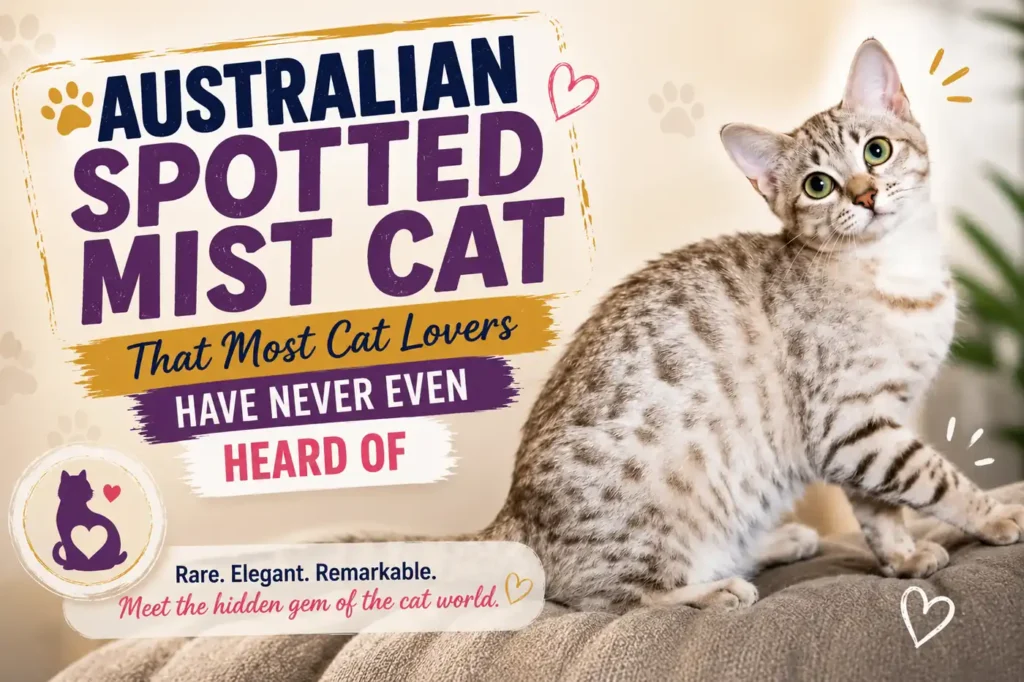
The Australian Spotted Mist Cat is a medium-sized breed known for its soft, blurred spots and warm, affectionate nature. Bred in Australia during the 1970s, the Australian Spotted Mist Cat combines Burmese, Abyssinian, and domestic shorthair genes to create a cat with a muscular yet elegant body, rounded head, and large green eyes. Its short, glossy coat comes in shades like brown, blue, chocolate, and caramel, each marked with a misty, spotted tabby pattern that seems to shimmer under light.
Beyond its striking looks, this breed is famous for being deeply loyal, often following its owners from room to room and craving physical closeness. Calm, playful, and highly people-oriented, it adapts well to indoor life and gets along easily with children and other pets.
What Is the Australian Spotted Mist Cat Like as a Pet?
Affection ranks as the defining trait of this rare Aussie breed. Burmese ancestry brings the people-focused, chatty personality, while Abyssinian genes add agility and a love of climbing. Domestic shorthair bloodlines round out the mix, adding hardiness and a broader gene pool. Families often describe the cat as dog-like, since it follows owners from room to room and greets visitors instead of hiding. Apartment living suits the breed well, provided daily attention and play stay part of the routine. Boredom, more than illness, tends to be the biggest challenge these cats face indoors.
Where Did the Breed Come From?
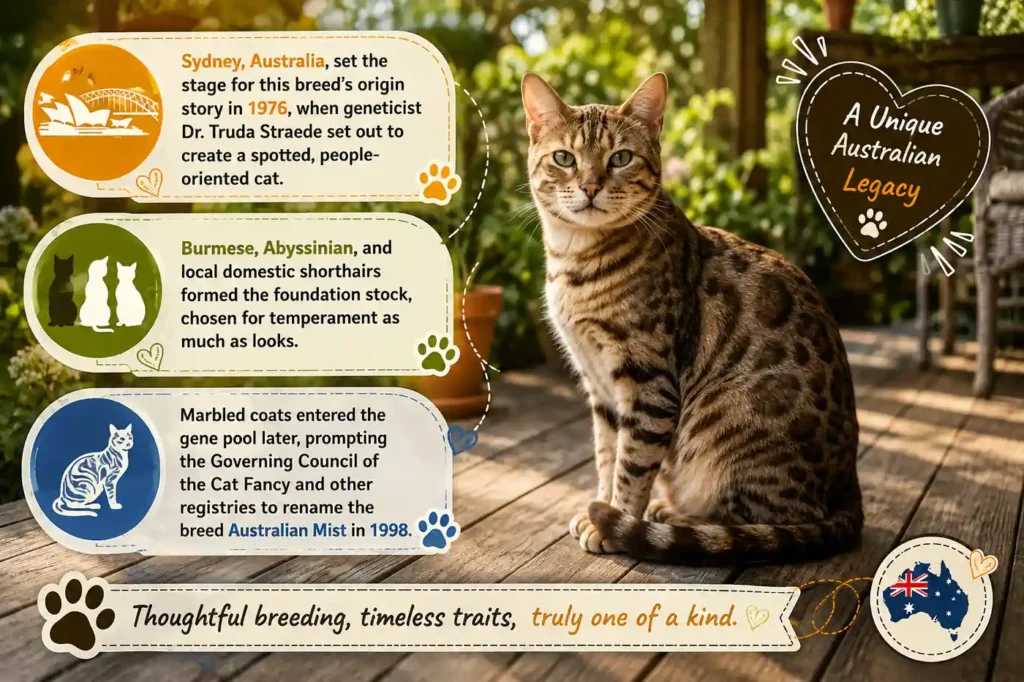
Sydney, Australia, set the stage for this breed’s origin story in 1976, when geneticist Dr. Truda Straede set out to create a spotted, people-oriented cat. Burmese, Abyssinian, and local domestic shorthairs formed the foundation stock, chosen for temperament as much as looks. Nintu Horatio, born in 1980, became the first kitten to match Straede’s vision.
Early breed clubs registered the cat as the Australian Spotted Mist Cat, a name tied directly to its spotted coat and origin. Marbled coats entered the gene pool later, prompting the Governing Council of the Cat Fancy and other registries to rename the breed Australian Mist in 1998. Full championship status followed across Australian, British, and American cat associations.
Quick Answer: What Does “Misting” Mean in This Breed’s Coat?
Misting describes a light, hazy overlay of ticking on each hair shaft, softening the edges of every spot or marble marking. Kittens show faint patterning at birth, and the effect sharpens gradually, usually finishing around two years of age.
Appearance and Physical Features
Medium build defines the Australian Mist’s frame, with adults weighing 8 to 15 pounds. Rounded heads, wide-set green eyes, and softly curved ears give the face a gentle look. Short, silky fur lies close to the body, reducing shedding compared with many breeds. Seven recognized colors, brown, blue, chocolate, lilac, gold, peach, and caramel, appear in a spotted or marbled pattern. Full coat color takes up to two years to develop, so a kitten’s markings can look different from its adult coat. Spotted patterning like this gave the breed its original name, the Spotted Mist, back in the 1970s.
A quick side-by-side of the breed’s core physical stats makes it easy to see how it compares with other medium-sized pedigree cats.
| Trait | Detail |
| Weight | 8–15 lbs (3.5–7 kg) |
| Height | 8–10 inches at the shoulder |
| Coat Type | Short, silky, low-shedding |
| Eye Color | Green (gold cast allowed in kittens under 18 months) |
| Recognized Colors | Brown, blue, chocolate, lilac, gold, peach, caramel |
| Coat Patterns | Spotted or marbled tabby |
| Full Color Development | Up to 2 years |
Personality and Temperament
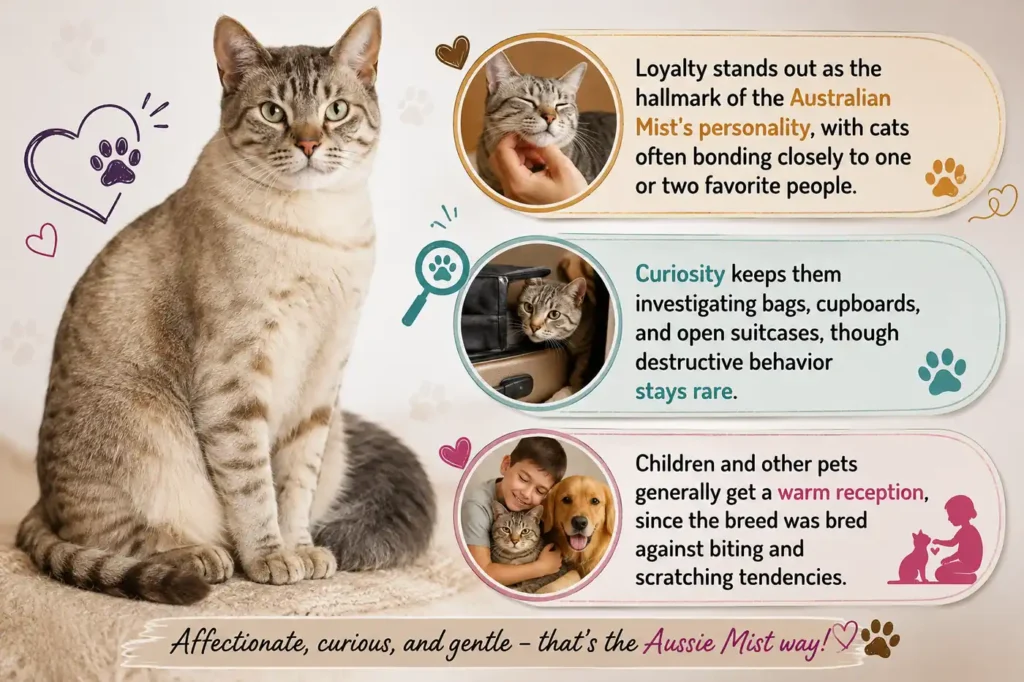
Loyalty stands out as the hallmark of the Australian Mist’s personality, with cats often bonding closely to one or two favorite people. Curiosity keeps them investigating bags, cupboards, and open suitcases, though destructive behavior stays rare. Vocal communication happens often but softly, more chirp than yowl.
Children and other pets generally get a warm reception, since the breed was bred against biting and scratching tendencies. Older cats mellow considerably, trading kitten zoomies for calmer lap time. Long separations from favorite humans tend to cause more stress in this breed than in many others.
Grooming and General Care
Weekly brushing keeps the short coat glossy and removes loose hair before it lands on furniture. Nail trims every one to two weeks prevent overgrowth, especially indoors. Dental disease affects many adult cats generally, so daily tooth brushing with pet-safe paste offers real long-term benefit.
Weekly ear checks catch wax buildup early, before it turns into infection. Bathing stays rarely necessary, since the coat sheds dirt easily and the cat grooms itself well. Routine care like this takes only a few minutes most days, suiting owners who want a low-maintenance pedigree cat.
A simple weekly routine covers nearly all of this breed’s grooming needs, as the checklist below shows.
| Grooming Task | Recommended Frequency | Why It Matters |
| Brushing | Once weekly | Removes loose hair, keeps coat glossy |
| Nail trimming | Every 1–2 weeks | Prevents overgrowth and snagging |
| Teeth brushing | Daily | Reduces plaque and dental disease risk |
| Ear checks | Weekly | Catches wax buildup before infection |
| Bathing | Rarely needed | Coat naturally resists dirt and odor |
Quick Answer: Is the Australian Mist Cat Hypoallergenic?
No cat breed counts as fully hypoallergenic, and the Australian Mist is no exception. Short, low-shedding fur can mean fewer allergens around the home, but allergy sufferers should still spend time with the breed before adopting.
Diet and Feeding Needs
High-protein commercial food suits the Australian Mist well, since the breed carries no documented special nutritional requirements. Measured portions matter more than food type, because this breed can gain weight quickly once settled into indoor life. Fresh water should stay available at all times, ideally in more than one bowl.
Wet food adds useful hydration for cats that don’t drink much on their own. Kitten-specific formulas support the two years of growth and coat development this breed typically needs. Treats work best kept under ten percent of daily calories, following guidance from the World Small Animal Veterinary Association.
Exercise and Daily Activity
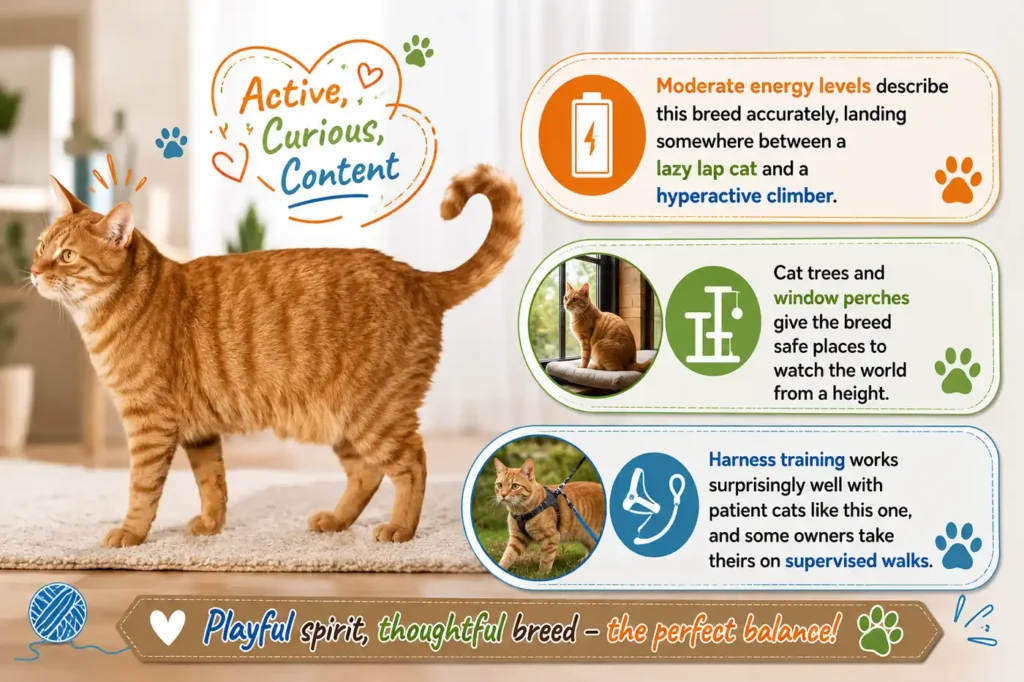
Moderate energy levels describe this breed accurately, landing somewhere between a lazy lap cat and a hyperactive climber. Interactive toys, feather wands, and puzzle feeders keep the mind engaged during short play sessions. Cat trees and window perches give the breed safe places to watch the world from a height.
Harness training works surprisingly well with patient cats like this one, and some owners take theirs on supervised walks. Ten to fifteen minutes of active play twice daily generally covers an adult cat’s exercise needs. Extra weight becomes a real risk factor for joint and heart problems later in life.
Health and Lifespan
Twelve to sixteen years represents the typical lifespan for a well-cared-for Australian Mist, with some individuals reaching eighteen. Genetic diversity from the breed’s three foundation lines has helped keep inherited disease rates low compared with many older pedigree breeds. Hypertrophic cardiomyopathy, a heart condition seen across many cat breeds, still warrants periodic screening from middle age onward.
Dental disease and obesity rank among the more common issues, both largely preventable with the care routines covered earlier. Kidney function bears watching once a cat passes seven, echoing senior-care guidance from the American Association of Feline Practitioners. Annual wellness exams, running $150 to $300 USD, catch problems early.
The table below sums up the breed’s health and longevity picture at a glance.
| Category | Details |
| Average Lifespan | 12–16 years (up to 18 with excellent care) |
| Common Watch Points | Dental disease, obesity, HCM, kidney function |
| Recommended Screening Age | Annual wellness exams from age 7 onward |
| Estimated Annual Wellness Cost | $150–$300 USD routine; $1,000+ USD senior care |
Quick Answer: Does the Australian Mist Have Breed-Specific Health Problems?
No inherited health problems specific to the Australian Mist appear in current breed club records. General feline conditions such as dental disease, obesity, and age-related heart or kidney issues still apply, the same as for any cat.
Behavior and Social Needs
Multi-pet households tend to suit this breed better than solitary living, since the cat bonds with other animals almost as readily as with people. Daily interaction ranks as a real need, not just a preference, and cats left alone for long hours can grow clingy. New environments rarely cause lasting stress, thanks to an adaptable temperament shaped over decades of selective breeding.
Training responds well to positive reinforcement, with many cats learning simple tricks or leash walking within weeks. Visitors usually get a curious greeting rather than a hiding act. Retirement-age owners and busy families both report success with this breed, provided someone is around for part of most days.
Kitten Care and Development
Nine to ten weeks marks the age when most breeders release Australian Mist kittens to new homes, allowing time for socialization with littermates. Vaccination schedules generally start around six to eight weeks, with boosters continuing every three to four weeks until sixteen weeks, per standard veterinary guidance.
Play behavior peaks hard during kittenhood, with mock hunting and pouncing games building coordination for adulthood. Coat color keeps developing for up to two years, so patience matters before judging a kitten’s final look. Spaying or neutering around four to six months prevents unwanted litters and offers documented health benefits.
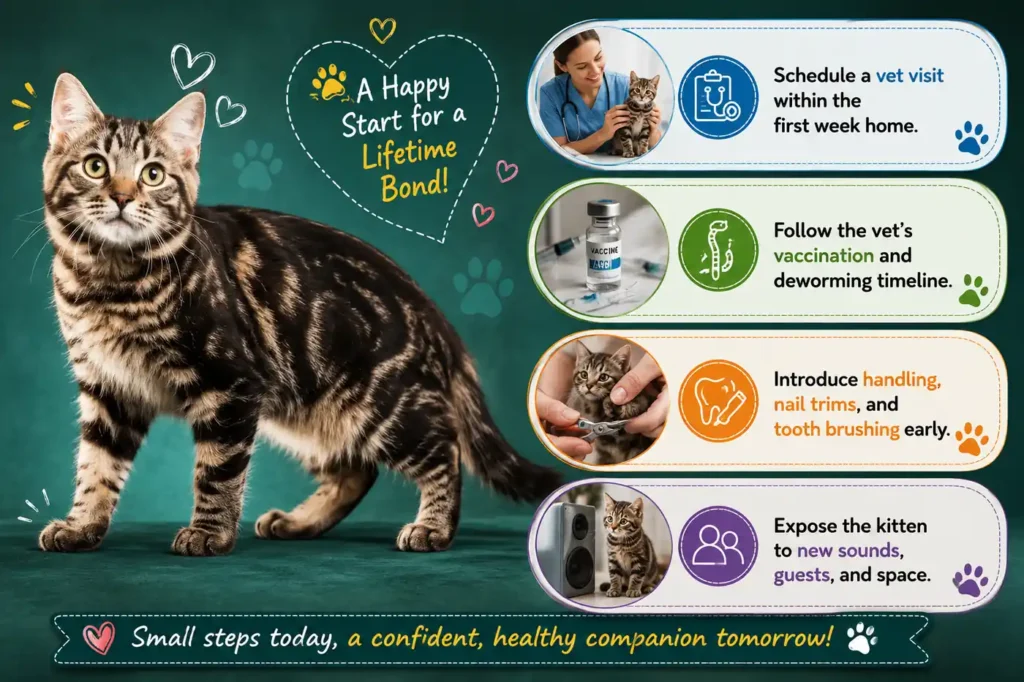
A short checklist covers the essentials during a kitten’s first few months:
- Schedule a vet visit within the first week home
- Follow the vet’s vaccination and deworming timeline
- Introduce handling, nail trims, and tooth brushing early
- Expose the kitten to new sounds, guests, and spaces
What Is It Like to Own an Australian Mist Cat?
Daily life with this breed involves a fair amount of company, since these cats tend to supervise cooking, calls, and even bathroom trips. Furniture damage stays minimal for most owners, thanks to low destructive tendencies bred into the line. Travel and boarding can prove stressful, given how attached these cats become to their routines.
Multi-story homes give the breed plenty to explore, though a single cat tree works just as well in smaller apartments. Long-term costs stay reasonable compared with breeds needing specialist grooming or frequent vet visits. Real satisfaction, per owner reports from breed clubs, comes from constant companionship rather than any particular trick.
Is This Breed a Good Fit for Your Home?
Busy households with children usually do well with this breed, given its documented tolerance for handling and noise. Allergy sufferers should still meet the cat in person, since low shedding doesn’t guarantee zero allergens. Owners who travel often or work long hours away may find the breed’s need for company challenging.
Multi-pet homes rarely see friction, as the Australian Mist adapts easily to cats and dogs alike. First-time pedigree owners often find the breed forgiving, since grooming and health needs stay simple. Anyone drawn to striking spotted coats and genuine affection will likely find the Australian Spotted Mist Cat checks every box.
- Good fit: families, first-time pedigree owners, retirees, multi-pet homes
- Needs thought: frequent travelers, long-hours-away households, tight import budgets
Final Word on the Australian Spotted Mist Cat
Dr. Truda Straede’s decades of careful breeding produced a genuinely rare, affectionate cat in the Australian Mist. History traces back to 1976 in Sydney, with Burmese, Abyssinian, and domestic shorthair roots shaping both looks and temperament. Appearance features a hazy, spotted or marbled coat across seven colors, paired with striking green eyes.
Personality leans loyal and people-focused, while grooming and diet needs stay simple for a pedigree breed. Moderate exercise, a twelve-to-sixteen-year lifespan, and low rates of inherited disease round out the practical picture. Kittens need patient socialization, and adult cats reward that investment with steady companionship for years. Families and first-time pedigree owners have good reason to consider the Australian Spotted Mist Cat, though rarity outside Australia means budgeting time to find a reputable breeder.
Frequently Asked Questions
Are Australian Mist Cats Friendly?
Yes, exceptionally so. Bred for a people-oriented temperament, these cats greet visitors and follow owners around the house.
Is the Australian Spotted Mist Cat a Rare Breed?
Yes. Fewer than a few hundred kittens get registered each year internationally, keeping the breed uncommon outside Australia.
Are Australian Mist Cats Good With Kids?
Very much so. Selective breeding reduced biting and scratching, so the breed’s patient, playful nature suits kids well.
Is the Australian Mist Cat Good for a First-Time Owner?
Yes, thanks to simple grooming, no special diet needs, and a forgiving temperament well suited to new owners.
How Much Does an Australian Mist Cat Cost?
Kittens from reputable breeders typically cost between $800 and $1,500 USD, depending on pedigree, location, and whether the cat is show or pet quality.
How Large Do Australian Mist Cats Get?
Adults typically weigh 8 to 15 pounds and stand 8 to 10 inches tall, a solidly medium-sized cat.
How Long Do Australian Mist Cats Live?
With good care, lifespan runs 12 to 16 years, and some well-monitored cats live past 18.