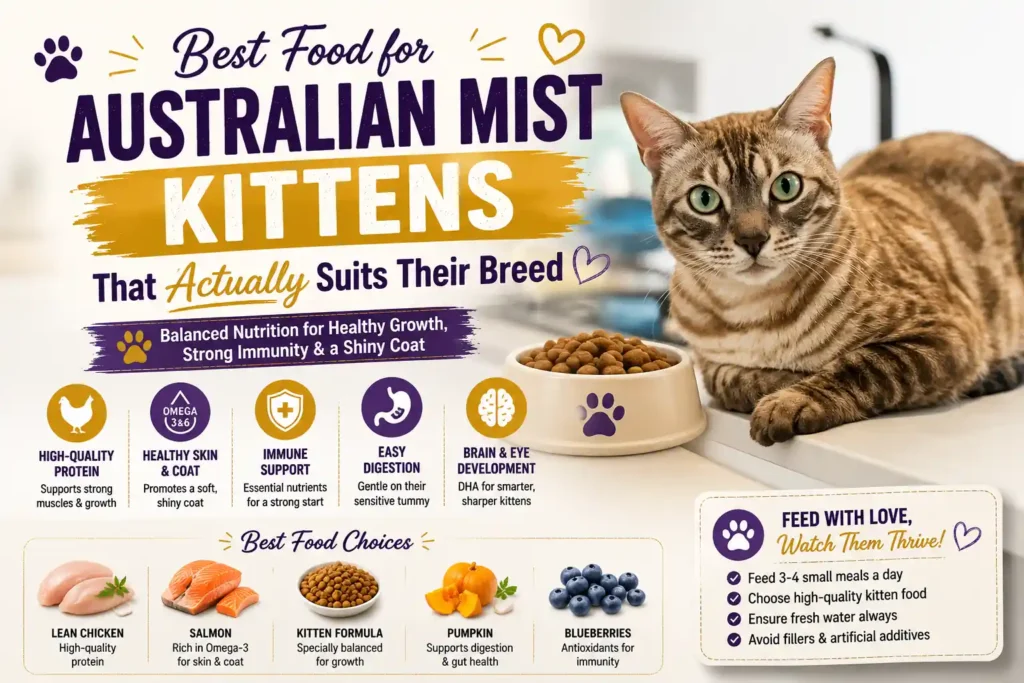
The best food for Australian Mist kittens is a nutrient-dense, high-protein diet made specifically for growing kittens, not adult cats or generic pet store brands. Look for a formula that lists real meat, poultry, or fish as the first ingredient, with at least 30-40% protein and moderate healthy fats to support their naturally high energy levels.
Because Australian Mist kittens carry Burmese bloodlines and a strong appetite, portion control matters just as much as ingredient quality; a food certified by AAFCO for growth or “all life stages” ensures they get proper calcium, phosphorus, and DHA for bone and brain development without excess calories that lead to early weight gain.
Many vets recommend a mix of wet and dry kitten food, since wet food adds hydration and dry food supports dental health, and both should be free from fillers like corn syrup, artificial colors, or excessive plant-based proteins. Choosing the best food for Australian Mist kittens early on sets the foundation for a lean, muscular adult cat with fewer digestive or joint issues later in life.
What to Look for in the Best Food for Australian Mist Kittens
Animal-based protein should top the ingredient list on any kitten formula, since cats are obligate carnivores needing taurine, arginine, and other amino acids found almost exclusively in meat. Growth formulas differ from adult diets in calorie density, calcium-to-phosphorus ratio, and fat content, supporting rapid bone and muscle development.
DHA, an omega-3 fatty acid, supports brain and eye development and appears naturally in fish oil or gets added to many commercial kitten diets. AAFCO (Association of American Feed Control Officials) sets the minimum nutrient profiles responsible manufacturers follow, so a label reading “complete and balanced for growth” confirms the formula meets those standards. Fillers such as excessive corn or unnamed meat by-products add little value compared with a named protein source.
What Is the Best Food for Australian Mist Kittens?
A nutrient-dense, AAFCO-approved growth formula with a named animal protein first, at least 35% crude protein on a dry matter basis, added DHA, and a controlled calcium-to-phosphorus ratio fits the bill. Wet, dry, or a mixed routine can all work, provided portions match age and weight.
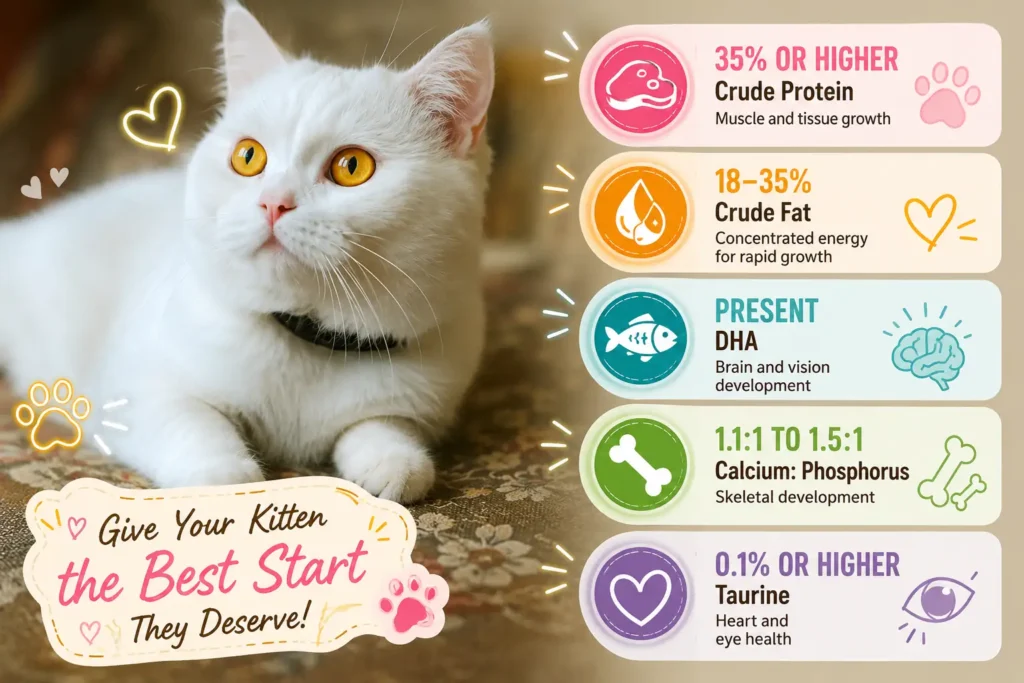
The table below breaks down the core nutrients a quality kitten formula should provide during the growth phase.
| Nutrient | Recommended Level | Why It Matters |
| Crude Protein | 35% or higher (dry matter) | Muscle and tissue growth |
| Crude Fat | 18-35% | Concentrated energy for rapid growth |
| DHA | Present, ideally fish-oil sourced | Brain and vision development |
| Calcium: Phosphorus | Roughly 1.1:1 to 1.5:1 | Skeletal development |
| Taurine | 0.1% or higher (dry matter) | Heart and eye health |
Wet or Dry Food: Which Is Better for Australian Mist Kittens?
Moisture content sits at roughly 75-80% in wet food versus just 6-10% in dry kibble, a gap that matters for kittens who don’t always drink enough water on their own. Dry kibble offers convenience, a longer shelf life, and a texture that can help scrape plaque from developing teeth, though it shouldn’t serve as a kitten’s sole hydration source.
Wet food tends to be more palatable for finicky eaters and mirrors the higher-protein, lower-carbohydrate diet a cat’s digestive system evolved to handle. Many veterinarians recommend a mixed feeding approach, offering wet food for hydration and dry food for grazing between meals.
This side-by-side comparison makes the wet-versus-dry decision easier to picture at a glance.
| Factor | Wet Food | Dry Food |
| Moisture content | About 75-80% | About 6-10% |
| Shelf life after opening | 24-48 hours refrigerated | Weeks in a sealed container |
| Dental benefit | Minimal | Some plaque-scraping action |
| Palatability | Generally higher | Varies by kitten |
| Cost per calorie | Higher | Lower |
Is Wet or Dry Food Better for Kittens?
Neither format wins outright. Wet food supports hydration and mirrors a cat’s natural high-protein, high-moisture diet, while dry food supports dental health and convenience. A mixed routine combining both, portioned to calorie needs, works well for most Australian Mist kittens.
How Much Should an Australian Mist Kitten Eat?
Adult Australian Mists typically settle between 8 and 15 pounds (4 to 7 kilograms), per breed standards from the Governing Council of the Cat Fancy, and kittens build toward that frame gradually over the first year. A kitten weighing around 2 pounds (900g) at eight weeks generally needs roughly 200-260 calories a day, split across several small meals.
Portions should climb steadily as body weight increases, with most kittens needing noticeably more food between three and six months, the period of fastest skeletal growth. Weighing a kitten weekly gives a clearer picture of portion needs than judging by appearance alone. Best food for Australian Mist kittens still needs portion control, since this breed’s hearty appetite makes overfeeding a real risk.
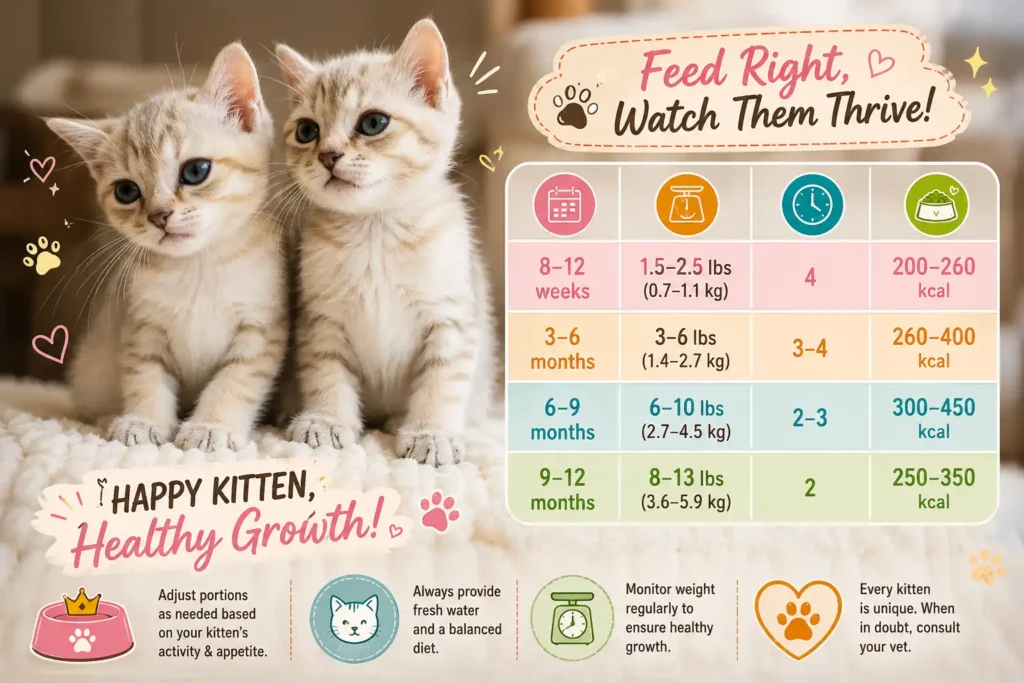
A simple age-and-weight chart makes daily portioning far less guesswork-driven.
| Age | Approx. Weight | Meals/Day | Daily Calories |
| 8-12 weeks | 1.5-2.5 lbs (0.7- 1.1 kg) | 4 | 200-260 kcal |
| 3-6 months | 3-6 lbs (1.4- 2.7 kg) | 3-4 | 260-400 kcal |
| 6-9 months | 6-10 lbs (2.7- 4.5 kg) | 2-3 | 300-450 kcal |
| 9-12 months | 8-13 lbs (3.6- 5.9 kg) | 2 | 250-350 kcal |
How Much Should You Feed an Australian Mist Kitten?
Most Australian Mist kittens need 200 to 400 calories a day depending on age and weight, split into three to four meals up to six months old, then reduced to two meals by their first birthday. Daily weigh-ins help fine-tune portions.
How Often Should You Feed an Australian Mist Kitten?
Newborn kittens nurse roughly every two hours, but by eight weeks old, four measured meals a day becomes the standard recommendation from most veterinary nutritionists. Meal frequency should drop to three times daily around three to four months, then to twice daily by six to nine months as growth slows.
Free-feeding dry food around the clock sounds convenient, but it works against portion control and can encourage the grazing habits linked to adult obesity in this breed. Consistent mealtimes, held at roughly the same hours each day, help regulate appetite and make litter box habits predictable. Fresh water should stay available at all times.
Foods to Avoid for Australian Mist Kittens
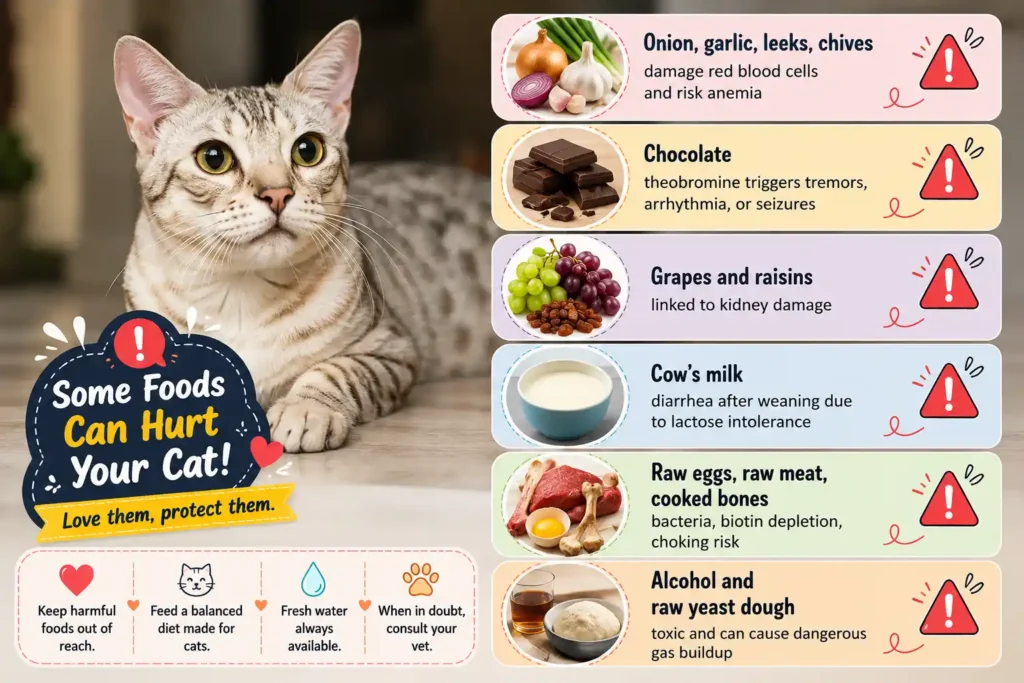
Onions, garlic, leeks and chives sit at the top of the danger list, since compounds in the allium family damage feline red blood cells and can trigger anemia even in small amounts. Chocolate contains theobromine, a stimulant cats process far more slowly than humans do, causing tremors or an irregular heartbeat in a kitten’s small body.
Grapes and raisins have been linked to kidney damage, and cow’s milk causes diarrhea in most kittens once they lose lactose tolerance after weaning. The ASPCA Animal Poison Control Center keeps a regularly updated list of foods that pose a risk to cats. The best food for Australian Mist kittens comes from a bag or can formulated for feline nutrition, never from a scrap off someone’s plate. A short list worth pinning to the fridge:
- Onion, garlic, leeks, chives; damage red blood cells and risk anemia
- Chocolate; theobromine triggers tremors, arrhythmia, or seizures
- Grapes and raisins; linked to kidney damage
- Cow’s milk; diarrhea after weaning due to lactose intolerance
- Raw eggs, raw meat, cooked bones; bacteria, biotin depletion, choking risk
- Alcohol and raw yeast dough; toxic and can cause dangerous gas buildup
Can Australian Mist Kittens Eat Adult Cat Food?
Adult cat food lacks the calorie density, calcium levels, and DHA a growing kitten needs, making it unsuitable as a primary diet before the one-year mark. An occasional bite of a housemate’s adult food won’t cause harm, but a steady diet of it can leave a fast-growing kitten short on nutrients that support proper bone and muscle development.
Multi-cat households often solve this by feeding kittens and adults separately or using microchip-activated feeders. Kitten formulas run higher in protein and fat, which a less active adult cat doesn’t need in the same quantities. Reading the AAFCO life-stage statement on the label removes the guesswork.
Can Australian Mist Kittens Eat Human Food?
Small amounts of plain, cooked chicken, turkey or fish make an occasional treat, provided they arrive boneless, unseasoned and offered in modest portions. Cooked eggs, small pieces of cooked carrot or pumpkin, and plain cooked rice are generally safe in tiny quantities and won’t unbalance a diet built around a complete kitten food.
Treats, including safe human foods, should never exceed about 10% of daily calories, with the main meal trimmed slightly to compensate. Seasoned, fatty, or processed human foods offer little value and can trigger digestive upset. Dairy causes more harm than good for most cats, despite the classic image of a kitten lapping up milk.
When Should Australian Mist Kittens Switch to Adult Food?
Most kittens, Australian Mist included, become ready to transition to adult food between 10 and 12 months old, once skeletal growth has largely finished. Spayed or neutered kittens, the majority in pet homes, sometimes benefit from switching slightly earlier since fixed cats carry lower calorie needs. The World Small Animal Veterinary Association recommends transitioning any cat food gradually over seven to ten days, mixing new food with old.
Best food for Australian Mist kittens becomes best food for Australian Mist adults through this gradual handover, not an abrupt swap made overnight. A vet check around the one-year mark is a sensible moment to confirm appropriate weight and body condition before making the switch official.
Discover What to Know Before Bringing an Australian Mist Kitten Home. Read more in 7 Australian Mist Cat Facts, Including One Big Hypoallergenic Myth.
Final Feeding Tips for a Happy, Healthy Kitten
Feeding an Australian Mist kitten well comes down to a handful of consistent habits rather than any single trick. A complete, AAFCO-approved growth formula with real animal protein, DHA and balanced minerals covers the basics, whether that arrives in wet, dry or a mixed format. Portion sizes and meal frequency shift as the kitten grows, from four small meals at eight weeks down to two by the first birthday, with body weight checked regularly along the way.
Dangerous foods like onions, chocolate, grapes and raw eggs deserve a permanent spot on the kitchen’s no-fly list, while occasional plain human food treats stay within about 10% of daily calories. Adult cat food and full human meals both wait until closer to the one-year mark, with any switch happening gradually. Best food for Australian Mist kittens, in the end, is simply a formula matched to the kitten’s age, weight, and this breed’s famously enthusiastic appetite. Getting these basics right early sets up a lifetime of steady weight, strong bones and the affectionate personality this breed is known for.
Australian Mist Kitten Food FAQs
How many times a day should I feed my Australian Mist kitten?
Four small meals a day suits most kittens under four months old, dropping to three, then two, as they approach their first birthday.
Is grain-free food better for Australian Mist kittens?
Grain-free isn’t inherently better; what matters more is a named animal protein listed first and a complete, AAFCO-approved growth formula.
Why does my Australian Mist kitten seem hungry all the time?
This breed is famous for a hearty appetite. Confirming portions match weight and age using packaging guidelines helps, and a vet visit is worthwhile if hunger seems constant.
Can Australian Mist kittens follow a raw food diet?
Raw diets carry bacterial contamination risks and require careful nutritional balancing best handled under veterinary guidance.
What’s the ideal weight for an adult Australian Mist?
Adult Australian Mists typically weigh between 8 and 15 pounds (4- 7 kg), per breed standards from cat registries such as the Governing Council of the Cat Fancy.