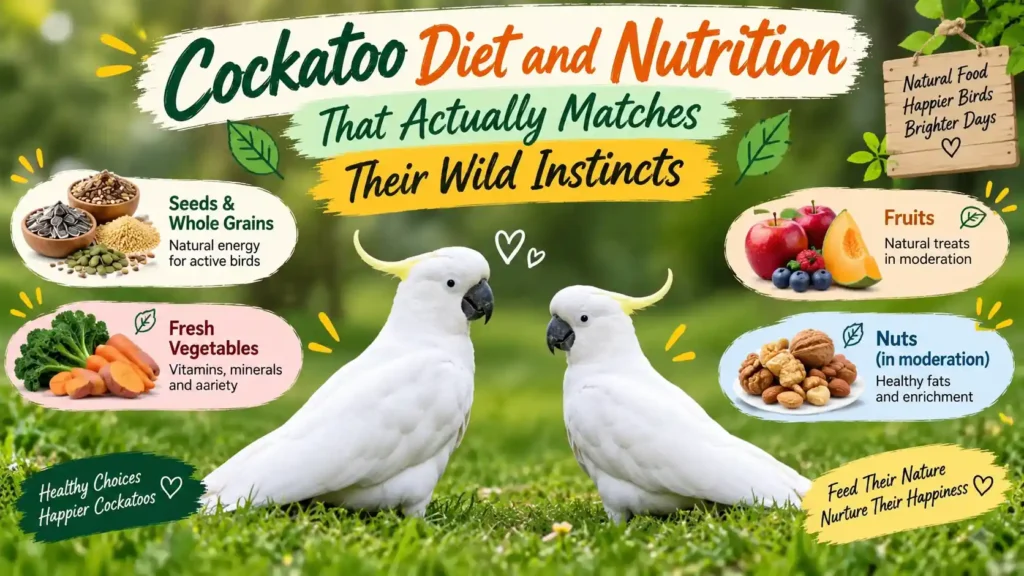
Cockatoo diet and nutrition should be based on formulated pellets, fresh vegetables, and small amounts of fruit, with seeds and nuts limited to occasional treats. Pellets should make up 60 to 70 percent of daily food because they provide balanced vitamins and minerals that seeds alone do not have. Safe vegetables include leafy greens, carrots, and bell peppers, while safe fruits include apples, berries, and melon, always given in small, seed-free portions.
Avocado, chocolate, caffeine, onion, garlic, and salty or sugary foods are toxic to cockatoos and must be avoided completely. Clean water and fresh food should be provided daily to prevent bacterial growth. Following correct cockatoo diet and nutrition guidelines directly supports healthy feathers, stable weight, and a longer lifespan.
Cockatoo Diet and Nutrition: What Do Cockatoos Eat?
Wild cockatoos spend up to six hours a day foraging across grasslands, eucalyptus forests, and farmland, eating a rotating mix of seeds, nuts, roots, berries, blossoms, and insects. Captive birds cannot replicate that variety exactly, so a formulated pellet forms the nutritional backbone of the diet, supplying balanced vitamins, minerals, and amino acids that loose seed cannot provide on its own.
Fresh vegetables and a smaller portion of fruit round out the plate, offering fiber, antioxidants, and natural enrichment value. Occasional protein, such as cooked egg, a few nuts, or lean cooked meat, supports feather and beak health, especially during molting season. Sunflower seeds and peanuts taste great to a cockatoo but pack too much fat for a bird that no longer flies 20 miles a day searching for food. Balance, not variety for its own sake, is the real goal of a captive cockatoo’s plate.
Thinking About a Cockatoo? Discover What You Should Know. Read more in Cockatoo Parrot Diet, Temperament, and the Commitment Few Expect.
Best Food for Cockatoos
Formulated pellets from trusted brands should anchor every meal, since they are engineered to prevent the selective eating that happens when birds pick favorite pieces out of a seed mix. Board-certified avian veterinarians consulted by the Association of Avian Veterinarians generally recommend that pellets make up 60 to 70 percent of a cockatoo’s daily food intake. Vegetables should fill roughly 20 to 25 percent of the bowl, with fruit and other treats limited to a smaller share because of natural sugar content.
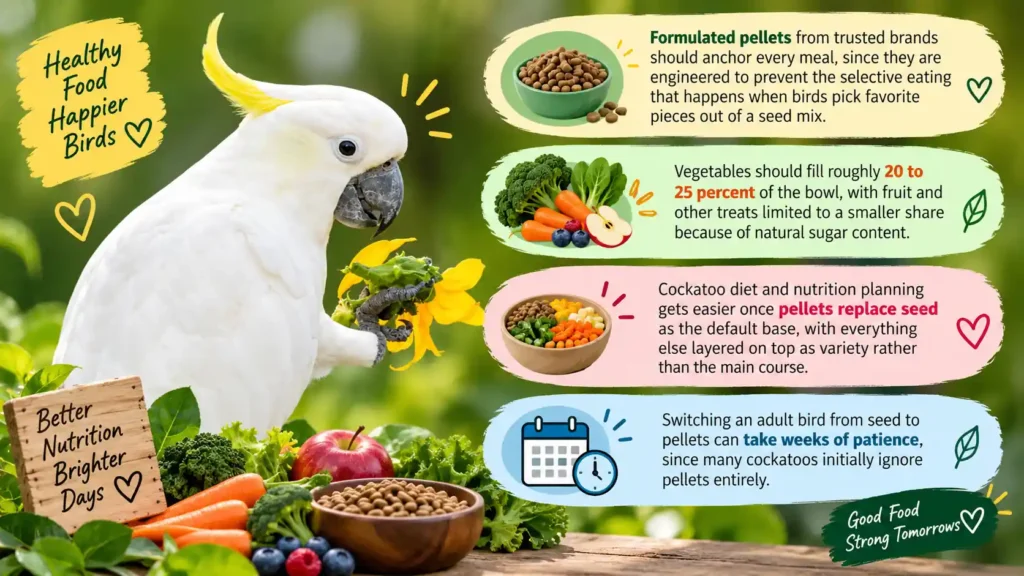
Cockatoo diet and nutrition planning gets easier once pellets replace seed as the default base, with everything else layered on top as variety rather than the main course. Switching an adult bird from seed to pellets can take weeks of patience, since many cockatoos initially ignore pellets entirely. Mixing a small amount of seed into a pellet bowl during the transition, then gradually reducing it, tends to work better than an abrupt swap.
Cockatoo Pellets, Seeds and Nuts
Pellets, seeds, and nuts all show up in cockatoo diets, but they play very different nutritional roles. The table below compares how each one fits into a balanced feeding plan, making it easier to see why pellets carry most of the daily workload.
How pellets, seeds, and nuts fit into a balanced cockatoo diet.
| Food Type | Role in the Diet | Recommended Share |
| Formulated pellets | Primary source of vitamins, minerals, and amino acids | 60-70% of daily diet |
| Seed mixes | Occasional treat or training reward, not a staple | Under 10% of daily diet |
| Tree nuts (unsalted, unshelled) | Healthy fats plus mental stimulation from shelling | 1-2 tbsp, a few times weekly |
Seeds and nuts still have a place at the table, just not as the main event. A tablespoon of unsalted, unshelled nuts a few times a week gives a cockatoo mental stimulation from cracking the shell, along with healthy fats. Sunflower seeds and millet work well as training treats in tiny amounts, since birds find them highly motivating. Feeding seed mixes as a free-choice, all-day food source, however, invites obesity and fatty liver disease over time. Rotating two or three high-quality pellet brands, rather than sticking with one forever, also helps avoid selective feeding and nutrient gaps.
Fruits and Vegetables for Cockatoos
Fresh produce adds moisture, fiber, and micronutrients that dry pellets alone cannot fully replicate. Dark leafy greens, orange vegetables, and low-sugar fruits offer the best nutritional return per bite for a captive cockatoo. Washing all produce thoroughly removes pesticide residue that could otherwise build up in a small bird’s system over repeated exposure.
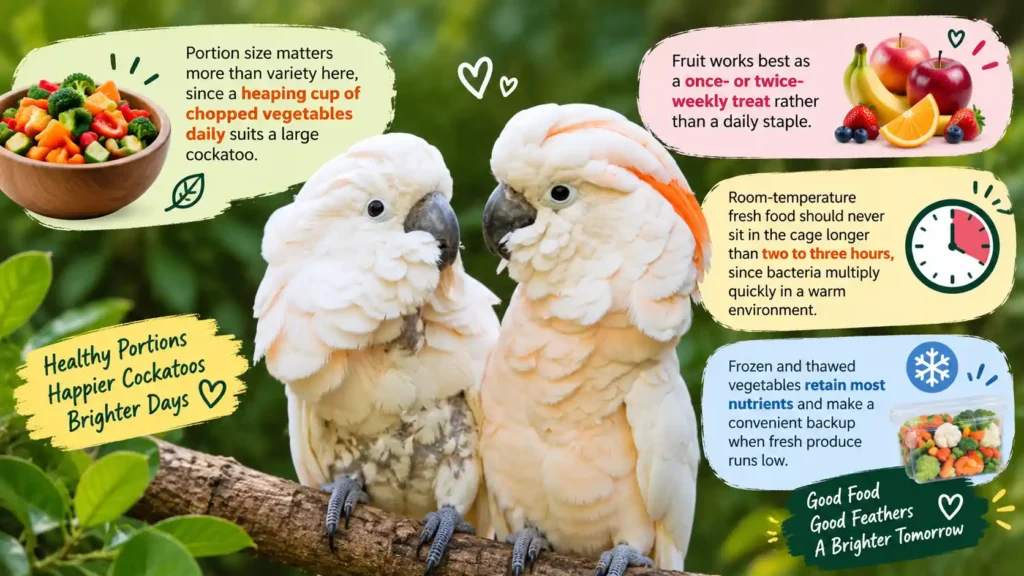
Portion size matters more than variety here, since a heaping cup of chopped vegetables daily suits a large cockatoo, while fruit works best as a once- or twice-weekly treat rather than a daily staple. Room-temperature fresh food should never sit in the cage longer than two to three hours, since bacteria multiply quickly in a warm environment. Frozen and thawed vegetables retain most nutrients and make a convenient backup when fresh produce runs low.
What Fruits Can Cockatoos Eat?
Cockatoo diet and nutrition experts generally list apples, bananas, berries, mango, papaya, and melon as safe fruit choices, always served with seeds and pits removed first. Grapes, pomegranate, and kiwi round out the safe list, offering antioxidants along with natural sweetness that most cockatoos love.
Apple seeds, cherry pits, and peach or apricot stones contain compounds that convert to cyanide, so removing them before serving is a non-negotiable step. Citrus fruits such as orange and mandarin segments are fine in small amounts, though the acidity can occasionally upset a sensitive stomach. A quarter cup of mixed fruit, offered two to three times a week, keeps sugar intake in check while still adding variety. The table below lists commonly available produce, its category, and a quick serving tip for each.
Safe produce for cockatoos, at a glance
| Food | Type | Serving Tip |
| Apple (seeds removed) | Fruit | Slice thin; discard core and seeds |
| Banana | Fruit | Small chunks; naturally high in sugar |
| Blueberries | Fruit | Whole or halved; rich in antioxidants |
| Mango | Fruit | Peel and pit removed; feed in moderation |
| Broccoli | Vegetable | Steamed or raw florets |
| Carrot | Vegetable | Grated or sliced; good beak exercise |
| Bell pepper | Vegetable | Raw strips; high in vitamin C |
| Sweet potato | Vegetable | Cook and cool before serving |
| Kale | Vegetable | Chop finely; feed in moderation |
| Zucchini | Vegetable | Raw or lightly steamed slices |
What Vegetables Can Cockatoos Eat?
Vegetables safe for cockatoos include broccoli, carrots, cooked sweet potato, bell peppers, kale, spinach in moderation, zucchini, and green beans, all of which supply vitamin A, calcium, and fiber. Bell peppers pack more vitamin C than an equivalent serving of an orange, making them one of the most nutrient-dense choices available. Leafy greens like kale and spinach are excellent, though spinach’s oxalic acid content means it should stay an occasional item rather than a daily staple.
Steaming harder vegetables such as sweet potato and carrot slightly softens them, making them easier for a cockatoo to chew and digest. Raw options generally retain more nutrients than cooked ones, so alternating between raw and lightly cooked keeps the diet varied. Corn on the cob, in small amounts, doubles as both food and a foraging toy that keeps a cockatoo occupied.
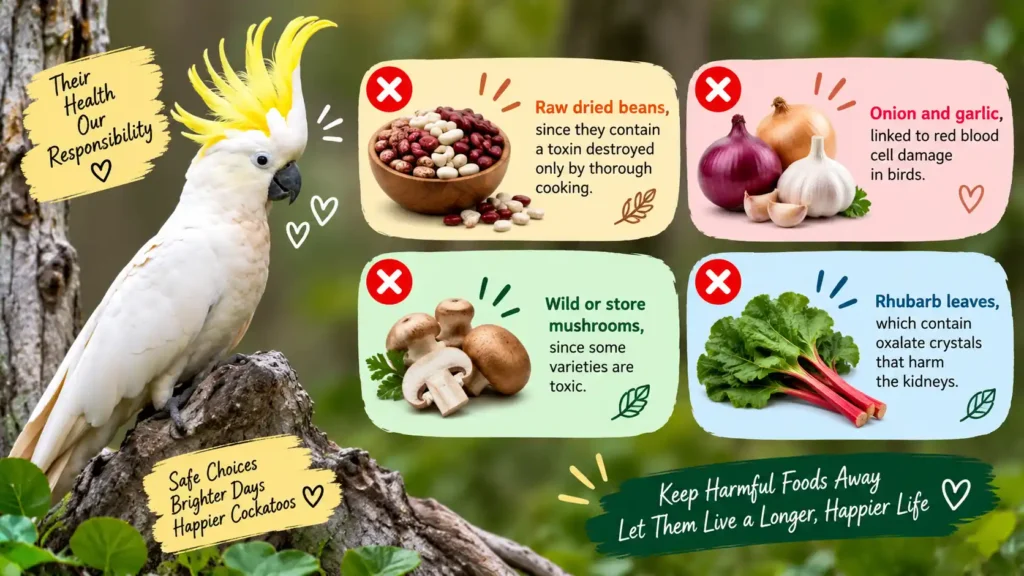
A few vegetables and vegetable-adjacent items deserve special caution:
- Raw dried beans, since they contain a toxin destroyed only by thorough cooking
- Onion and garlic, linked to red blood cell damage in birds
- Wild or store mushrooms, since some varieties are toxic
- Rhubarb leaves, which contain oxalate crystals that harm the kidneys
Foods to Avoid for Cockatoos
Certain everyday foods pose genuine, sometimes fatal, risks to a cockatoo’s small, fast metabolism. Persin, a fungicidal toxin found throughout the avocado plant, remains one of the most dangerous substances an owner can accidentally offer, since even a small piece of flesh has caused bird deaths within 24 to 48 hours. Chocolate, caffeine, and alcohol all affect a cockatoo’s heart and nervous system far more intensely than they affect a human of similar body proportions. Salty, fried, and heavily processed human snacks strain a bird’s kidneys and contribute to fatty liver disease over months of repeated exposure.
The ASPCA Animal Poison Control Center maintains an updated list of household toxins relevant to pet birds, worth bookmarking for quick reference during a suspected exposure. Reading ingredient labels before sharing any packaged human food prevents most accidental poisonings before they happen.
What Foods Are Toxic to Cockatoos?
Avocado, chocolate, caffeine, alcohol, onion, garlic, xylitol-containing sugar-free products, and raw or dried beans top the list of foods toxic to cockatoos, along with the seeds and pits of apples, cherries, and stone fruits. Persin in avocado attacks the heart and respiratory system, while theobromine in chocolate overstimulates a bird’s nervous system and can trigger seizures within hours.
Onion and garlic compounds break down red blood cells, leading to anemia when eaten repeatedly, even in small amounts hidden inside table scraps. Xylitol, a sugar substitute found in sugar-free gum and baked goods, causes dangerous blood sugar crashes and liver damage in birds far faster than it does in dogs or humans. Mold on spoiled fruit, bread, or nuts produces mycotoxins capable of causing severe organ damage, so any questionable food belongs in the trash rather than the food bowl.
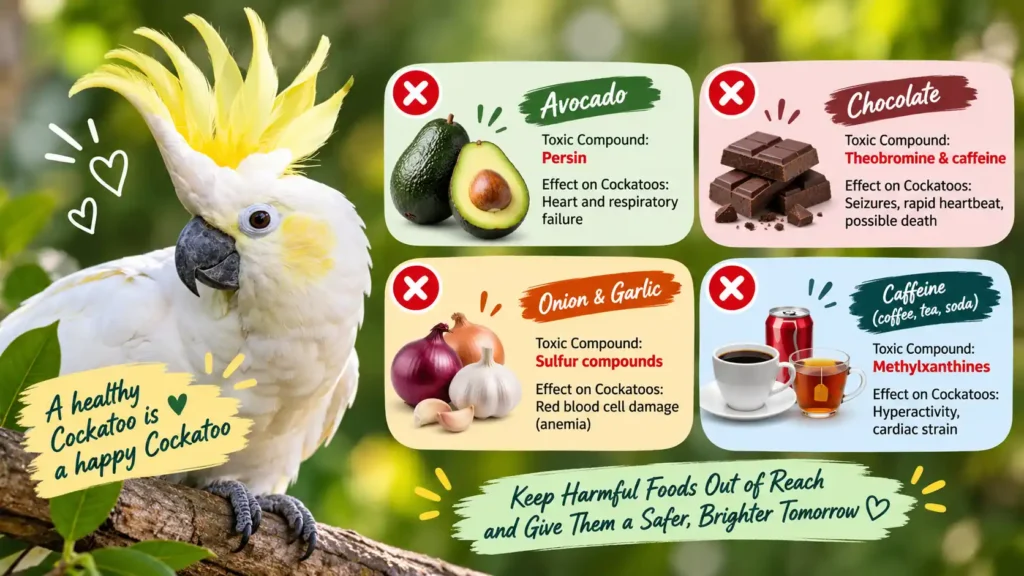
The chart below summarizes the most common toxic offenders, the compound responsible, and what each one does inside a cockatoo’s body.
| Food | Toxic Compound | Effect on Cockatoos |
| Avocado | Persin | Heart and respiratory failure |
| Chocolate | Theobromine & caffeine | Seizures, rapid heartbeat, possible death |
| Onion & garlic | Sulfur compounds | Red blood cell damage (anemia) |
| Caffeine (coffee, tea, soda) | Methylxanthines | Hyperactivity, cardiac strain |
| Alcohol | Ethanol | Organ failure, disorientation |
| Xylitol | Sugar substitute | Liver damage, blood sugar crashes |
| Apple, cherry, peach pits | Cyanogenic compounds | Cyanide poisoning |
| Salty or fried foods | Excess sodium and fat | Kidney strain, dehydration |
How Much and How Often Should Cockatoos Eat?
Adult cockatoos typically eat about a quarter to half a cup of pellets daily, adjusted based on body size and species, since a Goffin’s cockatoo needs less than an Umbrella or Moluccan. Two feeding sessions a day, morning and late afternoon, mirror a wild bird’s natural foraging rhythm better than one large bowl left out all day.
- Fresh vegetables belong in the bowl every morning, with uneaten portions removed within two to three hours to prevent bacterial growth.
- Cockatoo diet and nutrition needs shift with life stage, since breeding females and growing juveniles require extra calcium and protein.
- Monthly food costs typically run between $30 and $90 USD, depending on pellet brand and fresh produce added.
- Weighing a cockatoo weekly catches gradual weight changes early, giving a warning sign of diet problems.
Putting Cockatoo Diet and Nutrition Into Practice
Cockatoo diet and nutrition boils down to a simple ratio once the basics click: mostly pellets, a solid helping of fresh vegetables, modest fruit, and the toxic offenders kept far out of reach. Wild foraging habits explained why variety alone was never the point, since balance across food groups mattered more than novelty.
Pellets, seeds, and nuts each earned a specific role, with pellets carrying most of the nutritional weight and seeds shrinking to an occasional treat. Safe fruits and vegetables added fiber, vitamins, and enrichment, while a handful of dangerous items, from avocado to chocolate to onion, stayed permanently banned from the bowl. Portion sizes and feeding schedules tied everything together, with roughly a quarter to half cup of pellets daily split across two feedings.
Human food, eggs, rice, and milk each came with their own nuanced answer, none of them a flat yes or no. Applying these guidelines consistently gives a cockatoo the best shot at the long, healthy lifespan the species is capable of reaching. Partnering with an avian veterinarian for individualized advice rounds out a solid feeding plan for years to come.
Cockatoo Diet FAQs
Can Cockatoos Eat Human Food?
Small amounts of plain cooked chicken, pasta, unsalted vegetables, and hard cheese are safe as occasional treats. Salty, sugary, fried, or seasoned foods should be avoided since cockatoos process sodium and fat poorly.
Can Cockatoos Eat Eggs?
Fully cooked eggs, scrambled or boiled without salt or oil, offer good protein and calcium, especially during molting. Raw eggs carry salmonella risk, so a tablespoon of cooked egg once or twice a week is enough.
Can Cockatoos Eat Rice?
Plain cooked white or brown rice is safe and works well as a training or foraging treat. Seasoned or buttered rice should be avoided, and brown rice offers more fiber and B vitamins than white.
Can Cockatoos Drink Milk?
Cockatoos lack the enzyme to digest lactose, so cow’s milk can cause diarrhea and dehydration. Fresh water should always be available, and a vet should be consulted before offering yogurt as an occasional alternative.