A Cockatoo Parrot belongs to the family Cacatuidae, a group of 21 parrot species known for their movable head crest and mostly white, black, or pink feathers. Native to Australia, Indonesia, and nearby islands, this bird stands out from other parrots because of its strong pair bonding, its need for daily physical contact, and its habit of screaming to communicate over long distances in the wild.
Owning a Cockatoo Parrot means committing to a highly social creature that can live for 40 to 60 years, form a bond as intense as a marriage, and suffer real psychological distress if left alone for long stretches. This bird is not a casual pet choice; it is a lifelong companion that demands daily interaction, mental stimulation, and a home ready for both its noise and its emotional depth.
What Is a Cockatoo Parrot?
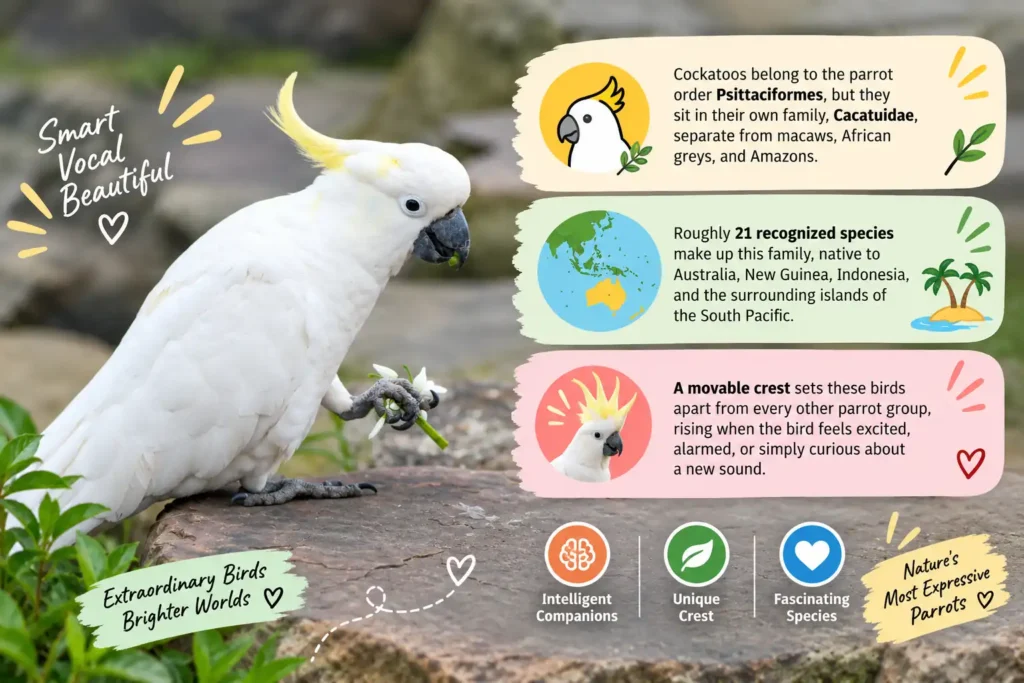
Cockatoos belong to the parrot order Psittaciformes, but they sit in their own family, Cacatuidae, separate from macaws, African greys, and Amazons. Roughly 21 recognized species make up this family, native to Australia, New Guinea, Indonesia, and the surrounding islands of the South Pacific. A movable crest sets these birds apart from every other parrot group, rising when the bird feels excited, alarmed, or simply curious about a new sound.
Feathers in white, black, pink, or yellow cover most species, along with a powder-down coating that gives many cockatoos a soft, chalky feel. Wild flocks can number in the hundreds, and that flock instinct explains much of the intense social behavior seen in pet cockatoos today. Understanding this background matters, since a captive bird still carries every one of these wild instincts into a living room.
Types of Cockatoos
Twenty-one species make up the cockatoo family, though only about six appear regularly in the pet trade. Size ranges dramatically across the group, from the 12-inch Goffin’s cockatoo up to the 20-inch Moluccan cockatoo. Color also varies more than most people expect, since black palm cockatoos display charcoal-grey plumage while galahs show a striking rose-pink chest against grey wings. Wild population status differs sharply by species too, and the IUCN Red List classifies several popular pet species, including the umbrella and yellow-crested cockatoo, as Endangered.
Breeding programs across the United States and Europe now supply the majority of pet cockatoos, easing pressure on wild flocks. The table below compares six commonly kept species side by side, since size and temperament differ enough between them to affect which one actually fits a given household.
Meet the Amazing Types of Cockatoos You Should Know. Read more in Types of Cockatoos That Cost More Than Most People Expect.
Quick comparison: adult size, lifespan, and noise level by species.
| Species | Adult Size | Typical Lifespan | Noise Level | Best Suited For |
| Goffin’s Cockatoo | 12 in (30 cm) | 40-60 yrs | Moderate | First-time large-parrot owners |
| Galah (Rose-breasted) | 14 in (35 cm) | 40-60 yrs | Moderate-High | Owners wanting a talkative bird |
| Umbrella Cockatoo | 18 in (46 cm) | 60-70 yrs | Very High | Experienced owners, lots of time |
| Sulphur-Crested Cockatoo | 18-20 in (46-50 cm) | 40-80 yrs | Very High | Owners with aviary space |
| Moluccan Cockatoo | 20 in (51 cm) | 60-80 yrs | Extremely High | Highly experienced owners |
| Major Mitchell’s Cockatoo | 14 in (36 cm) | 40-60 yrs | Moderate | Owners wanting a quieter cockatoo |
Cockatoo Personality and Temperament
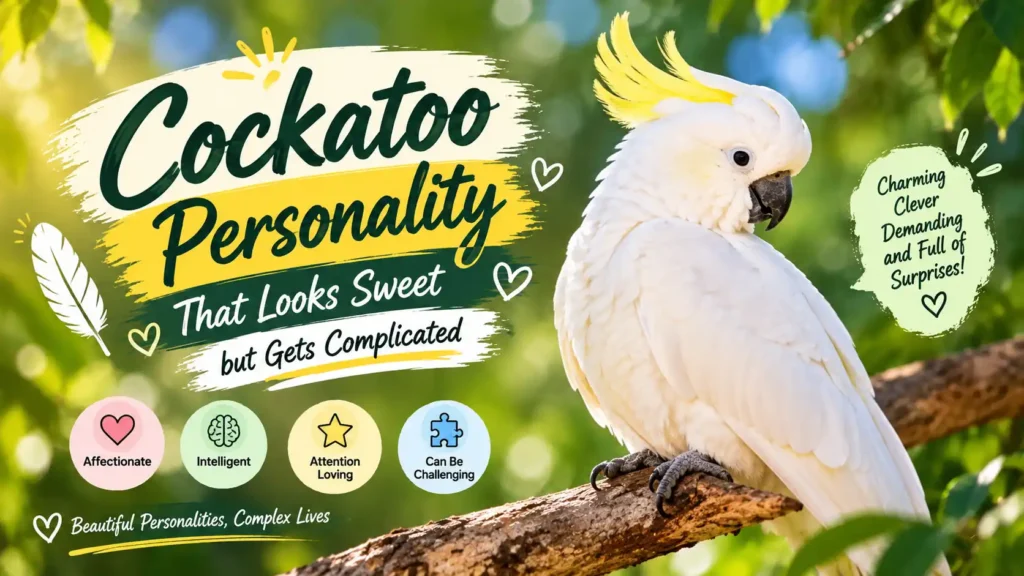
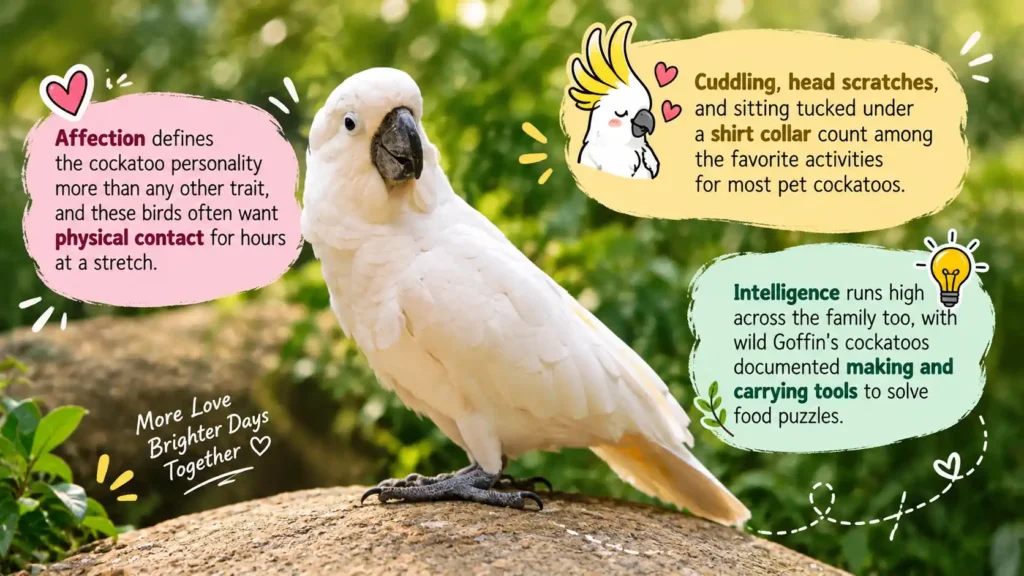
Affection defines the cockatoo personality more than any other trait, and these birds often want physical contact for hours at a stretch. Cuddling, head scratches, and sitting tucked under a shirt collar count among the favorite activities for most pet cockatoos. Intelligence runs high across the family too, with wild Goffin’s cockatoos documented making and carrying tools to solve food puzzles.
That same intelligence, paired with intense social drive, means boredom and loneliness show up fast as behavior problems rather than quiet sulking. Jealousy toward other pets or even a partner is common, since a bonded cockatoo frequently views its favorite person as a mate rather than an owner. Playfulness and mischief round out the picture, and many owners describe cockatoos as the class clowns of the parrot world.
What Makes Cockatoo Temperament So Intense?
Cockatoo temperament runs intense because wild flocks depend on constant physical closeness for safety, and a pet bird transfers that same need onto its human family. Hours of daily contact, vocal communication, and mutual preening replace the flock in a home setting, which is why isolation triggers screaming, plucking, and other stress behaviors so quickly.
Cockatoo Care and Cage Requirements
Cage size ranks as the single biggest care mistake new owners make when a Cockatoo Parrot first arrives home, since most commercial “large bird” cages still run too small for a full-grown bird. Minimum dimensions should allow full wing extension in every direction, with large species needing a cage no smaller than 36 inches wide, 30 inches deep, and 60 inches tall. Bar spacing between three-quarters of an inch and one inch prevents a curious beak or head from getting stuck.
Perch variety matters just as much as size, and rope, natural wood, and concrete perches together help keep feet healthy and beaks naturally worn down. Daily out-of-cage time of at least three to four hours supports both physical exercise and mental stability. Toys made from untreated wood, leather, and paper give cockatoos a safe outlet for the heavy chewing instinct built into every species.
Minimum cage size and daily out-of-cage time recommended by species group.
| Size Group | Min. Cage Size (W x D x H) | Bar Spacing | Out-of-Cage Time |
| Small (Goffin’s, Bare-eyed) | 24 x 24 x 36 in | 5/8-3/4 in | 2-3 hrs/day |
| Medium (Galah, Major Mitchell’s) | 30 x 24 x 48 in | 3/4 in | 3 hrs/day |
| Large (Umbrella, Sulphur-Crested) | 36 x 30 x 60 in | 3/4-1 in | 3-4 hrs/day |
| Extra-Large (Moluccan, Palm) | 40 x 32 x 66 in | 1 in | 4+ hrs/day |
Cockatoo Diet and Nutrition
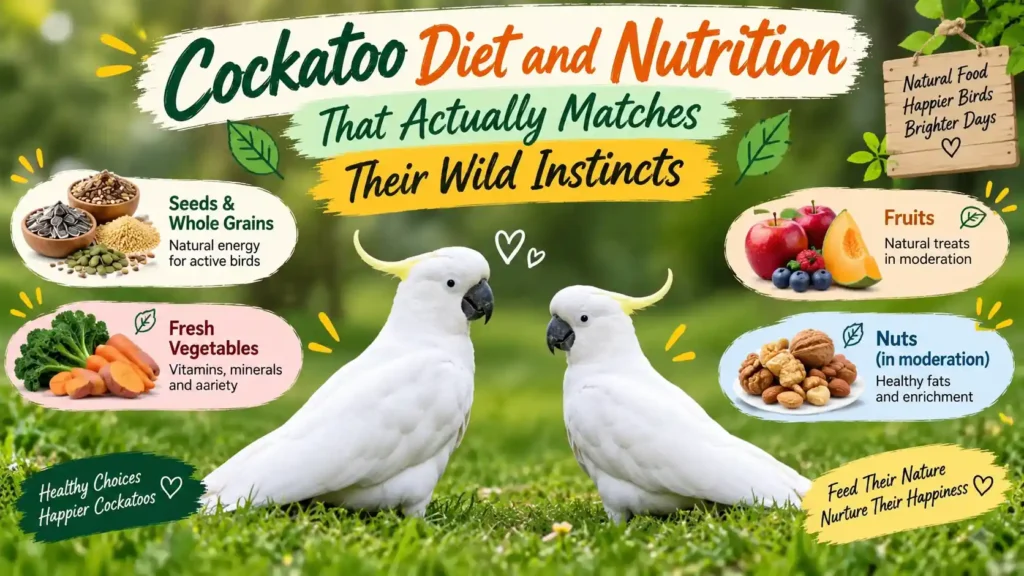
Formulated pellets should make up 60 to 70 percent of a healthy cockatoo diet, providing balanced vitamins and minerals that loose seed mixes cannot match. Fresh vegetables and a smaller portion of fruit round out the remaining calories, with dark leafy greens, sweet potato, and bell pepper offering strong nutritional value. Seeds and nuts still have a place, but only as an occasional treat, since their high fat content contributes to obesity and fatty liver disease in birds that eat them daily.
Fresh water needs replacing at least once a day, ideally twice in warmer climates where bacteria grow faster. Several common human foods pose genuine danger to cockatoos and belong on every owner’s do-not-feed list.
Explore Essential Cockatoo Nutrition Tips. Read more in Cockatoo Diet and Nutrition That Actually Matches Their Wild Instincts.
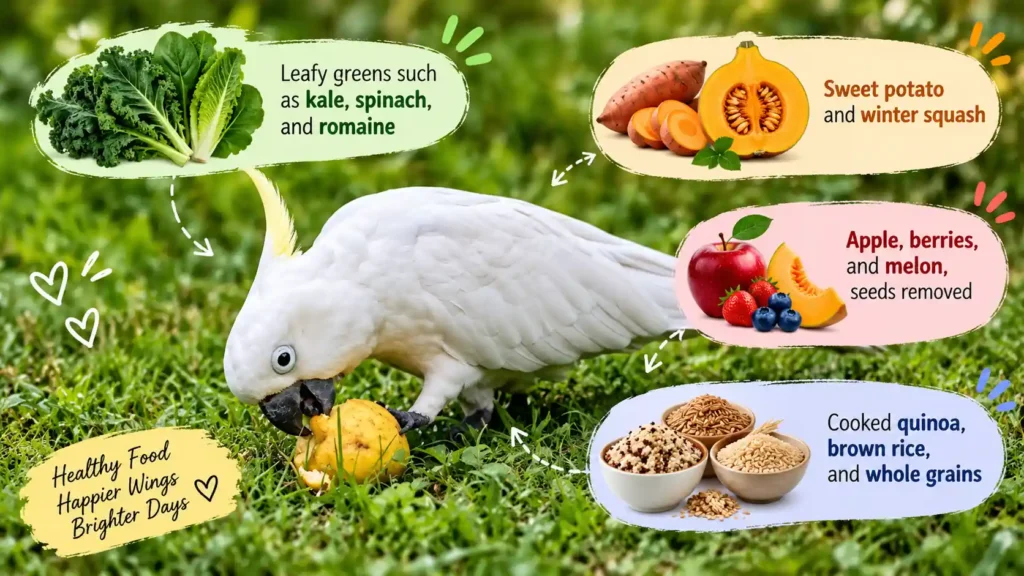
Safe everyday foods:
- Leafy greens such as kale, spinach, and romaine
- Sweet potato and winter squash
- Apple, berries, and melon, with seeds removed
- Cooked quinoa, brown rice, and whole grains
Foods to avoid completely:
- Avocado, which contains persin and is toxic to birds
- Chocolate and caffeine
- Onion, garlic, and salty snacks
- Alcohol and xylitol-sweetened products
Cockatoo Behavior and Training
Positive reinforcement forms the foundation of effective cockatoo training, with target training and simple clicker methods producing faster, more reliable results than punishment-based approaches. Step-up commands rank among the first skills worth teaching, since a bird that reliably steps onto a hand or perch becomes far easier to manage during vet visits or cage cleaning. Screaming counts as normal cockatoo communication at dawn and dusk, though excessive screaming throughout the day usually signals boredom, attention-seeking, or an unmet social need.
Consistency matters more than intensity, and short five- to ten-minute training sessions repeated daily tend to outperform long, irregular sessions. Rewarding calm, quiet behavior rather than only responding to noise helps prevent a bird from learning that screaming reliably summons attention. Professional avian behaviorists increasingly recommend foraging toys as a training tool, since they combine mental stimulation with natural food-seeking behavior.
How to Reduce Cockatoo Screaming
Reducing cockatoo screaming starts with ruling out boredom, hunger, and lack of attention, since screaming almost always communicates an unmet need rather than random misbehavior. Rewarding quiet moments with attention, offering foraging toys before departure, and keeping a predictable daily routine typically reduce excessive screaming within a few weeks of consistent effort.
Cockatoo Health Problems and Lifespan
Feather-destructive behavior ranks among the most common health complaints reported to avian veterinarians, often triggered by stress, poor diet, or an underlying medical condition rather than a simple bad habit. Psittacine Beak and Feather Disease, a viral condition first documented in Australian cockatoos, causes progressive feather and beak abnormalities and currently has no cure. Fatty liver disease develops in birds fed seed-heavy diets over many years, making pellet-based nutrition a genuine longevity factor rather than just a preference.
The Association of Avian Veterinarians recommends annual wellness examinations for every pet parrot, including bloodwork and screening for PBFD and polyomavirus. Lifespan varies enormously by species, with smaller cockatoos like the Goffin’s reaching 40 to 60 years and larger species such as the Moluccan regularly passing 60, occasionally reaching 80. Because that lifespan often exceeds a human career, many owners now include their bird in estate planning.
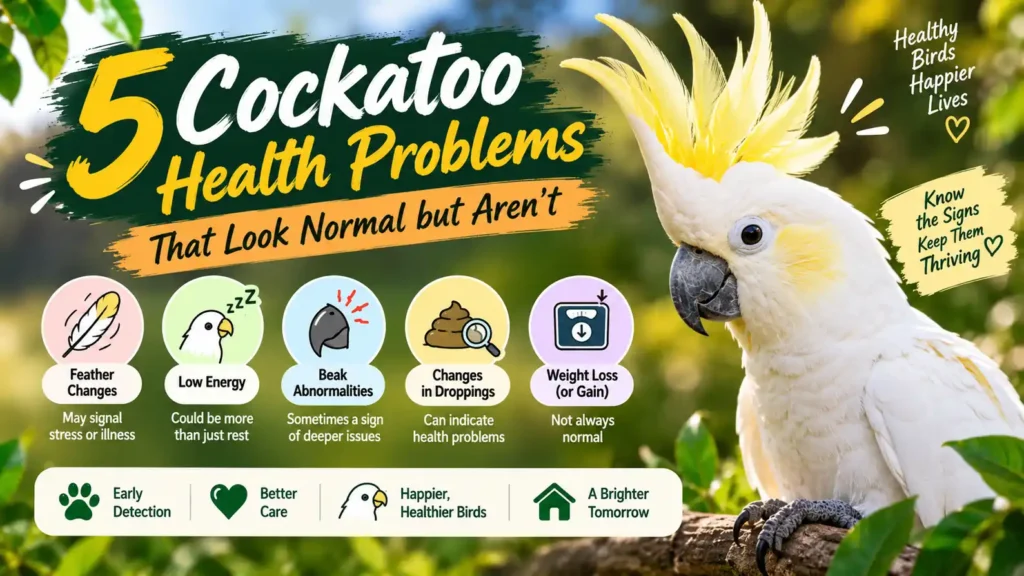
Know the Warning Signs of Common Cockatoo Health Issues. Read more in 5 Cockatoo Health Problems That Look Normal but Aren’t.
How Long Do Cockatoos Live?
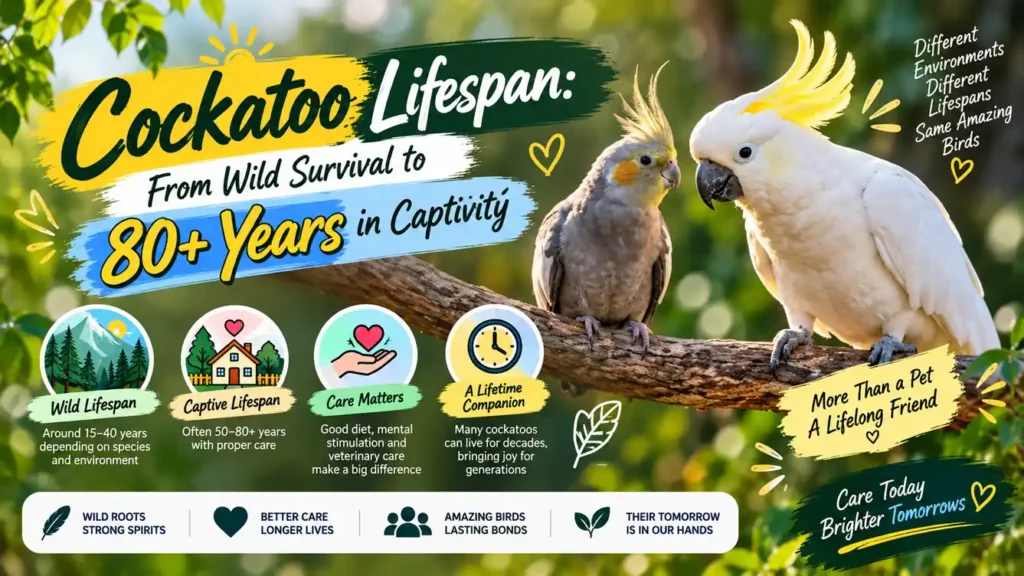
Cockatoo lifespan ranges from about 40 years in smaller species to 80 years in the largest species, such as the Moluccan and sulphur-crested cockatoo, when diet, mental stimulation, and veterinary care stay consistent throughout the bird’s life.
Find Out How Diet, Care, and Lifestyle Affect Cockatoo Lifespan. Read more in Cockatoo Lifespan: From Wild Survival to 80+ Years in Captivity.
Are Cockatoos Good Pets?
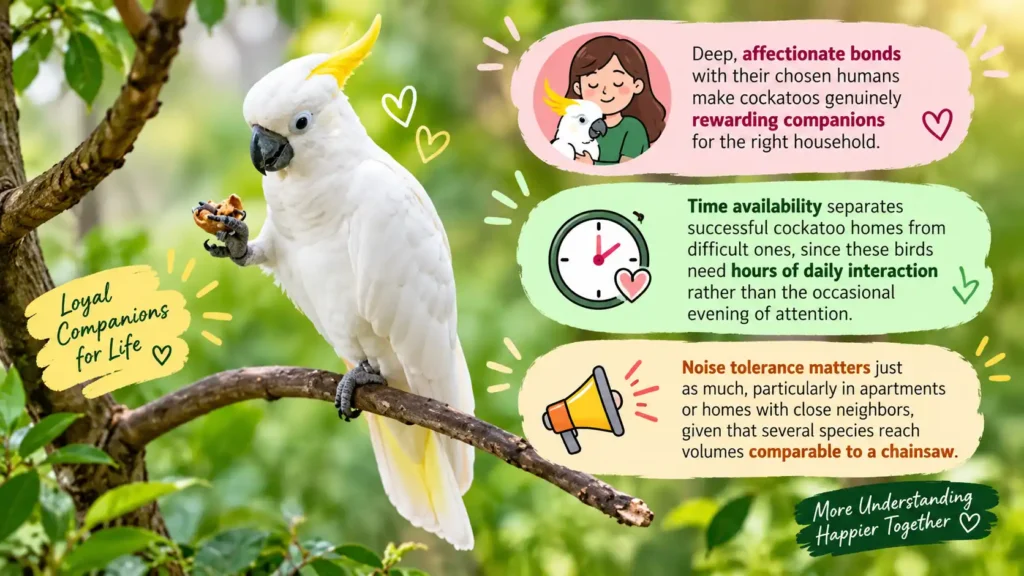
Deep, affectionate bonds with their chosen humans make cockatoos genuinely rewarding companions for the right household. Time availability separates successful cockatoo homes from difficult ones, since these birds need hours of daily interaction rather than the occasional evening of attention. Noise tolerance matters just as much, particularly in apartments or homes with close neighbors, given that several species reach volumes comparable to a chainsaw.
Experienced bird owners generally fare better than total beginners, since cockatoo-specific behavior challenges like plucking and aggression respond best to handlers who already understand parrot body language. Households with young children sometimes struggle too, as a large cockatoo’s beak can cause serious injury even without aggressive intent. Realistic expectations, not the bird’s undeniable charm, ultimately decide whether a cockatoo thrives in a given home.
Cockatoo Cost and Adoption
Purchase price marks only the first expense of Cockatoo Parrot ownership, and most new owners underestimate the ongoing cost by a wide margin. A cage suitable for a large species alone can run $250 to $1,300, before factoring in perches, toys, and a bird-safe air purifier. Monthly food costs typically land between $20 and $50 for quality pellets and fresh produce, though toy replacement adds a variable but real expense given how quickly cockatoos destroy them.
International trade in most cockatoo species falls under CITES, the treaty regulating cross-border movement of endangered wildlife, which is one reason reputable breeders and sellers provide documentation with every bird. Adoption through a parrot rescue organization often costs far less than buying from a breeder, and it also gives a surrendered bird a second chance at a stable home. Rescue organizations frequently report that cockatoos make up a disproportionate share of surrendered parrots, largely due to their noise and lifespan catching new owners off guard.
Typical 2026 purchase prices in USD by species, before cage, food, and vet costs.
| Species | Typical Price Range (USD) |
| Goffin’s Cockatoo | $700 – $1,800 |
| Galah (Rose-breasted) | $1,000 – $2,500 |
| Umbrella Cockatoo | $1,000 – $3,500 |
| Sulphur-Crested Cockatoo | $1,800 – $4,000 |
| Moluccan Cockatoo | $2,000 – $9,500 |
| Palm Cockatoo | $5,000 – $16,000+ |
Cockatoo Care: What It All Comes Down To
Cockatoos are intelligent, social parrots from a family of 21 species, ranging from the small Goffin’s cockatoo to the large Moluccan cockatoo. They are affectionate but demanding, needing a spacious cage, daily interaction, and a pellet-based diet free of avocado and chocolate. Positive reinforcement works best for training, and annual avian vet checkups help catch conditions like PBFD and fatty liver disease early.
With a lifespan of 40 to 80 years and costs starting near $700 plus ongoing cages, toys, and food, a cockatoo is a major long-term commitment. Adoption through a rescue is worth considering before buying from a breeder. For those ready for the noise and decades of care, a cockatoo offers one of the deepest bonds in the pet bird world.
Frequently Asked Questions About Cockatoos
Is a Cockatoo Parrot a Good Beginner Bird?
Most cockatoo species suit experienced bird owners better than beginners, given their extreme noise, decades-long lifespan, and intense need for social contact. Smaller species like the Goffin’s cockatoo come closest to beginner-friendly, though even they demand far more daily interaction than a cockatiel or budgie.
Are Cockatoos Loud?
Cockatoos rank among the loudest pet birds available, with large species like the umbrella and Moluccan cockatoo reaching roughly 135 decibels during peak screaming, comparable to a chainsaw at close range.
Can Cockatoos Talk?
Speech ability varies by individual and species, and cockatoos generally mimic fewer words than African greys or Amazon parrots. Sulphur-crested and umbrella cockatoos pick up simple words and household sounds most reliably among the family.
Why Do Cockatoos Scream?
Screaming serves as normal flock communication at dawn and dusk, while excessive daytime screaming usually signals boredom, hunger, attention-seeking, or an unmet social need that requires addressing at the root cause.
How Much Attention Does a Cockatoo Need?
Daily interaction of three to four hours outside the cage keeps most cockatoos mentally and socially healthy. Anything less tends to trigger stress behaviors like feather plucking, screaming, or aggression over time.
How Much Does a Cockatoo Cost?
Purchase prices range from about $700 for common species like the Goffin’s cockatoo to more than $16,000 for a rare Palm cockatoo, not counting cage, food, toys, and veterinary costs.